
Deep, vegetal, umami matcha with medium bitterness for lattes and baking
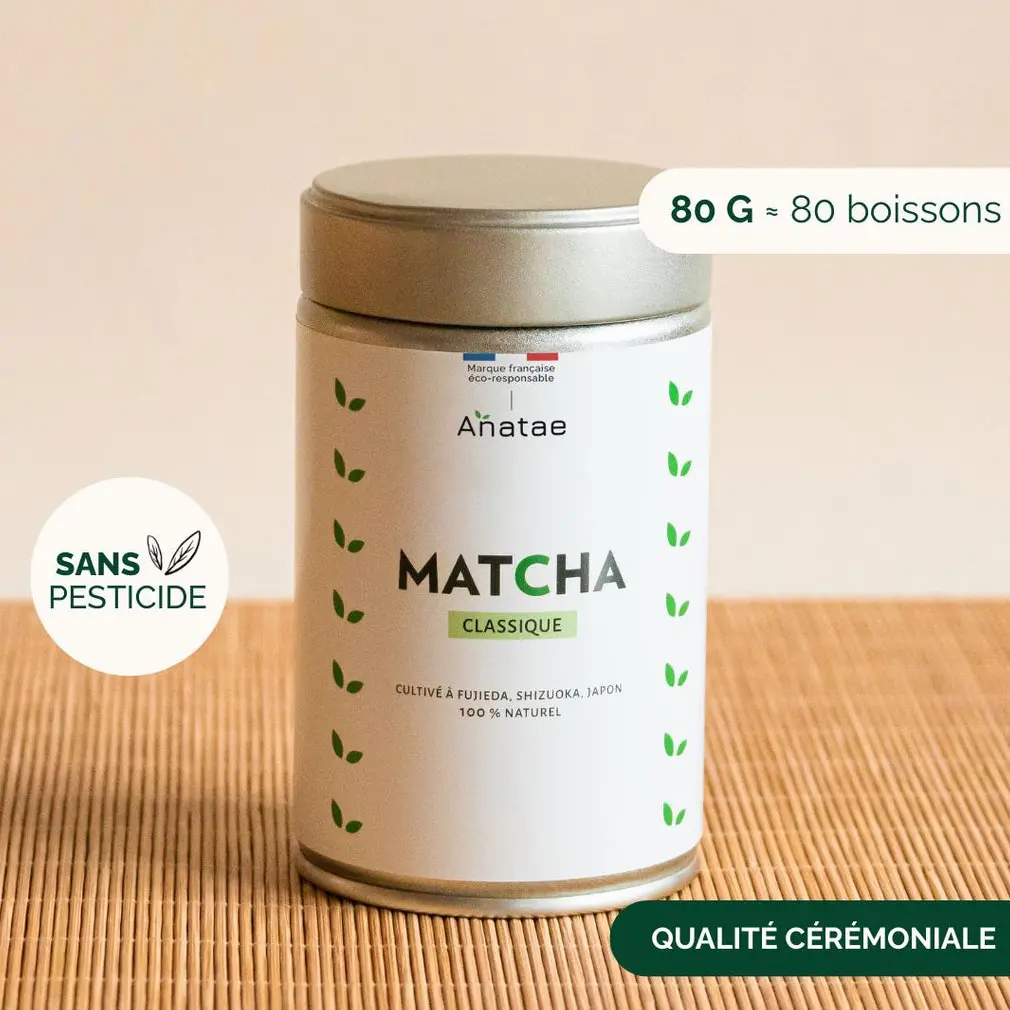
Anatae Classic Matcha is an organic Japanese green tea powder from Fujieda in Shizuoka, Japan. Its medium bitterness, deep vegetal character, and umami suit drinkers who prefer stronger matcha flavors. It works in traditional water-based matcha, lattes, smoothies, ice cream, baking, and sweet or savory dishes.
What does Anatae Classic Matcha taste like?
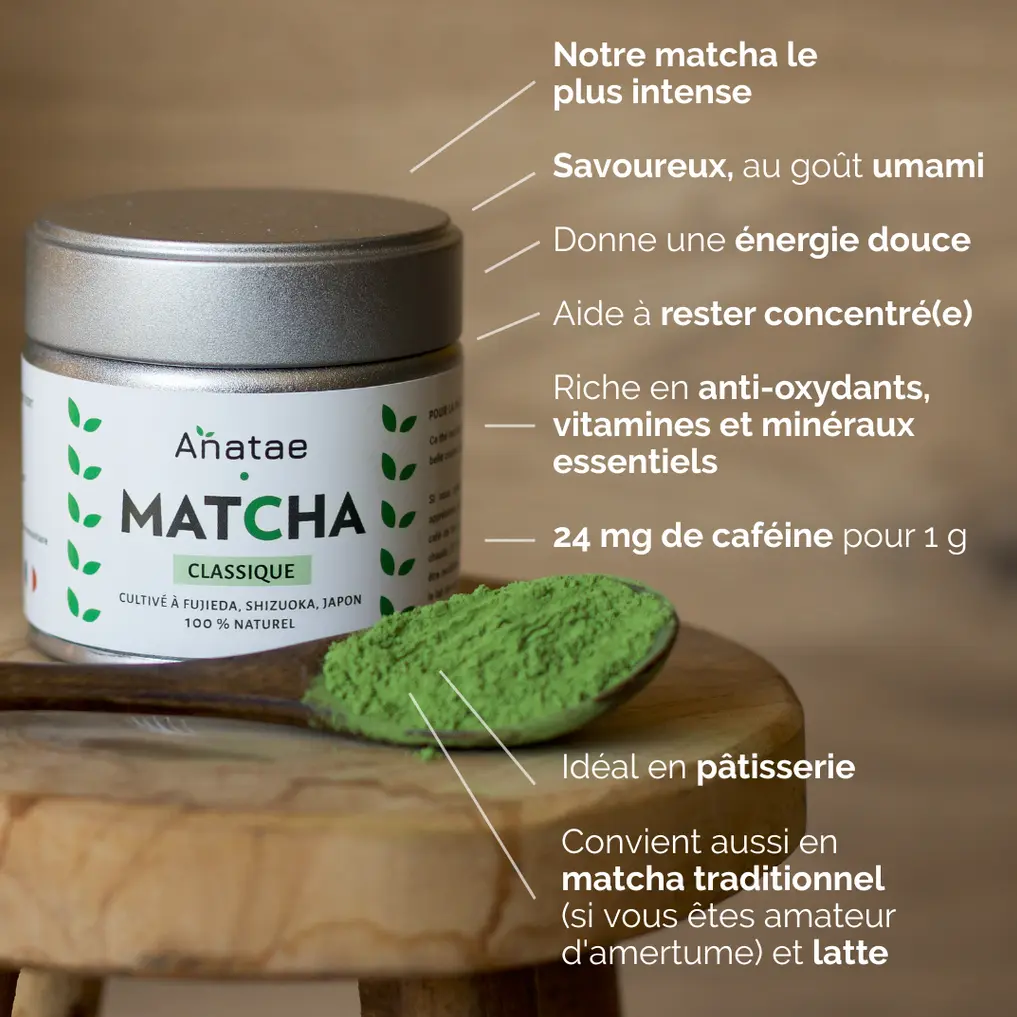
This is the only matcha among Anatae’s three compared powders with matcha’s characteristic bitterness. The profile combines medium bitterness with deep vegetal and umami notes. That stronger character makes it suitable for drinking with water or milk and for recipes where the matcha flavor needs to remain noticeable.
The powder contains 100% matcha green tea, with no gluten or allergens. It uses Yabukita, Yamakai, and Meiryoku cultivars. The leaves are harvested in spring during ichibancha, the first harvest, in Fujieda. Cultivation follows Japanese organic agriculture standards under JAS.
How is this Fujieda matcha produced?
After harvest, the leaves are steamed for several seconds. Their main veins are then removed with an artisanal machine, retaining the central portion of each leaf. The leaves are dried and ground between two granite millstones to make the finished powder.
- Origin: Fujieda, Shizuoka, Japan
- Harvest: spring ichibancha
- Cultivars: Yabukita, Yamakai, and Meiryoku
- Formats: 30g and 80g tins
- Yield: about 30 bowls from 30g or 80 bowls from 80g
How should Classic Matcha be prepared?
For a water-based bowl, place 1g of matcha, about one level teaspoon, in a bowl. Add 70ml of water at 70–75°C (158–167°F), then whisk for several seconds with a bamboo whisk or electric frother until foam forms. Add more water if preferred, or add milk for a matcha latte. Oat milk is one suggested pairing.
Because matcha is mixed rather than infused, some powder may settle after preparation. Stir it again before drinking. In the kitchen, use the powder in cakes, pastries, ice cream, smoothies, or as a topping for savory and sweet dishes.
Which sizes and purchase options are available?
Both 30g and 80g formats are currently available as one-time purchases or subscription options. Use about 1g per cup when estimating the best size for regular drinks or recipe use.
Keep the tin tightly closed in a cool, dry place away from light, moisture, strong odors, ovens, and direct sun. Refrigeration is an option when temperatures exceed 23°C (73°F). For the stated best flavor, use the matcha within three to four months after opening.
Culinary is a commercial matcha grade used for cooking and baking, with a stronger, more bitter flavor that suits recipes and lattes.
Yabukita is Japan’s dominant tea cultivar, selected in Shizuoka in the early 1900s and prized for its balanced sweetness and umami.
Ichibancha is the late-April-to-May first harvest, producing vibrant green matcha with sweet, delicate flavor and characteristic umami.
Japan is the birthplace of matcha, with shaded tencha cultivation centered in Kyoto, Kagoshima, Shizuoka, Aichi, Fukuoka, Mie, Nara, and Saitama.
Frequently asked questions
Anatae Classic Matcha comes from Fujieda in Shizuoka, Japan. It is made with Yabukita, Yamakai, and Meiryoku cultivars harvested in spring as ichibancha, the first harvest.
Yes. This matcha is organic and grown according to Japanese Agricultural Standards (JAS).
It has medium bitterness with deep vegetal and umami notes. Its characteristic bitterness and strong flavor distinguish it from the other matcha powders in Anatae’s range.
Use it with water, in matcha lattes, or as an ingredient in pastries, desserts, ice cream, and smoothies. It can also be sprinkled over savory or sweet dishes.
Place 1 g, about one level teaspoon, in a bowl and add 70 ml of water at 70–75°C (158–167°F). Whisk for several seconds with a bamboo whisk or electric frother until foamy. Add more water for a longer drink or milk for a latte.
The ingredient is 100% matcha green tea powder. It is described as gluten-free and allergen-free.
Available formats are 30 g, about 30 bowls, and 80 g, about 80 bowls. Both sizes are available as one-time purchases or subscriptions. The stated serving basis is 1 g per bowl.
Keep the container tightly closed in a cool, dry place away from light, moisture, strong odors, ovens, and direct sunlight. Refrigeration is an option when temperatures exceed 23°C (73°F). Flavor is stated to remain optimal for 3–4 months after opening.