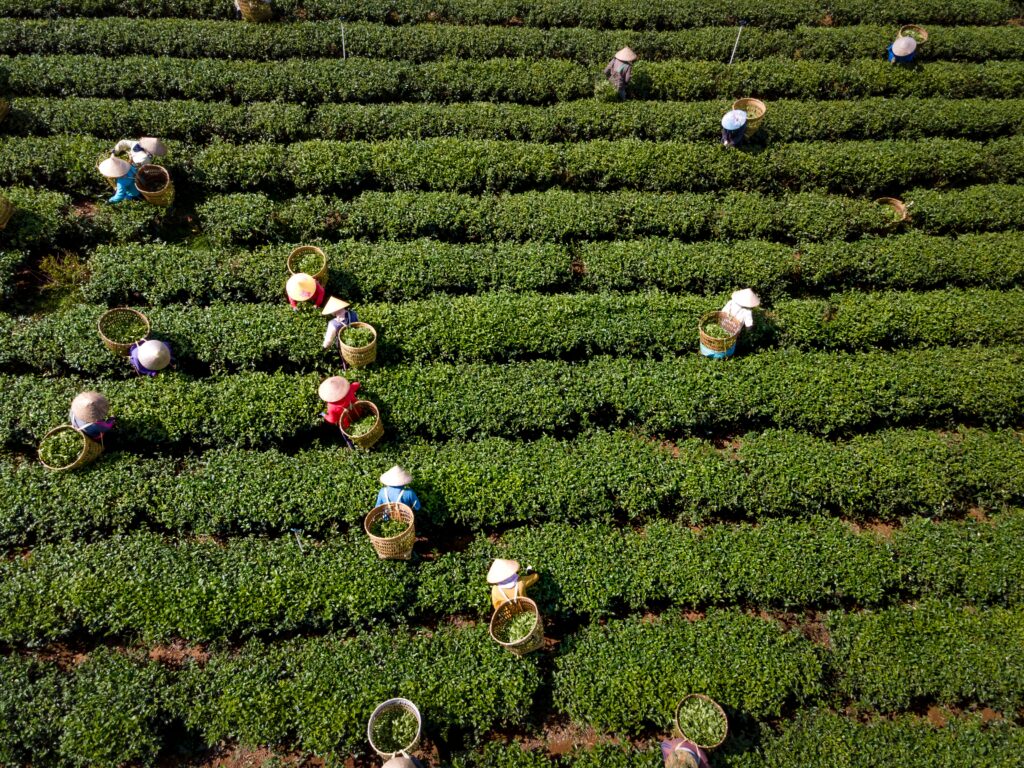
Yabukita: Tea Cultivar Selected in Shizuoka in 1908
Yabukita is a Japanese tea cultivar selected by Sugiyama Hikosaburo in Shizuoka in 1908. Its name identifies the plant, not a matcha grade.Definition of Yabukita
Yabukita is a Japanese tea cultivar selected by Sugiyama Hikosaburo in Shizuoka in 1908. Its name refers to the north side of a field cleared from a bamboo grove. The cultivar identifies the tea plant, not a matcha grade; cultivation and processing determine the finished product.
Learn more
Yabukita is a Japanese tea cultivar associated with Sugiyama Hikosaburo’s selection work in Shizuoka. Its importance in Japanese green tea does not make it a matcha grade or a guarantee that every Yabukita tea will taste identical.
How Yabukita Became a Reference Point
Shizuoka City’s account identifies Sugiyama Hikosaburo as the person who discovered and developed Yabukita. In 1908 he selected it from the north side of a field cleared from a bamboo grove, near the present Shizuoka Prefectural University grounds. The city links the name to that location: yabu refers to the bamboo grove and kita to north.
This is a history of cultivar selection, not the invention of matcha in 1908. Nor should a percentage of Japanese tea plantings be substituted for a percentage of finished matcha production. Without a dated, clearly defined statistic, Yabukita’s prominence is better described without assigning it a current production share.
Plant Identity and Processing
The Japanese name is やぶきた. A cultivar name identifies the plant material, while sencha and matcha describe different products made from tea leaves. For matcha, shade-grown shoots follow the tencha production route. JETRO describes steaming and drying without rolling, then removal of stems and veins and milling. Simply grinding a finished Yabukita sencha does not make it tencha-based matcha.
Sweetness, umami and astringency are useful elements of a tasting checklist. It should not be converted into a promise that Yabukita always occupies a mild middle ground or has less complexity than Samidori, Okumidori or Gokou. Those comparisons need named products and comparable preparation.
A Practical Buying and Tasting Scenario
Suppose a buyer is choosing between a single-cultivar Yabukita matcha and a blend whose cultivars are named. Yabukita offers a useful baseline: compare sweetness, umami, and astringency in the actual bowl. Record those traits rather than assuming that the familiar cultivar name settles the question of quality.
Then compare the label’s other information, including region, producer, harvest, and whether the powder is single-cultivar or blended. A blend may include Yabukita alongside other cultivars to achieve a particular profile. The practical choice is therefore not “pure is always better,” but whether the tea’s stated composition and observed character fit the buyer’s preference.
Limits and Common Confusions
The 1908 provenance is specific and useful, but it does not establish performance on every farm. Cold tolerance, yield and disease susceptibility are agricultural traits that require cultivar records and local growing context. They should not be turned into a guarantee of frost-proof crops or a claim that buying this cultivar implies a particular pesticide regime.
Similarly, “single-cultivar” is a statement about composition, not a quality rank. A producer may offer an identified Yabukita lot or use it within a blend. For either product, ask about leaf origin, harvest and the manufacturer’s preparation recommendation. A familiar name helps you ask better questions; it does not answer them all.
Yabukita in the Wider Cultivar Landscape
Cultivar, region, processing, and product format answer different questions. Yabukita identifies the plant variety. Shizuoka or another named area identifies origin. Sencha and matcha identify products made through different production paths. A tea can consequently be Yabukita from a particular region and processed for matcha without any one label replacing the others.
Sources and references
Accessed: 2026-09-08
Language: ja
Sugiyama Hikosaburo selected Yabukita in 1908 from the north side of a field cleared from a bamboo grove; name is associated with that location.
Accessed: 2026-09-08
Language: en
Shaded leaves are steamed and dried without kneading for tencha, refined then milled. Uji and Nishio are traditional production centers; Kyoto, Aichi and Shizuoka are named. Usucha is whisked; koicha uses less water and is kneaded. Mechanical powdering as well as stone milling is described.

Emilie Schol
Founder of Best MatchaFrequently asked questions
Here are some frequently asked questions and answers.Who selected Yabukita?
Who selected Yabukita?
Shizuoka City attributes its selection and development to Sugiyama Hikosaburo, identifying the selection year as 1908.
What does its name mean?
What does its name mean?
The city links Yabukita to the north side of a field cleared from a bamboo grove: yabu refers to the grove and kita means north.
Is Yabukita a grade of matcha?
Is Yabukita a grade of matcha?
No. It is a cultivar name. A Yabukita matcha also has a growing origin, harvest and processing history.
Does Yabukita always taste milder than other cultivars?
Does Yabukita always taste milder than other cultivars?
That is not guaranteed. Compare specific lots prepared alike rather than assigning a fixed rank from cultivar names.