What counts as matcha products?
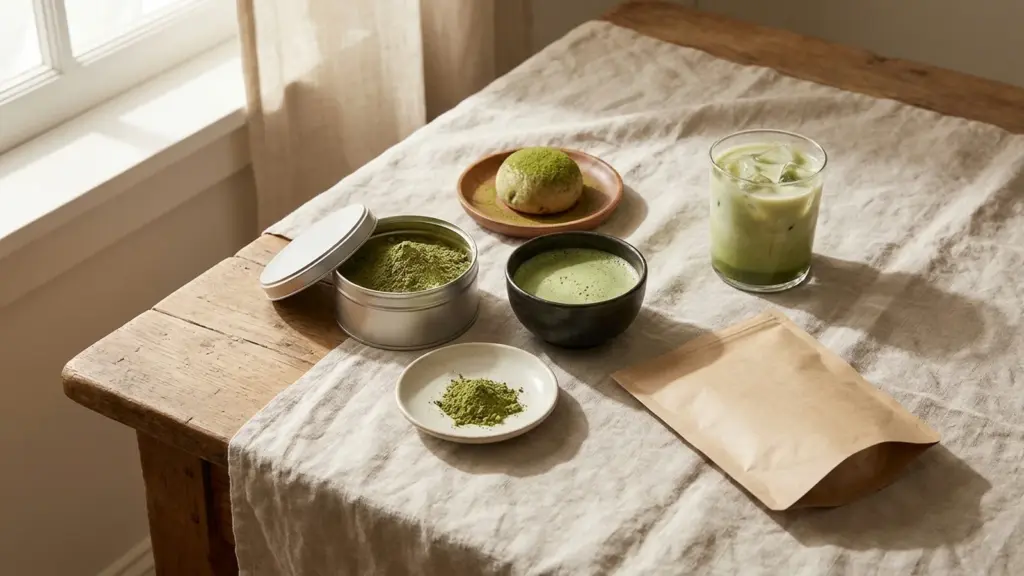
Matcha Products is this glossary’s umbrella for consumable matcha items and related preparation accessories. Its consumable forms include pure matcha powder, flavored blends, prepared foods, prepared drinks, and supplements that identify matcha as an ingredient. The accessories branch covers equipment, not edible tea. It does not treat every green tea product as matcha. Matcha traditionally comes from tencha: tea leaves cultivated under cover, steamed, dried without rolling, stripped of stems and veins, and ground into fine powder. Japan’s Ministry of Agriculture, Forestry and Fisheries describes matcha as tencha ground into powder in its overview of Uji tea.
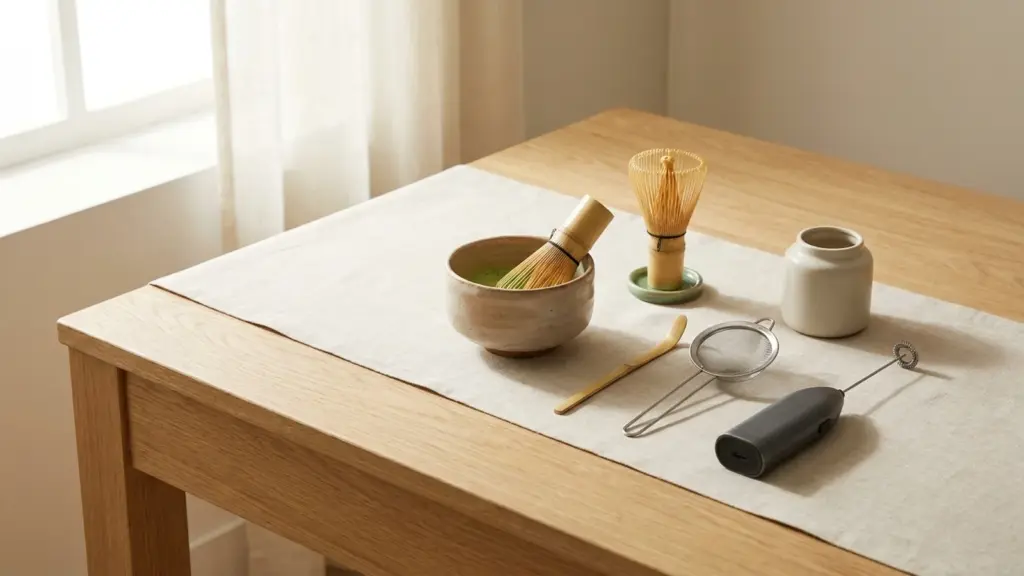
Within this umbrella, distinguish forms intended for consumption from the related accessories branch. Use matcha accessories for whisks, bowls, scoops, sifters, and other preparation equipment.
Pure matcha powder
Pure matcha powder contains matcha without added flavoring or another prominent ingredient. Product pages may identify origin, harvest, milling method, package size, or intended use. These details help describe product differences, but packaging language alone does not prove quality. A clear ingredient statement should identify what the product contains. For a single-ingredient powder, the ingredient list should name matcha or the applicable common name rather than rely only on marketing claims.
Ceremonial and culinary labels
Ceremonial and culinary are common commercial terms that sellers use inconsistently to describe intended use or market positioning. This page does not treat them as standardized quality grades. Shoppers should inspect ingredient statements, origin information, processing details, lot information, storage guidance, and intended-use claims instead of assuming either term guarantees a defined quality level.
Do not assume ceremonial always means higher quality or culinary means unsuitable for drinking. Flavor, bitterness, color, texture, freshness, preparation method, and personal preference matter. A useful comparison requires the full product description rather than label hierarchy alone. See matcha grades for label context and choosing matcha for comparison factors.
Flavored blends and prepared foods
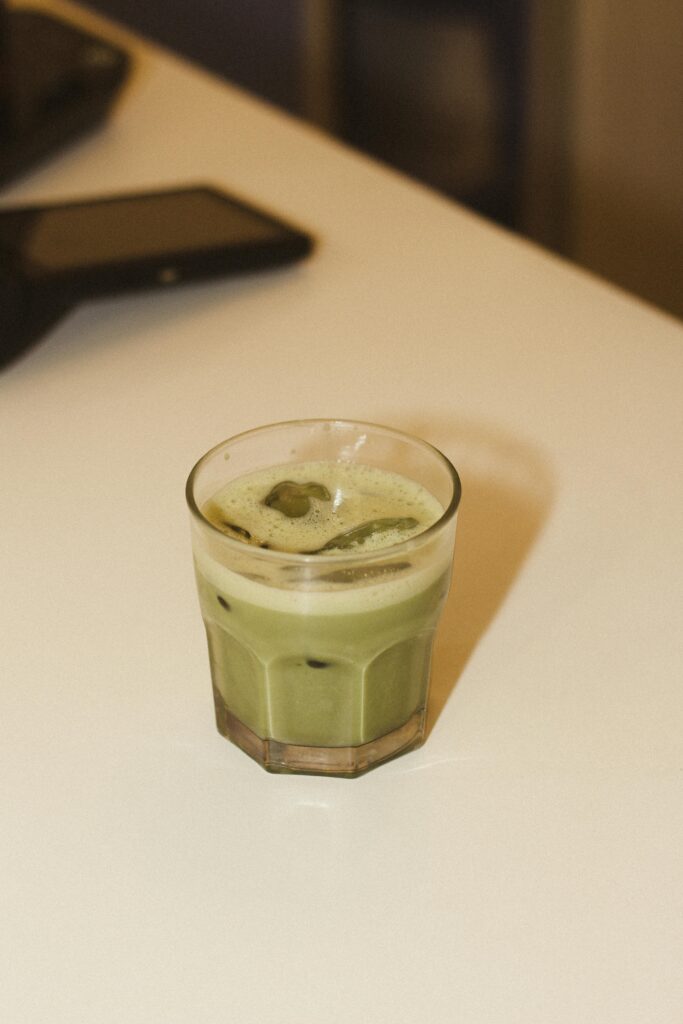
The Matcha Latte child entry covers a familiar prepared drink. It is distinct from the Matcha Accessories child entry: one describes a consumable beverage, the other equipment used around tea preparation.
Flavored matcha blends combine matcha with ingredients such as vanilla, sweeteners, spices, fruit flavor, or other tea and food components. Genmaicha with matcha combines matcha with roasted rice and tea. These products remain matcha products when matcha is a stated defining ingredient, but they are not equivalent to pure matcha powder. For U.S. foods covered by 21 CFR 101.4, required ingredients generally appear by common or usual name in descending order of predominance by weight, subject to stated exceptions. Dietary supplements follow additional presentation rules under 21 CFR 101.36.
Prepared foods and drinks can include matcha cookies, candy, chocolate, beverage mixes, bottled drinks, desserts, and other packaged or made-to-order items. Their matcha content can vary substantially. A product name, green color, or image cannot establish how much matcha it contains. Read the ingredient panel and product identity together. Ingredient order does not reveal an exact matcha percentage.
Supplements and label reading
Supplements belong in this matcha category when they identify matcha or a matcha-derived ingredient. A generic green tea powder or extract is not automatically matcha; check its actual ingredient identity. Supplements differ from ordinary tea powders because their label format, serving information, ingredient presentation, and product claims may differ. This page does not assess health effects or recommend supplement use. It only establishes classification and provides label-reading context.
Check serving size, ingredient list, added sweeteners, flavorings, allergens, caffeine disclosures where provided, and manufacturer information. U.S. dietary-supplement labels use the Supplement Facts framework in 21 CFR 101.36, subject to applicable exemptions. Dietary ingredients have specific naming and presentation rules, and readers should inspect both declared amounts and any proprietary-blend information. Claims about purity, origin, grade, or benefits still need product-specific evidence.
Matcha products versus accessories
Whisks, bowls, scoops, strainers, electric frothers, storage containers, and cleaning tools help prepare or store matcha and belong to the related accessories branch of this umbrella. They are equipment, not edible matcha ingredients. Find them under matcha whisk and tools or the broader matcha accessories entry. This separation keeps edible products distinct from equipment.
Beyond the defined consumable forms and preparation accessories, other merchandise requires product-specific review rather than automatic inclusion. A matcha-themed gift, cosmetic, scent, or non-edible item should not be classified as an edible matcha product solely because its name includes “matcha.”
Quality claims and practical comparison
Compare matcha products through evidence rather than hype. Review ingredient lists, origin statements, product form, intended use, packaging, storage instructions, batch or lot information, and seller disclosures. Bright green color can relate to chlorophyll, but appearance alone cannot verify freshness, authenticity, or flavor. Price alone cannot establish quality either. For claim review, see high-quality matcha and red flags in matcha marketing.
Classification answers what product is; it does not guarantee taste, safety, origin, grade, or performance. Keep those questions separate. Pure powder, flavored blend, prepared food, drink, and supplement each require different label checks. Product pages should state category, ingredients, form, and intended use clearly so readers can compare like with like.