What “Japanese matcha” tells you
Japan is an origin for matcha made in multiple tea-producing prefectures and regional systems. The phrase “Japanese matcha” can communicate national origin, but it does not by itself identify the prefecture, cultivar, harvest, shade period, quality tier, flavor, or intended use. Those are separate attributes that need more specific evidence.
From national origin to documented Japanese places
This page explains Japan-level origin, tencha, and regional-label boundaries. The locality pages answer narrower questions: Fukuoka covers the official Yame matcha initiative; Joyo documents direct tencha cultivation; Kasagi explains regional Uji tea geography without inventing town-specific matcha production; and Ujitawara owns the 1738 sencha innovation and its distinction from matcha.
Official material from Japan’s Ministry of Agriculture, Forestry and Fisheries (MAFF) gives a clear production example through Uji tea. It explains covered cultivation, distinguishes several Japanese tea categories, and describes the transformation of refined tencha into matcha. The example is authoritative for that documented system without turning Uji into a synonym for all matcha made in Japan.
The tencha-to-matcha route
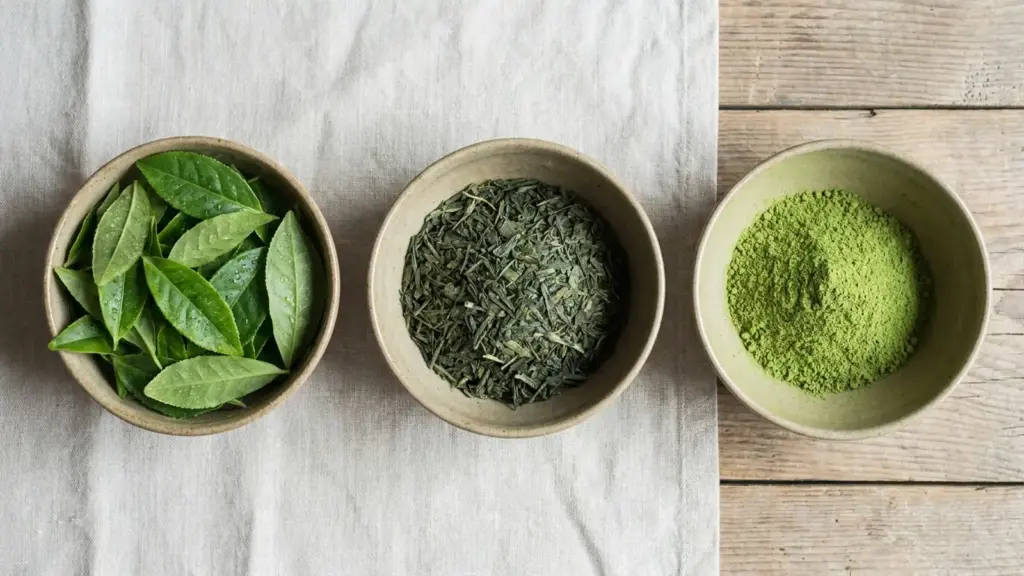
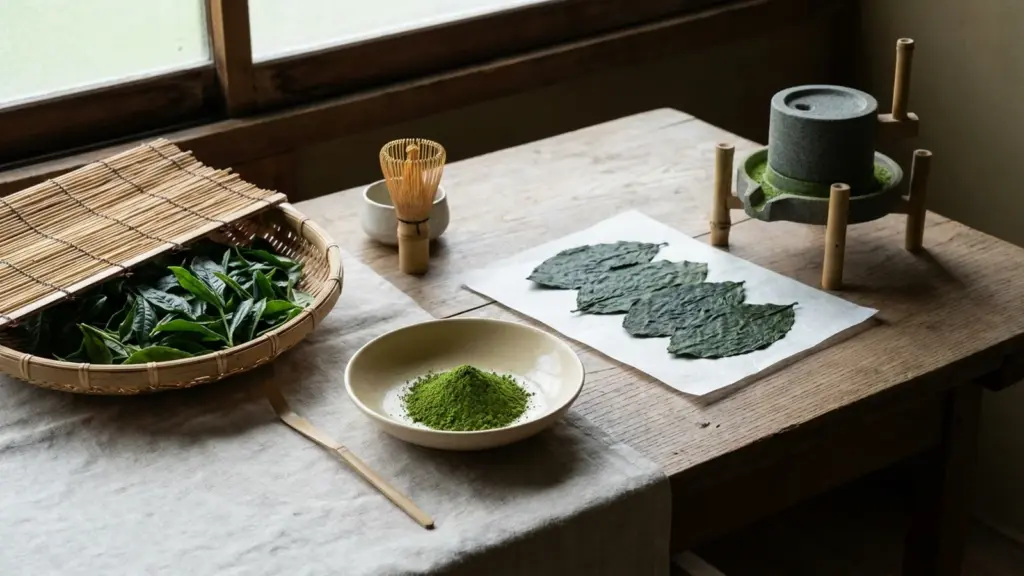
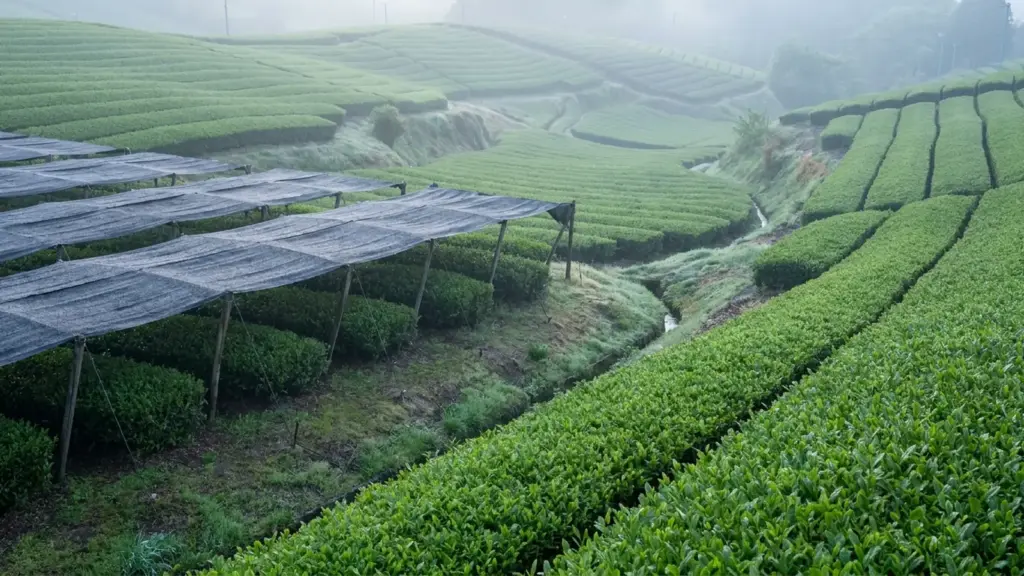
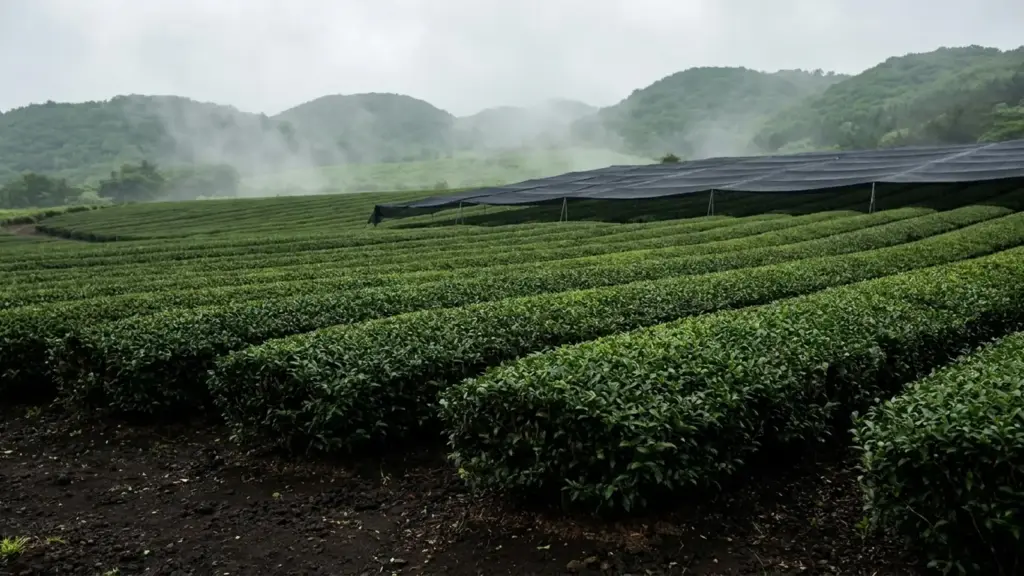
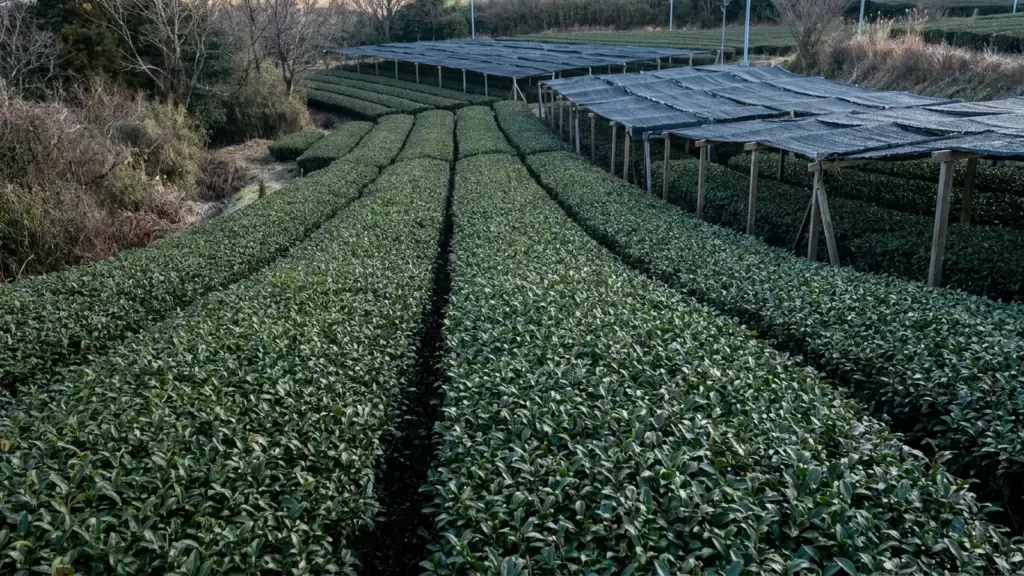
MAFF describes tencha as buds grown under oishita, or covered, cultivation, then steamed and dried without rolling. Stems and leaf veins are removed during refinement, and the resulting leaf material is ground into fine powder to make matcha. This route distinguishes matcha from a generic green tea that has simply been pulverized.
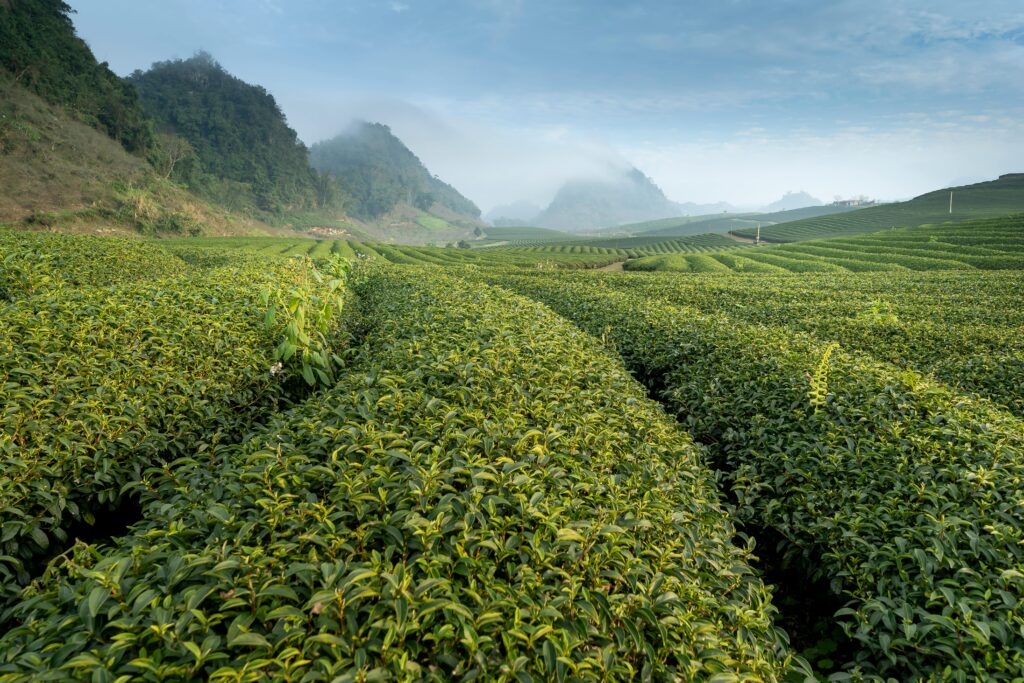
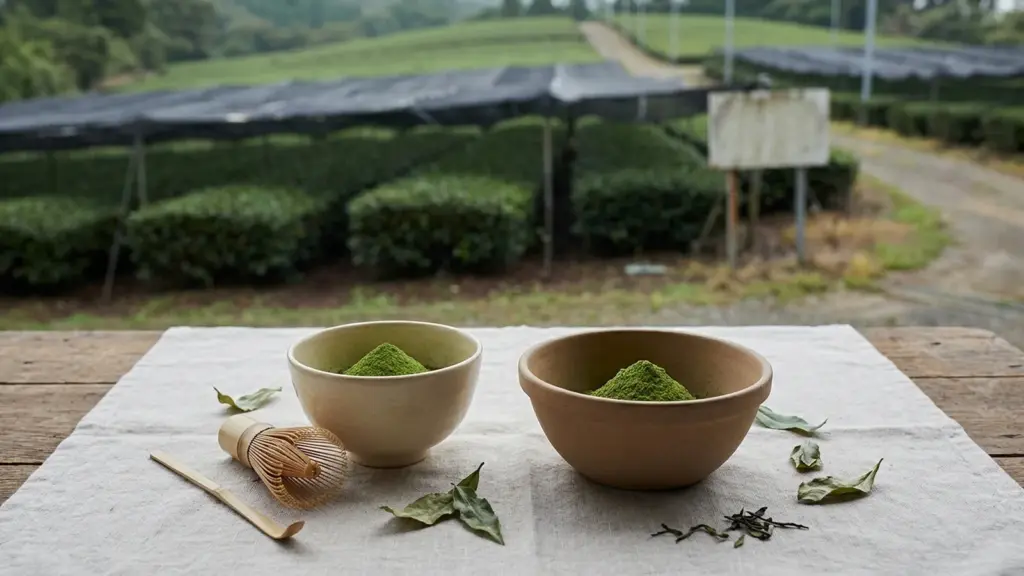
Covered cultivation reduces the leaves’ exposure to sunlight before harvest. The exact schedule and materials can vary by product and producer, so a national-origin page should not impose one universal number of days on every Japanese matcha. A seller making a precise shading claim should support it with product-level documentation.
Tencha, gyokuro, kabusecha, and sencha
MAFF lists tencha, gyokuro, sencha, and kabusecha as distinct tea types. Tencha is steamed and dried without rolling before refinement and grinding. Gyokuro is also made from covered buds, but the leaves are steamed, rolled, and dried for infusion. Kabusecha follows a covered route for fewer days in the Uji explanation and is likewise an infusion tea.
Sencha is different again: the MAFF page describes buds grown in open-air cultivation, then steamed, rolled, and dried. These processing distinctions matter more than the broad fact that all are Japanese green teas. Gyokuro should not be treated as matcha, and evidence about sencha or kabusecha cannot substitute for direct evidence about tencha and matcha.
Uji is one regional system, not all of Japan
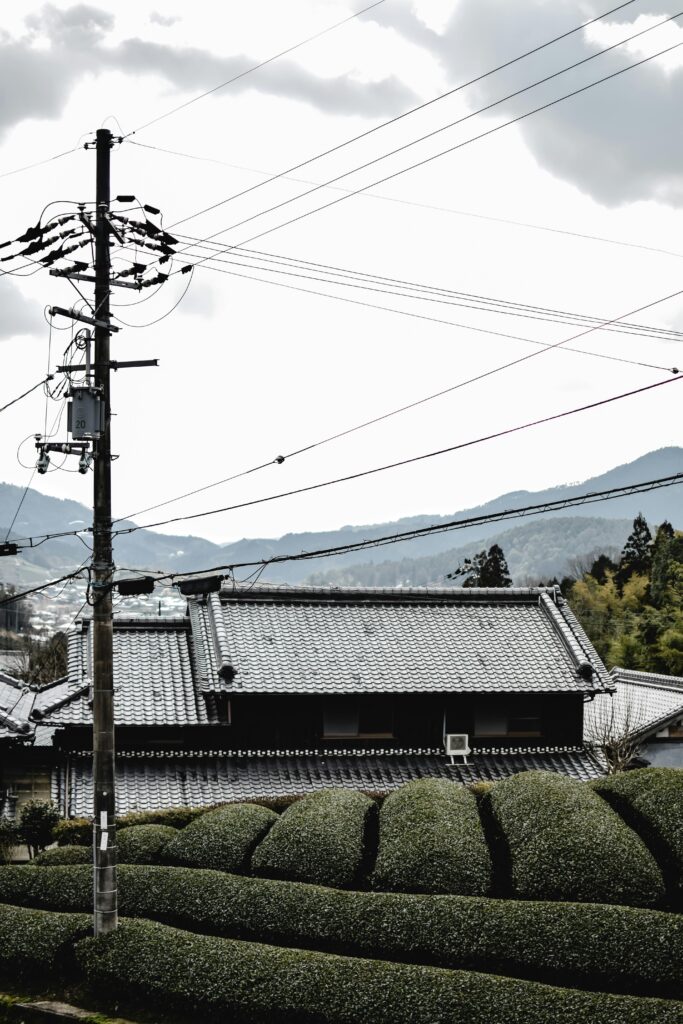
The ministry defines Uji tea as green tea made by Kyoto processors using a production method originating in the Uji region, with leaves produced in Kyoto, Nara, Shiga, and Mie prefectures. That definition shows why a regional name can include both raw-material geography and processing location. It also warns against assuming that the place printed most prominently on a label always answers every origin question.
Uji Matcha and Kyoto therefore deserve their own regional treatment. Other Japanese origins, including Fukuoka, Kagoshima, and Aichi or Nishio, should be described from their own evidence. Japan’s matcha landscape is regional, and no single prefecture establishes a universal national style.
Manufacturing location and leaf origin
MAFF’s processed-food origin-label guidance provides a useful narrow caveat. Its framework distinguishes a statement about domestic manufacture from the declared origin of the leading raw material. In other words, where a processed food was manufactured and where its principal ingredient originated are different questions.
The guidance is not a matcha-specific grading rule, so it should not be stretched beyond that point. For a matcha product, readers can look for an explicit leaf-origin statement, processing location, producer identity, and lot information. A phrase such as “made in Japan” should be read according to the label’s actual wording rather than assumed to guarantee Japanese-grown leaf without checking the origin declaration.
How to assess a Japanese regional label
Start with the exact label. Does it state Japan only, a prefecture, or a narrower regional name? Next, separate the origin of the leaves from the place of manufacture. Then look for process evidence: covered cultivation, tencha production, refinement, and milling. Finally, treat grades and tasting descriptions as product-specific claims, not automatic consequences of national origin.
This approach supports matcha authenticity while avoiding shortcuts. “Japanese” does not guarantee ceremonial grade, a particular color, low bitterness, stone milling, a single cultivar, or superior quality. Those claims require their own definitions and evidence.
National context versus product selection
This page explains origin and process vocabulary; it is not a shopping ranking. Regional pages can document local institutions and methods, while product pages can provide harvest, cultivar, testing, and preparation details. Keeping those levels separate lets readers compare Japanese matcha on traceable facts rather than prestige alone.