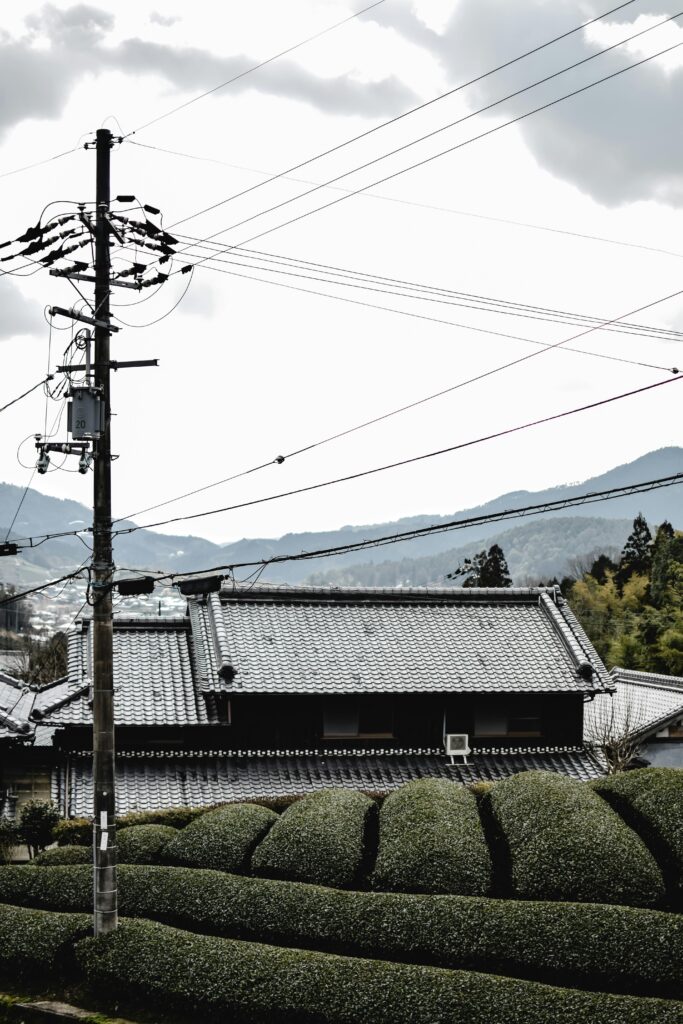
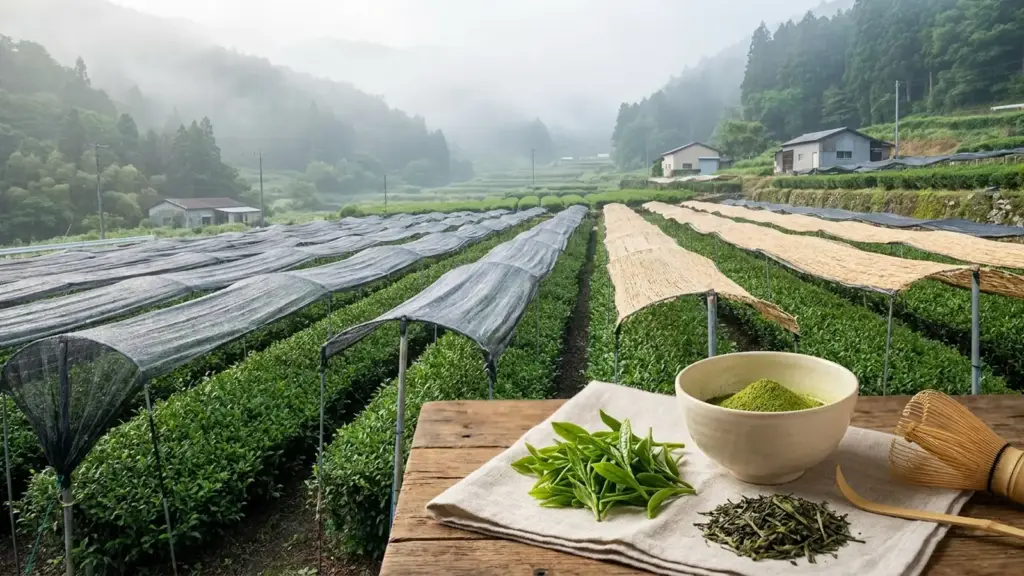
Shizuoka is a major Japanese tea region with more variety than a single national production ranking can convey. Plateau agriculture, mountain tea gardens, deep-steamed sencha and shaded teas all form part of its industry. A prefecture name supplies geographical context, but it does not identify the processing route or taste of every tea.
Plateaus, valleys and distinct tea districts
Shizuoka Prefecture’s account of the Shida-Haibara area identifies Kawane, Shimada, Fujieda and Makinohara among its tea districts. It describes the northern mountain gardens and the tea landscape along the Oi River, from Ieyama into Kawanehon. These place names provide a more useful starting point than assuming all Shizuoka tea grows on the same volcanic soil.
The same official account identifies Asahina, in the former Okabe area of Fujieda, with gyokuro and small-scale production of higher-value covered teas. Mountain and plateau districts need not share one harvest schedule or production style. Ask which district and product are meant when a label says only “Shizuoka tea.”
Sencha processing is not matcha processing
MAFF’s April 2022 profile of a Kakegawa producer gives a detailed example of deep-steamed tea manufacture. Leaves are steamed, cooled, rolled through successive operations and dried as aracha before sorting, firing and blending. The example explains a sencha production system; it should not be applied unchanged to tencha.
For matcha, the distinction is the unrolled tencha route. The prefecture’s regional page, updated in January 2023, reports increasing tencha production in its mountain areas. This documents an existing matcha-related activity without turning an older regional observation into a current national output estimate.
Chagusaba: grasslands linked to tea cultivation
The Traditional Tea-grass Integrated System in Shizuoka has been recognized by FAO’s Globally Important Agricultural Heritage Systems programme since 2013. Farmers maintain nearby semi-natural grasslands and use cut grass as mulch in tea fields. FAO describes links between this practice, soil protection and the conservation of grassland biodiversity.
That agricultural system is a specific feature worth understanding in its own right. It is not evidence that every tea sold under the Shizuoka name comes from a Chagusaba-managed garden. For a product-level claim, identify the farm or relevant production certification rather than extending a landscape designation to the entire prefecture.
How to interpret production claims
Tea-growing area, fresh-leaf harvest, aracha output and tencha output measure different things. Rankings and shares also change with the year. This entry does not assign Shizuoka a current national rank or a fixed percentage of Japan’s tea; an undated “largest” or “40%” statement obscures those distinctions.
For choosing tea, more useful details are the district, cultivar, harvest and manufacturing method. Compare deep-steamed sencha with other sencha, and matcha with other matcha. Neither the prefecture’s scale nor a broad regional tasting stereotype can determine whether a particular lot will suit your bowl or brewing preferences.