

Anatae is a French matcha brand founded in 2019 that sources organic tea directly from three Japanese prefectures: Nishio, Kagoshima, Shizuoka. Its matcha range is purpose-built—from ceremonial to culinary—with blends tailored to each use.
The ceremonial grade relies on ichibancha leaves shaded for three weeks with black sheets—tana shading—and stone-ground to a fine 10‑micron powder after steaming and drying. Anatae works with multi‑generational farmers like Kana’s family in Nishio; their pesticide‑free tencha helped the brand earn the Meilleur Produit BIO award.
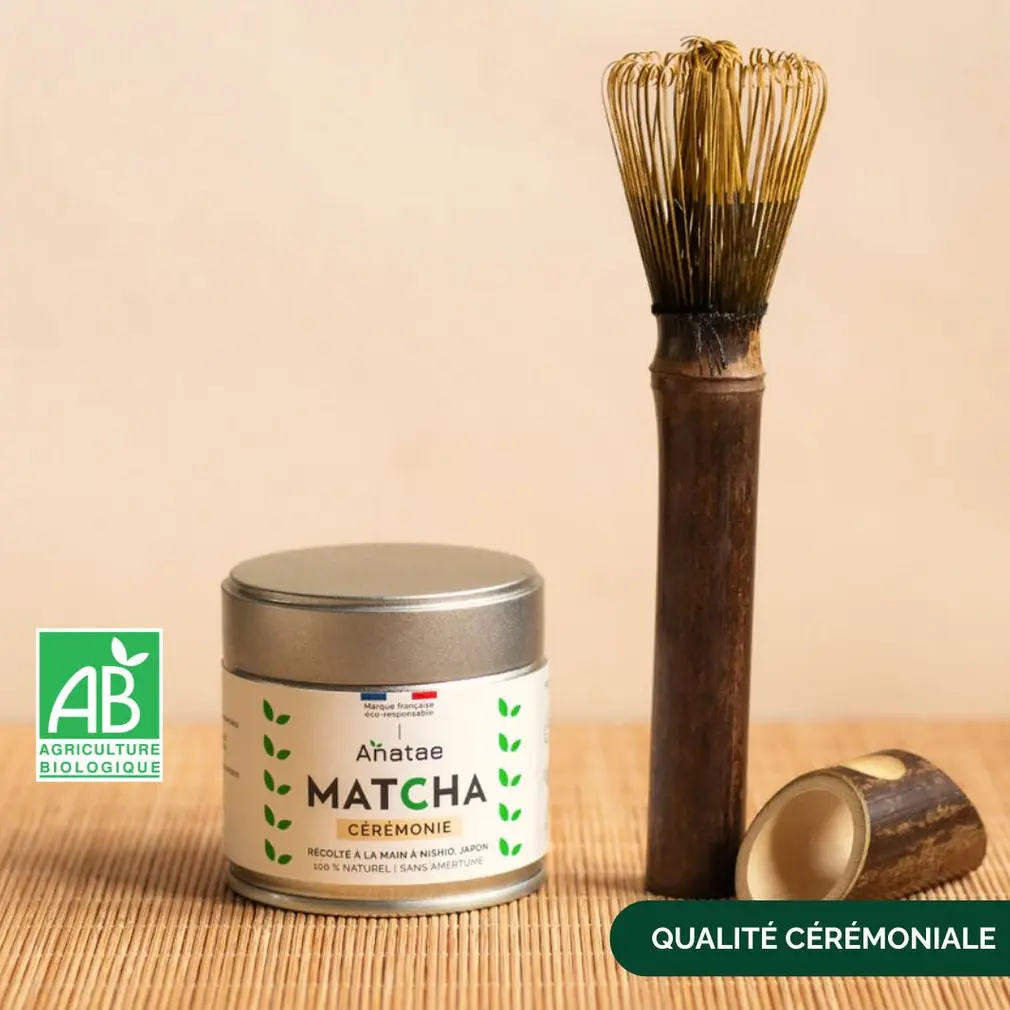
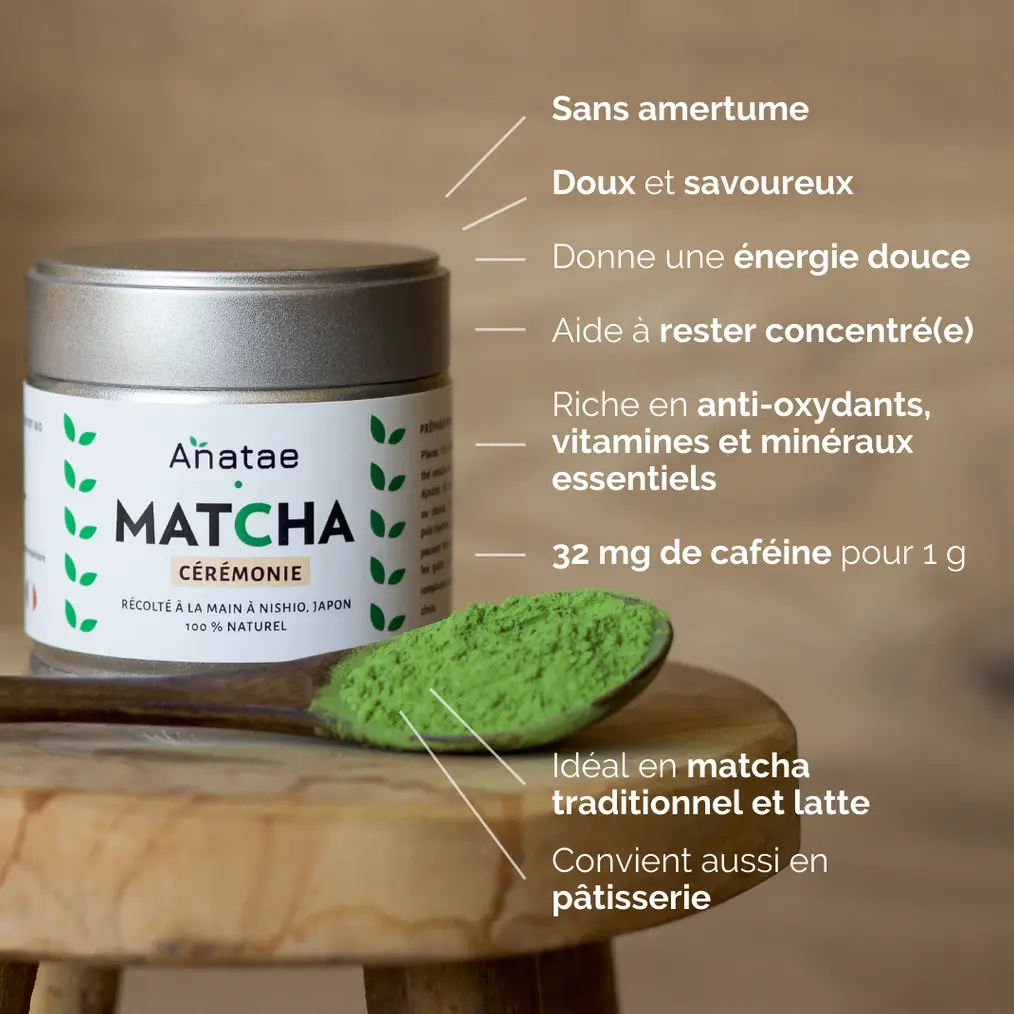
Anatae Organic Ceremonial Matcha and Long Bamboo Chasen Kit pairs a 30 g tin of Japanese matcha with a long bamboo whisk and small drying stand. Matcha comes from Nishio in Aichi, Japan, uses Yabukita cultivar, and is made from spring ichibancha, meaning first harvest. Its taste is described as mild, vegetal, fresh, and free from bitterness. Kit supports traditional water-based matcha, matcha lattes, and no-bake pastry use.
Kit contains organic ceremonial matcha made from 100% green tea powder and a bamboo chasen with an extended handle. Matcha tin holds 30 g, equal to about 30 bowls at stated serving of roughly 1 g per cup. Opaque, airtight tin protects powder from light and moisture.
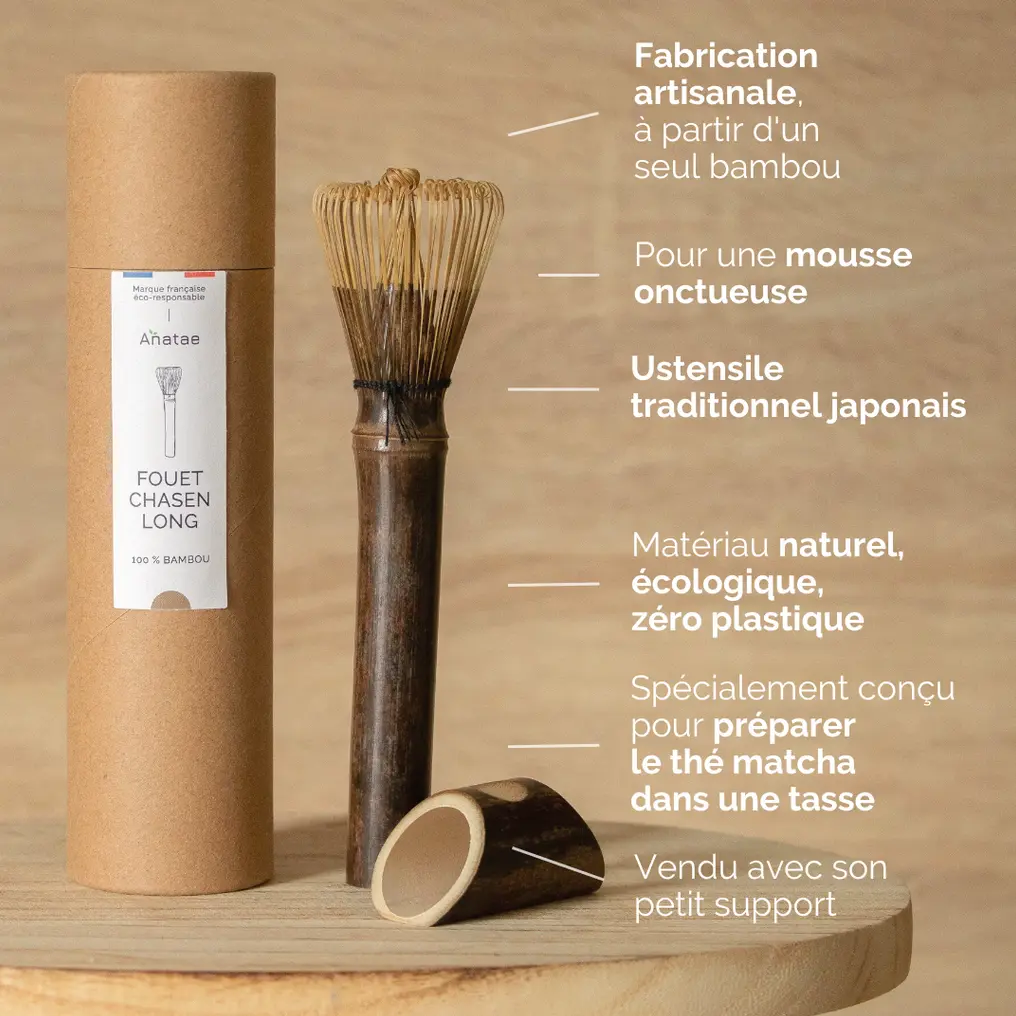
Long chasen is designed for narrow vessels such as cups and glasses. Its extended handle distinguishes it from short chasen traditionally used with matcha bowl, known as chawan. Long version produces foam similar to short whisk while helping disperse clumps.
Place one level teaspoon of matcha in cup or glass. Add small amount of water no hotter than 70–75°C (158–167°F), then whisk briskly in M or W motion. Fine, creamy foam should form after about 20 seconds. Add more water for traditional matcha or milk for matcha latte.
Format suits beginners, tea drinkers, gift buyers, and anyone who wants to prepare matcha directly in cup rather than chawan. Matcha can also be used in no-bake pastries. Short-chasen versions exist both with and without presentation box.
Close matcha tin after each use and keep it away from light, moisture, ovens, heaters, and other heat sources. Refrigeration is suitable when indoor temperature exceeds 24°C (75°F).
Rinse long bamboo chasen with cold water without cleaning product. Use soft brush if stains develop. Leave whisk to air-dry in dry place, either upright with tines facing up or resting on included stand. Do not return damp whisk to protective case because trapped moisture can promote mold and affect drink taste. Recycled and recyclable cardboard packaging protects whisk during delivery but is not intended for storage. Tines may begin to weaken after about 300 uses, indicating replacement time.
Kit includes 30 g of organic ceremonial matcha, long bamboo chasen whisk, drying stand, and protective cardboard packaging. Matcha tin is opaque and airtight.
Matcha comes from Nishio in Aichi, Japan. It uses Yabukita cultivar leaves from spring’s first harvest, called ichibancha, and is harvested and produced by hand.
Matcha has no bitterness, with mild, vegetal, and fresh notes. It contains 100% green tea matcha powder.
Place one level teaspoon of matcha in a cup or glass, add a little water at no more than 70–75°C (158–167°F), then whisk briskly in an M or W motion. A fine, creamy foam should form after about 20 seconds. Add more water for traditional matcha or milk for a matcha latte.
Kit supports traditional water-based matcha, matcha lattes, and no-bake pastry recipes. Long handle fits preparation directly in a cup or glass.
Long chasen has an extended handle for whisking matcha in a cup, glass, or other narrow container. It measures 15 cm long and 4 cm across at the tines. Short chasen is traditionally used with a matcha bowl, called a chawan; both produce similar foam without lumps.
30 g tin makes about 30 bowls at roughly 1 g of matcha per serving.
Close matcha tin after each use and keep it away from light, moisture, and heat. Refrigerate it if indoor temperature exceeds 24°C (75°F). Rinse whisk with cold water without cleaning products, remove marks with a soft brush, and air-dry it upright or on its stand outside its case. Tines may weaken after about 300 uses, indicating replacement time.