Uji Is a Region, Not One Cultivar
There is no single formal tea cultivar named simply “Uji” behind all Uji matcha. In this context, Uji identifies a historic tea-producing origin in Kyoto Prefecture, while a cultivar identifies a cultivated plant variety with inherited characteristics. The phrase Uji Tea Cultivars is useful as a category for varieties bred, selected, or strongly associated with Kyoto’s covered-tea tradition, but it should never be shortened in a way that implies Uji itself is a cultivar.
Kyoto cultivar pages by documented tea use
The individual entries keep breeding history and intended tea use separate. Ujihikari has direct official tencha and gyokuro relevance. Komakage is a historic Kyoto recommended cultivar whose naming and status require careful wording. Ujimidori and Houshun are documented primarily for gyokuro, so their pages do not turn that evidence into automatic matcha claims. For national registered sencha cultivars outside this narrower Uji group, compare Kanayamidori and Sayamakaori.
This page is about plant identity: which named varieties are grown, how they differ, and why Kyoto-developed cultivars matter for tencha and gyokuro. For geography, regional history, terroir, and production-origin claims, use the separate Uji Matcha glossary page.
Why Kyoto-Bred Varieties Matter
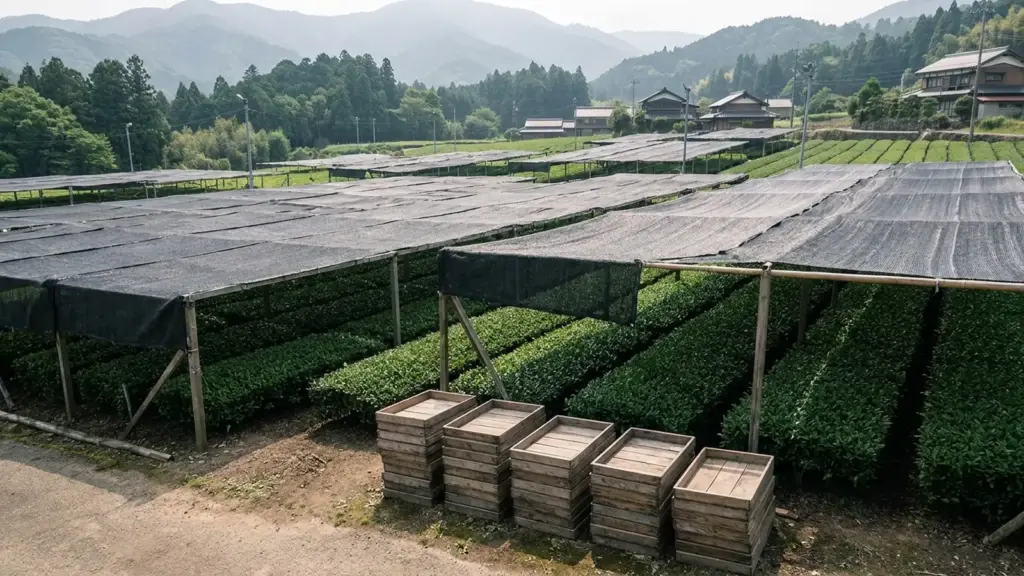
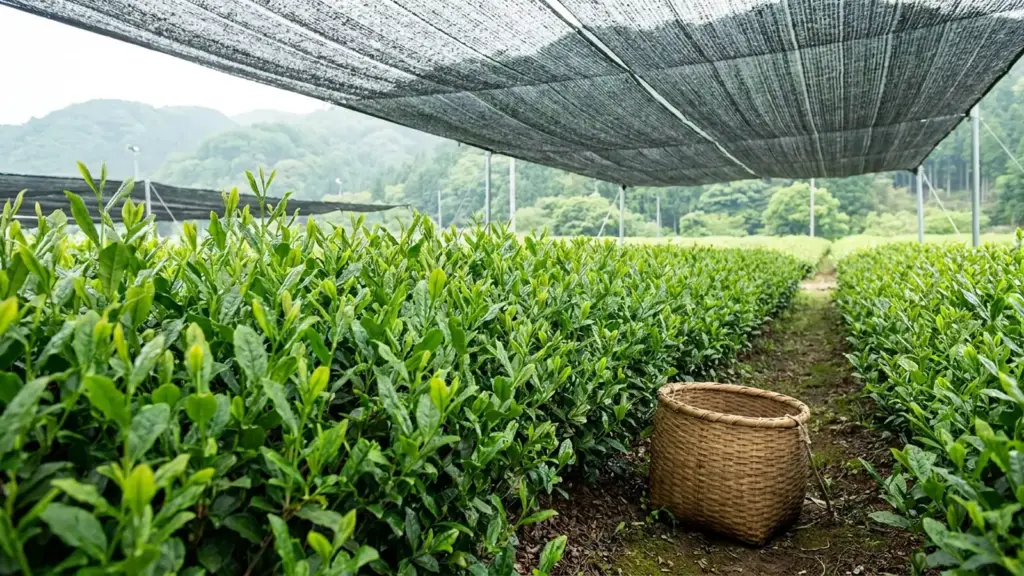
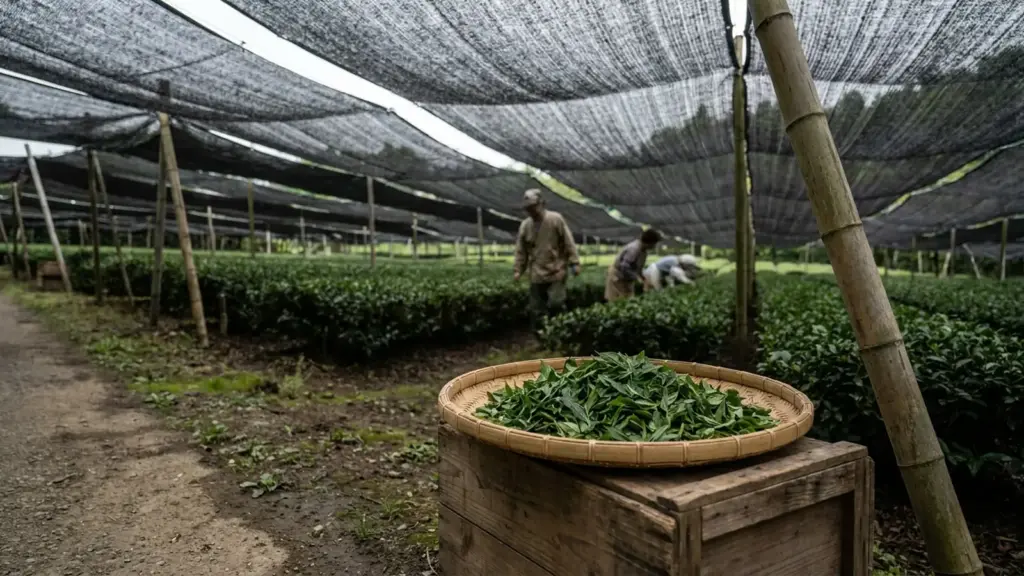
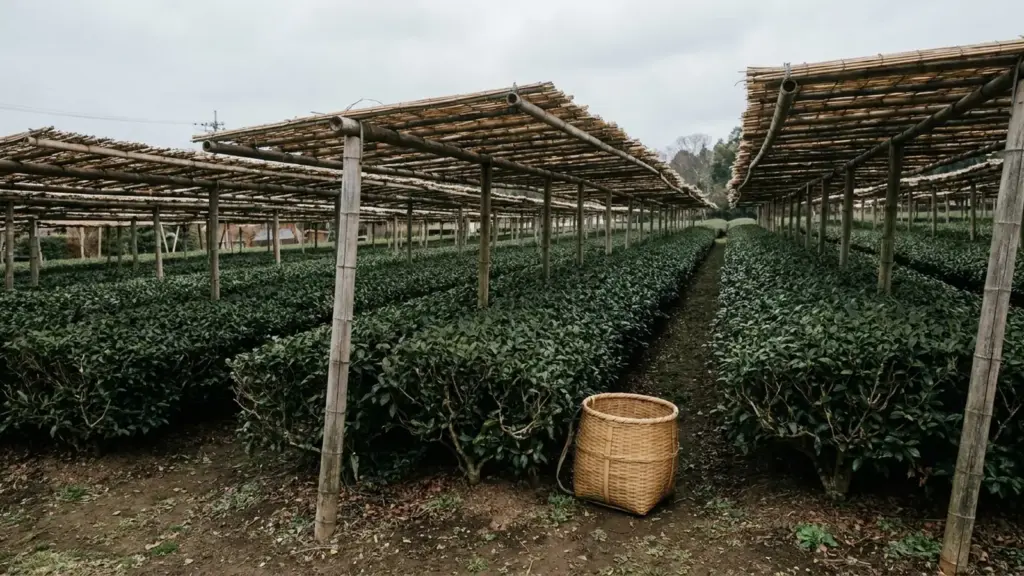
Kyoto Prefecture’s Tea Industry Research Institute explains that most green-tea cultivars developed in Kyoto were intended for covered teas, especially tencha and gyokuro. These varieties help producers build distinctive Uji tea styles in a national landscape where Yabukita occupies a large share of cultivated tea acreage. Selection for covered production can involve harvest timing, shoot shape, growth habit, yield, leaf color, aroma, taste, and suitability for intensive hand-picked or machine-harvest systems.
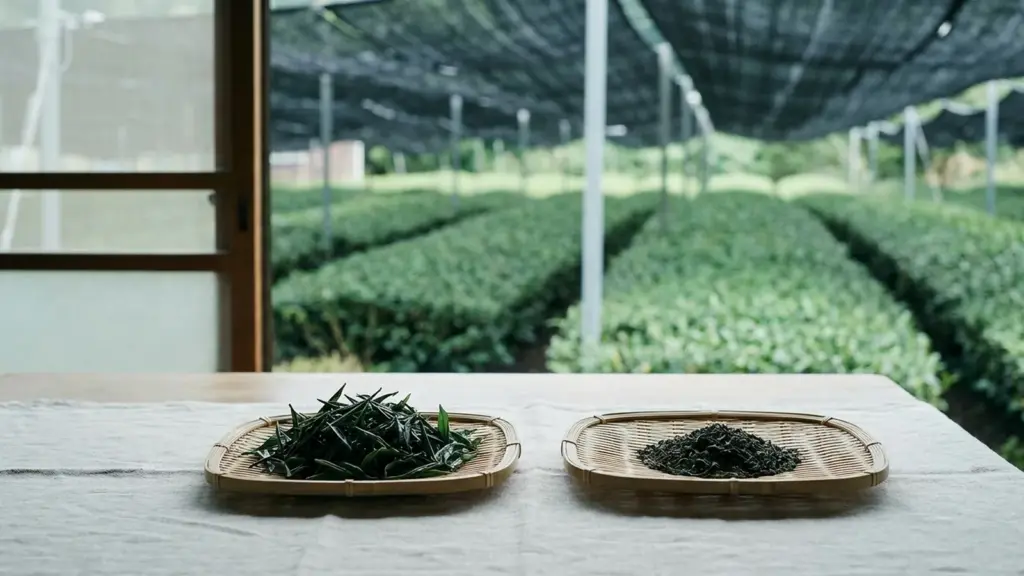
A cultivar does not determine quality by itself. Garden conditions, plant age, shading, nutrition, harvest date, plucking standard, steaming, drying, refining, storage, and milling all affect the finished tea. Cultivar information is most useful when it complements origin and production records rather than replacing them.
Important Uji-Associated Cultivars
Asahi
Asahi was selected from local Uji seed-grown tea material and is especially valued for tencha. Kyoto Prefecture describes it as particularly excellent for tencha and frequently used for competition teas. Its reputation belongs to the named cultivar Asahi, not to a generic “Uji cultivar.”
Samidori
Samidori was also selected from Uji local tea material. The Kyoto cultivar guide describes pale, glossy new shoots and strong tencha quality, including attractive color and aroma. It is one of the varieties closely associated with high-end covered-tea production in Kyoto.
Ujihikari
Ujihikari was developed by Kyoto’s tea research institute. Official cultivar notes describe quality for both tencha and gyokuro, with bright appearance and finely formed processed leaf. Although its name contains “Uji,” the full cultivar name is Ujihikari; it should not be reduced to Uji.
Gokou
Gokou was selected from Uji local tea material and is strongly associated with gyokuro. Kyoto Prefecture notes its characteristic aroma and use for competition gyokuro. Producers may also use Gokou in matcha, but that use should be stated as cultivar and product information rather than inferred from the word Uji alone.
Ujimidori
Ujimidori was selected by Kyoto’s tea research institute from Uji local tea material. The official guide emphasizes its gyokuro quality in both appearance and internal character. As with Ujihikari, Ujimidori is a complete cultivar name, not evidence that a cultivar called Uji exists.
Other Kyoto Covered-Tea Cultivars
The Kyoto guide also discusses newer institute-bred cultivars such as Tenmyou for tencha and Houshun for early-harvest gyokuro. Their inclusion shows that Uji-associated cultivar history is not limited to five famous names. The category can expand as breeding, registration, and production practices evolve, while each cultivar retains its own formal name and documented traits.
How to Read Cultivar Information on Matcha
When a matcha is described as Uji and single-cultivar, look for two separate facts: the documented Uji-area origin and the named cultivar. “Uji matcha made from Samidori” communicates both dimensions. “Uji cultivar matcha” is ambiguous because it may collapse a place and a plant into one unsupported claim. For blends, producers may list several cultivars or explain that the composition is proprietary.
Use cultivar names to compare plant material, harvest behavior, and sensory tendencies, while remembering that the finished cup reflects the entire cultivation and processing chain. This page is the canonical entry for cultivar intent; the Uji Matcha page remains canonical for origin intent.