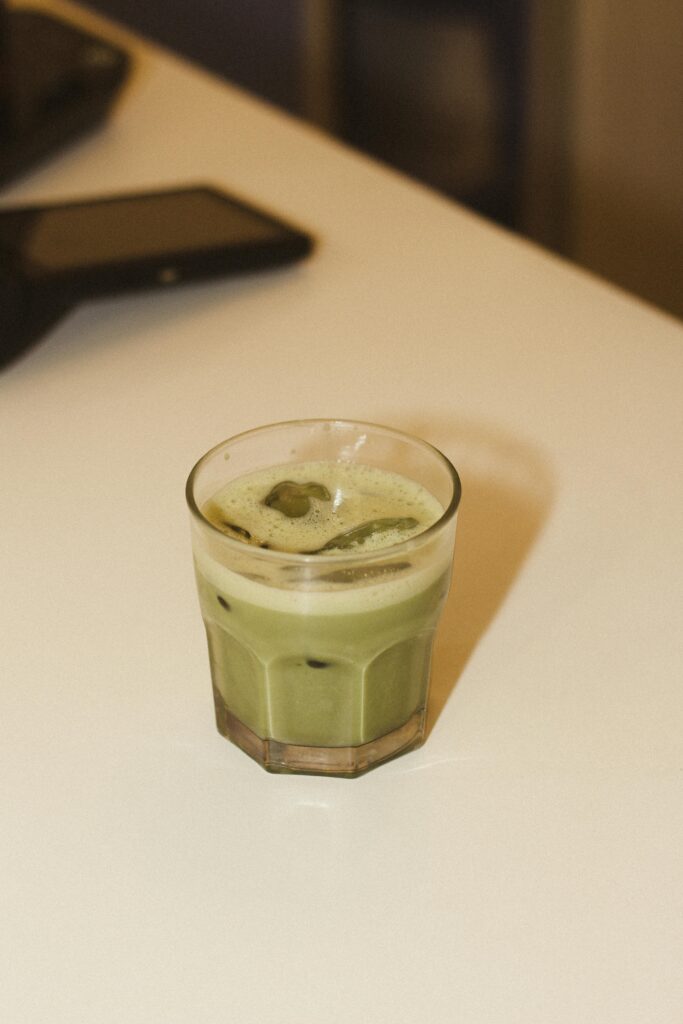
What makes a Matcha Latte?
The drink combines powdered green tea with milk or a plant-based alternative. Water is commonly used to mix the powder first; sweetener is optional. Unlike a coffee latte, it does not require espresso. Coffee is an additional variation, not part of the basic definition.
The category includes hot and iced versions. No single cup size or powder-to-milk ratio defines it. Distinguish tea dose, mixing water, milk and ice when comparing recipes: the same powder dose can yield different final concentrations.
A published preparation example
Ippodo’s Matcha Latte recipe calls for 3 g sifted matcha, 90 ml water at 80°C and 15 seconds of whisking, followed by milk or soy milk. The milk quantity can be adjusted to preference. This is a producer recipe, not a compulsory formula.
Its Kan-no-shiro latte guidance also names almond milk and recommends sifting for smoothness. The workflow is to break up dry clumps, mix the tea base, then add the chosen milk and stir.
Smooth mixing is not dissolution
Matcha includes ground leaf particles dispersed through liquid. A smooth base is not a completely dissolved solution. If dry clumps remain, check sifting and mixing before hiding them in a larger drink.
For an iced adaptation, a whisked base can be combined with cold milk and ice. Account for water from melting ice. This does not prove that hot mixing is the only valid method or that cold drinks have a fixed reduction in umami or nutrients.
Choosing milk
Milk and plant-based drinks vary in sweetness, body and flavor. Read the actual carton’s ingredient and nutrition labels, particularly when comparing sweetened and unsweetened versions. Try the same base with different milks before changing powder dose, so the source of the difference is clearer.
For heating or foaming, follow the product and equipment guidance. One steaming temperature cannot cover every plant-based formulation. Allergy needs concern actual ingredients and handling, not just the menu name.
No required grade or guaranteed winner
Producer recommendations for particular teas are more useful than treating ceremonial, premium and culinary as a universal hierarchy. A powder sold for water-only drinking is not automatically wasted in milk; one sold for cooking is not automatically best for every latte.
If tea disappears behind the milk, adjust dose or milk quantity one at a time. If flavor is unpleasant, assess the actual tea, storage and recipe rather than assuming a nutrient was destroyed or every bitter sample can be fixed by a grade label.
Nutrition follows the ingredients
Milk, plant drinks and sweeteners change the finished drink. Use product labels and actual quantities rather than a universal calorie table. Milk does not make tea caffeine-free. This preparation guide claims neither superior antioxidant absorption from a particular milk nor guaranteed sustained energy.
Sources and scope
Matcha Latte – Preparing Tea (Ippodo Tea). Preparing matcha latte with Kan-no-shiro (Ippodo Tea).