Matcha Quality Terms: Taste, Texture and Their Limits
Definition of Matcha Quality Terms
22 terms related to Matcha Quality Terms







Learn more



Frequently asked questions
Ceremonial grade usually means matcha offered for drinking with water, but it does not certify a fixed quality level or harvest method. Ippodo avoids the term while selling matcha used in ceremonies. Evaluate the particular product’s preparation recommendation and taste description instead of assuming every such label guarantees first-flush leaves or zero bitterness.
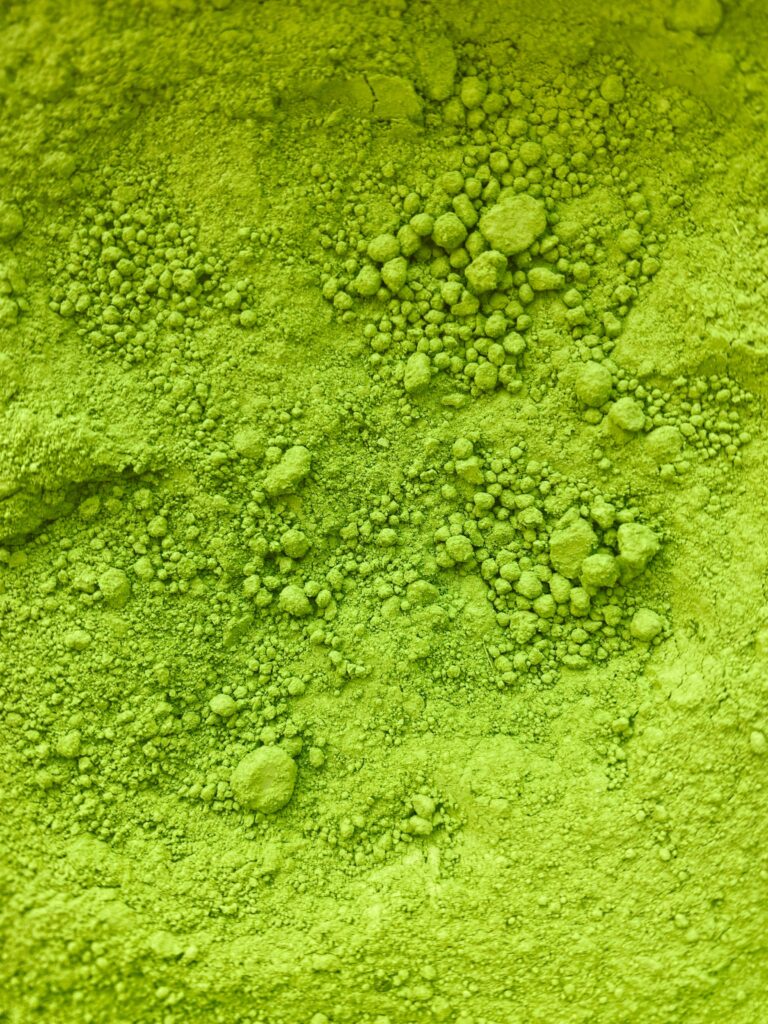
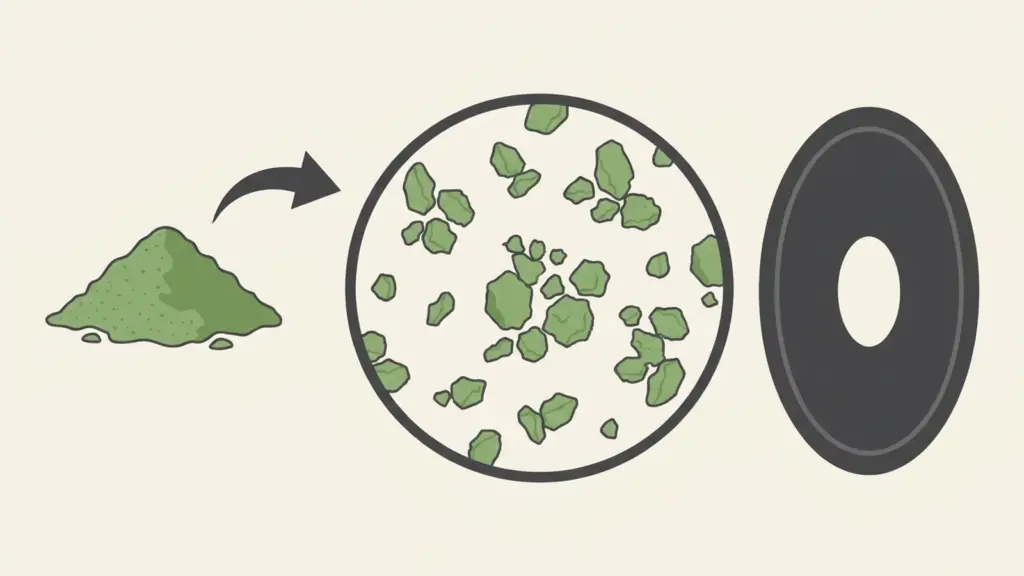
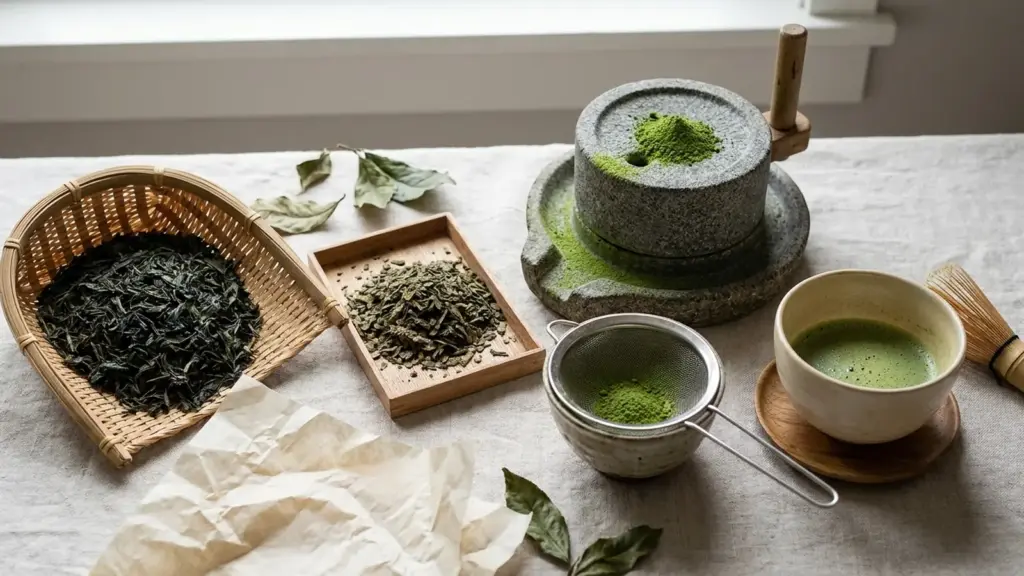
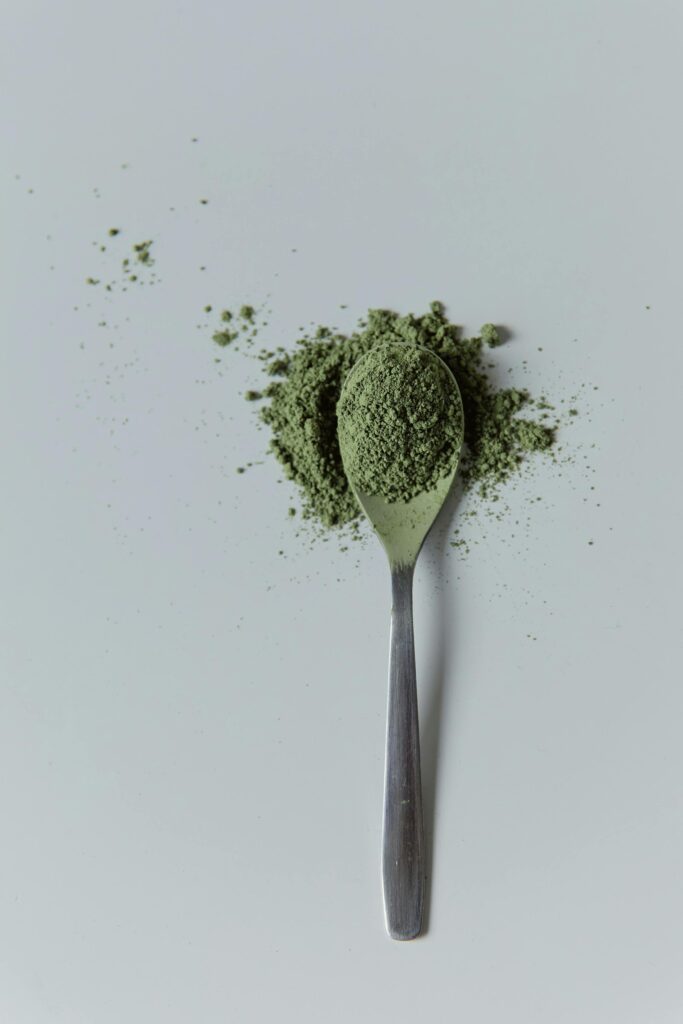
Particle characteristics matter to how powdered tea mixes and feels, but a smooth bowl does not establish complete dissolution or a measured particle size. Matcha is powdered leaf, distinct from extracted instant tea. Sift natural clumps before assessing texture, and do not infer a universal stone-versus-machine quality ranking from a grade label.
Umami describes savory character that helps explain the balance of a matcha, rather than simply calling it strong. The Umami Information Center identifies glutamate as an umami contributor in green tea. A savory impression cannot determine an exact theanine concentration, shading duration or production date without separate evidence from the producer or appropriate measurement.
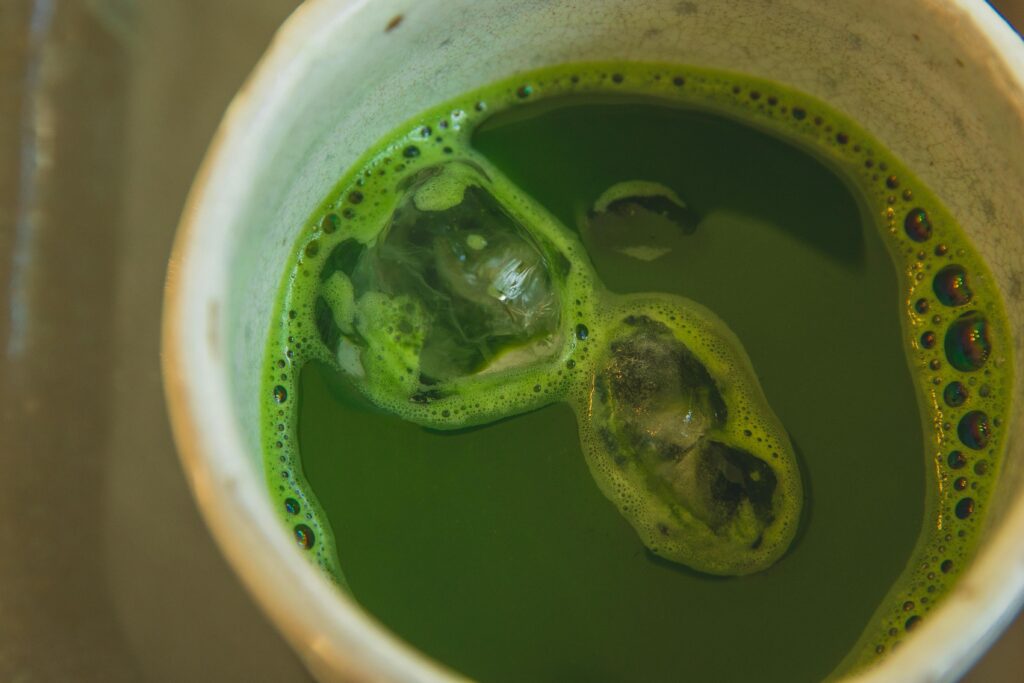
No. Color changes can be a clue to handling or deterioration, but appearance alone cannot identify oxidation as the cause. The Kyoto tea chamber describes light, temperature and storage as influences on tea quality. Consider the product’s history and aroma as well, without treating a photograph as a diagnostic test.
Prioritize suitability for your intended preparation, then compare taste balance and texture under consistent conditions. Record aroma, umami, bitterness and drying astringency separately rather than ranking by green intensity alone. Check ingredient and sourcing information independently: color cannot verify a harvest, and natural clumps are not by themselves proof of a defect.