Traditional Japanese Preparation Styles
Matcha Preparation Terms distinguish the drink’s consistency, the implements used to make it and the procedure followed when serving guests. Start with usucha and koicha: these describe thin and thick tea, not two different tea plants.
Usucha: Thin Tea
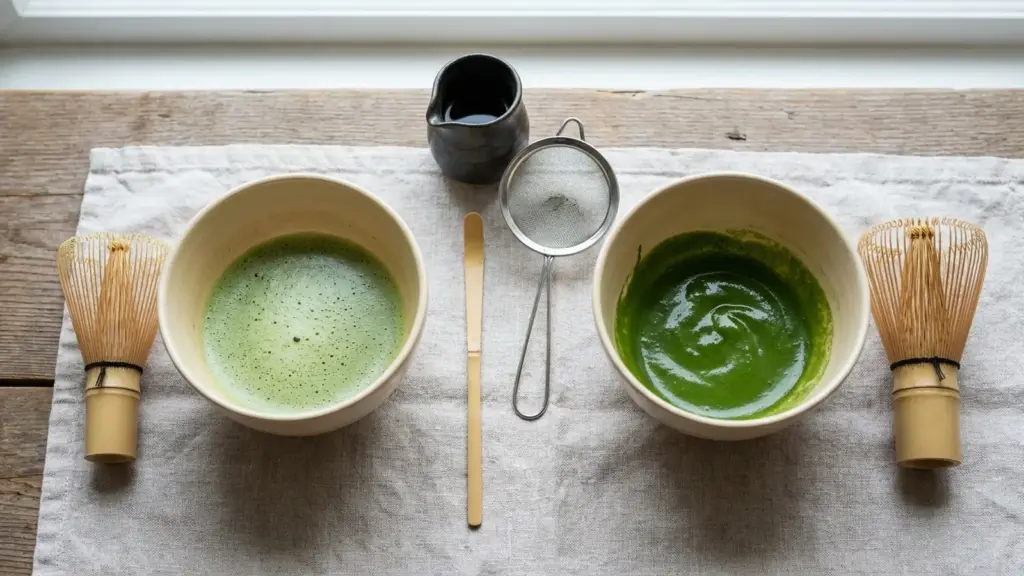
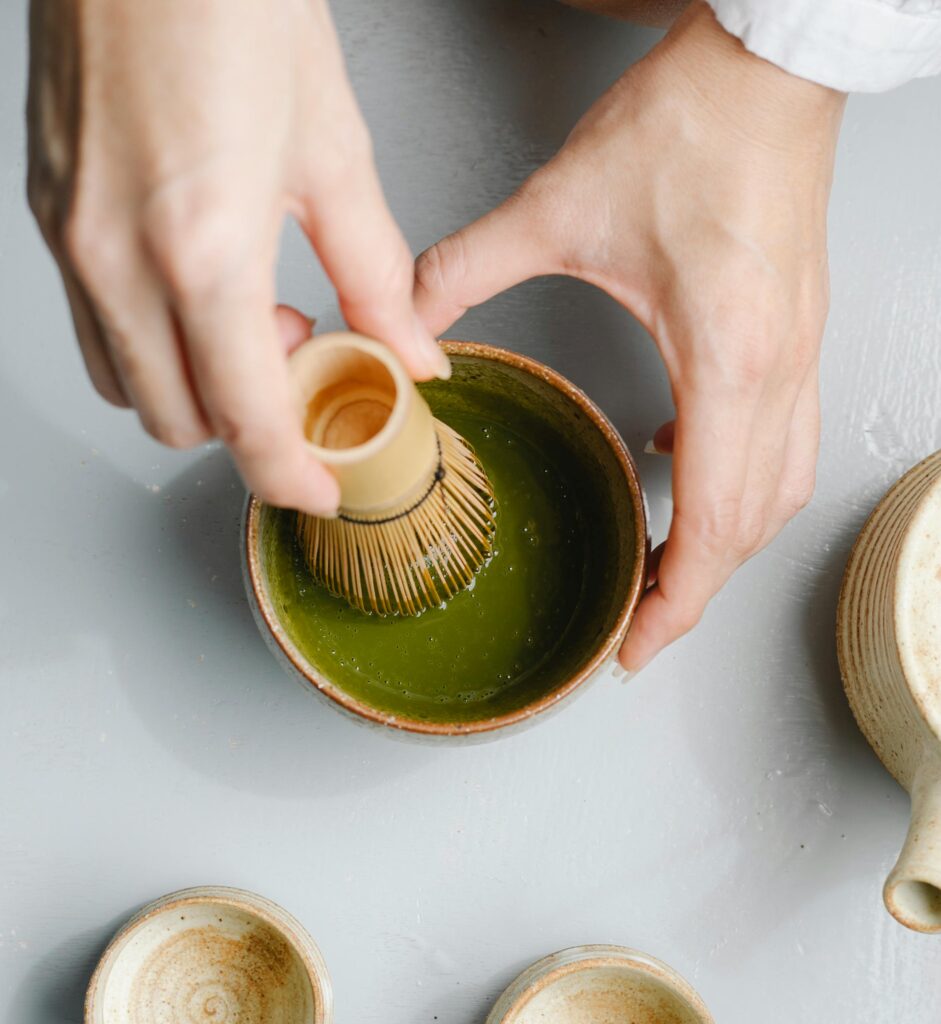
Usucha (薄茶) is prepared by whisking matcha with hot water. Omotesenke’s glossary describes one and a half tea scoops for its thin-tea preparation. A scoop is a utensil measure, not a universal gram weight; shape and how it is filled affect the amount. For repeatable home testing, weigh the powder rather than assuming each scoop holds exactly one gram.
Recipes using around 1.5–2 grams with 70–100 milliliters of water can be treated as home starting points, not a rule defining usucha. Adjust to the maker’s guidance and your preferred strength. Likewise, a suggested water temperature or a thirty-second whisking time is a recipe choice rather than part of the word’s meaning.
Koicha: Thick Tea
Koicha (濃茶) uses more powder relative to water and is kneaded rather than rapidly aerated. Omotesenke describes three tea scoops per person and compares the consistency to arrowroot broth. Its glossary places thick tea at the center of a formal chaji and describes sharing a bowl among guests. Follow the host or teacher’s current instructions at an actual gathering.
The concentrated preparation makes choosing an appropriate tea important, but “highest grade” is not a measurable definition of koicha. Ask whether the producer recommends that product for thick tea. Do not assume that every product called ceremonial grade is intended for the same preparation.
Essential Tools and Their Purpose
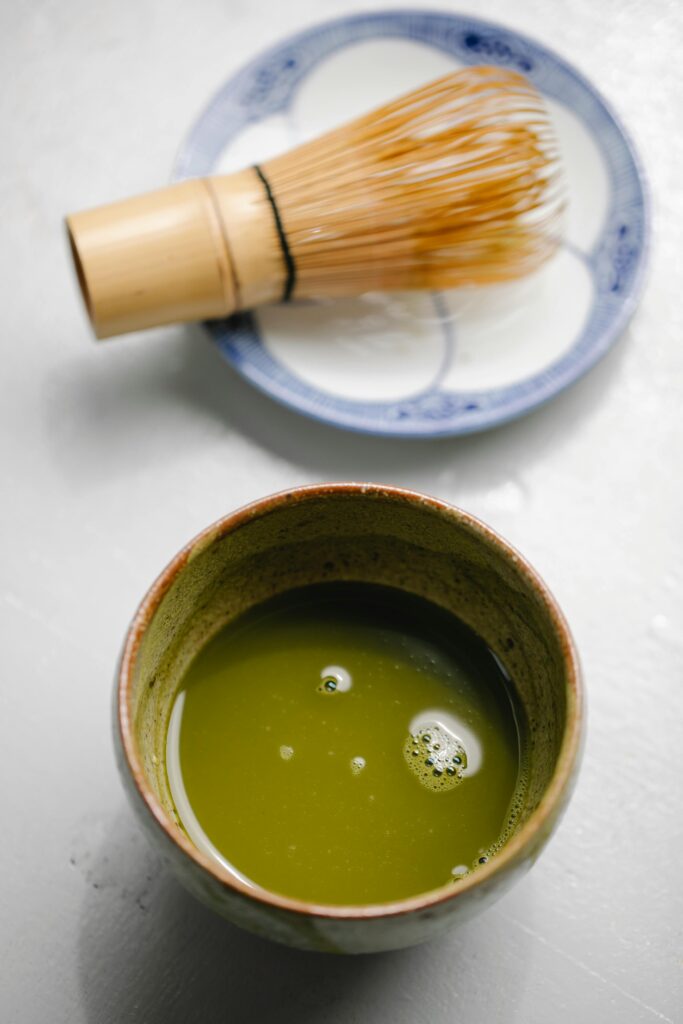
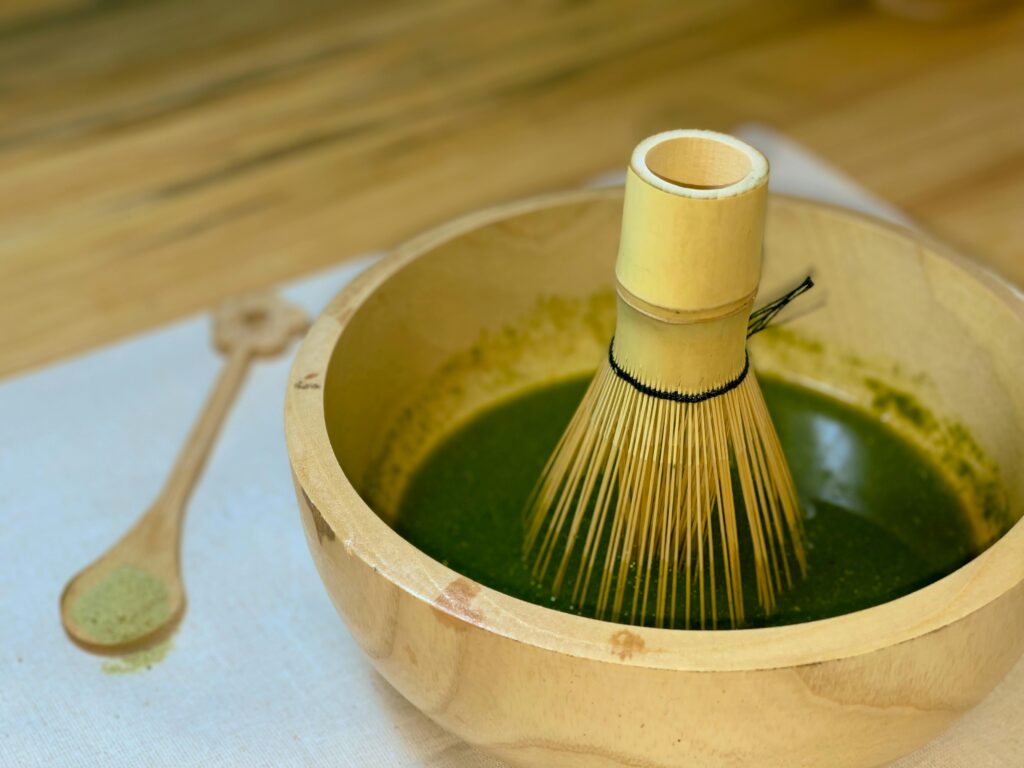
- Chasen: a bamboo whisk used to combine matcha and hot water. Tine counts vary; a particular number is not the definition.
- Chawan: the tea bowl, used for preparing and drinking matcha.
- Chashaku: a scoop for powdered tea, commonly bamboo.
- Natsume: a characteristic container for thin tea, named for its jujube-like shape.
- Chaire: a tea container associated with thick tea.
- Hishaku: a bamboo ladle for transferring water.
Serving containers and long-term storage packaging have different jobs. The fact that a natsume holds tea during preparation does not establish that it is an airtight storage vessel. Keep product storage instructions separate from the ceremonial role of the utensil.
Cloths, Procedure and Texture
A chakin is the cloth used to wipe the bowl. A fukusa is a silk cloth used in the ritual purification of implements such as the container and scoop. They are not interchangeable names for any kitchen towel. Temae refers to the ordered tea procedure performed in front of guests; learning its forms requires more than following a drink recipe.
In practical texture vocabulary, awa means foam, dama refers to lumps and nameraka describes smoothness. These words help discuss a bowl, but foam is not a universal pass-or-fail quality test. A thick layer of bubbles should not be prescribed for every tea tradition. Koicha’s objective is a smoothly incorporated thick tea rather than a foamy thin-tea surface.
Use the Terms without Turning Them into Fixed Rules
When a teacher or maker gives a ratio, retain its context: style, number of guests, tea and bowl. At home, change one preparation variable at a time and record the result. At a formal gathering, follow the host’s instructions instead of imposing a generic online recipe. Knowing which terms name objects, actions and consistencies prevents a scoop count, foam preference or marketing grade from being mistaken for the definition of matcha itself.