Definition of Kokumi

Kokumi is a Japanese sensory concept describing thickness, mouthfulness, complexity, and lingering richness that enhance existing flavors rather than supplying a distinct basic taste. Associated compounds can activate calcium-sensing receptors and intensify sweet, salty, and umami perceptions while having little taste alone.

Learn more

What kokumi describes

Kokumi describes thickness, mouthfulness and continuity that enhance an existing flavor. It is not another name for a distinct basic taste. Kokumi-active substances can have little taste on their own while making sweet, salty or umami stimuli seem fuller.

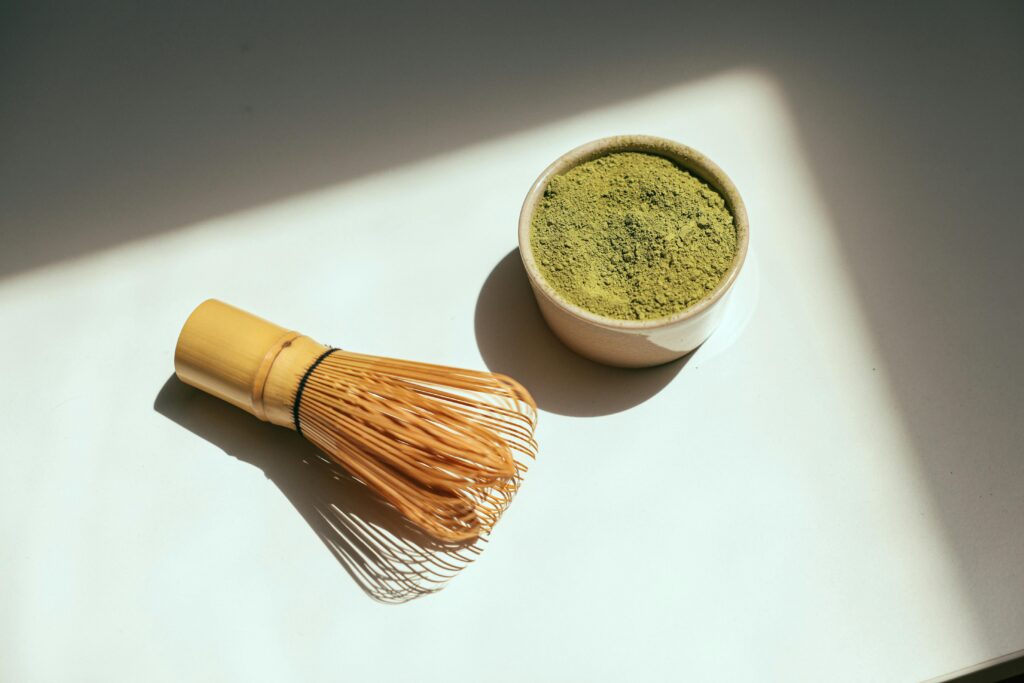
The word is useful in sensory description, but a substantial texture alone does not identify its molecular cause. Matcha’s suspended powder and foam also affect how a drink feels.

How kokumi differs from umami

Umami is a savory, brothy basic taste. Kokumi concerns enhancement and persistence of existing tastes. A tea can be described as savory, thick or lingering without treating those observations as interchangeable.

When tasting, consider the flavor first and then its continuity and mouthfulness. Comparing samples under the same preparation conditions helps distinguish a richer flavor impression from simply using more powder.

What calcium-sensing receptor research found

Research combining human sensory analyses with receptor experiments linked calcium-sensing receptor (CaSR) activation to kokumi effects. Tested gamma-glutamyl peptides included glutathione, also called gamma-Glu-Cys-Gly, and gamma-Glu-Val-Gly.

The investigators reported enhancement of sweet, salty and umami perceptions and suppression of the effect by a CaSR antagonist. This provides a mechanistic basis for studying kokumi rather than treating it as a synonym for creaminess.

What the research does not establish for matcha

The cited CaSR research does not quantify kokumi-active peptides in matcha, show that matcha has unusually high concentrations, or establish that first-harvest or ceremonial products contain the most. Whole-leaf consumption does not supply the missing concentration and sensory evidence.

Likewise, the study does not demonstrate a matcha-specific synergy between glutathione and L-theanine, a 55°C preparation optimum, or a temperature at which normal preparation destroys kokumi peptides. Those claims require direct evidence for the product and conditions.

Using the term in a tasting note

Describe what you perceive: fullness, continuity or enhancement of savory and sweet notes. Keep physical thickness and dry astringency separate. A tasting note can record a kokumi-like impression without asserting that a particular peptide was measured.

For a stronger chemical claim, look for analysis identifying and quantifying the relevant compounds together with controlled sensory testing. A price, grade label or harvest date is not a substitute for those measurements.
Sources

Sources and references

References supporting this page are listed below. Source access dates and supported claims are recorded in the evidence notes where available.
Involvement of the Calcium-sensing Receptor in Human Taste Perception
Accessed: 2026-09-08
Language: en

Human sensory analyses linked CaSR agonists with enhanced sweet, salty and umami perceptions. Gamma-glutamyl peptides including glutathione and gamma-Glu-Val-Gly elicited kokumi; this study does not measure matcha peptide concentrations or rank harvests.

Updated on September 8, 2026
Portrait of Emilie Schol, Founder of Best Matcha

Emilie Schol

Founder of Best Matcha

Frequently asked questions

Here are some frequently asked questions and answers.

What does kokumi mean in matcha tasting?

Kokumi describes mouthfulness, thickness and lingering richness that enhance existing tastes. It is not a separate basic taste, and physical thickness alone does not identify kokumi-active compounds.

How is kokumi different from umami?

Umami is a savory, brothy basic taste. Kokumi concerns enhancement and persistence of existing tastes, including umami, rather than supplying the same savory flavor under a different name.

Which compounds have been studied for kokumi?

CaSR research has tested gamma-glutamyl peptides including glutathione and gamma-Glu-Val-Gly. Their activity does not establish their concentration or sensory contribution in a particular matcha.

Does first-harvest matcha contain more kokumi peptides?

The cited receptor research does not test that comparison. A harvest or grade claim needs direct compositional and sensory evidence before it can rank matcha products.

Is 55°C the best temperature for kokumi?

The cited evidence does not establish a matcha-specific optimum. Compare preparation conditions for taste without presenting a preferred temperature as a proven peptide-preservation rule.

How can I describe kokumi without overstating the chemistry?

Record fullness, continuity and enhancement of existing flavors, while noting texture and astringency separately. Describe a sensory impression rather than claiming that an untested peptide concentration caused it.