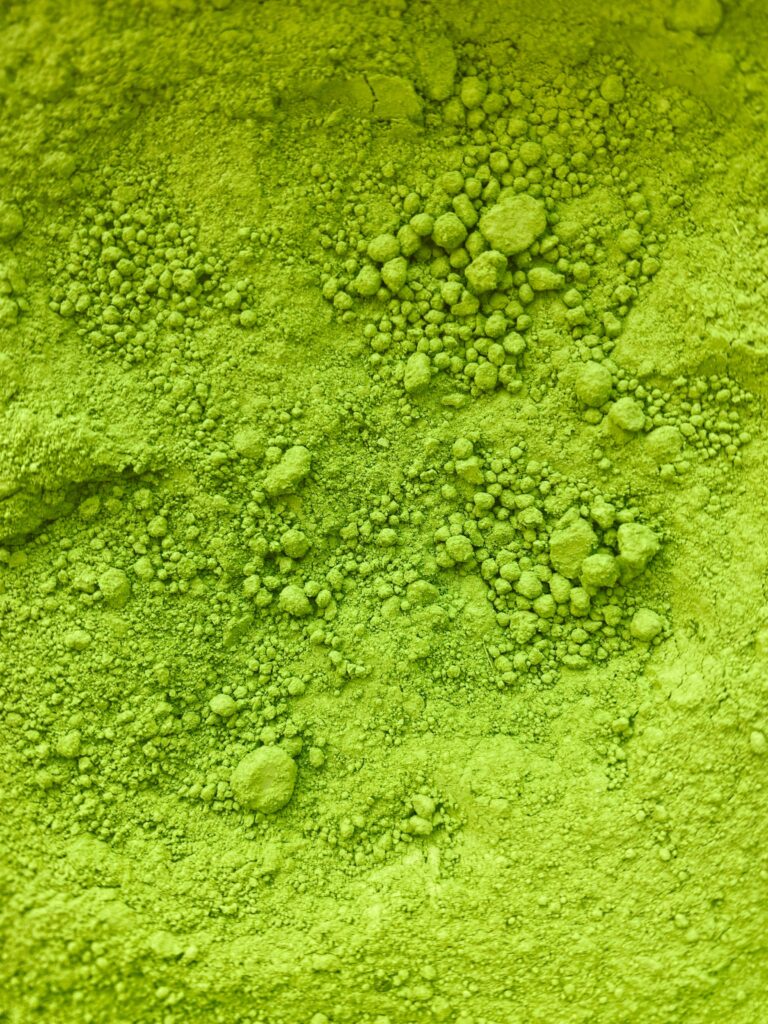
Color Value: Meaning and Matcha Context
Color Value describes matcha’s lightness and hue; it can aid comparison but cannot alone establish grade, freshness, authenticity, or safety.Definition of Color Value
Color Value is the visual or measured description of matcha powder’s lightness and hue, including its green and yellow components. Color can help compare batches or monitor changes in storage, but it does not independently establish a commercial grade, flavor profile, authenticity, or food safety.
Learn more
Defining Color Value in Matcha Quality Assessment
Color Value describes the appearance of matcha powder, whether assessed visually or measured with an instrument. It includes lightness, hue, and saturation rather than a single universal score. A green powder can be attractive, but its appearance does not independently prove careful cultivation, freshness, origin, or a particular flavor.
Keep color as one part of an assessment alongside aroma, texture, taste, and production information. A color change within the same stored lot can be useful evidence of deterioration. A difference between two unrelated products is harder to interpret because their cultivars, leaf material, processing, and presentation may differ.
The Science Behind Green Intensity
Chlorophyll contributes to tea’s green appearance. Shading before harvest influences the developing leaves and their chemistry, but shade duration is not a universal color prescription. Neither chlorophyll concentration nor a visual impression can establish the amount of every amino acid or antioxidant in a finished powder.
Evaluation Methods and Grading Systems
Visual inspection is most useful when samples are viewed under the same lighting and against the same background. Compare the same kind of sample: dry powder against dry powder, rather than a powder photograph against a prepared drink. Photographs and screens introduce additional differences in lighting, exposure, and color rendering, so they are not reliable instruments for ranking unrelated products.
Lab* Color Space Measurements
CIELAB describes color with three coordinates. Konica Minolta’s technical explanation defines L* as lightness, a* as the red–green direction, and b* as the yellow–blue direction:
- L*: lightness, conventionally from black at 0 to white at 100.
- a*: negative values point toward green and positive values toward red.
- b*: negative values point toward blue and positive values toward yellow.
More negative a* means a stronger green component in that coordinate, not a higher certified tea grade. Meaningful batch comparisons require a consistent measurement setup and sample preparation. Instrumental measurement reduces reliance on visual impressions but does not remove the need for a defined procedure.
Color Spectrum and Grade Classification
Descriptions such as jade green, bright green, olive, or yellow-green help communicate appearance. They should not be treated as a grading table in which one shade necessarily means ceremonial, premium, or culinary matcha. A cultivar cannot be identified from color, and a dark green powder does not prove hand picking, stem removal, or stone grinding.
Likewise, a yellow or brown cast may be associated with changes in pigments, raw material, or handling, but color alone cannot establish that a powder is unsafe. Safety concerns require information about the actual hazard and condition of the product, not a hue-based verdict. An unusually bright powder also cannot prove that a colorant was added; ingredient and analytical evidence are separate questions.
Factors Influencing Color Value
Cultivar, shading, leaf selection, manufacturing, and storage all belong in the explanation of a finished tea’s appearance. The Kyoto Prefectural Tea Industry Chamber notes that sunlight and high temperatures impair tea’s color and quality, while absorbed moisture accelerates deterioration. Protecting tea from these exposures matters after processing as well as on the farm.
Store matcha sealed, protected from light and moisture, and according to the producer’s instructions. Compare a stored lot with its own earlier appearance where possible, rather than assuming a different brand provides a valid freshness reference. There is no universal color deadline that makes every opened tin deteriorate on the same day.
Practical Applications for Selection and Purchasing
Ask what is being compared. If a supplier reports a* values for two batches, ask whether both were measured with the same settings and sample conditions. If a seller offers only photographs, use them to understand the presentation, not to calculate a quality ranking. Origin, harvest, milling, and storage details can help explain a difference but should not be inferred from the image.
Color is an accessible starting point, not a substitute for the rest of tea evaluation. The useful distinction is between observing a property and claiming its cause: a powder may look greener without that observation proving a better cultivar, more nutrients, a safer product, or a superior cup.
Related Reading
chlorophyll; amino acids; cultivars; gokou; oxidation.
Sources and references

Accessed: 2026-09-08
Language: en
CIELAB L* measures lightness, a* red/green and b* yellow/blue; color coordinates are not tea grades.
Accessed: 2026-09-08
Language: en
Cultivation and harvesting precede manufacturing; heat, sunlight and humidity impair stored tea quality.
Accessed: 2026-09-08
Language: en
Tencha is shaded tea made without kneading; shading influences theanine and the balance of taste.

Emilie Schol
Founder of Best MatchaFrequently asked questions
Here are some frequently asked questions and answers.Can a greener photograph prove better matcha?
Can a greener photograph prove better matcha?
No. A photograph records appearance under particular lighting and camera settings, not a complete quality test. Compare physical samples under similar conditions where possible, and assess aroma, texture, taste, and production information separately. Neither a vivid image nor a negative a* value certifies a commercial grade or establishes food safety.