Japan’s Established Matcha-Producing Areas
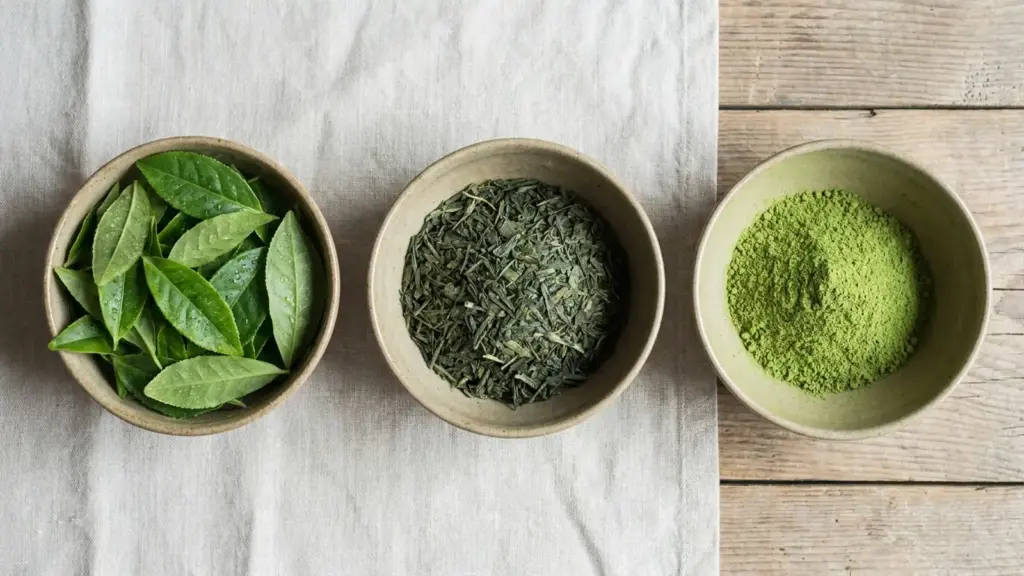
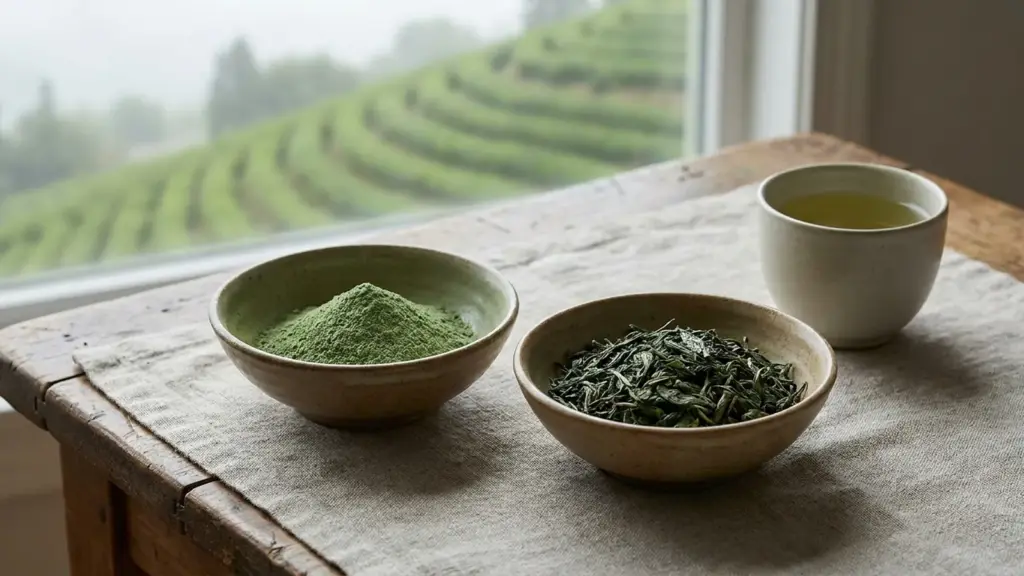
Matcha Growing Regions help locate the farms behind a powder, but growing, processing and selling are different activities. Tea bushes produce leaves; producers make tencha and mill it into matcha. A place on a label may refer to the leaf origin, a production tradition or the business that finished the tea.
Uji and Kyoto
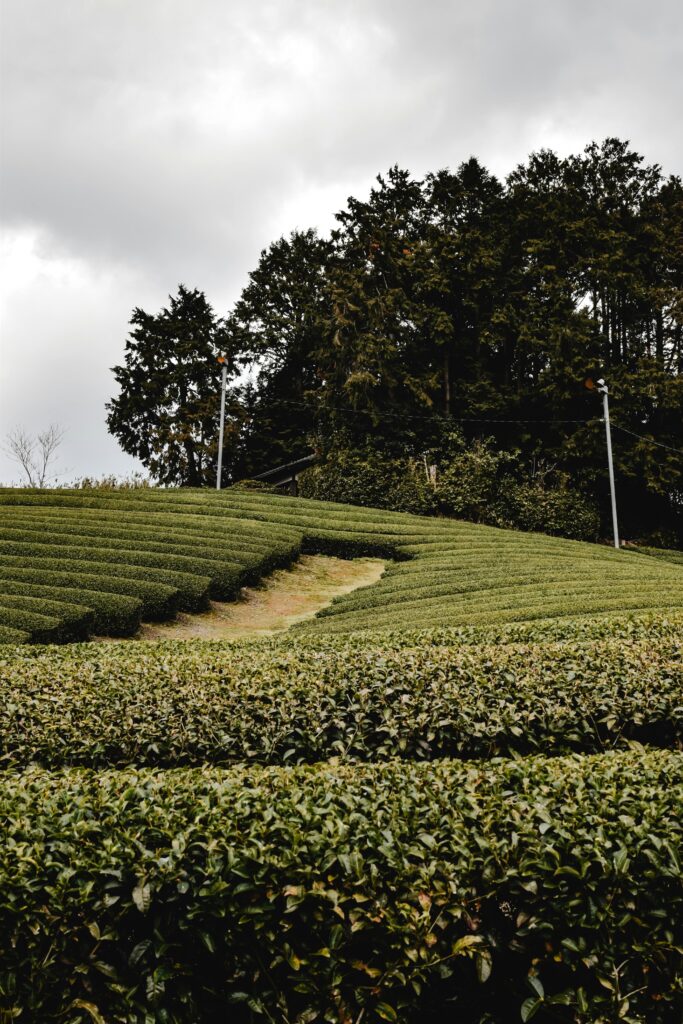
Uji is closely associated with the history of Japanese tea and the development of covered cultivation. MAFF describes several Uji tea types, including tencha, sencha and gyokuro. Matcha is the powder made from tencha, rather than a name for every tea grown in the area.
The Uji tea definition summarized by MAFF allows leaves grown in Kyoto, Nara, Shiga and Mie to be processed by Kyoto processors using methods originating in Uji. That is more informative than assuming all Uji tea comes from Uji City. For a farm-specific purchase, ask where the leaves were grown as well as where the tea was finished.
Nishio and Aichi
Nishio is another established matcha center. MAFF’s Nishio experience page documents tea fields, factory visits and stone milling in Aichi. These are concrete links between landscape and manufacture, rather than evidence that every Nishio product has the same taste or use.
An undated claim that Nishio supplies one quarter of Japan’s matcha is not a reliable current comparison. A production percentage needs a year and a denominator: finished matcha, tencha or all tea are different measures. Without that context, it is better to describe Nishio’s established production role without attaching a market share.
Shizuoka and the Wider Map
JETRO names Kyoto, Aichi and Shizuoka in its production overview. This offers orientation, not a current statistical ranking. Broad prefectural names cover many farms and products. Kagoshima and more local names such as Kirishima should likewise be read as provenance information rather than shorthand for bitter, sweet, organic or cooking-only tea.
Tea Regions Beyond Japan
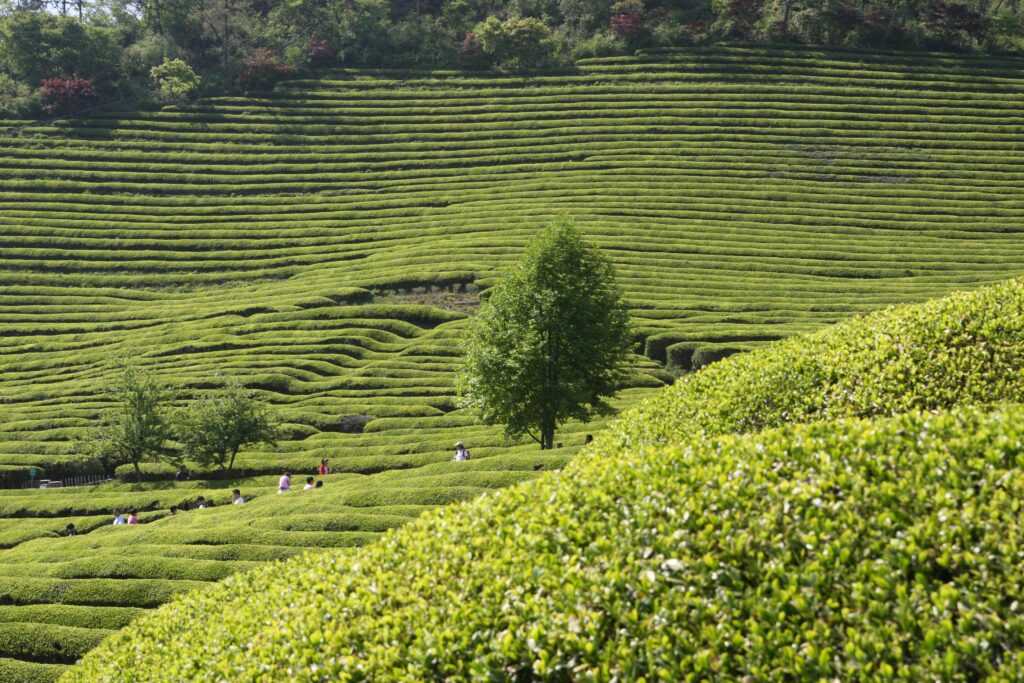
A tea-growing landscape outside Japan does not automatically establish local tencha manufacture. Jeju’s tourism authority documents Korean green-tea fields and tea businesses, for example, but that alone does not describe how every powder sold with the island’s name is processed. Conversely, nationality alone does not justify declaring a product inferior.
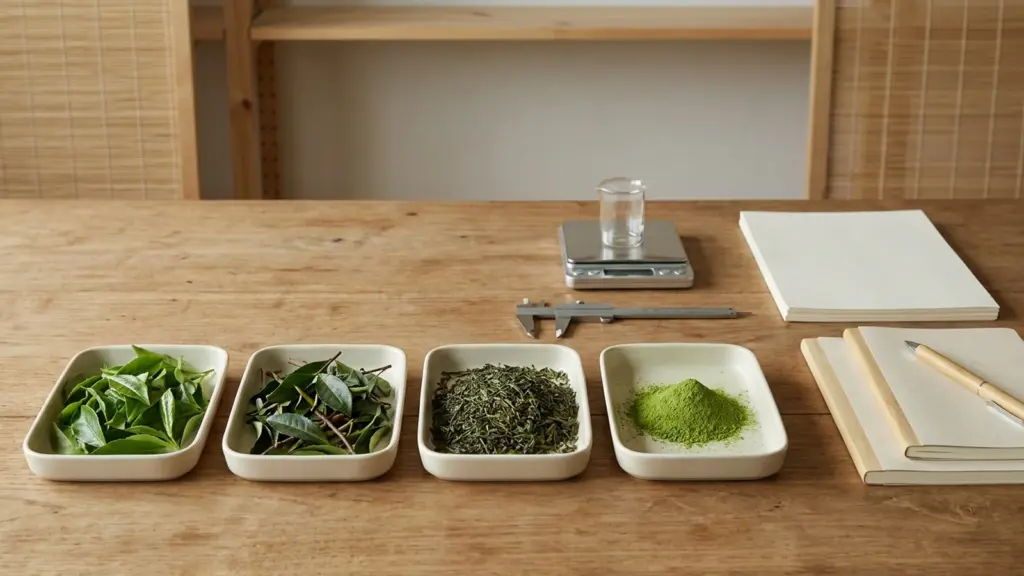
Use the same questions for every origin: were the leaves intentionally shaded, were they steamed and dried without rolling, and was the resulting tencha refined and milled? JETRO describes these manufacturing distinctions and notes that suitable powdering machinery, not only a stone mill, can be used.
Compare Labels Before Comparing Flavor
- Leaf origin: the country, region or named farm that grew the tea.
- Processing location: where tencha was made and where it was finished or milled.
- Composition: whether the product combines farms, regions or cultivars.
- Intended use: the maker’s preparation recommendation, rather than a use assigned by geography.
Once those details are clear, taste comparable products with the same preparation. A smooth Uji bowl and an assertive Nishio bowl describe those lots, not permanent boundaries between regions. Neither a location name nor attractive packaging is a substitute for traceable sourcing. This approach keeps the useful regional map while avoiding unsupported claims about national superiority, fixed regional flavors or production leadership.