Culture vocabulary describes practice, not a retail grade
Matcha ceremony and culture terms connect the drink to host–guest interaction, setting, procedure and inherited schools. They are useful for understanding what happens at a gathering, not for assigning a tin of powder a certified “ceremonial” rank. Knowing a word is also different from learning its practice with a teacher.
Chanoyu, chadō and the guiding principles
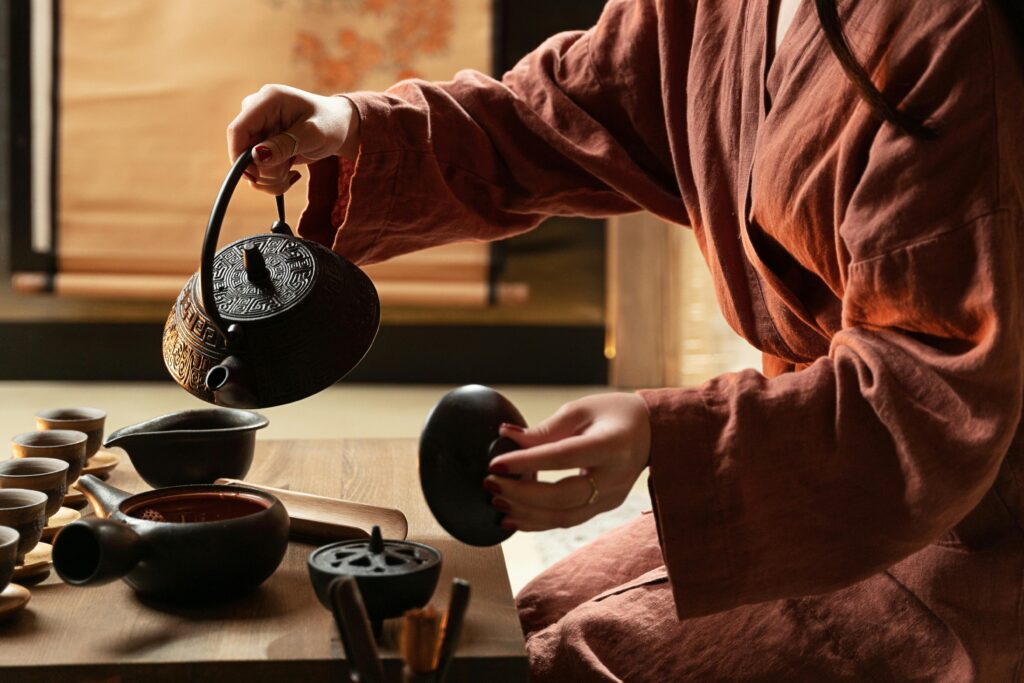
Chanoyu and chadō, also pronounced sadō, name the Japanese Way of Tea. Urasenke describes it as a spiritual and aesthetic discipline centered on host and guest sharing time over matcha. Its introduction emphasizes harmony, respect, purity and tranquility. These are cultural principles rather than measurable effects guaranteed by drinking tea.
The practice developed over time through several figures and social settings. Urasenke’s historical account includes court, temple, warrior and merchant contexts, and the contributions of Murata Jukō, Takeno Jōō and Sen no Rikyū. It should not be reduced to an unchanged ceremony invented by one person.
The three Sen schools are not all tea schools
Omotesenke, Urasenke and Mushanokōjisenke are the three Sen families, or Sansenke. Omotesenke’s glossary traces them to three sons of Genpaku Sōtan. Urasenke also describes other lineages arising from Rikyū’s disciples and later branches.
School affiliation matters when describing utensil preferences and procedure. It does not justify saying every overseas ceremony must belong to Urasenke, or that another school has exactly seven branches and no international presence without current organizational evidence. Ask the host or teacher which tradition is being followed.
Temae means tea procedure in this context
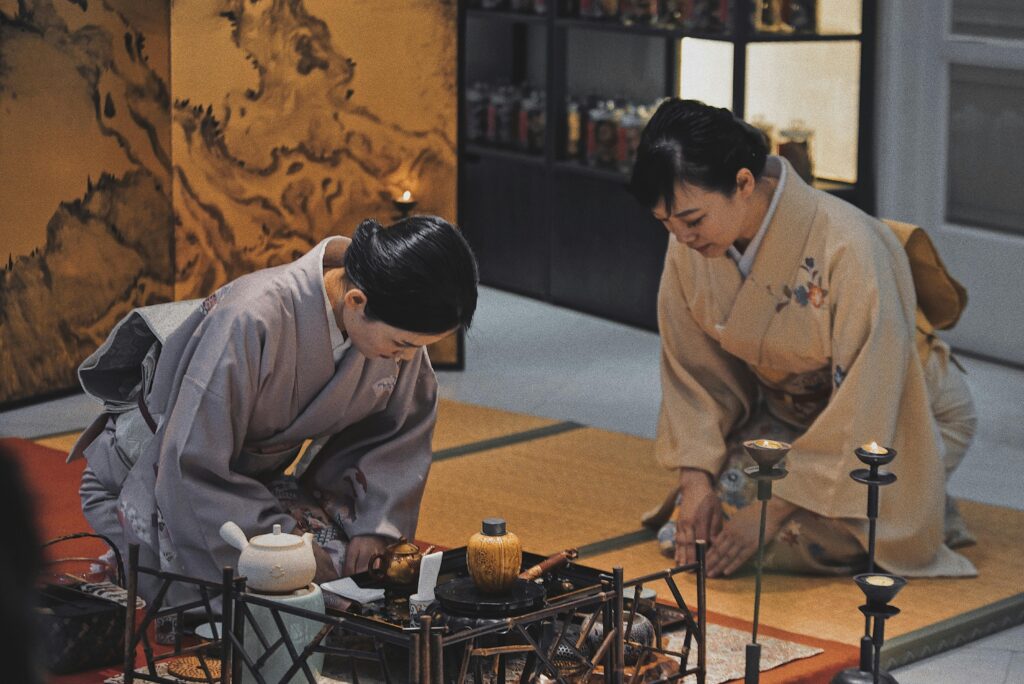
Omotesenke translates temae as “tea procedure”: preparing thick and thin tea according to procedure in front of guests. The term can also cover arranging charcoal. It should not be explained through an unsupported literal translation such as “before the eyes.”
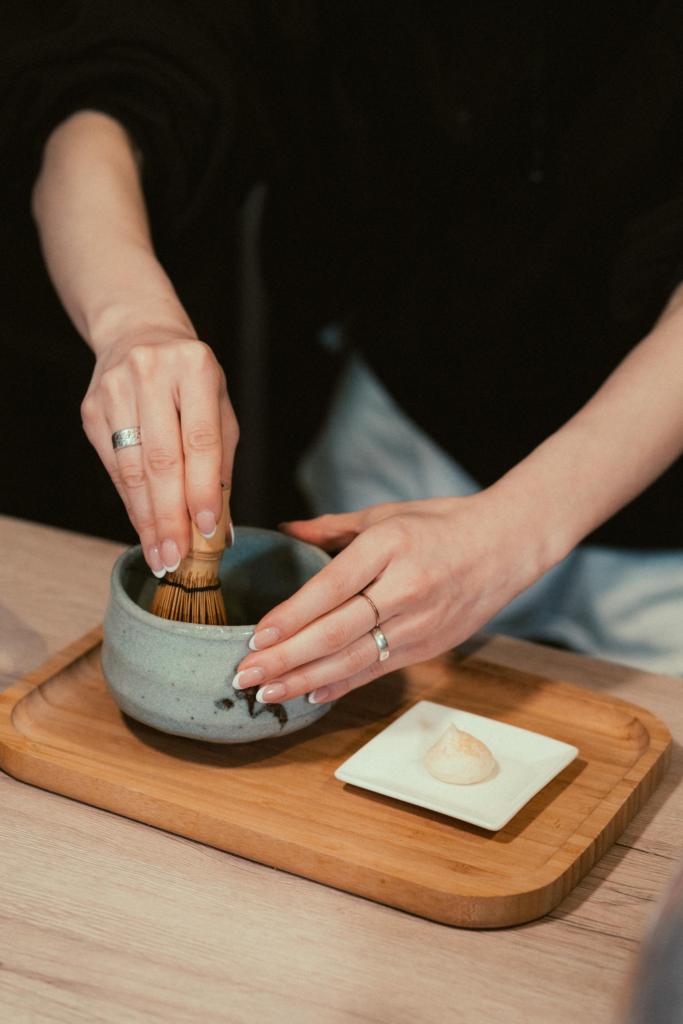
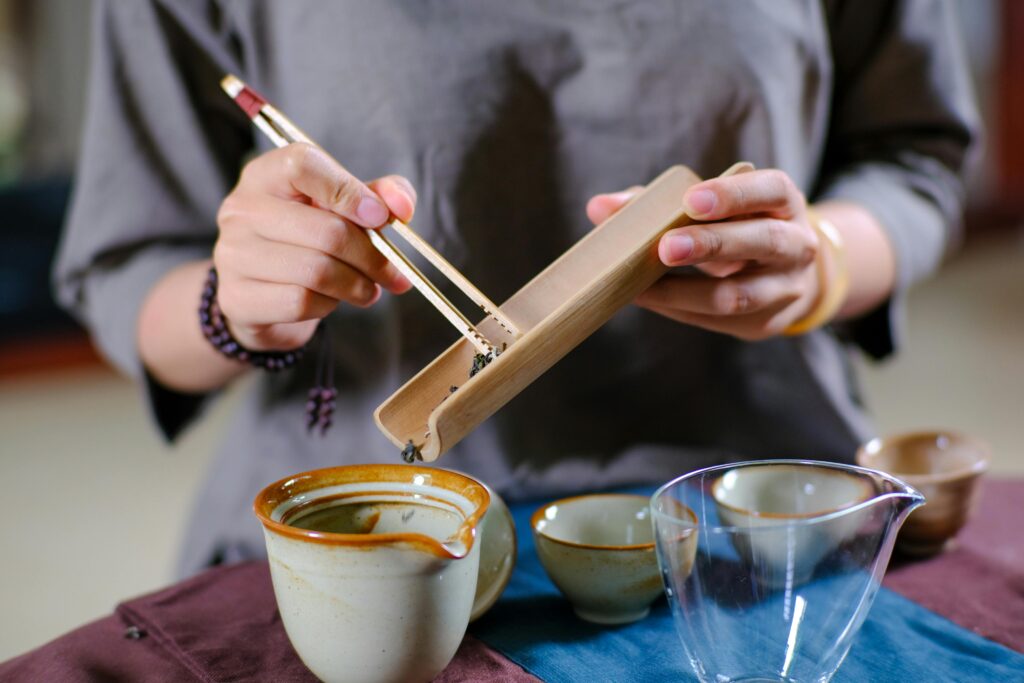
Procedure involves handling utensils and preparing the setting as well as mixing the powder. A glossary can orient a learner, but it cannot replace instruction in a specific school. Avoid converting one observed sequence into a rule that all practitioners follow identically.
Koicha and usucha; chaji and chakai
Koicha is thick tea, prepared by kneading a more concentrated mixture. Usucha is thin tea, prepared to a more fluid consistency. The distinction concerns preparation, not a universal requirement that the tea plants be above or below a particular age. Recipes and serving practices should be attributed to the school or producer giving them.
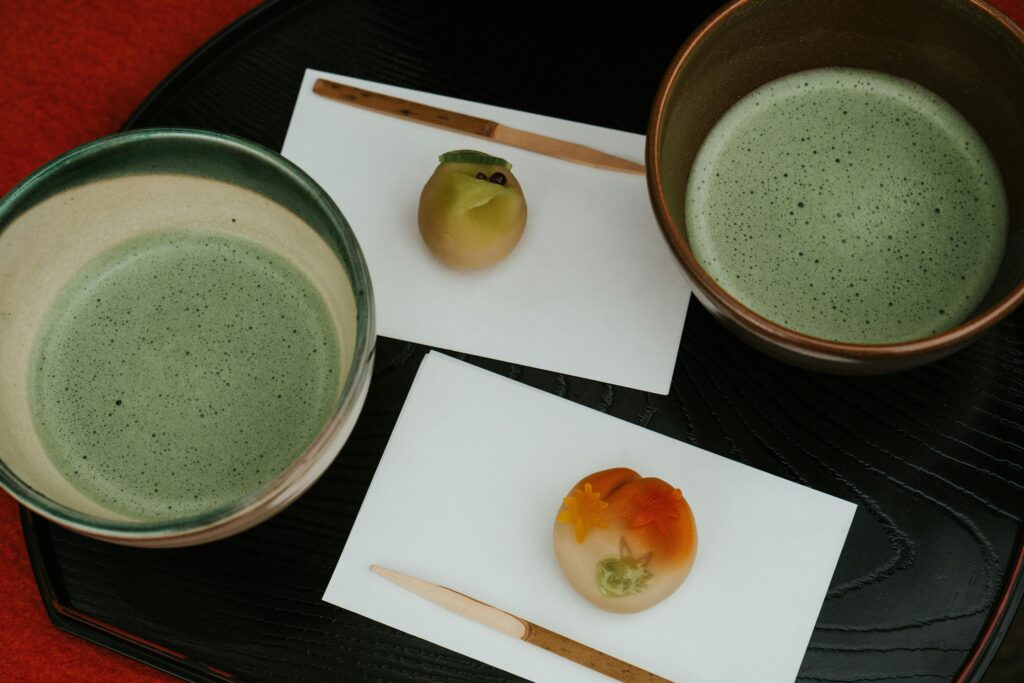
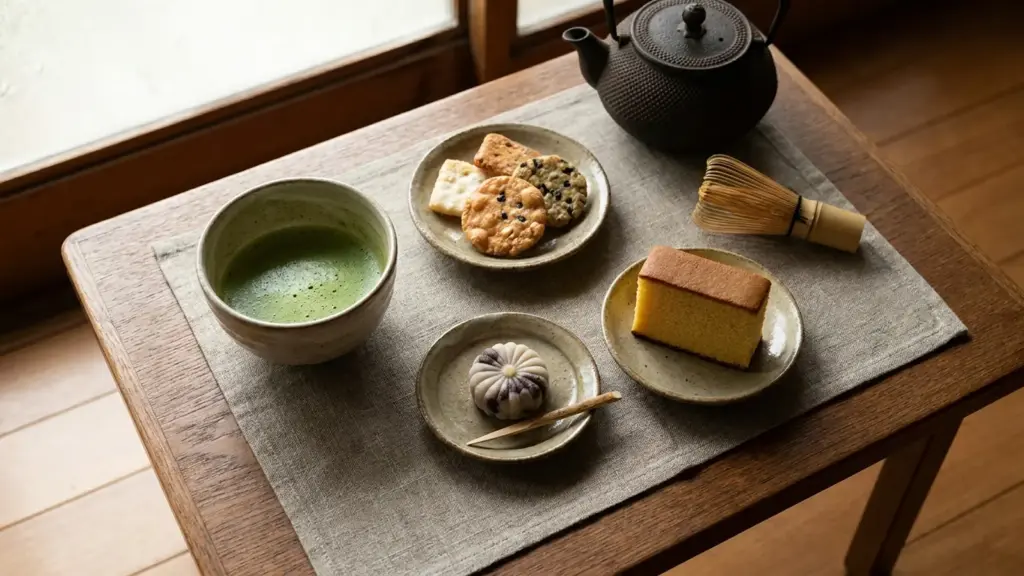
A chaji is a full formal gathering, generally involving a meal and thick and thin tea. Chakai commonly distinguishes a less extensive gathering, often serving tea and sweets. Omotesenke notes contemporary larger gatherings in its explanation. Duration, guest count, dress and access arrangements vary; none should be presented as an absolute definition.
Setting, objects and attention to the occasion
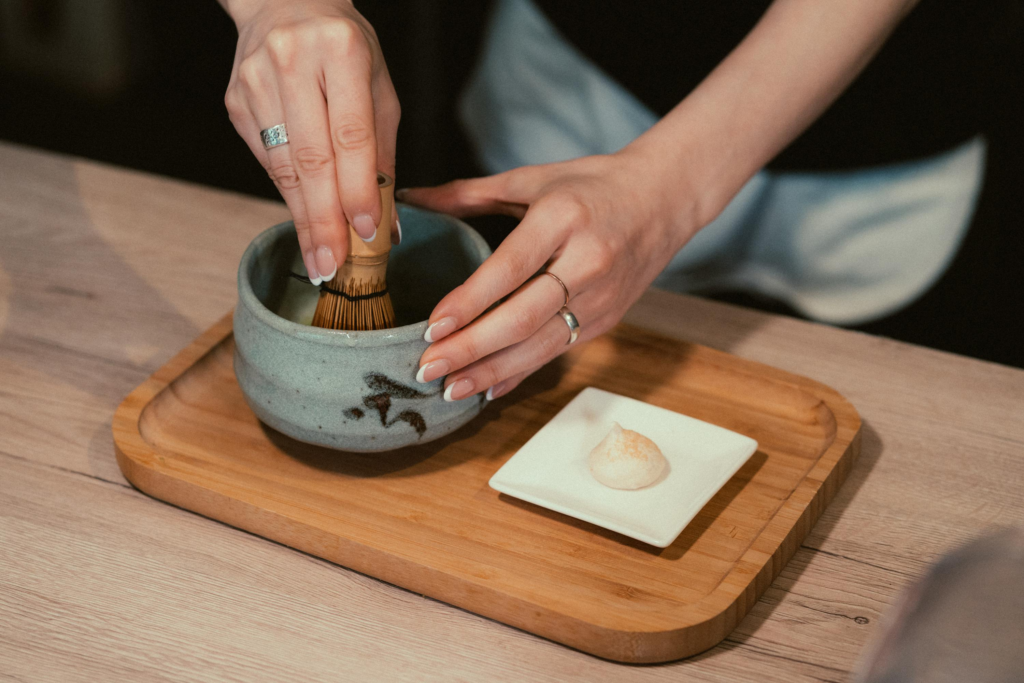
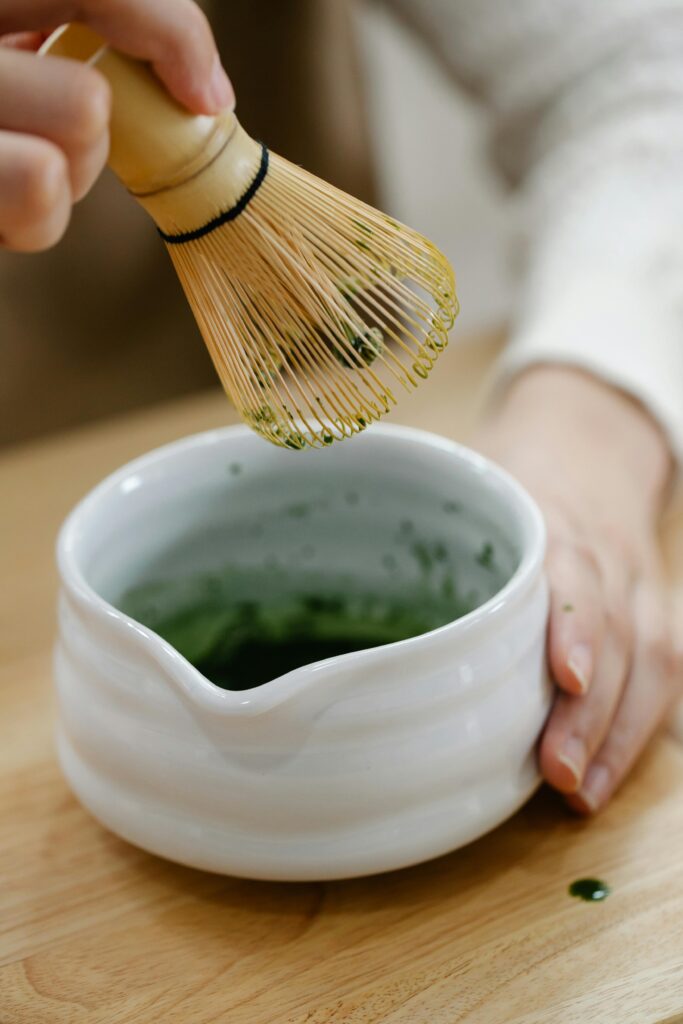
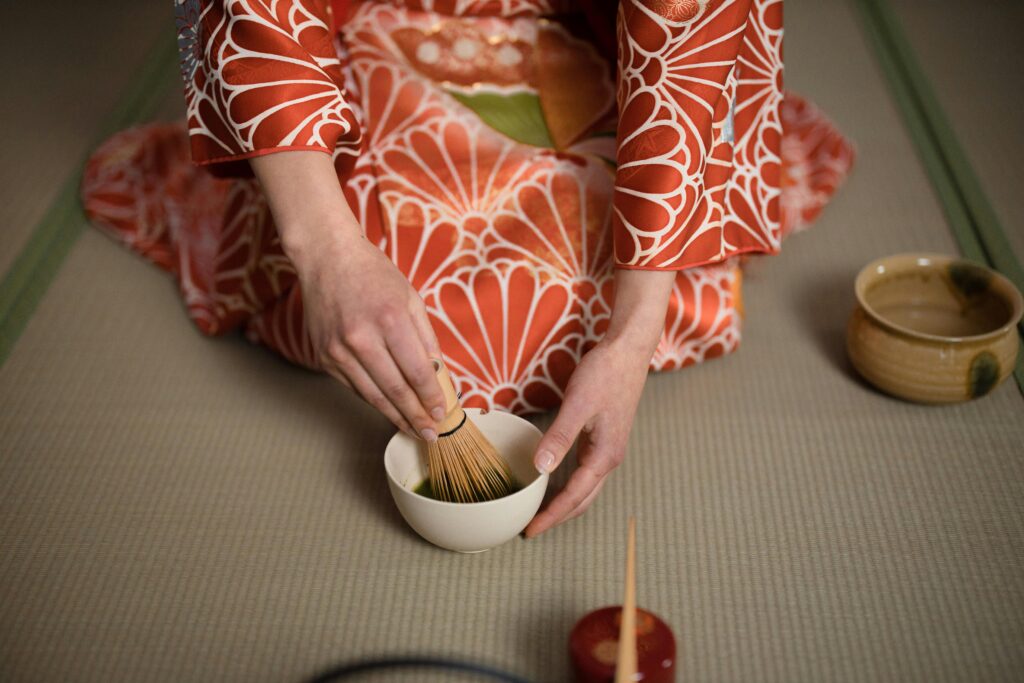
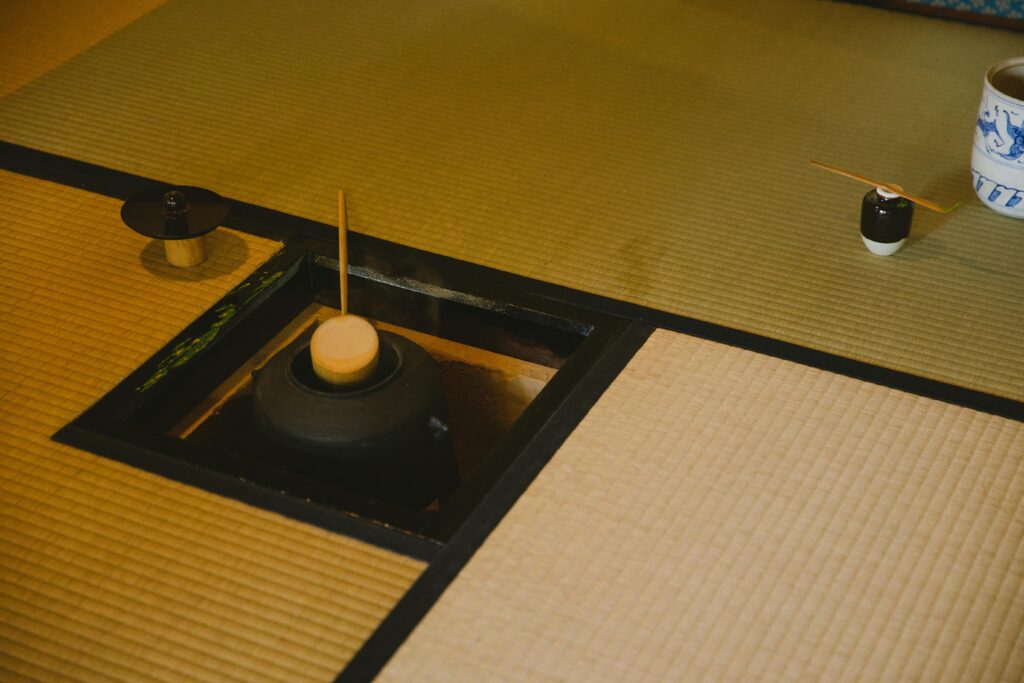
A roji is the garden approach; a tokonoma is the display alcove; a mizuya is the preparation area. A chawan is the bowl, a chasen the whisk and a chashaku the scoop. These terms keep place, object and procedure distinct instead of calling everything part of the “ceremony.”
Omotesenke describes wabi through simple living and finding spiritual sufficiency and beauty amid material poverty. Ichigo ichie concerns the unrepeatable encounter between participants. Such ideas offer context for choices of setting and utensils; they are not evidence that damaged pottery is necessarily more valuable or that a particular product carries spiritual benefits.
Use Chanoyu, Temae, Chaji, Roji and Ichigo Ichie for the individual concepts. For buying and using everyday implements, see Matcha Preparation Tools. Follow your host’s guidance rather than treating a glossary as a script.
Related glossary entries
Continue with the individual entries in this topic group: