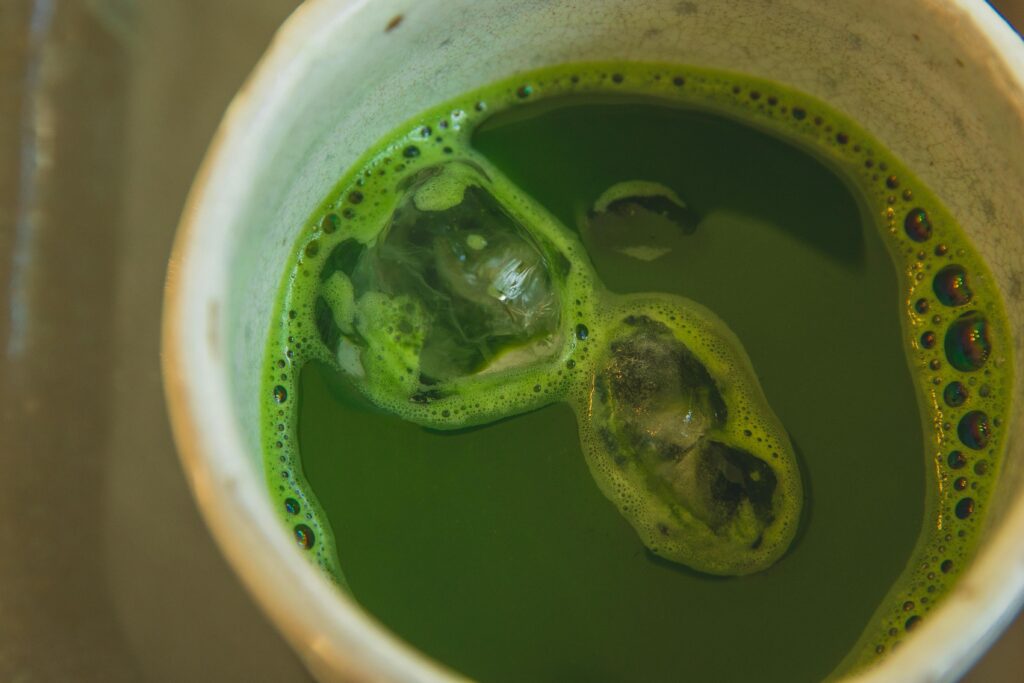
What moisture content means for matcha
Moisture Content describes how much water is present in the powder. Matcha is hygroscopic: it can take up moisture from its surroundings. Humid storage and wet utensils can therefore change how the powder handles. Moisture control matters, but a single percentage should not be presented as the dividing line between premium and poor matcha.
There is no universal below-5% buying rule established by the sources here. A producer’s specification must be read with its analytical method, sample basis, packaging, and intended storage conditions. Conflicting limits in a description and FAQ do not become reliable merely because both are low numbers.
Water content is not water activity
The academic reference Control of Salmonella and Other Bacterial Pathogens in Low-Moisture Foods distinguishes total water quantity from water activity, which concerns the availability of water. Foods can have similar moisture contents but different water activities. Moisture content alone consequently does not provide reliable information about microbial safety.
Low water activity can restrict microbial growth without eliminating organisms already present. Dry matcha is not necessarily sterile, and a best-by date is not a microbiological test. This is a general food-science distinction, not a claim that a particular matcha lot is contaminated.
Clumps, color, and aroma: useful but limited observations
Moisture uptake can affect powder flow and contribute to lump formation. However, fine powders can also clump for physical reasons. A small clump that breaks up during sifting is not, by itself, evidence of water damage. Nor can a finger test determine a moisture percentage.
Changes in color or aroma can prompt a quality check, but they do not uniquely identify moisture as the cause. Light, heat, air exposure, raw material, and processing also influence the finished tea. Visible mold, an unexpected musty odor, a wet powder, or compromised packaging warrants stopping use and contacting the seller; tasting is not a way to prove safety.
How professionals assess moisture
A laboratory result should identify the method used and the lot tested. A loss-on-drying result and a water-specific measurement should not be assumed interchangeable without the laboratory’s method details. Buyers requesting a certificate should ask whether the figure is moisture content or water activity, rather than accepting a number headed simply ‘dryness’.
The powder’s behavior in a bowl is a separate question. Matcha disperses into a suspension; it does not fully dissolve. Sifting and whisking help distribute particles but cannot reverse contamination or establish a laboratory moisture result.
Packaging and everyday handling
Ippodo advises keeping tea away from humidity, heat, sunlight, and strong smells. Its storage guidance recommends closing the original bag between uses and keeping it inside its can where appropriate. Automatically transferring every newly opened tea is unnecessary if the supplied packaging can be closed effectively.
Keep utensils clean and completely dry, close the package promptly, and avoid preparing open powder beside a steaming kettle or dishwasher. Follow the producer’s temperature advice rather than applying an invented ideal refrigeration range. Packaging and storage work together: a protective container cannot compensate for repeatedly leaving it open in humid air.
Buying and storing without false thresholds
Ask for a product-specific specification if moisture is important to a wholesale purchase. For home use, prioritize intact packaging, manageable quantities, and the seller’s storage instructions. Ceremonial and culinary labels do not justify different hygiene standards, and neither label supplies a universal shelf life. Moisture is one part of stability, not a standalone certificate of freshness.
Sources and scope