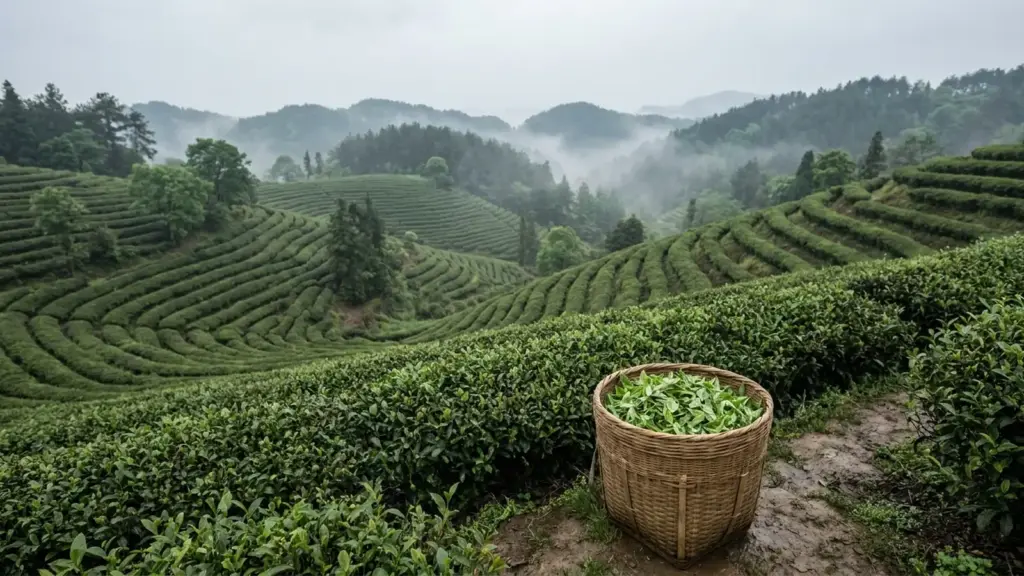
What “China matcha” means
China has a national standards framework that treats matcha as a specific product category, not as a synonym for every powdered Chinese green tea. The central reference is GB/T 34778-2017, titled “Matcha.” The national standards registry identifies it as a recommended product standard, published on 1 November 2017 and implemented on 1 May 2018.
Follow the documented Chinese production examples
This national page owns standards and country-level origin language. For narrower evidence, read Jiangsu for a provincial production standard and dated Yixing tencha exports, Yuecheng for a district-level Fusheng Town case, and Bapan for a locality with documented tea areas, tencha processing, and matcha lines. Each child page answers a different geographic question and keeps its figures tied to the reporting year.
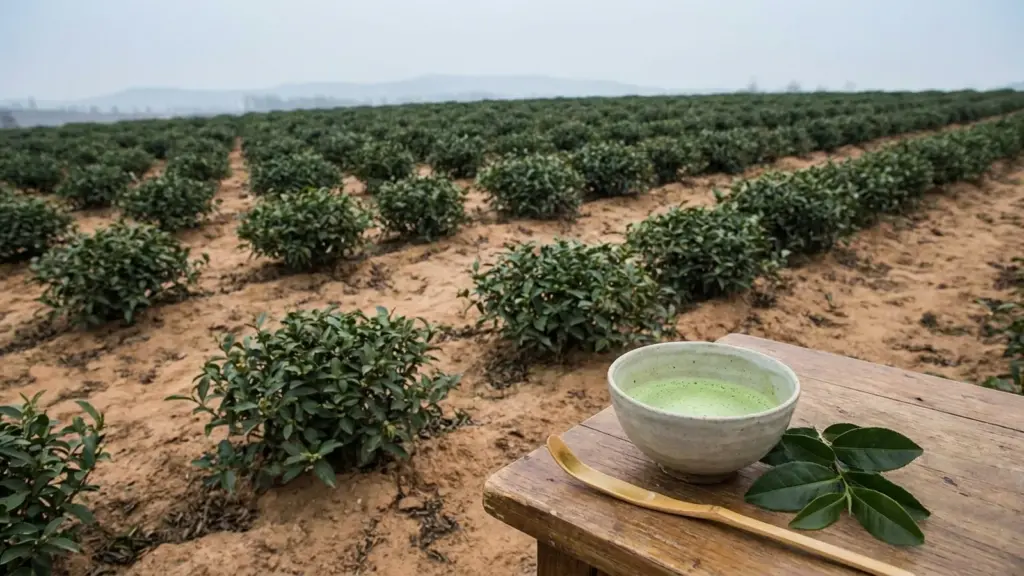
A country-of-origin statement and a product name answer different questions. “China” indicates national origin only when the relevant leaf or product origin is actually established. “Matcha” identifies a product category governed by specifications and processing context. Neither word alone proves a flavor, quality tier, cultivar, growing province, or ceremonial use.
The national matcha product standard
GB/T 34778-2017 is assigned to the National Technical Committee on Tea Standardization, TC339, and supervised by the All-China Federation of Supply and Marketing Cooperatives. The registry lists research, testing, university, and commercial drafting organizations. They include bodies and companies associated with Zhejiang, Jiangsu, and Shaoxing, but participation in drafting is not a national production ranking.
The registry records a review on 19 May 2021 with a conclusion to revise. This status information is important: the standard remains the documented national product reference in the supplied evidence, while its registry history also shows that standardization is maintained through review rather than frozen permanently at publication.
A separate production and processing project
China’s standards platform also records project 20240352-T-442, “Code of practice for producing and processing Matcha,” issued on 25 March 2024. The project is distinct from the 2017 product standard. A product standard defines requirements for the resulting category; a production code addresses how suitable material is cultivated, handled, and processed.
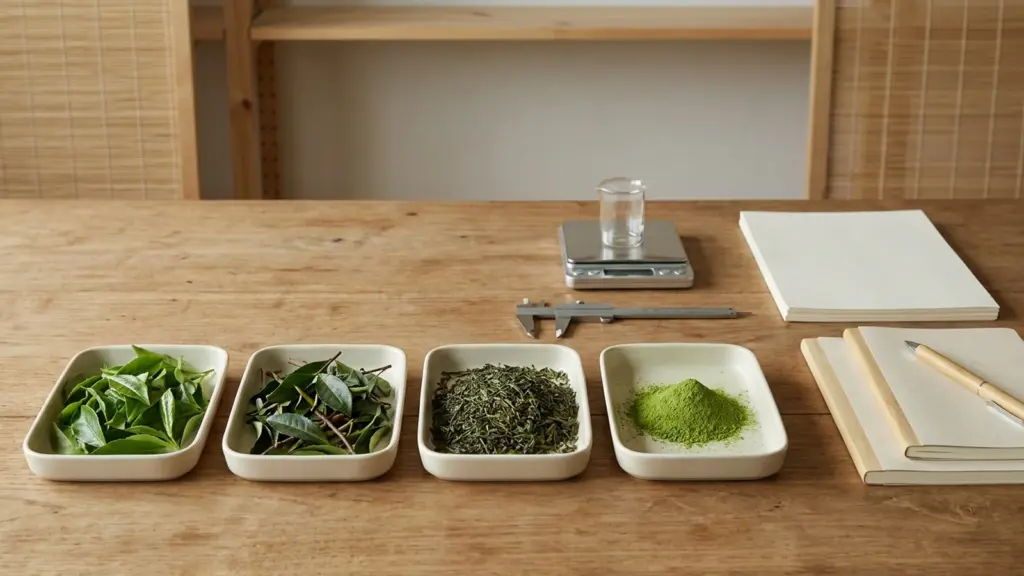
The project description covers matcha-suitable tea cultivars, tea-garden covering before harvest, management of fresh leaves, and processing workflows. It says the proposed requirements will specify shading rate and duration and will distinguish initial and refining processes according to the fixation method. This evidence directly contradicts the idea that any green tea becomes matcha merely by being ground into powder.
National rules and regional production
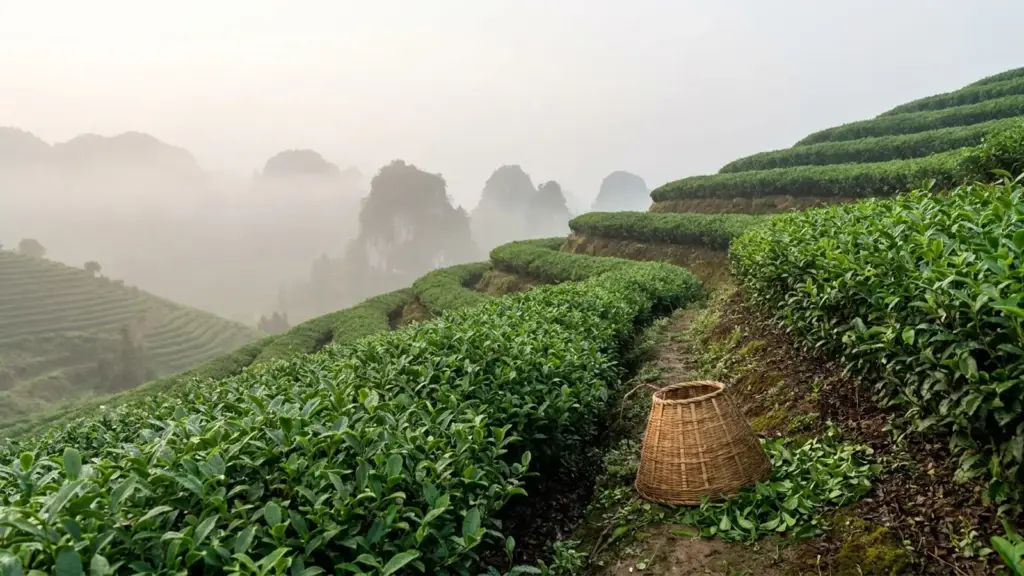
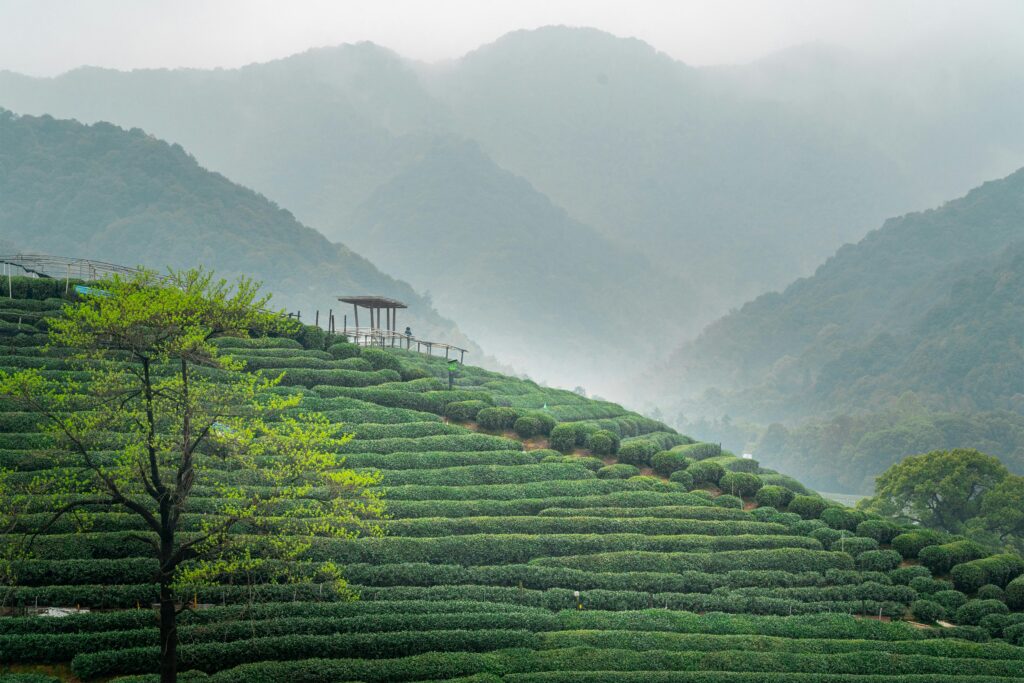
National standards provide a shared reference, but production occurs in particular provinces and localities. The national standard’s drafting list includes organizations from several places, and the registry links to provincial and local standards. Those records show a layered system rather than a single uniform regional method.
Jiangsu, for example, has a province-coded cultivation standard specifically for tea plants used for matcha. Guizhou and localities such as Bapan have their own documented standards or production activity. Zhejiang and Yuecheng represent other regional contexts. These examples should be evaluated individually, not converted into an unsupported list of national leaders.
Origin, process, and marketing language
When assessing Chinese matcha, separate three layers. First, verify origin: where were the leaves grown and where was the product processed? Second, verify process: does the producer document cultivation and processing consistent with the relevant matcha specification? Third, read marketing terms cautiously: descriptive grade names, color claims, or broad statements about tradition do not replace origin or process evidence.
The role of tencha also needs source-specific handling. Some production systems describe an intermediate leaf material before milling, while the Chinese production project explicitly anticipates multiple workflows distinguished by fixation method. A Japanese production description should therefore not be silently imposed on every Chinese standard or factory.
How China differs from Japan as an origin page
The Japan page explains Japanese national and regional context, including the tencha-to-matcha route documented by Japan’s agriculture ministry. This China page instead centers the Chinese product standard, its governance, and the developing national production code. Comparison is useful only when the underlying terms and sources are kept visible; origin alone does not establish that one product is better than another.
What the standards do not prove
The supplied registries do not establish a current percentage of world production, a uniform Chinese flavor, a universal quality level, or a complete province-by-province production ranking. They also do not show that China invented modern matcha. Those claims require different historical, statistical, or product-testing evidence and are omitted here.
For practical evaluation, use the national registry as a starting point, then seek the actual standard declaration, leaf origin, processing location, lot documentation, and producer-specific method. That approach supports matcha authenticity more reliably than judging a powder only by color, price, or country name.