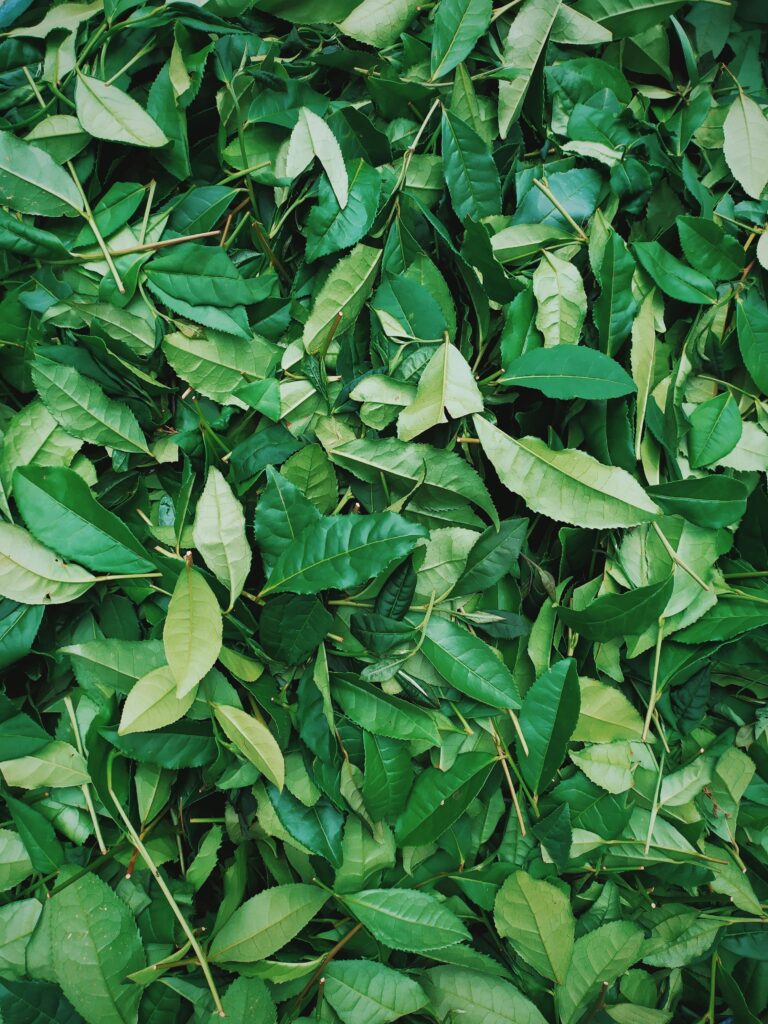
Tencha is a specialized Japanese green tea leaf cultivated under shade and processed specifically for grinding into matcha powder. It is the unground, single-purpose raw material for authentic matcha, distinguished from teas intended for steeping by cultivation and processing that promote deep green color, sweetness, umami, and low astringency.
Defining Tencha: The Foundation of Matcha
Tencha is the specialized tea leaf grown and processed specifically for grinding into matcha powder. It represents the leaf stage before grinding, serving as the exclusive raw material for authentic matcha production. Without tencha, there would be no matcha—these shade-grown leaves are what give matcha its distinctive flavor, color, and nutritional profile.
The term itself distinguishes this unique tea from other Japanese green teas. Unlike teas meant for steeping, tencha exists solely to become matcha powder. This single-purpose cultivation and processing method sets it apart in the world of tea production.
How Tencha Is Cultivated
The growing process for tencha begins with a critical step that defines its character: shading. Tea plants destined to become tencha are covered with cloth or specialized covers approximately three to four weeks before harvest. This deliberate blocking of sunlight triggers specific biochemical changes in the leaves.
The Science Behind Shading
Shading creates stress that transforms the tea plant’s chemistry. Chlorophyll levels increase dramatically, producing the vibrant green color matcha is famous for. L-theanine, the amino acid responsible for umami flavor and calming effects, concentrates in the leaves as they struggle to photosynthesize with limited light.
Meanwhile, catechins—compounds that create bitterness—decrease during this period. The plant also produces more caffeine in response to the shading stress. These combined changes create leaves with pronounced sweetness, rich umami, and minimal astringency.
Visual and Flavor Characteristics
Properly shaded tencha leaves develop a darker, more consistent green color compared to sun-grown teas. The resulting flavor profile emphasizes sweetness and smoothness rather than the grassy, astringent notes found in unshaded teas like sencha.
Processing Methods That Define Tencha
After harvest, tencha follows a distinctive processing path that separates it from all other Japanese green teas. The leaves are immediately steamed to halt oxidation, a standard practice for Japanese green tea. What happens next makes tencha unique.
No Rolling or Kneading
Unlike sencha, Gyokuro, or most other teas, tencha leaves are never rolled or kneaded after steaming. Instead, they’re dried flat in their natural state. This preserves the leaf structure in a way that’s optimal for grinding into fine powder rather than preparing for infusion.
Refinement and Preparation
The dried leaves undergo careful refinement where stems and veins are meticulously removed. This step is crucial—leaving these tougher parts would create bitterness and make grinding difficult. The cleaned leaves are then chopped into small flakes, typically about 4×4 millimeters, creating the final tencha product ready for milling.
These delicate flakes represent the culmination of weeks of careful cultivation. They’re fragile, lightweight, and distinctly different from the tightly rolled needles of sencha or the twisted leaves of other green teas.
Tencha Versus Other Japanese Green Teas
Understanding tencha requires knowing how it differs from its cousins in the Japanese tea family. While all share common origins, their cultivation and processing create vastly different products.
Comparing Growing Conditions
- Sencha: Grown in full sunlight with no shading, resulting in higher catechin content and more astringent, grassy flavors
- Gyokuro: Shade-grown like tencha but for different purposes and often with different timing
- Tencha: Shade-grown specifically for 3-4 weeks to maximize characteristics ideal for powder grinding
Processing Distinctions
Both sencha and gyokuro are rolled after steaming, a process that breaks cell walls and shapes the leaves for optimal infusion. Tencha skips this entirely. Gyokuro, despite being shade-grown, is meant to be steeped as whole leaves, so it undergoes rolling to enhance flavor extraction in hot water.
Tencha’s unrolled, stem-free form makes it unsuitable for traditional steeping. When brewed as leaves, tencha produces a very mild, light tea—nothing like the rich, full-bodied experience of properly prepared matcha powder.
The Quality Connection: From Tencha to Matcha
Tencha quality directly determines matcha quality—there’s no way to improve poor tencha through grinding. Experienced tea professionals can assess future matcha quality by examining the unground tencha leaves.
Visual Quality Indicators
- Dark, consistent green color throughout the leaves without yellowing or browning
- Uniform appearance indicating even shading and processing
- Complete removal of stems and veins
- Fresh aroma suggesting proper storage and handling
Chemical Quality Factors
Higher concentrations of L-theanine and chlorophyll from proper shading translate directly into matcha’s sweetness, umami depth, and vibrant color. The careful removal of stems and veins prevents bitterness and allows for finer grinding. Premium tencha produces matcha that’s smooth, sweet, and free from harsh or astringent notes.
Storage and Handling Before Grinding
Tencha’s delicate nature demands careful storage between processing and grinding. The unrolled leaves are fragile and susceptible to degradation from environmental factors. Moisture, heat, and light are the primary enemies of tencha quality.
Proper storage maintains the high chlorophyll levels that give matcha its signature green color. It also preserves the L-theanine content essential for umami flavor and the calming effects matcha enthusiasts value. Tea producers store tencha in cool, dark, moisture-controlled environments until they’re ready to grind it into matcha.
The grinding itself requires specialized equipment. Traditional stone mills grind slowly to prevent heat buildup that could damage flavor compounds. Modern grinders are designed specifically to handle the small, stemless leaf flakes and produce the ultra-fine powder that defines quality matcha.
Conclusion: The Essential Role of Tencha
Tencha represents a specialized branch of tea cultivation and processing developed specifically to create matcha. Every aspect of its production—from the weeks of careful shading to the meticulous removal of stems and veins—focuses on creating leaves that will grind into exceptional powder. Understanding tencha helps matcha drinkers appreciate the complexity behind their daily bowl.
For brands and vendors, tencha quality is the foundation of product excellence. For consumers, knowing about tencha explains why authentic matcha differs so dramatically from teas labeled as “powdered green tea.” True matcha begins with true tencha—shade-grown, carefully processed leaves that exist for one purpose: becoming the finest tea powder in the world.
Tencha is the specialized Japanese green tea leaf cultivated and processed specifically for grinding into matcha. It is the unground stage immediately before milling and serves as the raw material for authentic matcha production. Unlike Japanese teas intended for steeping as whole leaves, tencha follows a single-purpose cultivation and processing path designed to produce powdered tea.
Tea plants intended for tencha are covered for approximately three to four weeks before harvest. Restricting sunlight changes the chemistry of the leaves: chlorophyll and L-theanine increase, while catechins decrease. These changes support the deep green color, sweetness, rich umami, and reduced astringency associated with tencha and the matcha powder made from it.
After harvest, tencha leaves are steamed immediately to halt oxidation. Unlike sencha and gyokuro, they are not rolled or kneaded; they are dried flat in their natural state. Producers then remove stems and veins before chopping the cleaned leaves into small flakes. This unrolled, refined form prepares tencha for milling into fine matcha powder.
Tencha is shade-grown for grinding and remains unrolled after steaming. Sencha is grown in full sunlight and rolled for infusion, producing more astringent, grassy characteristics. Gyokuro is shade-grown like tencha but is also rolled because it is intended to be steeped as whole leaves. Tencha’s flat, stem-free form instead supports its conversion into powder.
Tencha should be kept in a cool, dark, moisture-controlled environment until it is ready for grinding. Its unrolled leaves are delicate and can deteriorate when exposed to moisture, heat, or light. Controlled storage helps preserve the chlorophyll associated with matcha’s green color and the L-theanine that contributes to its umami flavor.