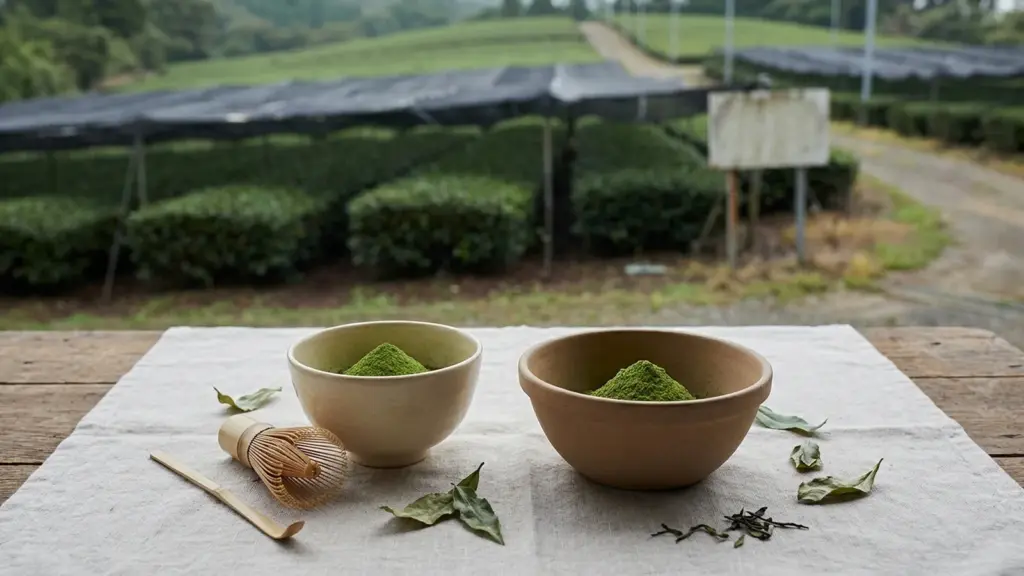
Aichi: Nishio Matcha and Regional Provenance
Aichi includes Nishio, a documented Japanese matcha origin. Learn how prefecture, growing area and processing details differ.Definition of Aichi
Aichi is a Japanese prefecture that includes Nishio, a documented matcha production area. The prefecture name identifies a broad origin, not a tea grade or a fixed taste. For a specific powder, confirm where the leaves grew and where they were processed.
1 term related to Aichi
Learn more
Aichi and Nishio are different levels of origin
Aichi is a Japanese prefecture; Nishio is a city within it and an established matcha-producing area. Keeping those names separate matters when reading a label. A powder described only as Aichi matcha has a broader stated origin than one with a documented Nishio growing location. Neither name, by itself, identifies the farm, cultivar, harvest or place of milling.
Aichi’s official tourism page on matcha identifies Nishio as a producer and describes opportunities to visit factories and taste tea. This supports the region’s genuine matcha connection without needing to call it Japan’s largest producer. Tea output, tencha output and finished matcha are different measurements; a rank requires a year and a clearly defined product.
Tea history is not a dated processing specification
The prefectural tourism account says production is believed to have begun in 1271. Treat that as an attributed local origin story, not proof that today’s covered cultivation or industrial matcha methods were already in use then. A long connection with tea does not mean every stage of modern manufacture has remained unchanged.
Nishio’s contemporary tea shops and factory visits are useful ways to encounter the local trade. They also show why a producing region should not be reduced to an assumed end use. Aichi is not a synonym for inexpensive culinary powder, just as a Kyoto label alone is not evidence of superior drinking quality.
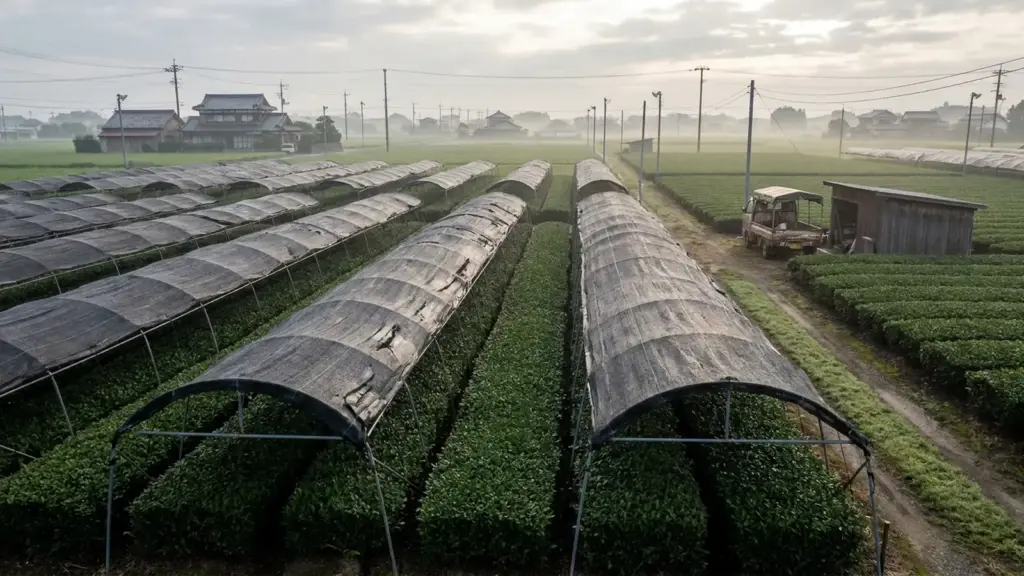
From covered tea fields to powdered tencha
The Japan Matcha Association’s process explanation describes shading the tea plants, steaming harvested leaves, drying without rolling and milling the resulting tencha. Drying without rolling is a useful distinction from sencha manufacture. Milling ordinary finished leaf tea does not retrospectively turn it into tencha.
The general method explains what to ask an Aichi supplier; it does not establish one shading duration, cultivar mixture or harvesting method for every local farm. Likewise, organic status belongs to a documented operator or product. It cannot be inferred from the prefecture, the use of natural fertilizer or a nearby producer’s certificate.
How to compare an Aichi matcha
Start with the growing location, then ask whether the product blends leaves from different places. Check harvest information, the stated raw material and the finishing or milling site. A company address in Nishio is useful contact information but is not, on its own, a complete leaf-origin statement.
The tourism page describes Nishio tea in favorable sensory terms, but that is not a specification for every lot. Compare samples at the same tea-to-water ratio and temperature, noting aroma, astringency, texture and finish. Select for your intended use rather than assuming a prefecture fixes sweetness, price or grade. Claims about a national production share or the percentage used in food need separate dated evidence; they are not necessary to understand Aichi’s place in matcha.
Sources and references

Accessed: 2026-09-08
Language: en
Nishio produces matcha; tourism source attributes an origin story to 1271 and describes factory tours and tastings. Does not establish national ranking or modern shading in 1271.
Accessed: 2026-09-08
Language: en
Matcha process only: shaded leaves, steaming, drying without rolling, and milling tencha; not its speculative history or health claims.

Emilie Schol
Founder of Best MatchaFrequently asked questions
Here are some frequently asked questions and answers.Is Aichi the same origin as Nishio?
Is Aichi the same origin as Nishio?
No. Aichi is the prefecture and Nishio is a city within it. Ask whether a product’s origin statement concerns the leaves, processing or the seller’s address.
Does Aichi mean culinary-grade matcha?
Does Aichi mean culinary-grade matcha?
No. A regional origin does not determine grade or intended use. Compare the stated production details and the actual sample instead of assigning a culinary share without dated evidence.