Terroir: How Place and Practice Shape Matcha
Terroir links growing place and local practice. For matcha, distinguish environmental context from claims about a particular tea’s flavor.Definition of Terroir
Terroir is a concept linking an agricultural product with its growing environment and local practices. Applied to matcha, it frames questions about climate, soil, geography and cultivation. It is not a formula predicting flavor: cultivar, processing, storage and preparation also matter for a particular tea.
Learn more
Defining Terroir in Matcha Production
Terroir describes the interaction of a growing place with the practices used there. Climate, soil, topography and local knowledge provide a useful way to discuss agricultural products. In matcha, the idea helps organize questions about where tea grew and how it was cultivated; it does not determine every feature of the finished powder.
The OIV’s 2010 definition is specifically about wine. It includes the physical and biological environment, applied practices and accumulated knowledge. Borrowing that framework for tea is an analogy, not proof that a particular Japanese soil produces a particular matcha flavor. The OIV also distinguishes descriptive terroir from a legal geographical indication.
Core Elements of Matcha Terroir
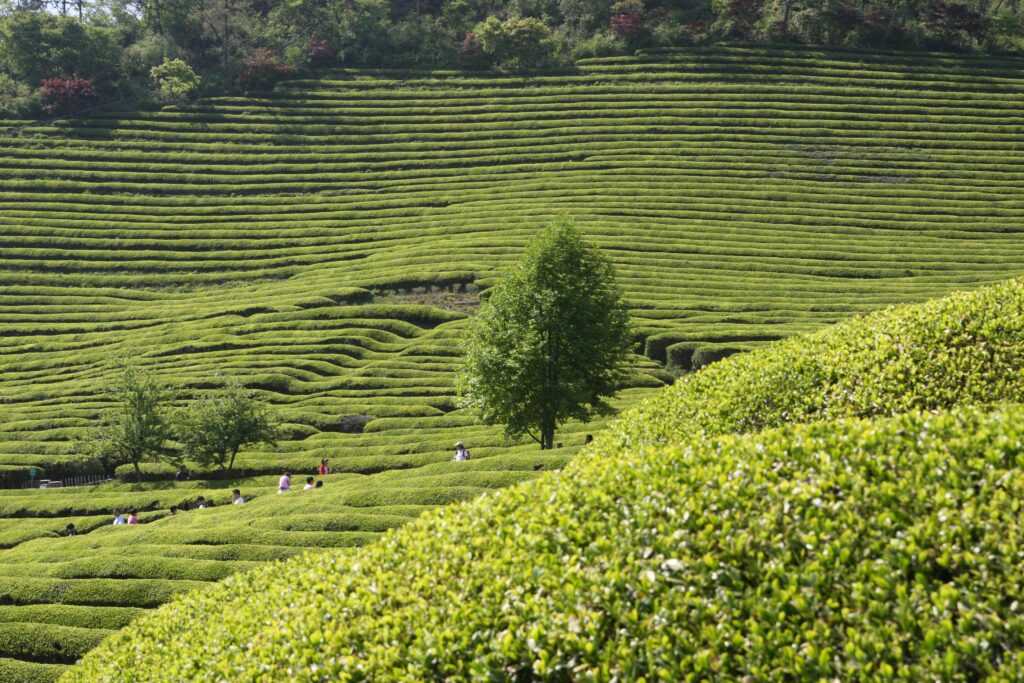
Climate includes seasonal temperature, rainfall and sunlight. Geography includes slope, elevation and landscape exposure. Soil is relevant to roots, water and nutrient management. These factors interact with a grower’s choices, including shading and harvest timing. A regional name is therefore the beginning of an explanation, not a complete recipe for sweetness or umami.
Why soil is not a flavor chart
Clay and sand describe physical properties of soil, not fixed tasting notes. A claim that clay always gives savory depth or sand always produces a lighter tea needs evidence from comparable tea lots. Faster drainage should not be equated with preventing all mineral buildup. Nor does volcanic geology prove that identifiable minerals will be tasted in the bowl.
Separate environment from processing
JETRO describes matcha manufacture as a sequence: shade-grown leaves are steamed and dried without rolling, refined as tencha and milled. This sequence matters alongside the field environment. The same region can supply different tea products, and a leaf’s origin cannot tell you whether it followed the tencha route.
Reading Regional Names Carefully
Uji and Nishio remain useful examples of places with established matcha traditions. MAFF explains that Uji tea can use leaves from Kyoto, Nara, Shiga or Mie processed in Kyoto using Uji-origin methods. A Uji label should therefore not automatically be read as one plot within Uji City. Ask for leaf origin separately if that level of detail matters to you.
A single-origin product can make provenance easier to follow, but the term still needs a stated scale: farm, town or region. Blended matcha may combine cultivars or origins to achieve a desired profile. Neither arrangement alone proves that a tea will taste more complex or better.
A More Useful Tasting Comparison
To explore place, compare products with as much other information in common as possible. Record cultivar, harvest, shading, producer and milling or packing information when supplied. Prepare the bowls with the same recipe. Write down perceived aroma, body, sweetness, umami and astringency before reading a seller’s regional description.
This is a practical comparison, not a controlled agricultural experiment. Differences between two products may reflect cultivation, processing, storage or preparation as well as place. Treat “this lot tasted sweeter” as an observation; “all tea from this soil is sweeter” is a much broader claim. That distinction preserves terroir’s value without turning origin into a national or regional quality ranking.
Sources and references

Accessed: 2026-09-08
Language: en
2010 descriptive wine-sector definition includes physical and biological environment and applied practices; not a geographical indication or tea-specific causal study.
Accessed: 2026-09-08
Language: en
Shaded leaves are steamed and dried without kneading for tencha, refined then milled. Uji and Nishio are traditional production centers; Kyoto, Aichi and Shizuoka are named. Usucha is whisked; koicha uses less water and is kneaded. Mechanical powdering as well as stone milling is described.
Accessed: 2026-09-08
Language: en
Uji tea includes leaves from Kyoto, Nara, Shiga and Mie processed in Kyoto using Uji-origin methods. Under-cover cultivation and non-rolled tencha distinguish matcha processing from sencha and gyokuro.

Emilie Schol
Founder of Best MatchaFrequently asked questions
Here are some frequently asked questions and answers.Does terroir determine matcha flavor?
Does terroir determine matcha flavor?
It is one way to discuss environmental and local-practice influences. Cultivar, processing, storage and preparation also matter, so origin alone cannot predict a bowl.
Does volcanic soil give matcha a mineral taste?
Does volcanic soil give matcha a mineral taste?
That causal claim needs tea-specific evidence. A volcanic location or a mineral-like tasting note does not by itself establish the connection.
Is single-origin better than blended matcha?
Is single-origin better than blended matcha?
Not automatically. Single-origin identifies sourcing at a stated scale; a blend describes composition. Compare the actual products and the information supplied.