Tools by the problem they solve
Matcha preparation tools help measure powder, break up clumps, disperse it in water and serve the drink. The core tasks remain useful whether you use traditional tea utensils or a practical kitchen substitute. A full ceremonial set is not necessary for an everyday cup.
Matcha does not completely dissolve like sugar. Mixing distributes fine leaf particles through the water, and some may settle later. Sifting addresses clumps; whisking addresses dispersion and aeration. Neither guarantees a permanently uniform drink.
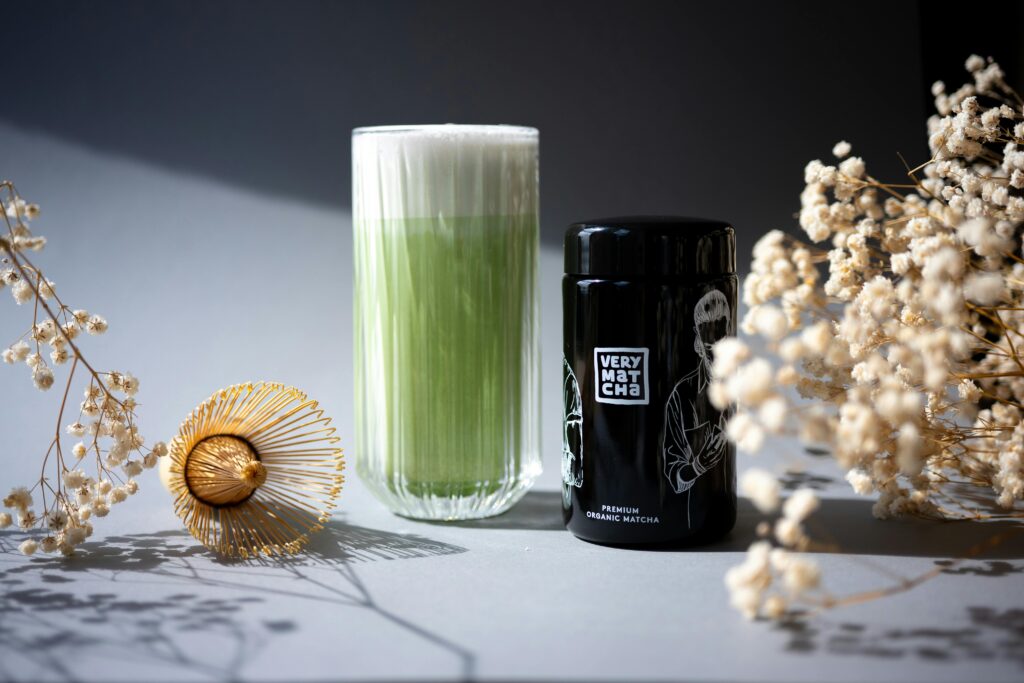
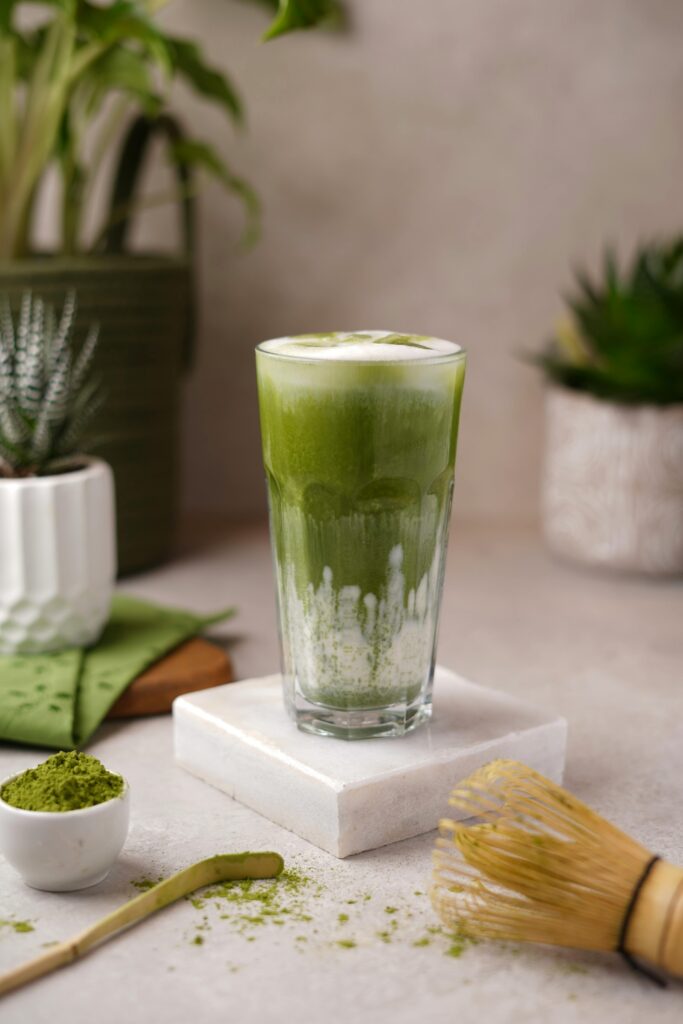
Chasen: the bamboo whisk
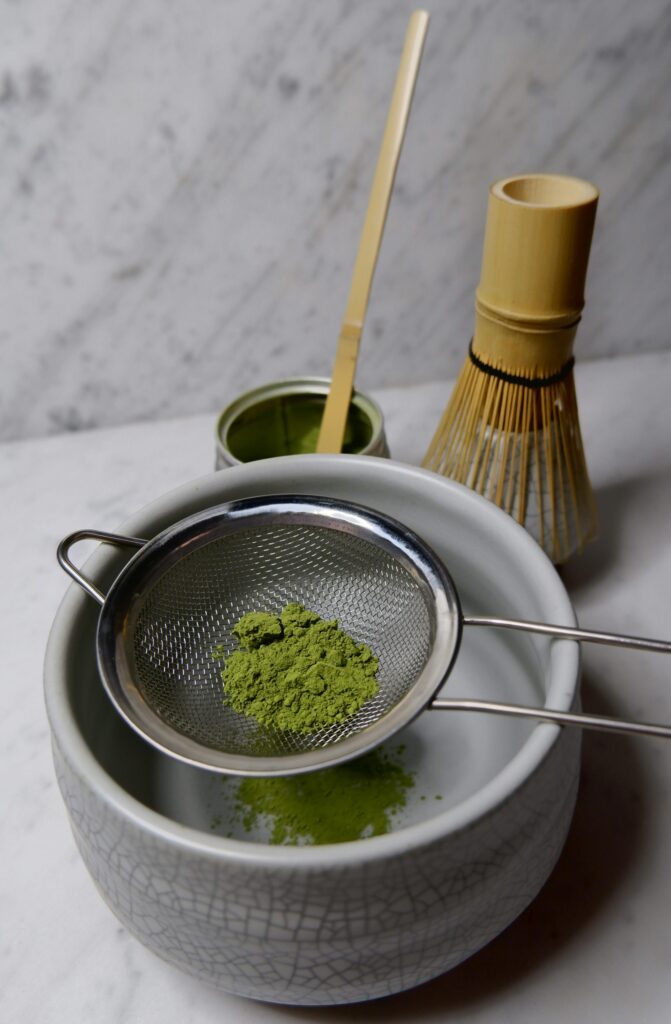
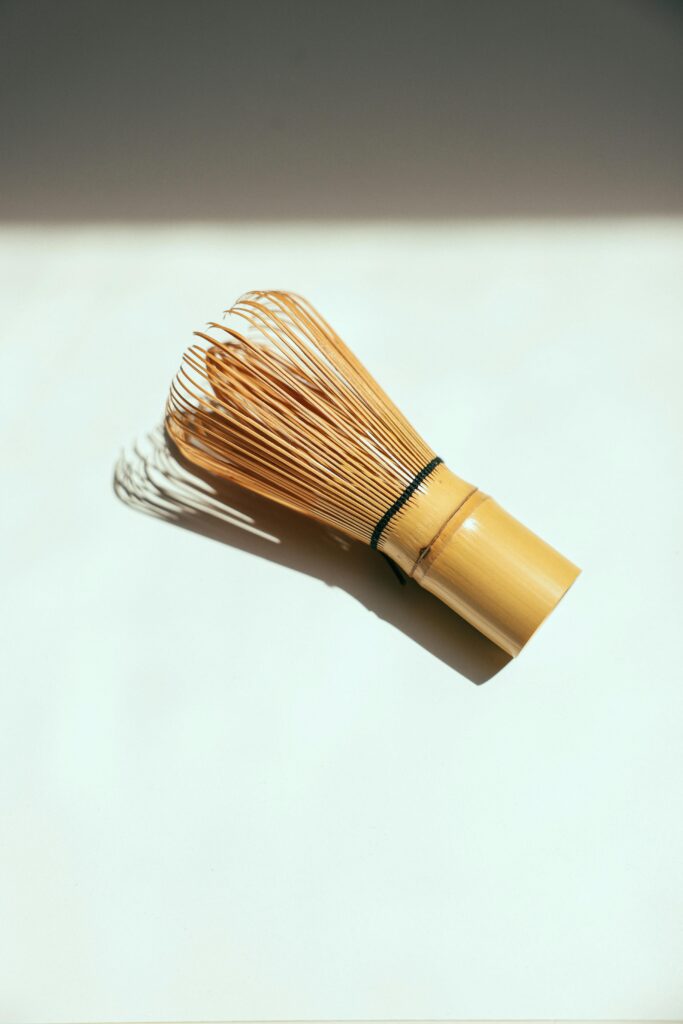
Omotesenke defines the chasen as a bamboo utensil for mixing powdered green tea and hot water. Traditional Crafts Aoyama Square documents Takayama whisk production and explains that material, shape and tine configuration vary by tea school and purpose. This is better guidance than ranking every whisk by a simple 80-, 100- or 120-tine ladder.
For a class, follow the teacher’s preferred style. For home use, choose a whisk that fits your bowl and intended preparation. More tines do not by themselves guarantee better foam, durability or flavor. Takayama’s craft history is meaningful without repeating undated artisan counts or a market-share percentage.
Chawan: room to mix and drink
A chawan is a tea bowl. The practical questions are whether its interior is suitable for food contact, whether the whisk can move without striking the sides, and whether the depth contains splashes. A wide household bowl may perform those tasks even if it is not a named ceramic style.
Traditional bowls also have cultural and aesthetic significance. Omotesenke’s glossary describes Chinese, Korean and Japanese examples in tea history. That variety does not support a universal rule about pale glaze, exact dimensions or one pottery tradition always being the best.
Chashaku, scale and sifter
A chashaku is a scoop for powdered tea, usually bamboo in the tea tradition described by Omotesenke. It is not a calibrated one-gram instrument. Scoop loading and powder condition affect the amount transferred; a scale is useful when you want repeatable recipe comparisons.
A furui or fine sifter helps break up agglomerated powder before mixing. Ippodo’s cold and hot recipes begin by sifting. Do not describe this as faster dissolution, and do not assume sifting removes every sensation of texture. It is a small preparation step, not a test of the powder’s grade.
Traditional tools and household alternatives
A suitable electric frother or a sealed container used with cold water can disperse powder for everyday drinks. Results depend on the device, vessel, dose and technique. Only a controlled comparison could establish precise claims about foam stability or preparation speed, and foam coverage itself varies with tea style.
Do not shake hot liquid in a closed container. For a bamboo whisk, follow the maker’s care instructions, rinse after use and allow it to dry thoroughly. Inspect for damaged tines or persistent contamination rather than relying on a promised replacement interval. Ordinary food-safe stainless steel is not automatically unsuitable just because traditional utensils use bamboo.
A starter kit is different from ceremony equipment
Begin with a suitable vessel, a way to measure powder and a mixing tool; add a sifter if clumps are troublesome. For formal study, the teacher may specify additional utensils and handling. Omotesenke distinguishes a chakin for wiping the bowl from a fukusa used in ritual handling, and a natsume for thin tea from a chaire for thick tea. A ceremonial caddy is not automatically an airtight long-term storage container.
Explore Chasen, Chawan, Chashaku and Furui for individual objects. Temae concerns their procedural use, not a shopping checklist or a claim that expensive tools are required for drinkable matcha.
Related glossary entries
Continue with the individual entries in this topic group: