Defining thick tea
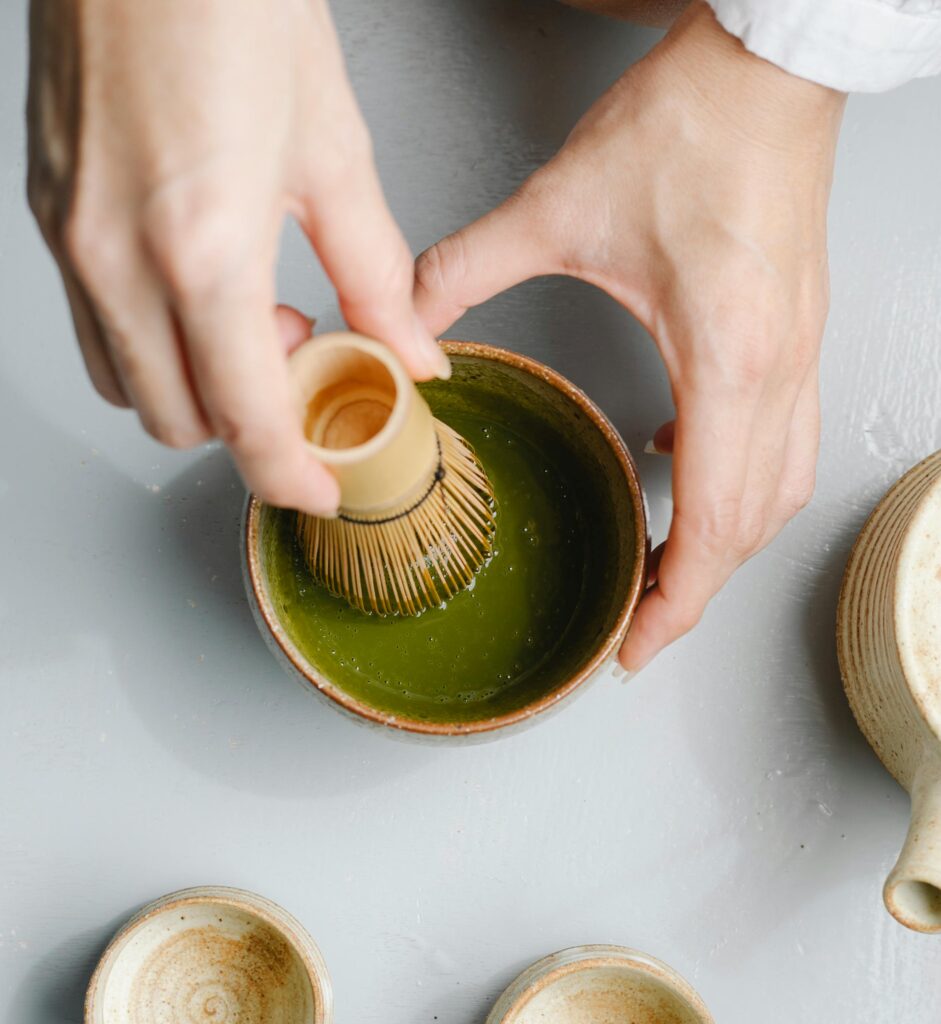
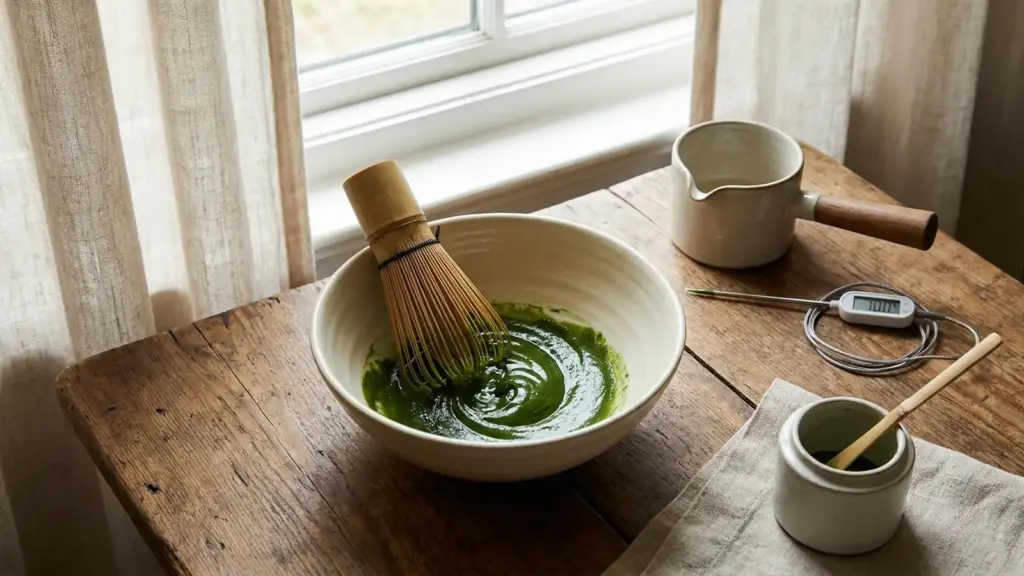
Koicha (濃茶) means thick tea. It is concentrated matcha made with more powder relative to water than usucha. Gentle blending or kneading produces a dense, smooth consistency rather than a deliberately aerated foam layer. The preparation name is not a cultivar or harvest designation.
Thick versus thin tea is useful in a tea school and when learning at home. Koicha is associated with formal gatherings, but not exclusively reserved for ceremonies. Ippodo gives a home method and also suggests dessert uses.
One producer’s recipe
Ippodo’s koicha guide uses 4 g of sifted matcha with 30 mL water at 80°C. The mixture is worked gently with a chasen, moving back and forth and in circles until smooth. These are the producer’s quantities, not a definition all schools must follow.
A ratio such as 4 g with 50 mL should not be treated as the single traditional recipe. Omotesenke describes scoop portions and a thickness like arrowroot broth. Use instructions associated with the tea, teacher or gathering rather than converting every description into one universal formula.
Choosing tea for concentration
Ippodo recommends more sweetness and less sharpness because koicha is powerful. An explicit producer recommendation for koicha is more informative than an unexplained ceremonial label. Concentration can make briskness more prominent, so suitability concerns taste and preparation.
There is no basis here for requiring bushes older than thirty years, a universal shading duration or a fixed commercial grade. Nor does 80°C mark a sharp threshold where amino acids are preserved and hotter water ruins the tea. It is a recipe temperature, not a chemical protection guarantee.
Formal service and its exceptions
Omotesenke identifies thick tea as the most important part of a chaji and describes sharing a bowl among guests. It calls the mixing kneading. This supports the communal-service explanation within that tradition and setting.
Sharing is not an invariant definition. An Urasenke pandemic-era class report describes tasting koicha in individual bowls. Home preparation can also be for one person. Do not say every guest must always drink from the same bowl or take an identical number of sips.
Mixing and etiquette are different instructions
For practical mixing, sift the powder and combine it evenly with the water. Work gently instead of building a foam cap. In formal practice follow the teacher’s method; a short home recipe cannot describe all host and guest movements at a chaji.
Ask the host about handling, drinking and passing the bowl. Omotesenke describes kaishi as paper used to wipe the rim after thick tea, but that does not turn one sequence into universal etiquette across schools and present-day arrangements.
What to notice in the bowl
Notice concentration, consistency and the particular tea’s flavor at that strength. Smooth mixing matters, but koicha does not mean leaf particles dissolve like sugar. Dense character distinguishes the style without a foam test, first-harvest certificate or an absolute ranking above every other preparation.