Chashaku: The Matcha Scoop, Not a Calibrated Gram Measure
A chashaku transfers matcha into a tea bowl. Learn why scoopfuls vary, how to compare them with a scale, and which preparation claims to avoid.Definition of Chashaku
Chashaku is a Japanese tea scoop used to transfer matcha powder into a tea bowl, most often associated with a slender bamboo form. It serves both preparation and tea practice, but is not a calibrated gram measure. The amount held depends on the scoop and how the powder is loaded.
Learn more
What is a Chashaku?
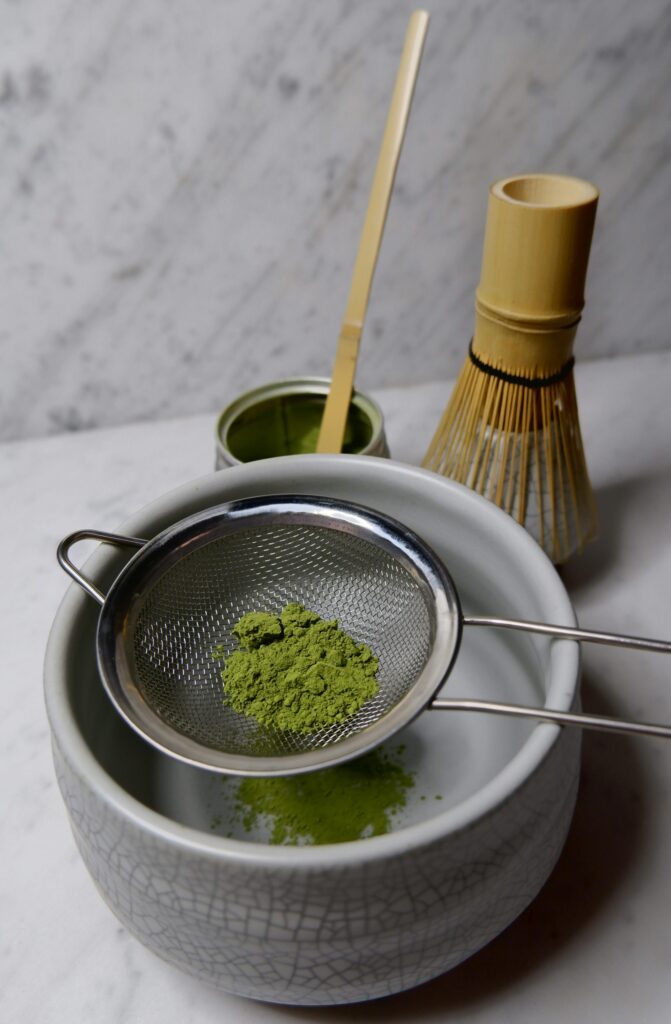
The chashaku transfers matcha powder into a bowl. The familiar form is slender bamboo with a shaped scooping end. Ohio State University’s Japan Discovery Box describes a scoop carved from one piece of bamboo and identifies its portioning role.
Do not confuse it with the chasen, which mixes powder and liquid. The scoop moves dry tea; it does not set water temperature, guarantee foam or turn a recipe into a precision measurement.
Why a scoopful is not a fixed gram
A scoopful depends on the utensil, size of the heap and how loosely the powder rests on it. Recipes can offer scoopfuls as practical approximations without calibrating every utensil to the same mass.
Ippodo’s latte recipe pairs 3 g with three heaped tea ladles. That belongs to this recipe, not a universal conversion. If another teacher describes a different heap, the quantities need not agree. Preserve the instruction rather than treating every scoop as interchangeable grams.
Using a scale alongside the scoop
If a recipe specifies grams, tare a suitable scale with a receiving bowl and weigh the powder. To understand your scooping habit, transfer several ordinary scoops one at a time and note the readings. This is an informal check, not permanent calibration.
Repeat if tea or filling technique changes. Keep powder and water quantities as separate variables. If a drink tastes too strong, adjust one deliberately rather than assuming temperature compensates exactly for an unknown powder mass.
Bowl and whisk size do not prescribe dose
A larger bowl offers different workspace, but its diameter does not itself require another scoop. Choose room to mix without spilling and use the recipe’s powder and water quantities. A whisk’s tine count is not a formula for the number of scoops.
Claims that a two-stage scoop-and-temperature technique selectively extracts sweetness, or that every competition mandates a precise scoop count, require their own evidence. They are not properties of a chashaku. Follow qualified school-specific instruction for formal procedures.
Handling and care
Ippodo recommends sifting before whisking for smoothness. Handle the scoop gently around a sieve; it transfers powder rather than forcefully grinding damp lumps through mesh. Persistent lumps warrant attention to the powder’s condition and storage.
Follow the maker’s care instructions for the actual material and finish. Keep the scoop clean and dry for dry tea, and inspect for damage. Do not rely on claims that bamboo is universally antibacterial, never retains powder or prevents static in every condition.
Do you need one for everyday matcha?
A chashaku is meaningful in tea practice and useful for powder handling. A clean food-safe spoon and scale can portion everyday drinks, but that does not make every spoon a substitute in a specific school’s procedure. Distinguish formal practice from measuring a recipe at home.
Sources and scope
Tea: Scoop (Ohio State University, Japan Discovery Box). Matcha Latte – Preparing Tea (Ippodo Tea).
Sources and references


Accessed: 2026-09-08
Language: en
Chashaku bamboo scoop and its role in portioning matcha.
Accessed: 2026-09-08
Language: en
Recipe: 3 g sifted matcha, 90 ml water at 80°C, whisk 15 seconds, add milk or soy milk to preference; three heaped tea ladles is this recipe’s approximation.

Emilie Schol
Founder of Best MatchaFrequently asked questions
Here are some frequently asked questions and answers.How many grams does one scoop hold?
How many grams does one scoop hold?
There is no universal calibrated amount. Use a scale when the recipe specifies grams.
Can I use an ordinary spoon?
Can I use an ordinary spoon?
For everyday portioning, a clean food-safe spoon and scale can work. Follow the school’s utensils for formal practice.
Does a wider bowl need more scoops?
Does a wider bowl need more scoops?
Not merely because it is wider. Powder and water amounts define the recipe; bowl size provides workspace.
Does bamboo guarantee no bacteria or flavor transfer?
Does bamboo guarantee no bacteria or flavor transfer?
No universal guarantee is established here. Follow maker care instructions and inspect the utensil.