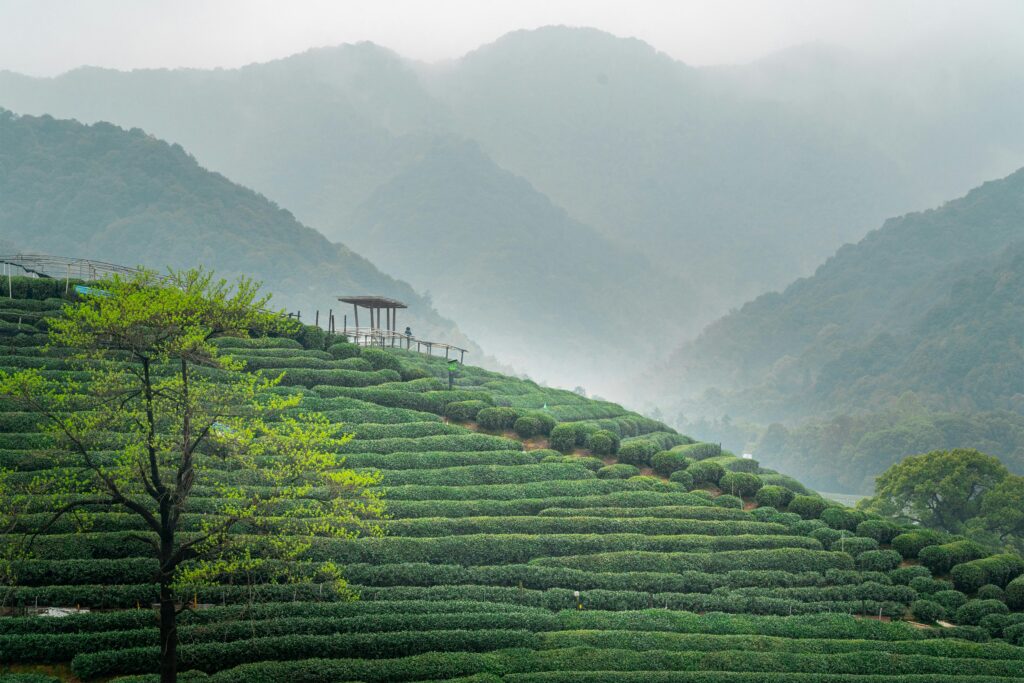
Jiangsu is an eastern Chinese province known for premium green tea cultivation, particularly Bi Luo Chun from Suzhou's Dongting Mountains with mild climate.
Jiangsu Matcha Production and Regional Characteristics
Jiangsu province sits in East China’s coastal region, straddling temperate and subtropical climate zones that create ideal conditions for tea cultivation. This ancient tea-producing area, with nearly 2,000 years of cultivation history, has emerged as a substantial contributor to China’s matcha production, which represents about 60% of the world’s total output. In 2024 alone, Jiangsu’s matcha production exceeded 1,200 tonnes, blending traditional tea-making heritage with modern processing methods.
Climate and Terroir That Shape Flavor
The province’s humid subtropical climate in southern regions provides moderate rainfall and four distinct seasons that influence matcha characteristics. Tea plants thrive in Jiangsu’s fertile, organic-rich soils with excellent permeability and ventilation. The terrain varies from flat plains to gentle hills, creating microclimates across different growing areas. This terroir produces matcha with coumarin and fruity notes, sharing aromatic similarities with neighboring Zhejiang province’s output. The moderate temperatures and consistent rainfall create conditions for tender leaf growth, which translates to the delicate flavors matcha drinkers recognize.
Key Growing Regions and Their Distinctions
Several areas within Jiangsu contribute to matcha production, each with subtle variations. Yixing, a county-level city in Wuxi, stands out with its 2,000-year tea-growing legacy and particularly fertile soil conditions. The Nanjing Plain and Yangzhou Plain also serve as productive tea-growing zones. Southern Jiangsu, part of the broader Jiangnan tea region, benefits from its proximity to traditional tea culture centers. The province’s position bordering Zhejiang allows for knowledge exchange and similar cultivation practices. These regions produce green tea varieties like the famous Bi Luo Chun, and the same cultivars and growing conditions that create refined green teas also yield quality matcha when processed differently.
Flavor Profile and Processing Methods
Jiangsu matcha carries floral and fruity characteristics inherited from the region’s green tea tradition. The flavor profile tends toward delicate and refined rather than bold or grassy, with a refreshing aftertaste that reflects the moderate climate. Producers use shading technology before harvest to reduce caffeine content and astringent compounds, intensifying the umami qualities and vibrant green color. The processing involves several steps:
- Shading tea plants 20-30 days before harvest to boost chlorophyll and amino acids
- Handpicking the youngest, most tender leaves for optimal texture
- Steaming leaves immediately after harvest to halt oxidation
- Drying and stone-grinding into fine powder using traditional methods
The combination of Jiangsu’s terroir, cultivar selection, and processing techniques creates matcha with balanced sweetness and minimal bitterness. Spring harvests, which occur slightly earlier than Anhui but later than Sichuan, produce the most prized matcha with peak flavor concentration. This timing coincides roughly with Zhejiang’s harvest, placing Jiangsu in the optimal window for quality matcha production within China’s tea calendar.
Jiangsu's matcha production centers around several key areas within the province. Yixing, Liyang, and parts of Nanjing are the primary tea-growing counties and cities where matcha is cultivated. These areas fall within the broader Jiangnan tea region, which has supported green tea cultivation for centuries.
The province's humid subtropical climate, characterized by four distinct seasons and fertile plains with low hills, creates suitable conditions for tea trees. While Jiangsu isn't as dominant in matcha production as southern provinces like Zhejiang or Guizhou, it's gaining recognition as a specialty matcha source. China's matcha production accounts for about 60% of the world's total, with Jiangsu playing a growing role in that landscape.
Jiangsu matcha offers a lighter, more delicate flavor profile than traditional Japanese matcha. You'll notice it's less umami-forward and has more vegetal, slightly sweet notes with a fresh, mellow character.
Here's why the taste differs:
- Japanese matcha uses extensive shade-growing techniques that boost amino acids and create that signature umami richness
- Jiangsu matcha typically grows in sunnier conditions, resulting in a brighter, less intense body
- The moderate climate and soil composition in Jiangsu produce less astringent powders with a more balanced sweetness
If you're looking for something gentler than the bold, grassy punch of premium Japanese matcha, Jiangsu's offerings provide an approachable alternative.
Shade-growing is less commonly practiced in Jiangsu compared to Japanese matcha production. Most Jiangsu tea cultivation happens in sunnier conditions, which is a key factor that distinguishes Chinese matcha from Japanese varieties. This difference in growing method directly impacts the chemical composition—shade-grown leaves develop higher chlorophyll and amino acid content, while sun-grown leaves tend to have different catechin profiles and a lighter flavor.
The region benefits from a humid subtropical climate with adequate rainfall, moderate temperatures, and four distinct seasons. This climate supports steady tea plant growth throughout the year. The terrain includes fertile plains and low hills with nutrient-rich soils that tea plants thrive in.
The temperate conditions—similar to neighboring Zhejiang province—allow for consistent spring harvests when young leaves are plucked for matcha production. The balance of moisture and warmth creates an environment where tea plants can develop the fresh, sweet characteristics that define Jiangsu green teas.
Tea cultivation in Jiangsu dates back centuries, with a long-standing tradition focused primarily on green tea production. The province has historically been known for leaf teas like Bi Luo Chun rather than powdered matcha-style preparations. The shift toward matcha production is relatively recent, reflecting modernization and diversification within China's tea industry as global demand for matcha has grown.
This deep heritage means Jiangsu tea growers bring generations of knowledge about cultivation techniques, leaf selection, and processing methods—even as they adapt these traditional practices for matcha production.
Yes, you'll find Jiangsu matcha available alongside products from other Chinese provinces like Zhejiang, Guizhou, Anhui, and Fujian, as well as Japanese matchas. Since China produces about 60% of the world's matcha, comparing regional options gives you access to diverse flavor profiles and quality levels. Jiangsu matcha typically offers a bright green color, fine texture, and balanced flavor that sits between the intensity of Japanese ceremonial grades and lighter Chinese alternatives.
When comparing options, look at specific production details, harvest timing, and processing methods to understand what distinguishes each source.