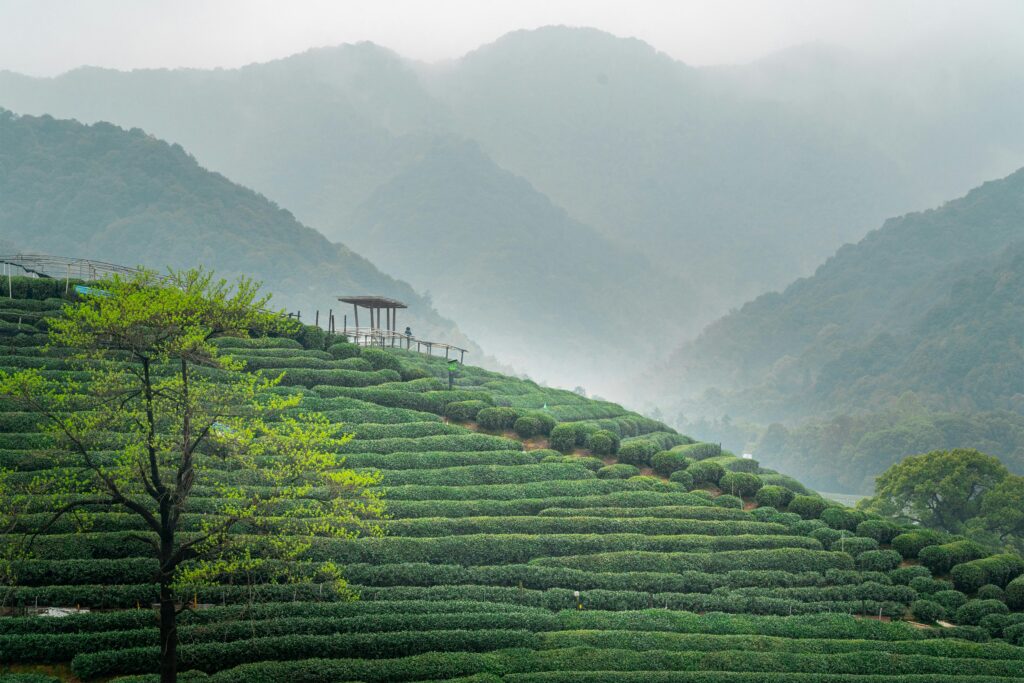
Guizhou is a southwest Chinese province with tea plantations above 1100m elevation, producing matcha with smooth roasted chestnut, nori notes, and umami.
000 years old
Guizhou matcha is produced in southwestern China from tea plantations located above 1,100 meters. The province’s elevated plantations form the geographic and growing context given for its matcha. The record associates this origin with a smooth profile featuring roasted chestnut, nori, and umami notes.
Guizhou matcha is described as smooth, with roasted chestnut, nori, and umami notes. These flavor characteristics are associated with tea grown on elevated plantations in the southwestern Chinese province. The record directly connects this profile with plantations situated above 1,100 meters.
The tea plantations associated with Guizhou matcha are described as being above 1,100 meters in elevation. Located in southwestern China, these elevated plantations produce matcha characterized by a smooth combination of roasted chestnut, nori, and umami notes according to the provided record.
Guizhou is a southwestern Chinese province whose matcha comes from tea plantations above 1,100 meters. Its matcha is distinguished in the record by a smooth flavor profile that includes roasted chestnut, nori, and umami notes, combining a specific elevated origin with clearly identified tasting characteristics.
Yes. Roasted chestnut and nori are both identified as notes in Guizhou matcha, together with umami and a smooth overall character. This flavor description is linked to matcha produced from tea plantations above 1,100 meters in the southwestern Chinese province of Guizhou.