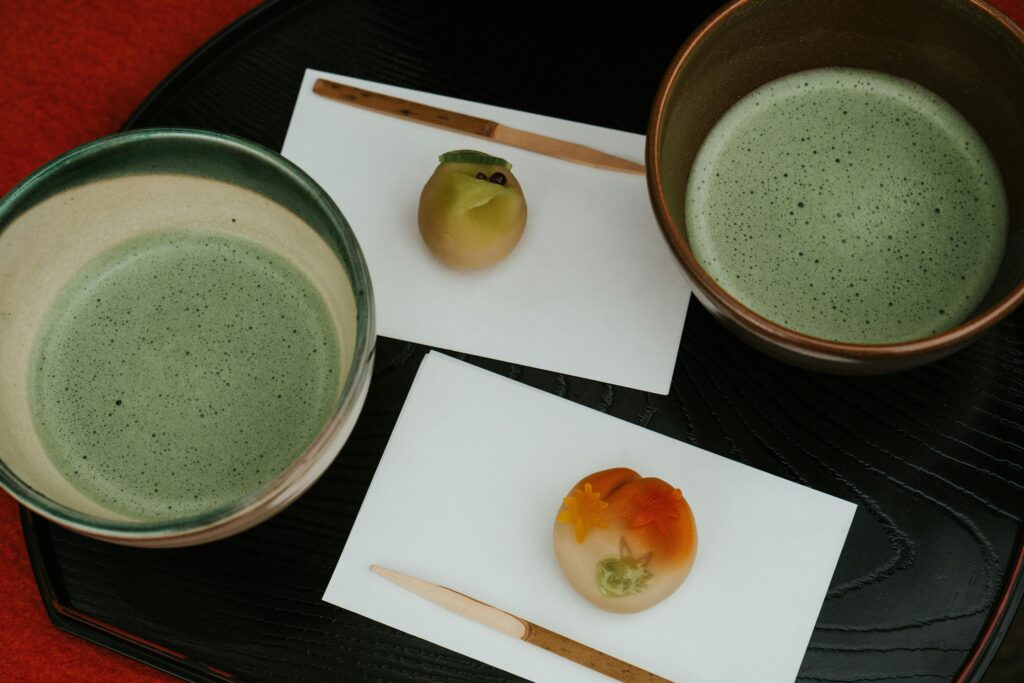
Definition of Cha-no-yu

Cha-no-yu is a hyphenated spelling of chanoyu, the Japanese practice of preparing and sharing matcha with guests. Written 茶の湯 and read cha-no-yu, the term is commonly glossed as “hot water for tea”; its cultural meaning includes the gathering and its forms, not just the water.

Learn more

Cha-no-yu is a hyphenated spelling of Chanoyu, written 茶の湯 in Japanese. It does not name a different ceremony, school or grade of matcha. Japan Search uses “Cha-no-yu” for its cultural collection guide, while tea schools also use the unhyphenated form. Both refer to the practice of preparing and sharing tea.

Spelling, reading and literal meaning

The Japanese reading is ちゃのゆ: cha-no-yu. The small ゃ belongs with ち to make cha; it is not an extra “ya” syllable. Hyphens make the parts visible to an English reader, but they do not create pauses or change the Japanese word.

  • Cha (茶): tea.
  • No (の): the linking particle between the two nouns.
  • Yu (湯): hot water.

“Hot water for tea” is the familiar literal gloss. It is not, however, a complete definition of the cultural practice. The Digital Daijisen entry reproduced by Kotobank distinguishes inviting guests to enjoy prepared matcha—including the procedures and gathering—from the literal sense of water heated for tea. Context tells you which meaning is intended.

Why translations differ

“Tea ceremony” is a common English translation, but a museum or school may describe the same subject as a cultural practice or art of tea. Japan Search introduces Cha-no-yu as a composite art involving architecture, gardening, calligraphy, crafts, philosophy and cooking. A catalogue about tea bowls may therefore discuss the same tradition as a class about hosting guests, despite emphasizing different aspects.

Chadō (Sadō) means the Way of Tea. The encyclopedia entry on Kotobank describes chanoyu and chadō as nearly synonymous, while noting a stronger sense of spiritual discipline in chadō. Urasenke explicitly introduces chado as also known as chanoyu. That difference in wording is useful context, not a rigid division between practical tea-making and a separate philosophy.

Reading Japanese sources without confusing the terms

When an English spelling leads to few useful results, look for 茶の湯 as well as chanoyu and cha-no-yu. The kana ちゃのゆ supplies the reading; it is not another style of tea. Search the complete expression, since 茶 by itself covers a much wider range of tea topics.

Next, check what kind of source you are reading. A dictionary explains usage. A museum record may describe an object associated with tea rather than teach its handling. A school manual specifies procedures within its own tradition. Urasenke’s resource list, for example, separates introductory study, usucha procedures and koicha procedures.

Keep neighboring terms distinct: temae concerns preparation and serving forms, while chaji identifies a full tea gathering. Neither is simply a new spelling of cha-no-yu. This distinction helps when matching a Japanese heading to an English translation or deciding whether an event description promises a full gathering.

What the name does not tell you

The spelling alone cannot establish seating, duration, utensils or the amount of foam in the bowl. Those details belong to the particular event and instruction. For an account of host and guest practice, use the Chanoyu entry; for schools and learning, use Chadō (Sadō). The different reading focuses do not turn these closely related names into separate cultural traditions.

Sources

Sources and references

References supporting this page are listed below. Source access dates and supported claims are recorded in the evidence notes where available.
茶の湯: meaning and reading
Accessed: 2026-09-08
Language: ja

Reading ちゃのゆ; gathering/practice and literal hot water senses; chanoyu and chado nearly synonymous, with a stronger disciplinary connotation for chado.

Cha-no-yu (Tea Ceremony)
Accessed: 2026-09-08
Language: en

Hyphenated spelling for 茶の湯; architecture, gardening, calligraphy, crafts, philosophy and cooking.

An Introduction to Chado
Accessed: 2026-09-08
Language: en

Chado and chanoyu name the same tradition; host and guest, seasonality, four principles, Rikyu and the three Sen lineages.

Urasenke Chado Study Resources in English
Accessed: 2026-09-08
Language: en

Progressive host and guest study; separate usucha and koicha procedures; seasonal equipment and vocabulary.

Updated on September 8, 2026
Portrait of Emilie Schol, Founder of Best Matcha

Emilie Schol

Founder of Best Matcha

Frequently asked questions

Here are some frequently asked questions and answers.

What is Cha-no-yu?

Cha-no-yu is the Japanese ceremonial practice of preparing and serving matcha. Its name literally means “hot water for tea,” and it is also called chado or sado, meaning “the way of tea.” The practice combines artistic expression, spiritual discipline, cultural refinement, mindfulness, aesthetics, and human connection.

What principles guide Cha-no-yu?

Cha-no-yu is guided by harmony, respect, purity, and tranquility. Harmony concerns the relationship among host, guests, utensils, and surroundings. Respect extends to participants and the tea. Purity applies to space, implements, and intention, while tranquility names a guiding ideal rather than a promised emotional result. Together, these principles shape behavior throughout the ceremony.

Which utensils are essential for Cha-no-yu?

Important implements include the chawan tea bowl, chasen bamboo whisk and chashaku scoop. Urasenke’s study resources also discuss tea containers and cloth handling within specific preparation forms. The equipment and procedures depend on the tea being served and the instruction being followed, rather than one universal list for every occasion.

What is the difference between usucha and koicha in Cha-no-yu?

Usucha is thin tea, while koicha uses a higher concentration of matcha to make thick tea. Thin tea may be whisked to develop foam; thick tea is mixed slowly. Usucha is not confined to casual occasions: Urasenke describes full formal gatherings that include two types of matcha.

How do guests receive and drink tea during Cha-no-yu?

Follow the host’s guidance for receiving and drinking the tea. Urasenke’s resources treat guest conduct, taking sweets, drinking tea and inspecting utensils as subjects of study, with procedures differing by preparation and bowl. A brief description should not replace the instructions for the actual gathering.