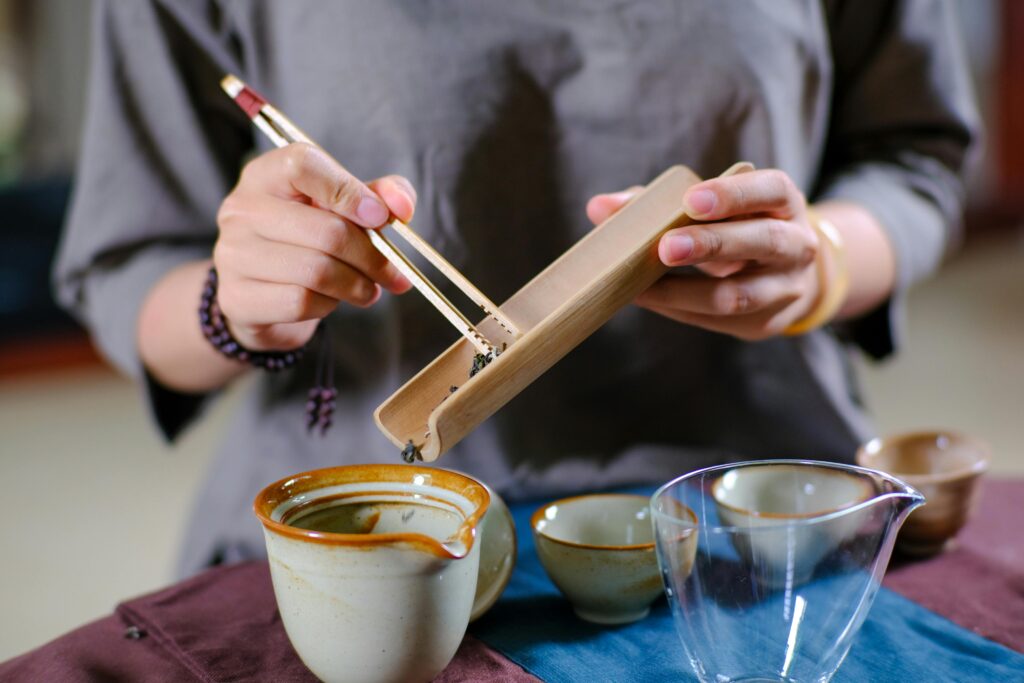
Ichigo Ichie: Each Tea Gathering as a Unique Encounter
Ichigo Ichie means each tea gathering is unique. Distinguish Rikyū’s earlier teaching from the wording in Ii Naosuke’s later writing.Definition of Ichigo Ichie
Ichigo Ichie is a Japanese tea principle meaning one lifetime, one encounter: each gathering deserves sincere care because it cannot happen again in exactly the same way. Its earlier teaching is associated with Sen no Rikyū; the familiar four-character wording appears in Ii Naosuke’s later writing.
Learn more
The Meaning and Origins of Ichigo Ichie
Ichigo ichie (一期一会) means “one lifetime, one encounter,” emphasizing an irreplaceable meeting. This Japanese four-character proverb captures the philosophical understanding that each encounter is unique and unrepeatable. Even when the same people gather again, the exact conditions, feelings, and circumstances will never align in precisely the same way.
The Omotesenke school distinguishes two historical wordings. The Yamanoue Sojiki records ichigo ni ichido, “once in a lifetime,” as a saying associated with Sen no Rikyū. The wording ichigo ichie appears in Ii Naosuke’s later Chanoyu Ichie Shu. It is more precise to connect Rikyū with the earlier teaching than to say he coined the exact modern phrase.
Umoregi-no-ya, the historical residence associated with Ii Naosuke, dates completion of his work to the middle of 1857, since a pupil was permitted to copy it that August. Its account emphasizes consideration for the other participants: even when the same people attend again, that particular tea meeting cannot return.
Core Philosophical Principles
At its heart, ichigo ichie embodies several interconnected values that shape how practitioners approach tea ceremony and life itself.
Mindfulness and Presence
The concept demands full attention to the present moment. Practitioners recognize that dwelling on past gatherings or anticipating future ones diminishes the current experience. A gathering can invite focused awareness, although no ritual guarantees that every participant will feel the same way.
Impermanence and Transience
Within tea practice, ichigo ichie acknowledges that all moments pass and cannot be recaptured. This understanding of impermanence doesn’t lead to sadness but rather to deeper appreciation. When you know something won’t return, you treasure it more fully while it exists.
Gratitude and Sincerity
Recognizing each gathering’s uniqueness cultivates profound gratitude. Hosts prepare with exceptional care, knowing their efforts honor an irreplaceable moment. Guests respond with equal sincerity, acknowledging the thoughtfulness invested in their experience.
How Ichigo Ichie Shapes Matcha Tea Ceremony
The preparation and consumption of matcha provides the perfect vessel for expressing ichigo ichie philosophy. Every element of the ceremony reflects this once-in-a-lifetime mindset.
The Host’s Preparation
Before guests arrive, the host engages in meticulous preparation that honors the gathering’s singular nature. The tea room arrangement, scroll selection, flower placement, and utensil choices all reflect careful consideration of the season, guests, and occasion. Each decision carries weight because this specific combination of elements will never occur again.
The matcha itself receives special attention. The host selects the tea and prepares it with precise technique, understanding that temperature, whisking speed, and timing all contribute to creating this particular bowl’s unique character.
The Guest’s Experience
Guests honor ichigo ichie by engaging all five senses throughout the ceremony:
- Sight: Observing the tea room’s aesthetic harmony, the matcha’s vibrant green color, and the foam’s delicate texture
- Sound: Listening to water boiling, the whisk moving through tea, and the silence between movements
- Touch: Feeling the tea bowl’s warmth, weight, and texture as it passes between hands
- Smell: Appreciating the matcha’s vegetal aroma and the room’s subtle incense
- Taste: Savoring the tea’s umami, sweetness, and slight bitterness with complete attention
The Ceremony’s Flow
Every gesture during the ceremony carries intentionality. The host’s measured movements and the guests’ respectful responses create a choreography that unfolds in real time, particular to that gathering despite its practiced structure. Conversation, when it occurs, remains genuine and spontaneous rather than scripted.
Care within a practiced form
Unrepeatable does not mean unpracticed. Omotesenke explains that repeated forms, or kata, let host and guests express their feelings toward one another. A greeting or bowl-handling sequence can be learned and repeated while the people, season and circumstances of the gathering remain particular to that day. Ichigo ichie concerns the attention brought to the form, not abandoning etiquette in favor of improvisation.
Applying Ichigo Ichie to Modern Matcha Practice
Contemporary matcha enthusiasts and practitioners can integrate ichigo ichie principles into their tea experiences, whether conducting formal ceremonies or preparing daily bowls.
For Personal Practice
- Eliminate distractions: Put away phones and close laptops before preparing matcha, creating space for full attention
- Engage intentionally: Notice the matcha powder’s texture, the water’s temperature, and your whisking rhythm rather than rushing through preparation
- Savor completely: Drink slowly, appreciating each sip’s distinct flavor profile as it evolves from first taste to finish
- Reflect briefly: After finishing, take a moment to acknowledge the experience before moving to your next activity
Building a Mindfulness Practice
Ichigo ichie extends beyond tea to influence daily life. The same principles that make each tea gathering precious apply to every encounter—meetings with friends, family dinners, or quiet moments alone. This perspective transforms routine into ritual and ordinary into extraordinary.
Sources and references
Accessed: 2026-09-08
Language: en
Distinguishes Rikyu-associated ichigo ni ichido in Yamanoue Sojiki from ichigo ichie in Ii Naosuke’s Chanoyu Ichie Shu; one lifetime, one encounter meaning.
Accessed: 2026-09-08
Language: en
Chanoyu Ichie-shuu completed by mid-1857; repeating participants do not make a gathering repeatable.
Accessed: 2026-09-08
Language: en
Repeated kata express reciprocal feelings of host and guest.

Emilie Schol
Founder of Best MatchaFrequently asked questions
Here are some frequently asked questions and answers.Did Rikyū coin Ichigo Ichie?
Did Rikyū coin Ichigo Ichie?
Omotesenke links the earlier wording ichigo ni ichido to Rikyū through the Yamanoue Sojiki, while locating ichigo ichie in Ii Naosuke’s Chanoyu Ichie Shu.
Can the same guests meet again?
Can the same guests meet again?
Yes. The circumstances of one gathering cannot recur exactly; this does not mean people should meet only once.
Does it replace tea etiquette?
Does it replace tea etiquette?
No. Repeated forms can express care and gratitude. Sincere attention matters within those forms.