Definition of Chadō (Sadō)

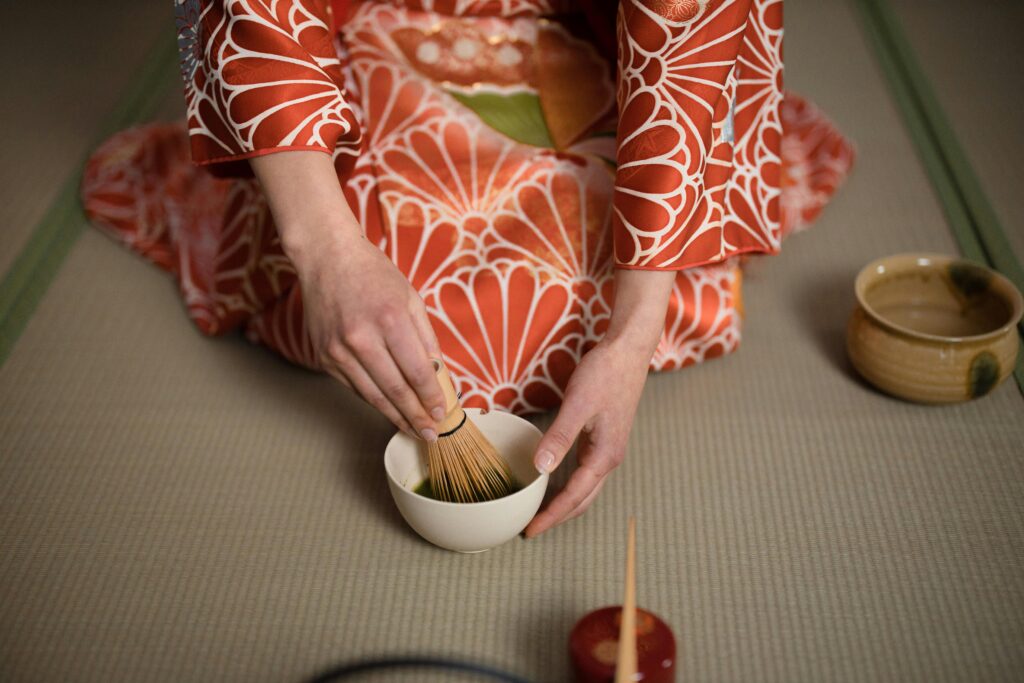
Chadō (Sadō) is the Japanese Way of Tea, a discipline centered on preparing and sharing matcha with attentive hospitality. The two readings name the same tradition, also called chanoyu, in which learning host and guest roles connects tea preparation with etiquette, aesthetics and cultural study.

Learn more

Chadō (Sadō), written 茶道, means the Way of Tea: a Japanese discipline centered on preparing and sharing matcha. Chadō and sadō are readings of the same written term, not different tea schools. Chanoyu, also spelled Cha-no-yu, names the same tradition; the words often overlap in actual usage.

What “the Way of Tea” emphasizes

Urasenke describes chado as a spiritual and aesthetic discipline for refinement of the self. Its starting point is nevertheless concrete: a host makes a satisfying bowl of tea and a guest receives it with appreciation. Omotesenke describes chanoyu in similarly relational terms, as communication between host and guests. It would be misleading to reserve philosophy for chadō and practical activity for chanoyu.

The four principles—harmony, respect, purity and tranquility—offer an introduction to this approach. They connect the quality of the shared occasion to consideration for others, care of the surroundings and attentive conduct. They are values to practice, not promises that a bowl of matcha will produce a particular mental state.

Schools transmit more than a whisking style

Urasenke, Omotesenke and Mushakōjisenke are three prominent Sen-family traditions. Urasenke’s historical account traces them through the sons of Sen Sōtan, Rikyū’s grandson. It also describes other lineages formed by Rikyū’s disciples and later branches. The three Sen schools are therefore important examples, not an exhaustive list of Japanese tea traditions.

Sen no Rikyū remains a central figure in their history, but the practice did not spring fully formed from one person. Urasenke places Murata Jukō and Takeno Jōō before him in its account of the development of tea. This lineage of learning is more informative than attributing every utensil, room feature or movement to a single inventor.

For a prospective student, a school’s name identifies a teaching tradition. Reducing schools to how much foam they make misses their procedures, material culture and ways of transmitting knowledge. Learn the forms your teacher demonstrates rather than combining fragments from unrelated tutorials into a supposed universal method.

What beginners actually study

Urasenke’s English-language resources show a progression from conduct in the tea room and preparation fundamentals to separate usucha and koicha procedures. Temae, the forms of preparing and serving tea, is studied alongside guest knowledge. Receiving sweets, drinking tea and appreciating utensils are not incidental extras to learning how to whisk.

The International Chado Institute describes learning both host and guest roles and connecting tea-room practice with crafts and food. Its examples include visits related to tea growing, ceramics and sweets. This helps explain why tea study can introduce calligraphy, architecture, cuisine, lacquerware and woodwork without requiring beginners to master every art first.

Choosing a starting point

Ask whether a class is an introductory demonstration or continuing instruction, which tradition it teaches, and what participants need to bring. Ask about seating and accessibility rather than assuming every session requires kneeling: the Japanese government’s chanoyu program text describes chair-seated ryūrei practice.

A full chaji brings several strands of study together, but it is not the only appropriate introduction. A clear beginner lesson with guidance on both hosting and receiving tea is a practical first step. Reading can support that learning; it should not be mistaken for completing a school’s training or receiving a qualification.
Sources

Sources and references

References supporting this page are listed below. Source access dates and supported claims are recorded in the evidence notes where available.
An Introduction to Chado
Accessed: 2026-09-08
Language: en

Chado and chanoyu name the same tradition; host and guest, seasonality, four principles, Rikyu and the three Sen lineages.

Chanoyu Omotesenke Fushin’an
Accessed: 2026-09-08
Language: en

Communication between host and guests and a living culture learned through daily practice.

Saturday Chado Classes in English (Kyoto)
Accessed: 2026-09-08
Language: en

Learning host and guest roles; crafts and cultural study; a full gathering includes food and two types of matcha.

Urasenke Chado Study Resources in English
Accessed: 2026-09-08
Language: en

Progressive host and guest study; separate usucha and koicha procedures; seasonal equipment and vocabulary.

Chanoyu (the Art of Preparing Tea) (Program Text)
Accessed: 2026-09-08
Language: en

Matcha preparation and serving; chado/sado; four principles; chair-seated ryurei demonstration.

茶の湯: meaning and reading
Accessed: 2026-09-08
Language: ja

Reading ちゃのゆ; gathering/practice and literal hot water senses; chanoyu and chado nearly synonymous, with a stronger disciplinary connotation for chado.

Updated on September 8, 2026
Portrait of Emilie Schol, Founder of Best Matcha

Emilie Schol

Founder of Best Matcha

Frequently asked questions

Here are some frequently asked questions and answers.

What are Chadō and Sadō?

Chadō and Sadō are two names for the traditional Japanese tea ceremony, translated as “The Way of Tea.” The practice centers on ceremonially preparing and serving matcha while combining aesthetics, philosophy, hospitality, and mindfulness. The names denote the same practice and can be encountered interchangeably in tea ceremony contexts.

Why are Chadō and Sadō pronounced differently?

Chadō and Sadō are alternative readings of 茶道, with 茶 meaning tea and 道 meaning way or path. Their difference is pronunciation, not a division into different practices. It is incorrect to explain Sadō as simply the native Japanese reading in contrast to a Chinese-derived Chadō.

How does Chanoyu differ in emphasis from Chadō or Sadō?

Chanoyu and Chadō or Sadō often refer to the same tradition. “The Way of Tea” can suggest discipline and cultivation more strongly, but chanoyu also includes philosophical and cultural dimensions. Urasenke describes chado as also known as chanoyu, rather than treating them as separate practices.

What principles guide the practice of Chadō?

Chadō is guided by four principles: harmony, respect, purity, and tranquility. Harmony creates balance among people, utensils, and environment. Respect shows appreciation for others and the implements. Purity concerns both physical space and mental state, while tranquility names an ideal of the practice rather than a guaranteed mental state.

Which utensils are central to a Chadō tea ceremony?

Central utensils include the chawan, the bowl used to prepare and serve matcha; the chasen, a bamboo whisk for combining matcha and water; and the chashaku, a bamboo scoop for measuring the powder. Matcha is held in a lacquerware natsume or a ceramic chaire, depending on the preparation.