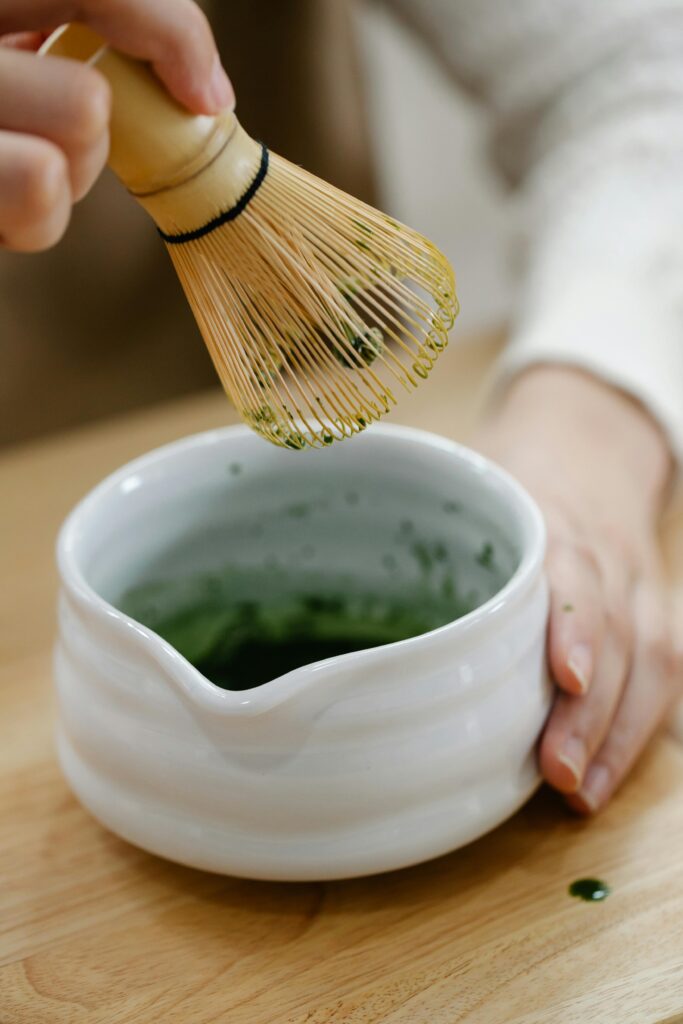
What is Chaji?
Chaji brings food, tea, utensils, setting and the host–guest relationship into one full event. Urasenke’s introduction describes it as the gathering in which the Way of Tea unfolds, emphasizing a shared occasion rather than expensive objects.
Omotesenke identifies the formal event with kaiseki, thick tea and thin tea as chaji. This distinguishes it from a brief bowl of tea and sweets, but details belong to the particular school and host.
Chaji and chakai are not rigid opposites
Omotesenke explains that chaji have historically also been called chakai. Because many gatherings now use that broader word, it uses chaji to clarify the full event with kaiseki. Chakai is not a universal synonym for casual or usucha-only service.
Urasenke’s Spring Chakai at Konnichian on 17 May 2019 included koicha, a light tenshin meal and usucha in different spaces. This example does not make it a chaji; it shows why the word chakai cannot prove that only thin tea will be served.
Understanding the sequence
Omotesenke’s teaching outline includes greetings, a first charcoal procedure, kaiseki and sweets, followed by a middle break, thick tea, a second charcoal procedure, thin tea and departure. This is an attributed outline, not a universal four-stage formula for every school, season or event.
Reducing the event to meal, sweets, koicha and usucha misses the hearth, interval and other parts of hospitality. A glossary can orient a guest but cannot replace instruction in the procedures they will encounter.
Thick tea and thin tea
Koicha and usucha are different ways of preparing matcha. The host’s tea and method belong to the practice followed. Do not turn the event into a rule that acceptable tea must come from one region or carry one retail grade.
Do not assume a shared-bowl arrangement for every present-day invitation. Ask the host and follow their guidance. Beginners need not infer seating, handling or drinking procedures from a generic recipe.
Preparing as a guest
Confirm duration, arrival time, clothing, items to bring and accessibility needs in advance. Tell the host about dietary restrictions because food forms part of the hospitality. The word chaji does not impose one exact guest count or number of hours.
Urasenke presents harmony, respect, purity and tranquility as guiding principles, together with consideration toward guests. Arrive ready to attend to the occasion and ask for guidance when unsure, rather than treating the event as a performance a beginner must already know.
Choosing an introduction
When booking, ask whether the experience is a full chaji, shorter gathering or demonstration. Confirm meal and tea services and the tradition informing the event. These details are more useful than judging authenticity by duration, group size or promotional language.
Sources and scope
About tea gatherings (Omotesenke Fushin’an). An Introduction to Chado (Urasenke Konnichian). Spring Chakai at Konnichian (Urasenke Konnichian).