Who is Matcha Crew?

Matcha Crew is a specialty matcha café brand founded in Helsinki in 2022 by Eva Wei, describing itself as being for people who take their matcha seriously but not themselves. It now runs nine cafés across three countries and franchises the concept.

Its own matcha is numbered rather than named, and unusually the brand publishes the cultivar behind every number, all sourced from organic farms in Kagoshima.

Videos

Matcha Crew videos

Finnish matcha café franchise, every numbered lot tied to a named cultivar

Browse the gallery to see 26 videos about matcha.

Matcha Crew in details

Matcha Crew is a specialty matcha café brand founded in Helsinki by Eva Wei and built as a franchise — a model almost no other matcha brand uses. From its Kamppi flagship it has grown to nine locations across Finland, Czechia and Spain.

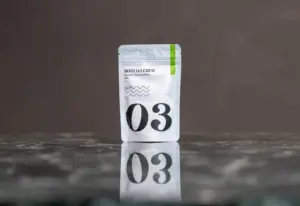
Its own retail range is identified by number rather than name, and each number maps to a specific grade and cultivar: Yabukita for the culinary and premium tiers, Saemidori and Okumidori for the ceremonial ones, all from organic farms in Kagoshima. The shops also stock matcha from the historic Uji house Marukyu Koyamaen.

About the Matcha Crew Matcha

Matcha Crew numbers its own lots instead of naming them — and, unlike most brands that do this, publishes the grade and cultivar each number refers to.

Own numbered range (40 g, Kagoshima, organic)

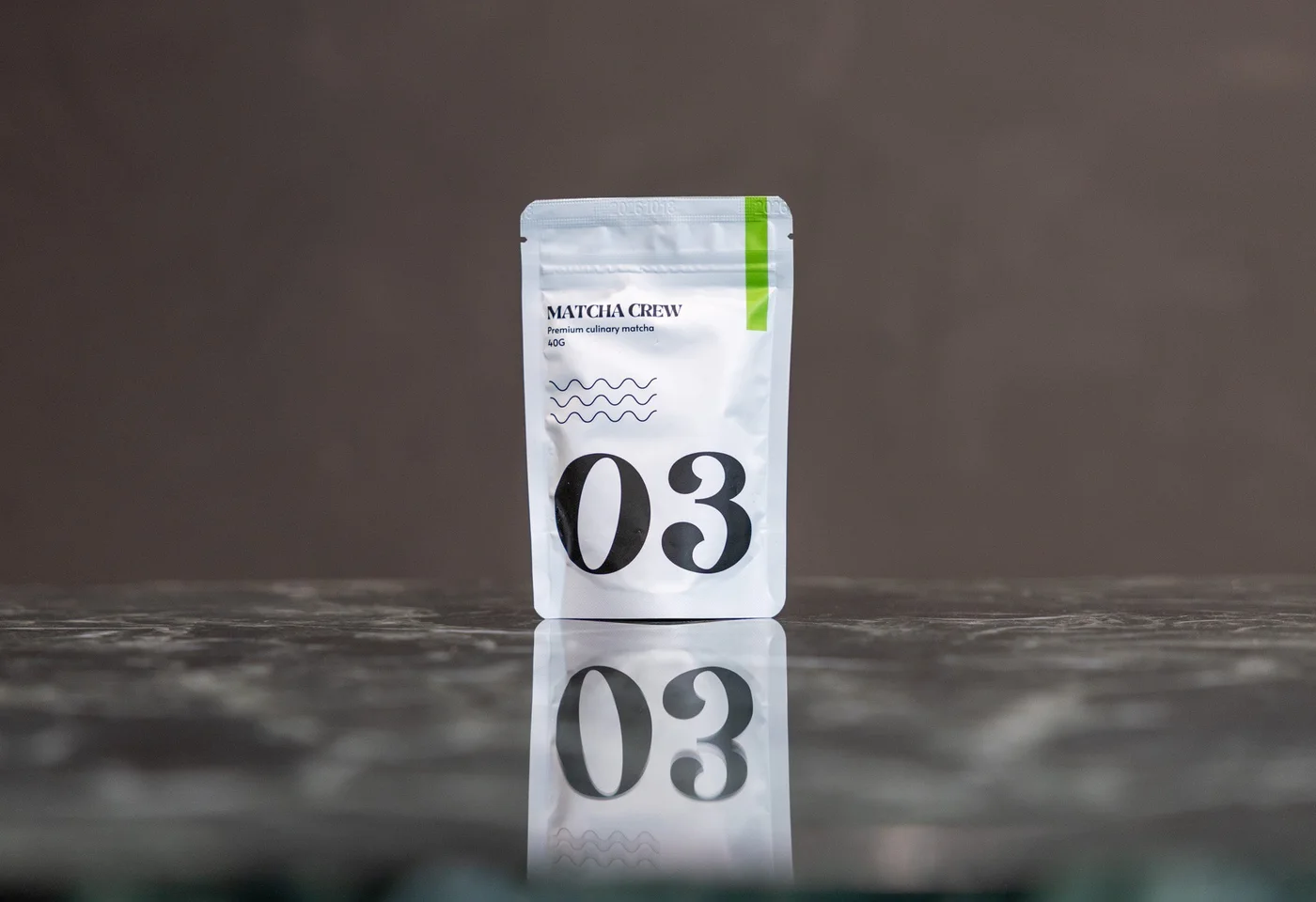
  • No. 03 — culinary grade, Yabukita cultivar; for baking and cooking.
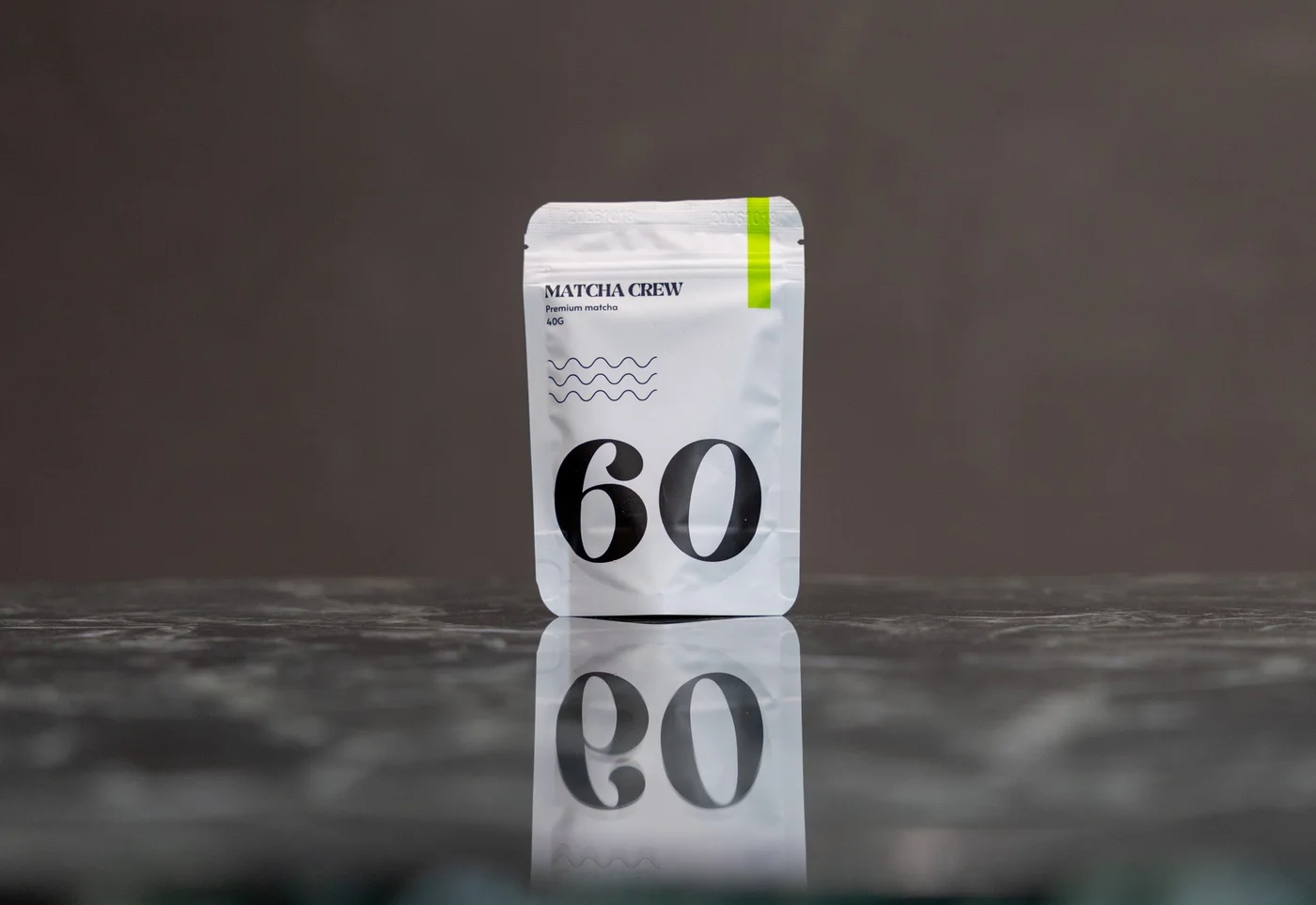
  • No. 60 — premium grade, Yabukita cultivar.
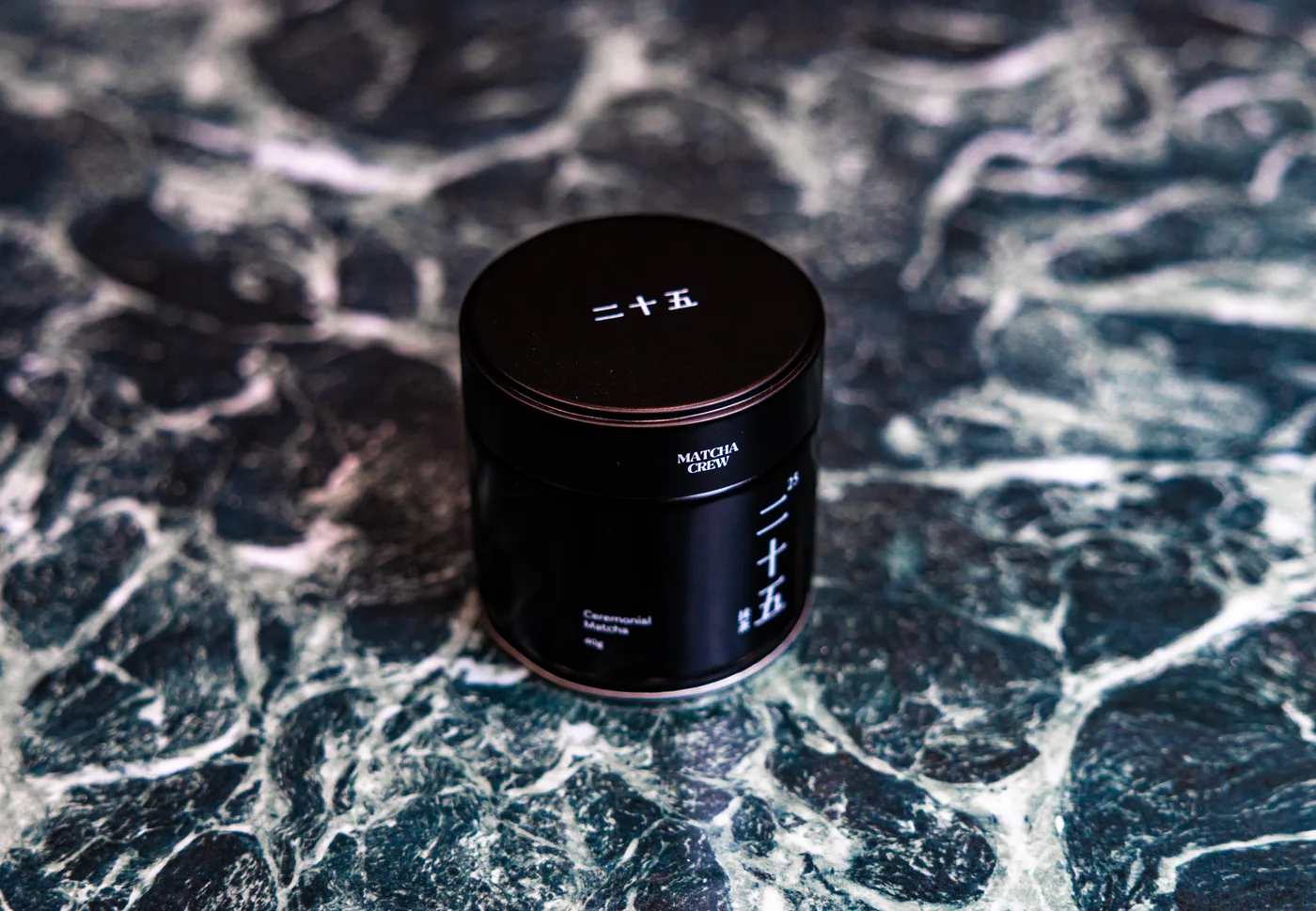
  • No. 25 — premium ceremonial, single-cultivar Saemidori, sold in a tin.
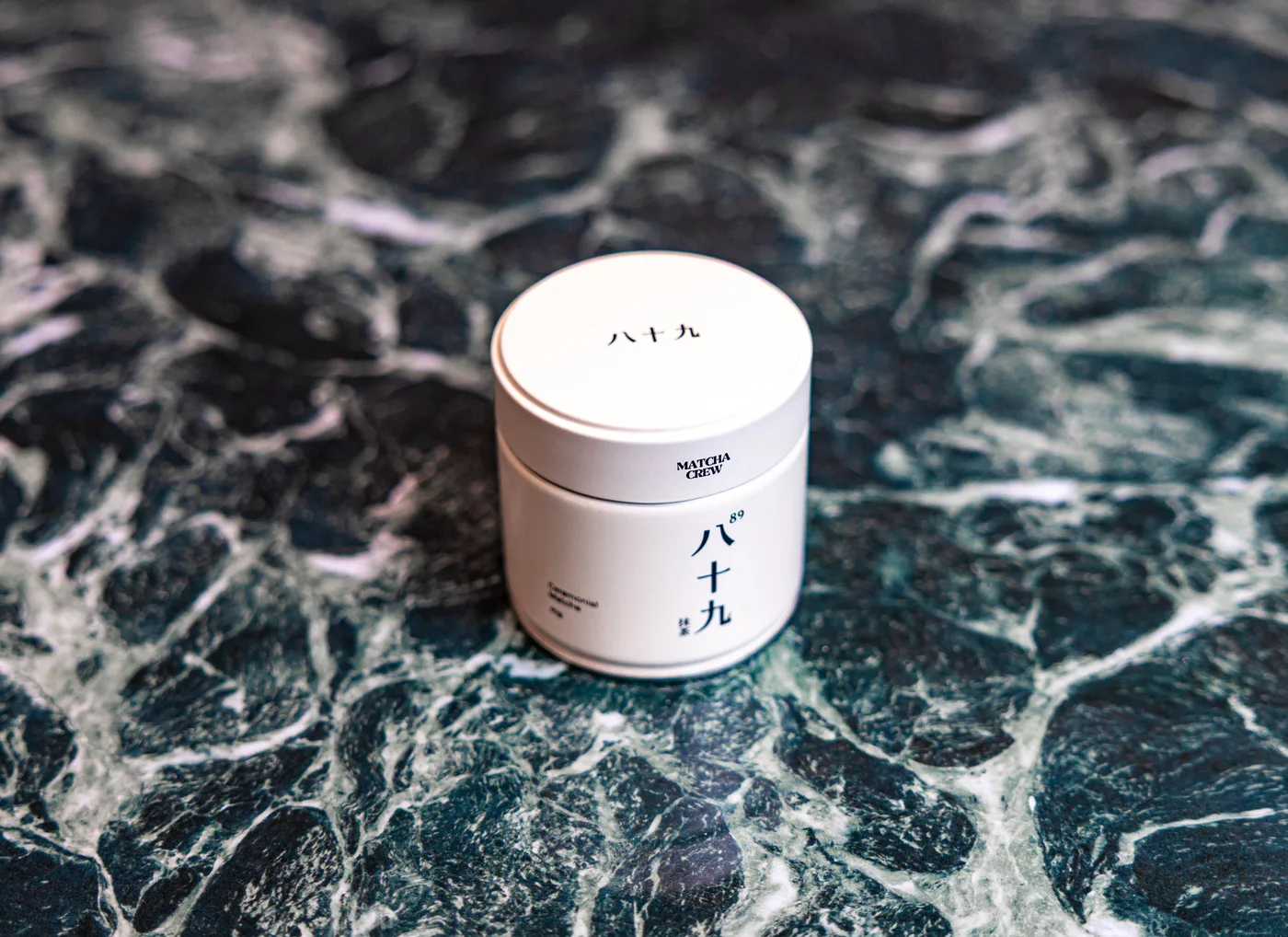
  • No. 89 — premium ceremonial, a Saemidori and Yabukita blend, in pouch and can.
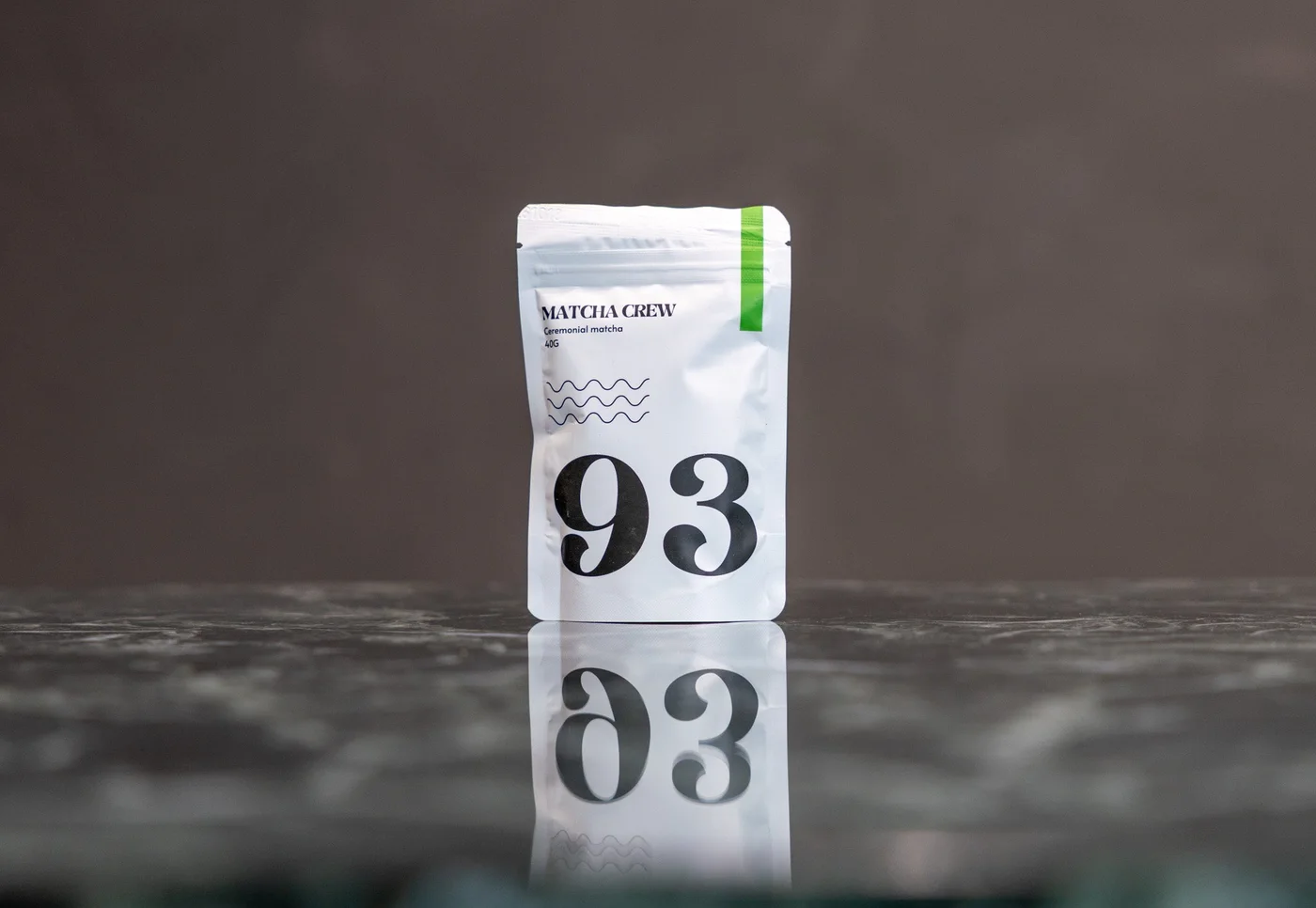
  • No. 93 — ceremonial, Okumidori cultivar.

Other Japanese tea powders

  • Hojicha no. 12 — dark-roasted, lower in caffeine.
  • Genmaicha no. 15 — with roasted rice.

Marukyu Koyamaen

The shop also stocks 100 g tins from Marukyu Koyamaen, the long-established Uji tea house — Midorigi, Byakuren and Wakatake — placing well-known Kyoto blends alongside its own Kagoshima lots.

Tools, workshops and wholesale

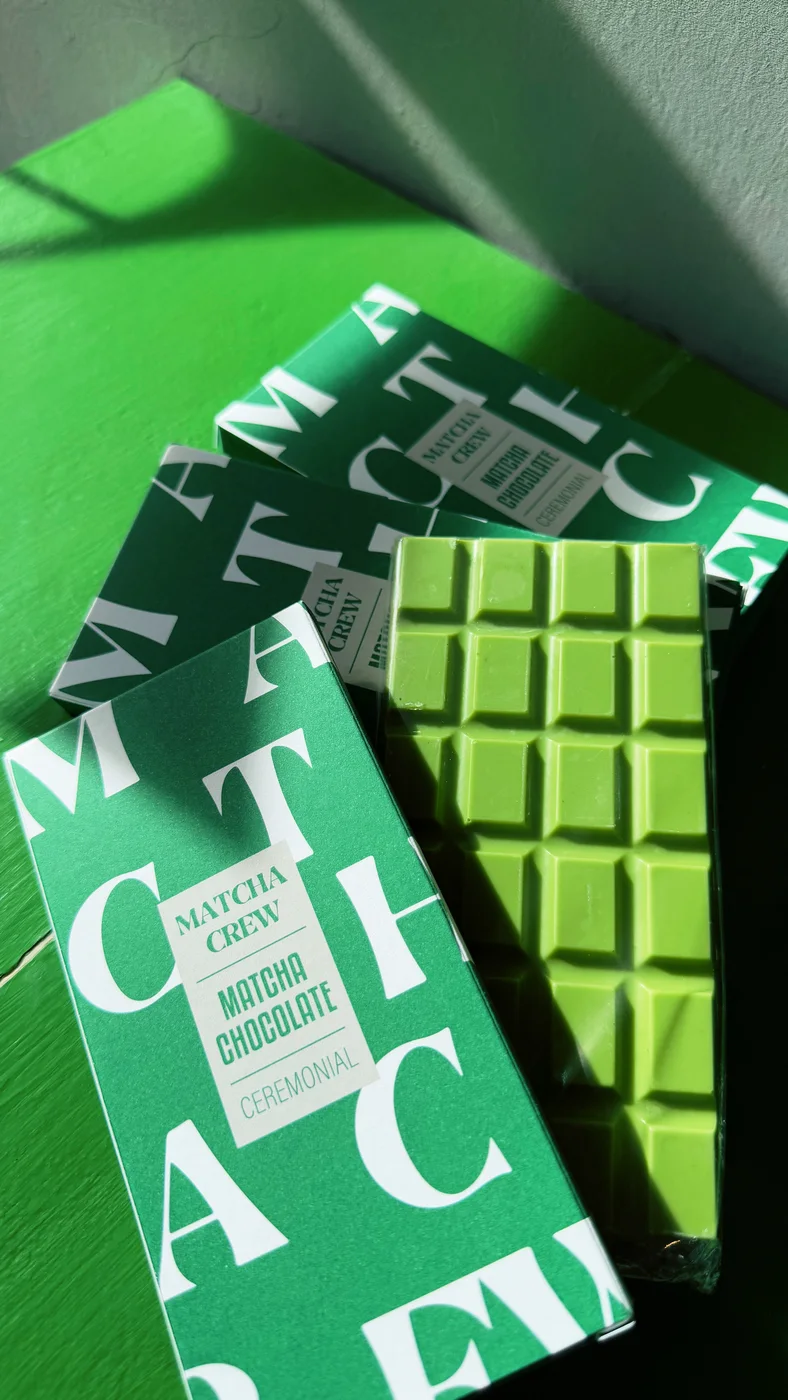
Bamboo and plastic whisks, matcha spoons, pouring glass bowls, and ceramics from Studio Chi and Studio Wiss. The brand also sells a ceremonial matcha chocolate bar, runs matcha workshops, and supplies wholesale accounts.

Harvest location

Matcha Crew sources its own-label matcha from organic farms in Kagoshima and publishes the cultivar for each numbered lot — a level of disclosure most café brands skip.

Kagoshima

Kagoshima Prefecture, at the southern end of Kyushu, is Japan’s second-largest tea-producing region. Its warm climate and volcanic soils give an earlier harvest than Kyoto or Shizuoka, and its matcha is typically vivid in colour with a fresh, vegetal character and pronounced sweetness. It is also the centre of large-scale organic Japanese tea cultivation, which is consistent with the brand sourcing an entirely organic own-label range there.

Cultivars by number

Yabukita, Japan’s most widely planted variety, carries the culinary and premium tiers (no. 03 and no. 60). Saemidori, valued for sweetness and low astringency, is the single cultivar behind the no. 25 ceremonial tin and is blended with Yabukita in no. 89. Okumidori, a late-harvesting variety with deep colour, is behind no. 93.

Uji, via Marukyu Koyamaen

The Marukyu Koyamaen tins the shop carries come from Uji in Kyoto Prefecture, so the range spans both the modern southern producing region and the historic centre.

The brand describes its own matcha as 100% organic but does not name a certifier or certification scheme.

Matcha Crew History

Matcha Crew Oy was incorporated in Helsinki in December 2022 (business ID 3333785-7) by Eva Wei, and opened its first café the following year. Taiwanese-born, Wei had already spent over a decade building East Asian tea culture in Finland, bringing bubble tea to the country and founding the More Tea chain before turning to matcha.

The concept is run as a franchise: the brand began franchising in 2024 and actively recruits operators beyond the Helsinki region. Its Czech sites operate through a separate entity, Matcha Crew s.r.o. (IČO 21135835), incorporated in January 2024 and seated at the Prague Vinohrady café.

Frequently asked questions

Here are some frequently asked questions and answers.

Where are Matcha Crew's cafés?

Nine locations across three countries, not the three the brand’s own summary suggests. Finland: the Kamppi flagship at Lapinlahdenkatu 9 in Helsinki plus an Itis Kauppahalli pop-up. Czechia: Prague Vinohrady, Prague Westfield Chodov, Prague Westfield Černý Most, and Brno Galerie Vankovka. Spain: Barcelona Eixample, a Barcelona Gràcia site listed as coming soon, and Madrid.

Is Matcha Crew a franchise?

Yes, and that is unusual in this category. Matcha Crew Oy began franchising the café concept in 2024 and actively recruits operators beyond the Helsinki region. Its Czech cafés run through a separate company, Matcha Crew s.r.o., incorporated in January 2024. So a given café may be operated by a franchisee rather than by the Finnish parent.

What do Matcha Crew’s lot numbers mean?

Each number maps to a published grade and cultivar, which is more disclosure than most numbered ranges offer. No. 03 is culinary Yabukita; no. 60 is premium Yabukita; no. 25 is a single-cultivar Saemidori ceremonial; no. 89 is a Saemidori and Yabukita ceremonial blend; no. 93 is an Okumidori ceremonial. Its hojicha (no. 12) and genmaicha (no. 15) are numbered the same way.

Who founded Matcha Crew?

Eva Wei, who incorporated Matcha Crew Oy in Helsinki in December 2022 and opened the first café in 2023. Taiwanese-born, she had already spent more than a decade promoting East Asian tea culture in Finland — she is credited with bringing bubble tea to the country and founded the More Tea chain before moving into matcha.

Does Matcha Crew sell other brands’ matcha?

Yes. Alongside its own numbered lots the shop stocks 100 g tins from Marukyu Koyamaen — Midorigi, Byakuren and Wakatake — the long-established Uji tea house. That puts well-known Kyoto blends next to its own Kagoshima-sourced lots, so the range covers both the historic centre and the modern southern producing region.