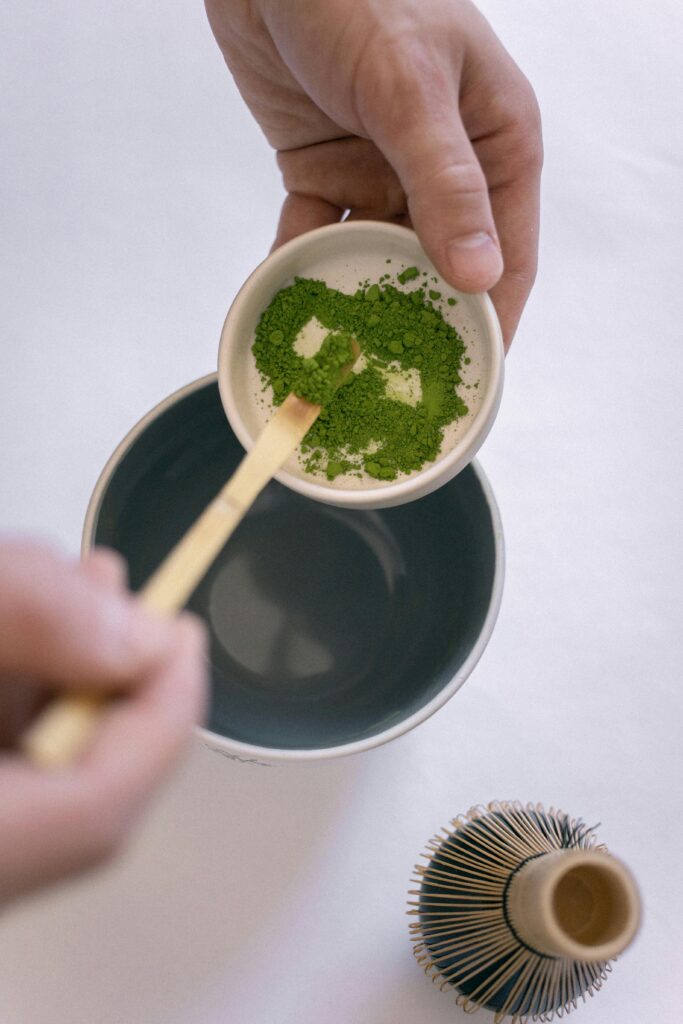
Definition of Ceremonial Grade Matcha

Ceremonial Grade Matcha is a commercial label usually applied to matcha intended for drinking with water rather than mixing into food. The term does not establish a shared harvest, milling or sensory specification, and suitability for thin tea or concentrated thick tea depends on the particular product and preparation.

Learn more

Ceremonial Grade Matcha is a commercial description usually applied to matcha offered for drinking with water. It is not a certificate that a tea was hand-picked, harvested only in spring or approved for every style of tea ceremony. The useful question is whether a particular powder suits the bowl you want to prepare.

A drinking recommendation, not a production guarantee

Ippodo explains that it does not use “ceremonial grade” because it considers the phrase vague marketing terminology. The company also says its matchas are used in tea ceremonies. This is an important distinction: use in a ceremony does not depend on those English words appearing on the packaging.

Some suppliers provide first-harvest, hand-picking or stone-milling details. Treat those as separate product claims requiring their own support. The grade phrase cannot supply missing evidence. The Kyoto tea chamber describes both hand and powered harvesting, and recognizes matcha made with equipment other than traditional tea mills.

Nor is smoothness a promise of zero bitterness. Ippodo’s description of Sayaka combines richness, sweetness and umami with a hint of bitterness. Suitability for drinking depends on the balance you enjoy, not on eliminating every assertive flavor.

Usucha and koicha ask different things of a tea

Usucha is thin matcha prepared with water. Start with the producer’s recipe rather than assigning a universal temperature to the grade. Marukyu Koyamaen gives approximately 1.5 grams with 70 milliliters as one bowl guideline and explicitly invites adjustments to amounts and temperature.

Koicha uses more powder relative to water and is mixed into a thick consistency. Ippodo’s recipe uses 4 grams with 30 milliliters of water at 80°C, mixed slowly. These are examples from different producers, not legal definitions or a mandatory grading test.

For koicha, request an explicit product recommendation. A broad drinking label does not tell you how a tea will feel or taste at that concentration. For a formal practice, follow the tea selection and preparation guidance of your teacher or host rather than treating a retail grade as permission.

Assess the powder without inventing tests

Check the ingredient declaration, product identity and recommended use before looking at the color. Bright green appearance can be attractive, but it cannot confirm a harvest date or establish suitability for thick tea. There is no universal retail price cutoff that authenticates the label.

Sift before mixing if there are clumps. Ippodo explains that natural clumping is not itself a defect. Matcha is powdered leaf mixed into water; a smooth bowl should not be taken as evidence that all the powder has dissolved or passed a particular micron specification.

Can it go into milk or food?

Yes. The ceremonial label does not prohibit lattes or baking. Whether the result justifies the price is a personal recipe decision. Compare the finished drink or food rather than assuming every subtle note will vanish, or that a culinary-labeled powder must always outperform it.

See Culinary Grade Matcha for recipe-focused selection and Matcha Grade Standards for what documentation can establish. For your next purchase, the first matcha purchase guide helps you start with an intended preparation and a manageable quantity. Protect the tea in light-blocking, airtight storage and follow the supplier’s handling instructions.

Sources

Sources and references

References supporting this page are listed below. Source access dates and supported claims are recorded in the evidence notes where available.
Is Ippodo’s matcha ceremonial grade?
Accessed: 2026-09-08
Language: en

Ippodo rejects ceremonial grade as a vague Western marketing term and says its matchas are used for tea ceremony without that label.

Sayaka Matcha (40g Can)
Accessed: 2026-09-08
Language: en

Producer describes a rich, smooth matcha with sweetness, umami and a hint of bitterness, contradicting zero-bitterness requirements.

How Uji tea is made
Accessed: 2026-09-08
Language: en

Hand picking and powered harvesting both occur; finishing adjusts taste, aroma and price; storage affects tea quality.

Types of Tea
Accessed: 2026-09-08
Language: en

Matcha is finely powdered tencha from shaded cultivation, dried without rolling; ball mills as well as tea mills are recognized. Sencha, gyokuro, kabusecha, other powdered tea and extracted instant tea are distinct.

抹茶の点て方 (How to Prepare Matcha)
Accessed: 2026-09-08
Language: ja

Adjustable example uses about 1.5 g and 70 mL; sift, disperse slowly, whisk forwards and backwards, then refine foam. Also describes iced and low-foam preparations.

Koicha (Thick Matcha)
Accessed: 2026-09-08
Language: en

Direct HTML fetch confirms thick paste preparation with more powder and less water: 4 g, 30 ml, 80 C, slow mixing. This is a producer recipe, not a grading standard.

Why are there clumps in matcha?
Accessed: 2026-09-08
Language: en

Clumps occur naturally and do not themselves prove spoilage or defects; sifting improves mixing and texture.

How to choose tea
Accessed: 2026-09-08
Language: en

Humidity, oxygen, light, temperature and odors affect storage quality; recommends small purchases and light-blocking airtight storage.

Updated on September 8, 2026
Portrait of Emilie Schol, Founder of Best Matcha

Emilie Schol

Founder of Best Matcha

Frequently asked questions

Here are some frequently asked questions and answers.

What distinguishes ceremonial-grade matcha from other matcha grades?

Ceremonial grade generally indicates matcha offered for drinking with water, not a verified set of production requirements. The term does not prove first-harvest leaves, hand picking or a prescribed grind. Ippodo sells matcha used in ceremonies without the label, so compare the supplier’s specific preparation recommendations and flavor description instead.

How can you identify authentic ceremonial-grade matcha?

There is no single appearance or mixing test that authenticates a ceremonial label. Check product identity, ingredients and the supplier’s explanation of intended use, then assess the prepared tea. Bright color cannot verify harvest timing, and Ippodo explains that natural clumps are not themselves defects; smooth mixing is not proof of complete dissolution.

Why does ceremonial-grade matcha cost significantly more?

The ceremonial label itself does not prove why a product costs more. Harvesting, processing and sourcing details should be documented independently, not inferred from the price. Compare the actual product and its recommended use; neither mandatory hand picking nor higher antioxidant content can be established merely from an expensive tin or the word ceremonial.

Should ceremonial-grade matcha be used for lattes and baking?

Yes, you can use ceremonial-labeled matcha in lattes or baking. The label is not a restriction on recipe use. Whether its flavor and price suit the finished recipe depends on your preference, so compare results rather than assuming milk removes every nuance or that culinary-labeled matcha will always be the better choice.

Does the vibrant green color guarantee ceremonial-grade quality?

No. Vivid green color does not certify ceremonial quality or suitability for a particular preparation. Production and storage both need context, and photographs are not a harvest or freshness test. Read the ingredient and product information, follow a preparation recommendation, and assess taste balance rather than making color the deciding criterion.

Which traditional preparation methods suit ceremonial-grade matcha best?

Water-based thin tea is a common intended use, but ask specifically about koicha rather than assuming any ceremonial label guarantees thick-tea suitability. Ippodo’s koicha recipe uses more powder and less water, mixed slowly into a thick consistency. Follow the chosen product’s guidance and, in formal practice, the teacher’s instructions rather than a universal grade recipe.