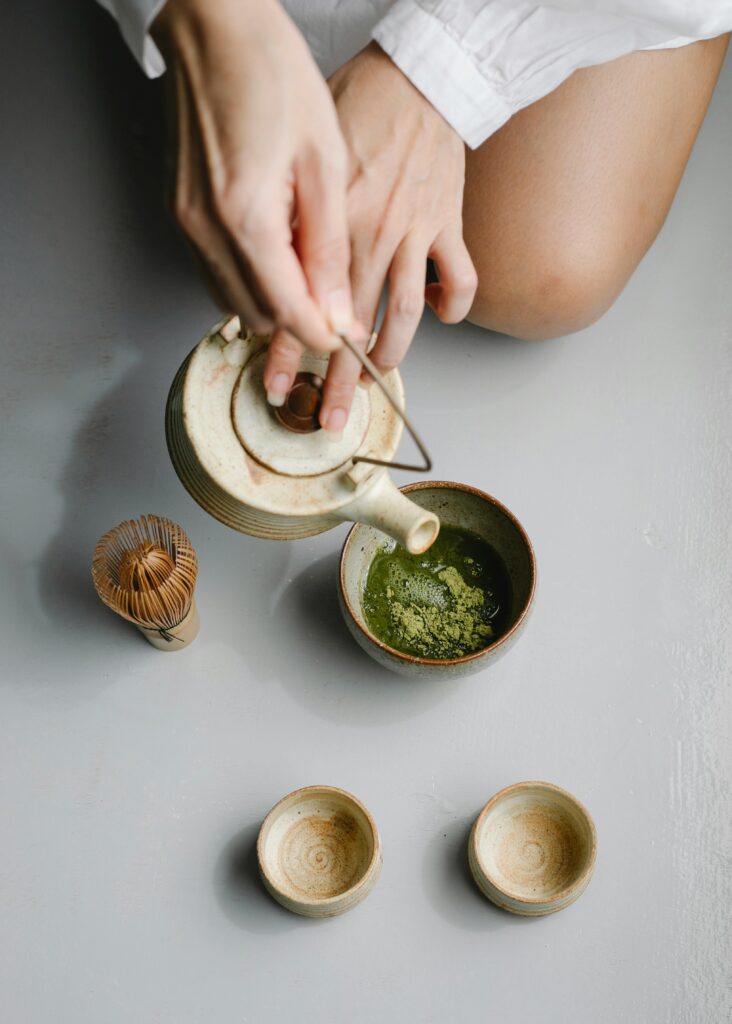
Okumidori is a named Japanese tea cultivar used for green teas including tencha, the material milled into matcha. It is not a grade or a place name: it identifies the plant variety, which can be grown in more than one region and processed into more than one kind of green tea.
What defines Okumidori
Okumidori is a late cultivar. The original breeding report recorded bud opening about eleven days after Yabukita and plucking about eight days later. These are trial observations, not a fixed calendar for every farm. Later growth can spread harvesting work and reduce exposure to some early frosts, but it does not make the plant immune to frost.
Chikiriya describes Okumidori as having a refreshing, clean aroma and flavor and being valued for gyokuro and tencha. These are useful expectations rather than a fixed tasting script: region, field conditions, shading, harvest, and processing can change the finished tea. Mango or coconut notes should be attributed to a particular tasted lot rather than promised for every Okumidori matcha.
Color is another trait assessed in cultivar selection. Okumidori produces green leaves, but a cultivar name does not specify the chlorophyll concentration or color coordinates of a finished powder. Shading and subsequent handling also affect appearance.
Origin and growing range
Okumidori was bred at the National Research Institute of Tea in Shizuoka from Yabukita and Shizuoka native selection No. 16. It was registered in June 1974, rather than first crossed that year. The breeding report describes vigorous growth, cold resistance, high yield, and suitability for combining with earlier cultivars to spread harvest work.
Shizuoka is associated with Okumidori’s breeding history, but the cultivar is not confined there. The breeding report identifies suitable areas in Tokai, Kinki, and Kyushu; Kyoto tea merchant Chikiriya also describes its cultivation in Kyoto and Kagoshima. “Okumidori” on a label should not be treated as shorthand for a single origin.
A practical comparison at purchase
Imagine two tins: one says “Shizuoka Okumidori,” while another says “Uji Okumidori.” Both identify the same cultivar, but neither name supplies a measured astringency or color result. Yet they are not necessarily interchangeable because their origins and producers differ. To compare them fairly, check whether each is single-cultivar or blended and whether harvest and production details are provided.
Now consider a tin marked only “ceremonial grade.” That wording does not identify Okumidori or any other cultivar. Grade language describes intended quality or use, while cultivar names identify plant genetics. Similarly, “Uji” is an origin, not a cultivar. Reading these categories separately prevents a polished grade claim from being mistaken for traceable plant material.
Matcha, sencha, and gyokuro uses
Okumidori was bred as a green-tea cultivar, not exclusively for matcha. It is used for sencha, gyokuro, and tencha for matcha. Those teas do not become equivalent simply because they share a cultivar. Gyokuro is a shaded leaf tea, while matcha is made by milling tencha into powder.
This versatility matters to growers because one cultivar can serve different product plans. For matcha or a blend, the finished tencha must be assessed for the producer’s intended flavor and color; the cultivar name alone supplies no universal tasting specification. Yabukita, Kanayamidori, and Sayamakaori are related cultivar terms in the glossary, while Uji Tea Cultivars is a regional grouping. Okumidori should therefore be understood as one cultivar within a wider vocabulary of origin, cultivation, processing, and final tea style.
Limits of the cultivar name
A cultivar can guide expectations, but it cannot certify quality on its own. “Okumidori” does not disclose whether leaves were well shaded, carefully harvested, properly processed, freshly milled, or protected from oxidation. Nor does vivid color alone prove every other quality dimension. The strongest product description combines the cultivar name with origin and transparent production information, allowing the drinker to connect Okumidori’s known tendencies with the specific matcha in the tin.