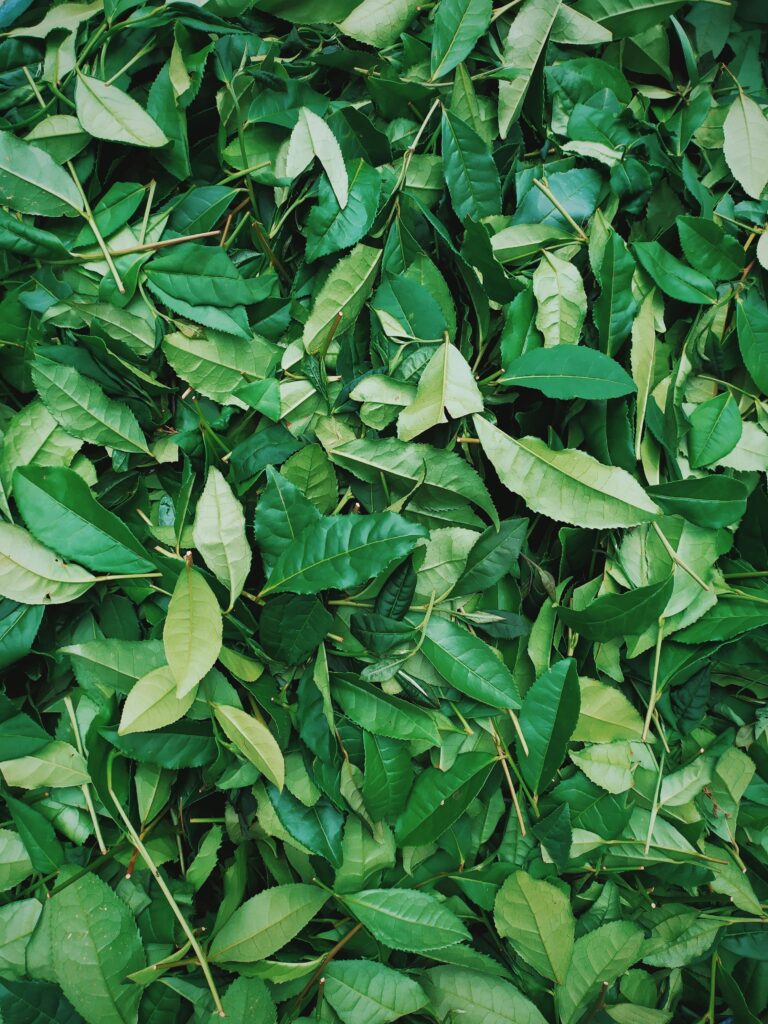
Tencha: Shade-Grown Leaf Made for Grinding into Matcha
Tencha is shade-grown leaf dried without rolling before matcha milling. Learn how cultivation, refinement and storage differ from grinding.Definition of Tencha
Tencha is a shade-grown Japanese green tea steamed and dried without rolling, then refined as the raw material for matcha. Milling turns the prepared leaf into powder. It is not a cultivar or a finished powder, and its harvest, refinement and milling are separate production stages.
Learn more
Tencha: the leaf before matcha
Tencha is the shade-grown, unrolled green tea used to make matcha. It is not a cultivar and not another name for the powder already in a retail tin. MAFF and JETRO describe the essential sequence: shading, harvest, steaming, drying without rolling, removal of stems and veins, and milling into matcha.
Shading develops the raw material
Covering the plants changes the light reaching new shoots. Kyoto’s tea-research account links shading with free amino acids, chlorophyll and characteristics of the covered-tea aroma. These help explain why tencha differs from ordinary sun-grown sencha. They do not guarantee a fixed composition in every field or a calming effect from every bowl.
Yamamasa Koyamaen describes covering for three to four weeks before picking in its own production sequence. Treat this as a producer example, not a mandatory duration for every lot. The same account describes both hand and machine harvesting, so tencha should not be defined as necessarily hand-picked.
Why skipping rolling matters
After steaming, tencha leaves are dried without the rolling used for sencha and gyokuro. MAFF identifies this as a defining processing distinction. The unrolled form remains light and flake-like rather than being shaped into sencha needles. Shaded cultivation alone is not enough to identify tencha, because gyokuro also grows under cover but is rolled.
There is also a distinction between crude tencha and finished material ready for milling. Yamamasa calls the initially dried leaf tencha aracha. It then describes size grouping, removal of stems and veins, further drying and removal of unwanted older leaves. A universal four-millimeter flake specification is unnecessary: refinement is the useful concept, not an unsupported fixed size.
Evaluation, blending and storage
Yamamasa describes evaluating tencha before blending it for balanced flavor. Marukyu Koyamaen similarly explains combining different varieties and soils to maintain the character of named teas. Milling is not the only decision between a harvested leaf and a finished matcha; selection and blending are important parts of the production account.
Producers also store tencha before milling. Marukyu describes refrigerated storage, while Kyoto Prefecture’s 2026 research report notes varied storage approaches among merchants and continuing investigation of maturation conditions. This is controlled professional handling, not a recommendation to age an opened matcha tin at home.
Buying tencha rather than finished powder
A purchase specification should state whether the product is crude tencha, refined leaf ready for milling or finished matcha. These are not interchangeable delivery forms. The producer’s account shows why refinement and milling need to be specified even after cultivation and drying have been completed. A harvest date describes the crop; it does not identify when the leaf was refined or ground.
For matcha production, ask what further work is required and who is responsible for it. Do not assume a supplier’s unground leaf has the same preparation instructions as a retail powder. Follow the instructions for the product actually supplied. The central definition of tencha is its cultivation and nonrolling process, with milling as the step that produces matcha.
Sources and further reading
- 味わいや香りもさまざまなお茶の種類 — Ministry of Agriculture, Forestry and Fisheries of Japan
- Matcha | Highlighted Japanese Ingredients — Japan External Trade Organization
- Cultivation and processing of Matcha — Yamamasa Koyamaen
- About Matcha・How to store tea・Growing and Processing of Matcha — Marukyu Koyamaen
- R8(2026)年度 茶業研究所の活動報告(月報) — Kyoto Prefecture Tea Industry Research Institute
Sources and references


Accessed: 2026-09-08
Language: ja
April 2022: sencha rolling stages; deep steaming at least twice ordinary steaming; shaded, steamed, unrolled tencha; stem and vein removal; matcha from ground tencha; gyokuro and kabusecha distinctions.
Accessed: 2026-09-08
Language: en
Tencha is shaded, steamed and dried without kneading, refined then milled; non-stone milling can produce matcha; powdered other tea is distinguished from matcha. Used for processing and preparation only, not promotional health claims.
Accessed: 2026-09-08
Language: en
Producer describes 3–4 weeks covering, both hand and machine harvest, steaming, unrolled drying, sorting out stems, veins and old leaves, evaluation, blending, cool dry storage and milling.
Accessed: 2026-09-08
Language: en
Heat, humidity, light, air and odors affect quality; cold packages should warm before opening; tencha kept refrigerated until finishing; blending for consistent flavor.
Accessed: 2026-09-08
Language: ja
2026 report: trainees observed merchants inspecting samples and bidding in May; tencha storage practices vary and optimal maturation conditions remain under study.
Accessed: 2026-09-08
Language: en
Maho Kanda’s 2010 technical account links shading to free amino acids, chlorophyll and covered-tea aroma; these are cultivation explanations, not a composition guarantee for each product.

Emilie Schol
Founder of Best MatchaFrequently asked questions
Here are some frequently asked questions and answers.Is tencha the same as matcha?
Is tencha the same as matcha?
No. Tencha is the unground tea material. Milling refined tencha produces matcha powder.
Is tencha rolled like gyokuro?
Is tencha rolled like gyokuro?
No. Both are shaded teas, but tencha is dried without rolling, whereas gyokuro is rolled.