The Essential Definition of Furui
Furui refers to a sieve. In matcha preparation it is the fine-mesh tool used to break apart clumps in dry powder before whisking. The action is sifting: the tool and the preparation step are related, but not interchangeable definitions.
A mesh screen sits above a receiving bowl or inside a collecting container. Frames, handles and accessories vary. A supplied bamboo spatula does not mean the sieve itself must be bamboo; Ippodo’s matcha sieve is a tin-bodied example with wire mesh and a bamboo spatula.
Why Sifting Matcha Matters
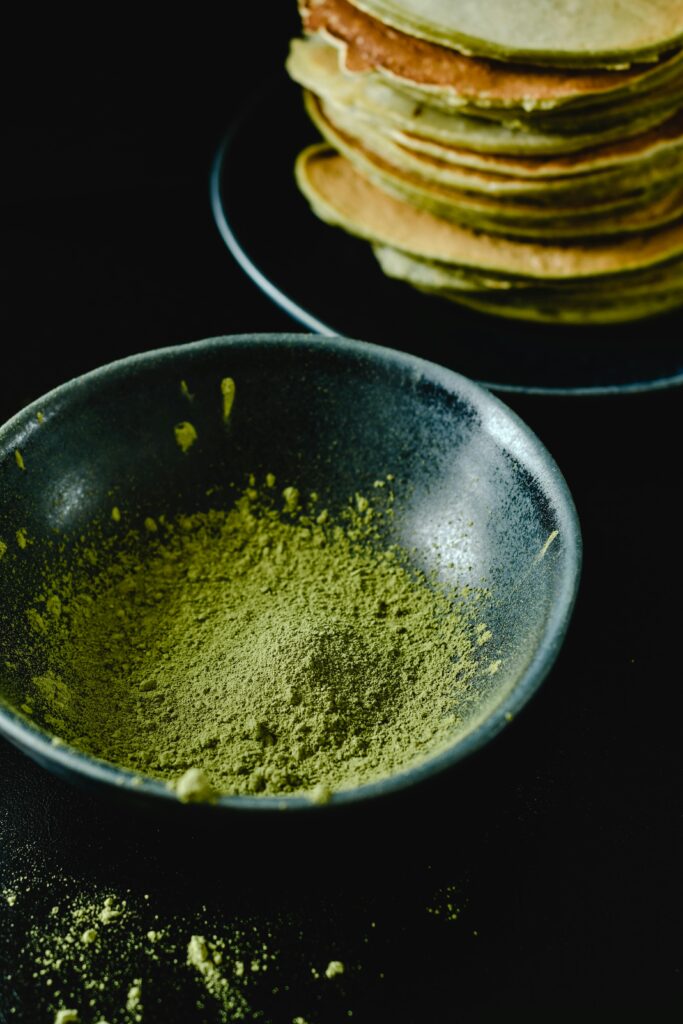
Fine matcha naturally forms clumps, as Marukyu Koyamaen explains. Passing it through a sieve helps break those clumps so that mixing leaves fewer dry pockets. The point is easier dispersion, not removal of every leaf particle from the drink.
Matcha powder is ground leaf and does not completely dissolve like sugar. Some settling remains possible after sifting and whisking. A smooth-looking drink or a thick foam layer cannot certify grade, freshness or the absence of contaminants.
How Furui Differs From Standard Sieves
A purpose-made matcha sieve is sized and arranged for tea preparation, often with a collecting tin or convenient bowl fit. A sufficiently fine kitchen strainer can also do the job. It is too absolute to claim that all kitchen sieves are too coarse.
Choose a screen that breaks up the clumps you encounter, fits securely and is easy to use without spills. There is no demonstrated universal mesh count for every matcha, and a mesh count should not be confused with an opening size in micrometers.
Proper Furui Usage Technique
Keep the sieve and receiving vessel dry. Add a measured amount of powder, then move a spoon or the supplied spatula gently across the mesh. Use light movements to avoid spills; this is a practical suggestion, not a universal instruction supplied with every sieve.
Light pressure to break clumps is normal; excessive scraping can spill powder or strain the screen. Inspect material that does not pass readily instead of automatically forcing it through or assuming every retained clump is spoiled.
Selecting and Maintaining Your Furui
Cleaning is material-specific. Ippodo identifies its sieve material as tin and says not to use a dishwasher or dishwashing detergent. Consult the instructions supplied with your model for the cleaning method. A blanket instruction to rinse every furui immediately after use is therefore inappropriate.
For a washable stainless-steel model, follow that maker’s directions and ensure it is dry before contact with powder. Check the mesh and frame for damage. Replace a torn or unstable screen rather than working around it; there is no fixed service life for all designs.
Sifting for One Bowl or a Gathering
Sifting directly before making a bowl is convenient, but Ippodo also describes advance sifting for a gathering and transferring the powder to a tea canister. Keep it covered and dry. Advance preparation is not automatically improper ceremonial practice, and the sieve is not a substitute for sound tea storage.
For daily use, choose a setup that makes the task easy rather than treating a particular material, price or historical appearance as evidence of authenticity. The useful result is fewer clumps with safe, practical handling.