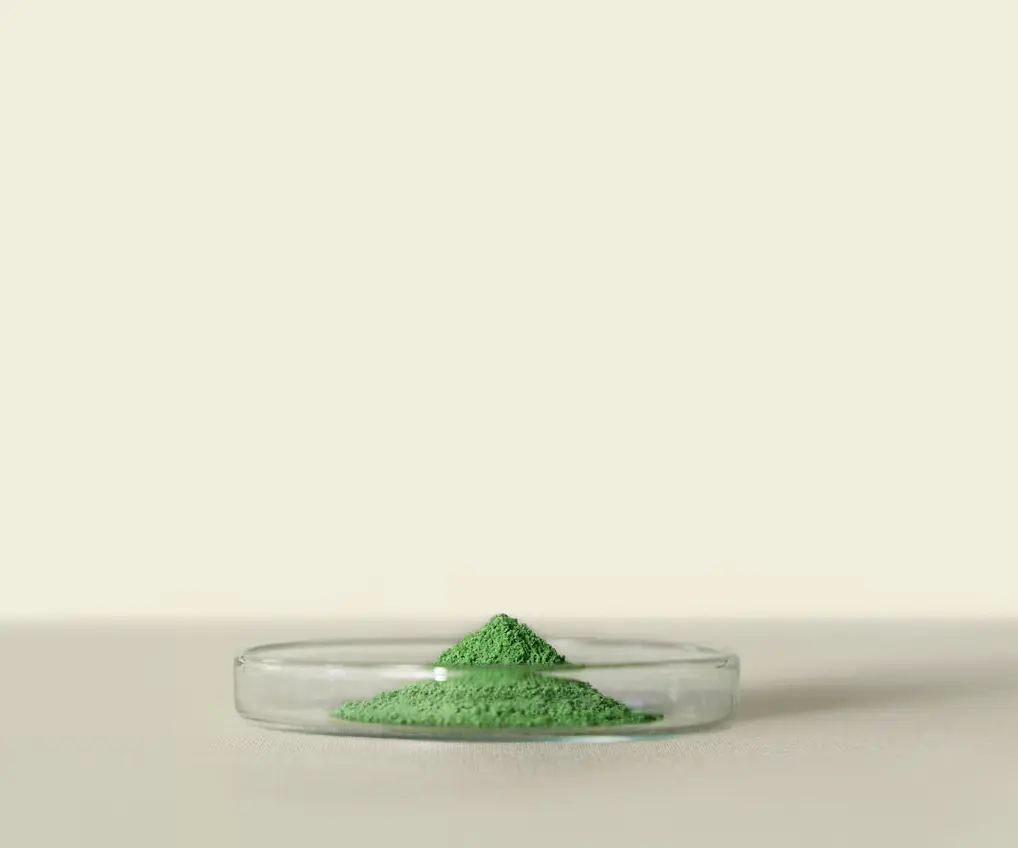
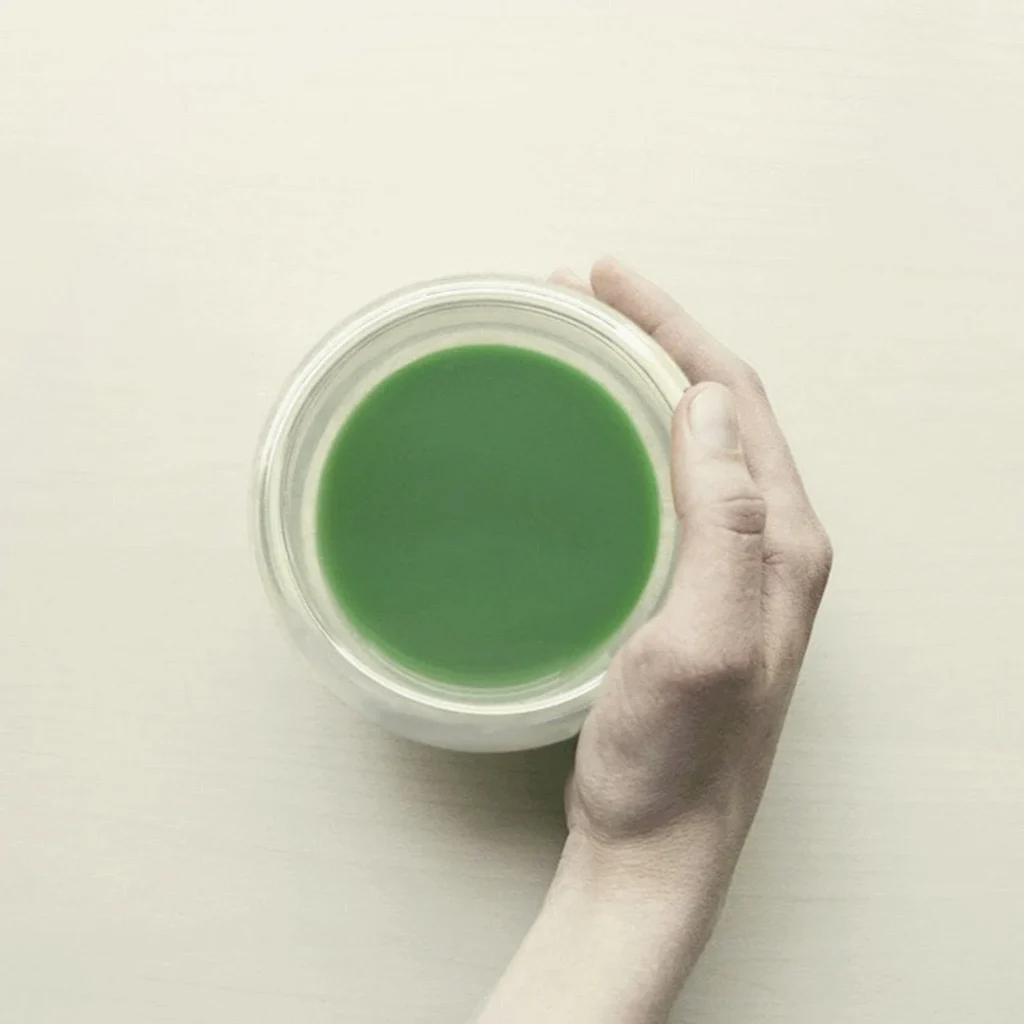
Misaki Ceremonial Grade Matcha
Misaki Ceremonial Grade Matcha is a 20 g shade-grown matcha with sweet umami undertones, a buttery-sweet character and roasted aromas. It uses the topmost leaves from tea trees nurtured for more than 30 years before harvest. The matcha can be whisked to a standard consistency or prepared as thick koicha. What does Misaki ceremonial matcha […]-
{{ item.label }}
{{ item.value ? item.value : currencyFormat( item.amount ) }}
Subtotal
{{ currencyFormat( pricing_summary.total_amount ) }}
Who is Matchaeologist?
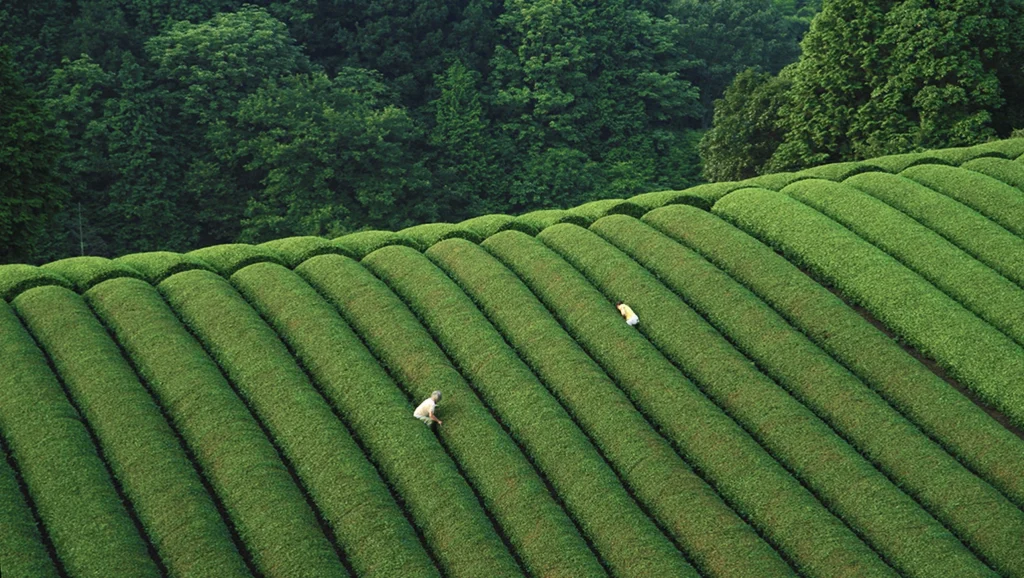
Matchaeologist is a matcha brand sourcing exclusively from Uji, Kyoto, Japan, offering a curated range of ceremonial and culinary grades. Its matcha is grown using the traditional Honzu method, a 30-day shading process with rice-straw mats before harvest.
The collection includes cultivars Misaki, Matsu, and Meiko for drinking, and Midori and Mirai for culinary use, all processed from first-flush tencha ground slowly on granite stone mills.
Shade-grown ceremonial matcha that can also be prepared as koicha
Misaki Ceremonial Grade Matcha is a 20 g shade-grown matcha with sweet umami undertones, a buttery-sweet character and roasted aromas. It uses the topmost leaves from tea trees nurtured for more than 30 years before harvest. The matcha can be whisked to a standard consistency or prepared as thick koicha.
What does Misaki ceremonial matcha taste like?
The flavor profile centers on sweetness and umami. Buttery notes accompany rich, malty roasted aromas, while roasted caramel becomes apparent during brewing. The resulting bowl is described as rich and luscious, with enough concentration for koicha preparation.
How are the leaves selected and grown?
Misaki is ceremonial-grade, artisan-roasted matcha made only from the topmost leaves of shade-grown tea trees. The trees are nurtured for more than 30 years before harvest. These are the main cultivation, selection and processing details given for this matcha.
- Grade: Ceremonial grade
- Leaf selection: Topmost leaves only
- Cultivation: Shade-grown tea trees
- Processing: Artisan-roasted matcha
- Pack size: 20 g
How do you prepare Misaki matcha at 70°C?
Place 1/2 teaspoon, approximately two bamboo scoops or 1 g, in a matcha bowl. Wet the powder with 15 ml (0.5 fl oz) of water at 70°C (160°F). Knead the mixture thoroughly with a bamboo whisk until it forms a smooth paste.
Add another 70 ml (2.4 fl oz) of water and mix until the bowl has an even consistency. The drinking guidance suggests rolling the matcha around the palate to experience its full flavor profile. For a thicker serving, Misaki can also be prepared as koicha.
How should Misaki be stored after opening?
Keep the matcha in a cool, dry place away from moisture, sunlight and odors. Refrigerate it after opening. The single listed variant, Ambrosial with sweet umami undertones, is currently available.
Ceremonial is a commercial matcha grade made from hand-picked young tea leaves, then stone-ground for its taste and vibrant color.
Reviews on Misaki Ceremonial Grade Matcha
Find below the taste profile of this product based on reviews found on Matchaeologist’s website.22 review details
- I classify the explicit bright-green appearance as Vibrant; the later smoothie recipe is not the color evidence. Johnny (2016-11-26): “has a bright green color”.Johnny — 2016-11-26
- I read the direct color description as Vibrant, without converting the fresh aroma into a color score. Liliana (2016-06-01): “Vibrant colour”.Liliana — 2016-06-01
- I place color at Vibrant from vivid green, not from the reviewer’s broader quality claims. Josefine (2016-12-01): “rich, vivid green colour”.Josefine — 2016-12-01
- I use Moderate for the green liquor prepared at 160°F; deep alone does not establish brightness or exceptional saturation. Tammy (2023-03-10): “the tea liquor was a deep green”.Tammy — 2023-03-10
- I assign Vibrant color to this usucha description; very bright is clear brightness but not an electric-green claim. Bao (2025-02-06): “a very bright green”.Bao — 2025-02-06
- I retain Moderate color: deep green identifies the hue, while beautiful does not quantify vibrancy. Oana (2018-07-25): “a very beautiful deep green”.Oana — 2018-07-25
- I score the green appearance as Vibrant; the wording is about color despite its awkward placement after tastes. akw (2023-10-05): “very vibrant green”.akw — 2023-10-05
- I choose Vibrant color from the explicit bright-green observation, keeping quality and energy claims outside the score. Maria (2016-07-10): “a very bright green color”.Maria — 2016-07-10
- I rate the stated bright hue as Vibrant; the later iced-latte texture is a separate observation. C.R.G. (2025-02-12): “bright hue”.C.R.G. — 2025-02-12
- Shockingly green provides the exceptional-intensity cue for my Very vibrant reading of the first, unsweetened water preparation. “the color of the tea is shockingly green” — Jaime, 2016-08-16.Jaime — 2016-08-16
- I record Vibrant color from the direct observation; the price comparison does not enter the assessment. Nohealani (2016-12-28): “It is bright green in colour”.Nohealani — 2016-12-28
- I use Vibrant color for the vibrant-green powder, independently of the review’s nutritional assertions. Hannah (2017-01-08): “The color was a vibrant green”.Hannah — 2017-01-08
- I retain Vibrant color for the powder; quick dissolution belongs to a different criterion. John (2017-03-29): “bright green”.John — 2017-03-29
- Vibrant green is the concise color evidence I retain at Vibrant, distinct from the umami praise. “Vibrant green” — Vanessa, 2024-09-20.Vanessa — 2024-09-20
- The vibrant-color phrase supports my Vibrant reading without validating the inference that it proves quality. “the vibrant color” — Danielle, 2022-10-12.Danielle — 2022-10-12
- I keep color at Moderate: emerald/jade describes a green hue, while gorgeous alone would not establish vibrancy. TeaTiff (2019-02-07): “That luscious emerald/jade green.”.TeaTiff — 2019-02-07
- I distinguish deep green from vivid green and assign Moderate rather than inferring high saturation. Louise (2022-06-24): “the deep green color”.Louise — 2022-06-24
- Coconut milk and honey are part of the preparation, so I retain Vibrant as a context-dependent color report. “The bright green colour is great” — Elizabeth, 2016-11-13.Elizabeth — 2016-11-13
- Deep green identifies the liquor hue, but I keep Moderate because depth alone does not establish vivid brightness. “The liquor is a deep green color” — anthony, 2020-08-22.anthony — 2020-08-22
- The explicit bright-green phrase supports my Vibrant reading; price and quality judgments do not strengthen it. “bright green colour” — Cindy, 2023-08-01.Cindy — 2023-08-01
- Emerald identifies a hue that I retain at Moderate; beauty and natural appearance do not measure saturation. “a beautiful emerald green without looking artificial” — Kalia, 2019-04-12.Kalia — 2019-04-12
- Misaki powder is the subject of my Vibrant reading, while the brownish green belongs to the other brand. “the powder looked vibrant green” — Monica, 2016-08-03.Monica — 2016-08-03
28 review details
- I read the explicit absence of bitterness as Minimal, rather than using the overall praise. ary (2016-09-11): “There is absolutely no trace of bitterness.”.ary — 2016-09-11
- I assign Minimal bitterness to the unqualified absence reported here; the iced-latte suggestion is separate. Rojin (2025-03-17): “No hint of bitterness”.Rojin — 2025-03-17
- I place bitterness at Minimal; the reviewer describes avoiding overly hot water and usually sifting. Jessica (2017-03-16): “no bitterness”.Jessica — 2017-03-16
- I retain Moderate bitterness from the bitter taste itself, not from the reviewer’s enjoyment of it. Jonathan (2017-04-22): “The roasted aroma really enhances the natural bitter taste of the green tea”.Jonathan — 2017-04-22
- I use Minimal bitterness for this water-only preparation at 160°F with a chasen. Tammy (2023-03-10): “Absolutely no bitterness”.Tammy — 2023-03-10
- I assess the explicit bitterness statement as Minimal, independently of the ambiguous word smooth. Sharon (2022-05-03): “no bitterness”.Sharon — 2022-05-03
- I interpret the comparative reduction as Mild bitterness, not proof of none; water and ice are described. Seung (2016-12-18): “Misaki doesn't have such a bitter aftertaste”.Seung — 2016-12-18
- I score Misaki’s bitterness as Minimal from this absence; the earlier bitter description concerns other products. Taku (2016-11-19): “without the bitterness aftertaste like with Kenko”.Taku — 2016-11-19
- I rate bitterness Moderate for Misaki’s own clause; the tasting used 65–70°C water and a metal spoon. Jan (2020-01-29): “Misaki had a full-bodied, most intense taste, with a bitter aftertaste.”.Jan — 2020-01-29
- I record Minimal bitterness at both the opening and finish; the account describes drinking without sweetener. Maria (2016-07-10): “It is not bitter in the beginning and not bitter for the aftertaste.”.Maria — 2016-07-10
- I preserve the negation and place bitterness at Minimal; a bare quotation of bitter reverses this evidence. Nohealani (2016-12-28): “has no bitter aftertaste”.Nohealani — 2016-12-28
- I classify Misaki’s bitterness as Minimal. The earlier balanced bitterness belongs to Meiko, not this product. Natalie (2016-07-08): “It is strong in a way that reflects quality and is not bitter.”.Natalie — 2016-07-08
- I treat barely perceptible bitterness as Minimal; the negative adjective does not increase its intensity. John (2017-03-29): “I can barely taste the unpleasant bitterness of this tea.”.John — 2017-03-29
- Water-only preparation anchors my Minimal bitterness reading, distinct from the separately mentioned milk drinks. “No trace of bitterness at all” — Emma, 2016-11-14.Emma — 2016-11-14
- I understand the source’s non as an absence claim and assign Minimal bitterness without correcting its quoted spelling. Danielle (2022-10-12): “The taste is soft and has non of that bitterness you often get.”.Danielle — 2022-10-12
- I keep Mild bitterness as a weak comparative estimate; the reviewer compares it with coffee, not an absolute absence. jeffe (2016-10-31): “less bitter”.jeffe — 2016-10-31
- I revise the intensity to Minimal because hardly any describes near-absence, not a clearly noticeable mild bitterness. Louise (2022-06-24): “Hardly any bitterness”.Louise — 2022-06-24
- Nothing added is the stated preparation, making my Minimal bitterness reading specific to the unadorned drink. “no bitterness” — Jamie, 2023-09-29.Jamie — 2023-09-29
- Denial of a strong bitter aftertaste leads my assessment to Mild, not a claim of zero bitterness. “does not have a strong and bitter aftertaste” — Janett, 2017-02-06.Janett — 2017-02-06
- I retain Mild bitterness from the comparative claim; least bitter does not establish complete absence. Bonny (2016-05-07): “this Misaki is by far, the least bitter matcha you can get in the market.”.Bonny — 2016-05-07
- I score Mild bitterness in hot water, keeping the later, less-bitter latte experience separate. Spill (2019-02-20): “It's a bit bitter upon brewing in hot water”.Spill — 2019-02-20
- Aftertaste bitterness is explicitly denied, so I retain Minimal while noting the review also mentions traditional water preparation. “No bitter aftertaste at all.” — Vanessa, 2016-06-15.Vanessa — 2016-06-15
- Between-usucha-and-koicha consistency is the stated preference accompanying my Minimal bitterness reading of Misaki. “No trace of bitterness at all.” — Kajal, 2016-03-23.Kajal — 2016-03-23
- Misaki receives my Minimal reading from the concluding denial; the earlier no-bitterness clause concerns Matsu. “definitely not bitter” — Chriztine, 2016-03-29.Chriztine — 2016-03-29
- I restore Minimal bitterness by retaining both the negation and the reviewer’s emphatic clarification. Kristine (2016-02-29): “this matcha has absolutely no bitter taste, not even one bit!”.Kristine — 2016-02-29
- I classify bitterness as Minimal from the complete absence claim; koicha preparation is also discussed. James (2016-03-22): “without even the slightest trace of bitterness”.James — 2016-03-22
- I take the absolute absence statement as Minimal bitterness; the roasted aroma does not change that reading. Matt (2016-03-08): “There's absolutely no bitterness at all”.Matt — 2016-03-08
- I keep Minimal bitterness from the brewed-matcha clause, separating it from color and creaminess. Monica (2016-08-03): “taste creamy without any bitterness”.Monica — 2016-08-03
12 review details
- I place smoothness at Smooth because creamy and smooth jointly describe the drink’s texture, without a silky claim. A. (2024-10-18): “so creamy and smooth”.A. — 2024-10-18
- I retain Smooth smoothness from successful dispersion in water; this says nothing about foam or exceptional silkiness. Nausica (2019-04-02): “it dissolves well in water, even if not boiling.”.Nausica — 2019-04-02
- I use Smooth smoothness from the explicit fine-texture observation, rather than from the lack of bitterness. Maria (2016-07-10): “very fine texture”.Maria — 2016-07-10
- I assess Smooth smoothness from fine texture and water mixing together; neither alone warrants a silky level. Hannah (2017-01-08): “a very fine texture. The powder itself mixed well when whisked with water.”.Hannah — 2017-01-08
- Quick dissolution in water supports my Smooth reading of dispersion, not a claim of velvety mouthfeel or froth. “It dissolves quickly when in contact with water.” — John, 2017-03-29.John — 2017-03-29
- I choose Smooth smoothness because texture is explicitly named; pleasantness does not raise it to silky. Lea (2023-10-20): “The texture of matcha is very smooth and nice.”.Lea — 2023-10-20
- I assign Silky smoothness from the explicit mouthfeel, not the powder’s soft touch or its marine flavor. TeaTiff (2019-02-07): “Silky mouth feel.”.TeaTiff — 2019-02-07
- The hot-chocolate analogy has a stated between-usucha-and-koicha consistency context, which I read as Smooth texture. “Very smooth, just like having hot chocolate.” — Kajal, 2016-03-23.Kajal — 2016-03-23
- I read smooth and creamy as texture here because flavor is praised separately; I keep smoothness at Smooth. Maxine (2021-11-01): “It is so smooth, creamy and the matcha flavour is amazing”.Maxine — 2021-11-01
- Misaki has its own smooth-and-creamy clause, which I retain at Smooth rather than borrow the earlier Matsu description. “Misaki is also very smooth and creamy.” — Chriztine, 2016-03-29.Chriztine — 2016-03-29
- I assess smoothness as Smooth from the explicitly named mouthfeel, leaving aroma and umami intensity separate. anthony (2020-08-22): “has a smooth mouthfeel”.anthony — 2020-08-22
- Velvety explicitly qualifies mouthfeel, giving my assessment a direct basis for Silky beyond flavor richness. “The mouthfeel on this is creamy, luscious and velvety” — Kalia, 2019-04-12.Kalia — 2019-04-12
19 review details
- I assign Moderate natural sweetness from the matcha’s stated sweet flavor; no sweetening ingredient is described. Serena (2022-11-07): “Its sweet, delicate flavour”.Serena — 2022-11-07
- I use Moderate natural sweetness for the product’s reported sweet taste, not the service praise. Salma (2025-05-23): “good and sweet as it should be.”.Salma — 2025-05-23
- I keep Moderate natural sweetness from the sweet aftertaste in this water-based preparation. Nausica (2019-04-02): “a sweet, fairly creamy aftertaste”.Nausica — 2019-04-02
- I classify sweetness as Moderate; totally taste it establishes perception, not an exceptionally sweet intensity. Oana (2018-07-25): “you can totally taste the sweetness in it.”.Oana — 2018-07-25
- I revise natural sweetness to Subtle using the unsweetened taste, not the earlier aroma or next day’s agave. Jaime (2016-08-16): “tastes a bit sweet with nothing added”.Jaime — 2016-08-16
- I rate natural sweetness Moderate for Misaki; the separate bolder-flavor comparison does not intensify sweetness. Amy (2019-08-02): “Misaki. Hands down my favorite as it is sweet and has a bolder flavor”.Amy — 2019-08-02
- I select Subtle natural sweetness, supported by the explicit statement that nothing is added. Jamie (2023-09-29): “slightly sweet”.Jamie — 2023-09-29
- I record Moderate natural sweetness from the savory-sweet taste, without turning the soup analogy into extra intensity. Bonny (2016-05-07): “It's pure savoury-sweet taste - almost like a sweet soup.”.Bonny — 2016-05-07
- I keep natural sweetness Moderate: sweet is explicit, but very does not unambiguously modify its intensity here. mauricio (2017-02-20): “its very smooth and sweet”.mauricio — 2017-02-20
- I assess Moderate natural sweetness in the between-usucha-and-koicha preparation; chocolate and pea soup are comparisons. Kajal (2016-03-23): “it tastes even more like a sweet broth of pea soup”.Kajal — 2016-03-23
- Sweet is the direct taste descriptor I classify as Moderate, with the price complaint excluded. “sweet and smooth” — Sasha, 2025-04-09.Sasha — 2025-04-09
- Misaki is explicitly named as sweet, giving me a Moderate sweetness reading without a stronger intensity cue. “I love the taste of misaki it is sweet and umami” — Amanda, 2025-04-18.Amanda — 2025-04-18
- I correct natural sweetness to Minimal: Misaki is explicitly not sweet, even though the reviewer enjoys its flavor. Chriztine (2016-03-29): “The flavor is delicious, yet not sweet, not sour, not salty and definitely not bitter.”.Chriztine — 2016-03-29
- I place natural sweetness at Minimal from the tiniest hint on the tongue, separate from the powder’s chocolate aroma. anthony (2020-08-22): “the tiniest hint of sweetness”.anthony — 2020-08-22
- I retain Moderate natural sweetness from the stated flavor; enthusiastic so is not enough to establish exceptional intensity. Anonymous (2026-03-22): “the flavour is so sweet and creamy”.Anonymous — 2026-03-22
- I read the product’s sweet-yet-umami flavor as Moderate natural sweetness, independent of its value claims. Kevin (2020-08-01): “Its sweet yet umami flavour”.Kevin — 2020-08-01
- The unspecified more-sweet comparison leaves my natural-sweetness reading at Moderate. “Good taste more sweet and umami” — Sorn, 2025-06-04.Sorn — 2025-06-04
- I score natural sweetness Subtle from the qualified aftertaste; the later general sweet claim does not override slightly. Matt (2016-03-08): “a slightly sweet aftertaste”.Matt — 2016-03-08
- I choose Subtle natural sweetness from subtly sweet; the review explicitly prefers traditional preparation to dilution in milk. Karen (2020-12-18): “It's subtly sweet”.Karen — 2020-12-18
19 review details
- I classify the directly perceived umami as Moderate, without treating persistence as proof of intensity. Josefine (2016-12-01) describes it as “with an umami taste”.Josefine — 2016-12-01
- I place umami at Subtle from a hint of savory notes in the 160°F water preparation. Tammy (2023-03-10): “a hint of umami notes”.Tammy — 2023-03-10
- I classify umami as Subtle because it is an undertone; sweeter mornings is not a sensory intensity statement. rhea (2026-08-09): “the umami undertones in this blend”.rhea — 2026-08-09
- I retain Moderate umami from the direct umami claim; enthusiasm and package size do not establish stronger intensity. Flora (2018-07-28): “This ceremonial matcha gives me the umami fix.”.Flora — 2018-07-28
- I revise umami to Moderate: Misaki has layers of it, but strong, rich and bold qualify the overall flavor rather than umami alone. Natalie (2016-07-08): “MISAKI: Strong, rich, bold matcha flavour with pleasant creamy aftertaste complimented by layers of umami.”.Natalie — 2016-07-08
- I assess umami as Moderate from the named flavor, without turning admiration into an intensity multiplier. Maya (2024-11-18): “I love the flavour of the umami here!”.Maya — 2024-11-18
- I keep umami Moderate; fantastic evaluates enjoyment but does not quantify savory strength. Vanessa (2024-09-20): “fantastic umami”.Vanessa — 2024-09-20
- I retain Subtle umami because the review calls it an undertone and describes the marine sensation as fleeting. TeaTiff (2019-02-07): “a wonderful umami undertone”.TeaTiff — 2019-02-07
- Soft qualifies the savory umami, leading my assessment to retain Subtle rather than omit the intensity qualifier. “soft, savory umami flavor” — Louise, 2022-06-24.Louise — 2022-06-24
- A savory-sweet soup analogy supplies my Moderate umami evidence, independently of the bitterness comparison. “It's pure savoury-sweet taste - almost like a sweet soup.” — Bonny, 2016-05-07.Bonny — 2016-05-07
- I choose Moderate umami for the clear perception on the palate; definitely indicates confidence rather than high intensity. Spill (2019-02-20): “I definitely can taste the umami feature after swishing it around in my mouth.”.Spill — 2019-02-20
- I record Moderate umami because Misaki’s taste is directly named and no strength qualifier is supplied. Amanda (2025-04-18): “the taste of misaki it is sweet and umami”.Amanda — 2025-04-18
- The concluding umami interpretation concerns Misaki, and I retain Moderate without deriving savoriness solely from absent tastes. “I think I have just discovered what umami is!” — Chriztine, 2016-03-29.Chriztine — 2016-03-29
- I score umami Subtle from mild, corroborated by the review’s later rejection of a heavy, intense umami profile. anthony (2020-08-22): “it has a mild umami flavor”.anthony — 2020-08-22
- Great expresses approval of umami, so my intensity reading remains Moderate. “Great umami taste” — Cindy, 2023-08-01.Cindy — 2023-08-01
- I correct umami to Moderate because the flavor is stated directly, with no hint, mild or undertone qualifier. Kevin (2020-08-01): “Its sweet yet umami flavour”.Kevin — 2020-08-01
- More has no stated comparison baseline here, leaving my umami classification at Moderate. “more sweet and umami” — Sorn, 2025-06-04.Sorn — 2025-06-04
- Brothy savoriness supports my Moderate umami reading; the hearty-soup analogy does not by itself establish exceptional intensity. “more brothy, savoury kind of sweet you get from drinking a hearty bowl of soup” — Matt, 2016-03-08.Matt — 2016-03-08
- Floral and umami notes are explicitly assigned to this matcha; I retain Moderate umami rather than treat superb as intensity. “the floral and umami notes of this matcha are absolutely superb” — tiffany, 2026-05-14.tiffany — 2026-05-14
9 review details
- I place the finish at Very pleasant because the lingering sensation is explicitly called spectacular and highly enjoyed. Nausica (2019-04-02): “I find that its persistence on mouth is spectacular, I really like it a lot”.Nausica — 2019-04-02
- I read the sipping endorsement of this aftertaste as a Pleasant finish, not as evidence of particle-free texture. Melina (2019-11-15): “very smooth aftertaste. perfect for sipping.”.Melina — 2019-11-15
- I rate the finish Pleasant from the explicitly favorable aftertaste comparison, keeping Kenko’s bitterness separate. Taku (2016-11-19): “Taste wise, it is so much better without the bitterness aftertaste like with Kenko.”.Taku — 2016-11-19
- I retain a Pleasant finish because aftertaste is explicitly part of the positively evaluated balance; it is not separately called exceptional. Hannah (2017-01-08): “a perfect mix of aroma, taste, and aftertaste”.Hannah — 2017-01-08
- I score Misaki’s finish Pleasant from its own pleasant-aftertaste clause, not Matsu’s separate lingering-smoke description. Natalie (2016-07-08): “MISAKI: Strong, rich, bold matcha flavour with pleasant creamy aftertaste complimented by layers of umami.”.Natalie — 2016-07-08
- I interpret the favorable smooth-finish description as Pleasant, without treating it as a claim about graininess. B (2022-01-25): “Its subtle/smooth finish is deceptive.”.B — 2022-01-25
- Elegance paired with the smooth ending supports my Pleasant finish reading. “with a smooth finish. Very delicated and elegant.” — Eloina, 2021-08-05.Eloina — 2021-08-05
- I assign a Pleasant finish from the direct positive aftertaste statement; the pricing discussion is irrelevant. Joshure (2016-12-11): “Really nice aftertaste as well!”.Joshure — 2016-12-11
- The favorably received sweet aftertaste supports my Pleasant finish reading without changing sweetness intensity. “it surprising comes with a slightly sweet aftertaste.” — Matt, 2016-03-08.Matt — 2016-03-08
Frequently asked questions
Shade-grown ceremonial matcha that can also be prepared as koicha Here are some frequently asked questions and answers.
What does Misaki Ceremonial Grade Matcha taste like?
What does Misaki Ceremonial Grade Matcha taste like?
Misaki has sweet umami undertones, a buttery-sweet character and rich, malty roasted aromas. Roasted caramel aromas become apparent during brewing.
Is Misaki a ceremonial-grade matcha?
Is Misaki a ceremonial-grade matcha?
Yes. Misaki is identified as ceremonial-grade matcha and uses only the topmost leaves from shade-grown tea trees.
Can Misaki matcha be prepared as koicha?
Can Misaki matcha be prepared as koicha?
Yes. Misaki can be prepared as koicha, the thick style of matcha, as well as at the standard consistency given in its brewing directions.
How much Misaki matcha should I use per bowl?
How much Misaki matcha should I use per bowl?
Use about 1/2 teaspoon, approximately two bamboo scoops or 1 g, for the stated preparation method.
What water temperature should I use for Misaki matcha?
What water temperature should I use for Misaki matcha?
Use water at 70°C (160°F). Begin with 15 ml (0.5 fl oz) to make a smooth paste, then add another 70 ml (2.4 fl oz) and mix evenly.
Is Misaki made from shade-grown tea leaves?
Is Misaki made from shade-grown tea leaves?
Yes. Misaki uses the topmost leaves from shade-grown tea trees nurtured for more than 30 years before harvest.
How should I store Misaki matcha?
How should I store Misaki matcha?
Store it in a cool, dry place away from moisture, sunlight and odors. Refrigerate the matcha after opening.
What size is Misaki matcha and is it available?
What size is Misaki matcha and is it available?
Misaki is offered as a 20 g product. Its single listed variant, Ambrosial with sweet umami undertones, is currently available.