Matsu Ceremonial Grade Matcha

Matsu Ceremonial Matcha is an artisan-roasted, ceremonial-grade matcha with an intense yet mellow roasted flavor. It combines a rich, creamy body and smooth mouthfeel with umami, savory-sweet undertones and a long, creamy finish. Its depth and texture are likened to a well-brewed espresso. What does Matsu ceremonial matcha taste like? Roasted aroma leads the flavor […]
  • Subtotal

    {{ currencyFormat( pricing_summary.total_amount ) }}

Roasted ceremonial matcha with a creamy body and long finish

Matsu Ceremonial Matcha is an artisan-roasted, ceremonial-grade matcha with an intense yet mellow roasted flavor. It combines a rich, creamy body and smooth mouthfeel with umami, savory-sweet undertones and a long, creamy finish. Its depth and texture are likened to a well-brewed espresso.

What does Matsu ceremonial matcha taste like?

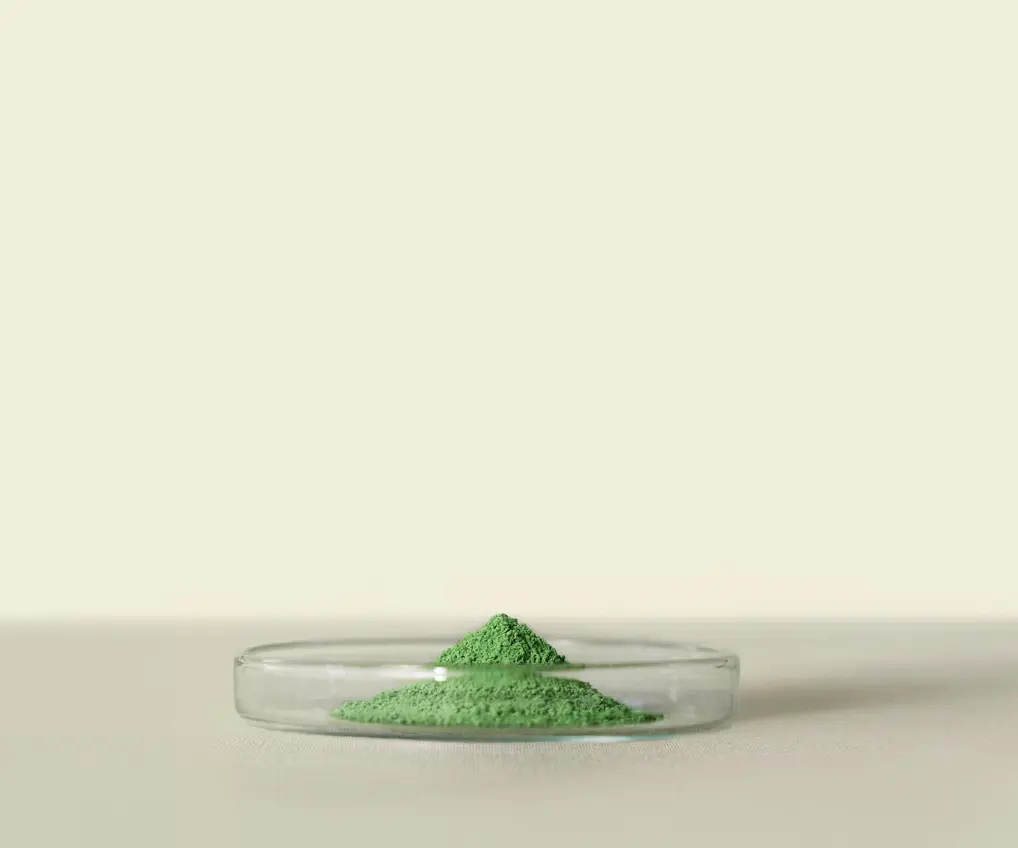
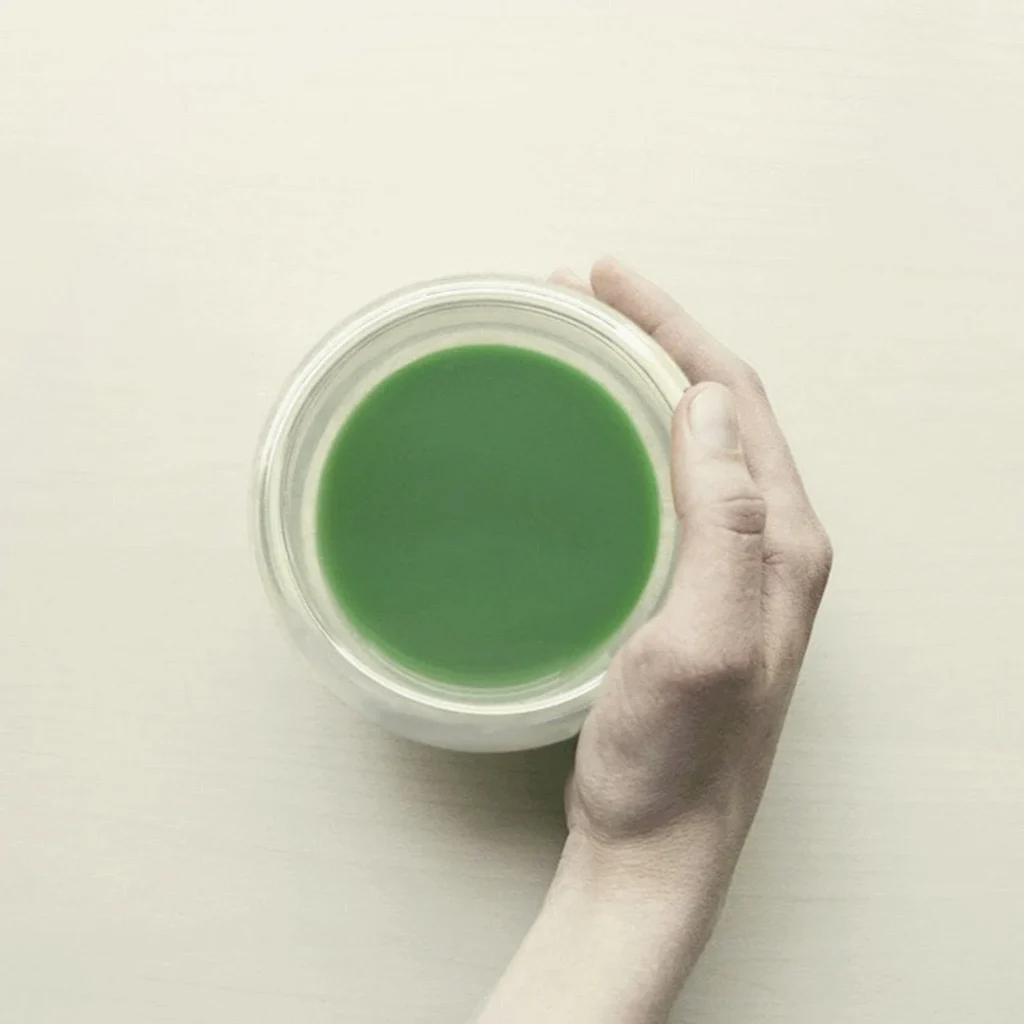
Roasted aroma leads the flavor profile. Umami and savory-sweet notes round out the roast, creating a full-bodied cup with a complex finish rather than a light or delicate character. The matcha has a deep green color reminiscent of Japanese pine trees.

The roasting technique has been handed down through generations of matcha sommeliers. It brings the roasted aromas forward while retaining the smooth mouthfeel and creamy consistency described for this matcha.

  • Grade: Ceremonial grade
  • Processing: Artisan roasted
  • Flavor: Mellow roast with umami and savory-sweet undertones
  • Body: Rich, creamy and full
  • Finish: Long and creamy

How should Matsu matcha be prepared?

Place 1/2 teaspoon, approximately two bamboo scoops or 1 g, in a matcha bowl. Wet the matcha with 15 ml (0.5 fl oz) of water heated to 70°C (160°F). Knead the mixture thoroughly with a bamboo whisk until it forms a smooth paste.

Add another 70 ml (2.4 fl oz) of water and mix until the drink has an even consistency. When tasting, roll the liquid around the palate to experience the roasted, umami and savory-sweet elements across the full-bodied cup.

How should the opened matcha be stored?

Keep the container in a cool, dry place away from moisture, sunlight and odors. Refrigerate it after opening for maximum flavor and potency. The product is offered as a 20 g format.

Matsu Ceremonial Matcha is currently available. Its defining option is labeled “Intense with a mellow roasted flavor.”

Reviews

Reviews on Matsu Ceremonial Grade Matcha

Find below the taste profile of this product based on reviews found on Matchaeologist’s website.
Learn more about how Best Matcha generate matcha taste profiles
This review has been generated by Best Matcha sensory profiling system, and represent the reviews aggregated below.
Color Vibrancy
10 review details
  1. In Karen (2019-10-14), “the smoothest, sweetest, most vibrant Matcha I have ever tried in the UK” supports my Vibrant assessment. The superlative is comparative; I retain vibrancy without assuming electric saturation.Karen — 2019-10-14
  2. At Moderate, I retain this evidence from Aiden (2020-02-09): “Very beautiful, pine-green color”. Pine green identifies the hue; beauty alone does not prove vivid saturation.Aiden — 2020-02-09
  3. I take Joseph (2025-05-21)’s “wonderfully vibrant in both colour and taste” to indicate Vibrant. The color is described as vibrant in an usucha preparation.Joseph — 2025-05-21
  4. I read A.K (2024-10-20) as Vibrant: “amazing bright green colour”. Bright green is a color observation, independent of delivery or price.A.K — 2024-10-20
  5. From KT (2020-03-15), I retain “Marvelous emerald green color” at Vibrant. Emerald green conveys vivid color, without proving freshness or quality.KT — 2020-03-15
  6. With Dane (2020-06-02)’s “such a vivid green colour”, I select Vibrant. The vivid green observation is separate from the milk and nitrogen experiments.Dane — 2020-06-02
  7. I assess L. (2019-08-11) at Vibrant on the wording “Very beautiful vibrant green color”. The stated vibrant green, not the generic praise, determines this color level.L. — 2019-08-11
  8. I ground Vibrant in Hannah (2026-03-12)’s phrase “a vibrant green”. Vibrancy is directly stated; delicious taste is not used for color scoring.Hannah — 2026-03-12
  9. For Customer (2024-08-01), I assign Vibrant to “a gorgeous green vibrant colour”. The criterion rests on vibrant green, not trust in the brand.Customer — 2024-08-01
  10. For this criterion, I read “It’s vibrant green” by Customer (2026-04-21) as Vibrant. The direct color observation is not inferred from the quality claim.Customer — 2026-04-21
3.9(10 reviews)
Bitterness
11 review details
  1. My reading of Aiden (2020-02-09) is Minimal, based on “almost no trace of bitterness”. Almost no bitterness is an explicit minimal-intensity observation.Aiden — 2020-02-09
  2. I classify the account by Kevin (2021-12-02) as Minimal: “no bitterness at all was observed”. The reviewer reports no bitterness across stated usucha and latte use.Kevin — 2021-12-02
  3. For Petra (2025-05-16), I assign Mild to “mild bitterness at the end”. The end-of-sip bitterness is mild, not absent.Petra — 2025-05-16
  4. I use Minimal for Dane (2020-06-02)’s wording: “no bitterness at all”. A plain-water preparation is among the trials supporting no bitterness.Dane — 2020-06-02
  5. At Minimal, I retain this evidence from L. (2019-08-11): “without any bitterness”. The negation establishes minimal bitterness, irrespective of overall praise.L. — 2019-08-11
  6. For this criterion, I read “not too bitter” by Jesse (2018-01-23) as Mild. Not too bitter allows some bitterness and therefore does not mean none.Jesse — 2018-01-23
  7. My Minimal reading rests on William (2017-09-29): “no bitter after taste”. This minimal bitterness finding is limited to the aftertaste, not every sip phase.William — 2017-09-29
  8. A bitter ending is explicitly absent, supporting my Minimal reading specifically at the finish. “without bitter ending” — Aleksandra, 2019-01-16.Aleksandra — 2019-01-16
  9. Absolute negation of bitterness supports my Minimal assessment, independently of the soft-taste description. “not at all bitter” — Prachi, 2018-07-26.Prachi — 2018-07-26
  10. I assess Customer (2026-04-21) at Minimal on the wording “absolutely zero bitterness”. Zero bitterness is an intensity statement rather than an overall quality score.Customer — 2026-04-21
  11. I retain a Minimal assessment for Nathan (2019-04-11): “when people say a very high ceremonial grade green tea should have no bitterness I didn't think that it was an actual thing but Matsu actually delivers that!”. The wider statement explicitly credits Matsu with delivering no bitterness.Nathan — 2019-04-11
1.2(11 reviews)
Body
5 review details
  1. My Full reading rests on KT (2020-03-15): “an almost creamy texture”. The nearly creamy texture supports body rather than flavor strength.KT — 2020-03-15
  2. I find support for Full in Penny (2016-10-14): “smooth and creamy matcha”. Creaminess is attributed to the tea; the later agave addition is not used to infer sweetness.Penny — 2016-10-14
  3. I interpret Chris (2016-11-13)’s “the flavour and body are "full strength"” as Full. Full body is explicitly named; the reviewer uses more powder than recommended.Chris — 2016-11-13
  4. I classify the account by Olivia (2017-02-06) as Full: “It is rich, creamy”. Creaminess follows the account of freshly brewed Matsu and supports full body.Olivia — 2017-02-06
  5. I distinguish Light here through Kelly (2025-05-26)’s “more light-bodied”. The reviewer explicitly calls the tea light-bodied and favors it for usucha.Kelly — 2025-05-26
3.6(5 reviews)
Natural Sweetness
7 review details
  1. On Sam (2018-07-27)’s evidence, I choose Subtle: “the grassy, subtly sweet taste”. The subtle sweetness is described for an iced water preparation.Sam — 2018-07-27
  2. My choice is Moderate for this passage by Customer (2015-12-22): “Tastes bold yet sweet”. The taste is described as sweet without a stated milk or sweetener contribution.Customer — 2015-12-22
  3. I connect Angelina (2016-07-23)’s “It had such a delicate sweetness” with the Subtle level. The delicate sweetness is reported in the brewed tea, with no added sweetener stated.Angelina — 2016-07-23
  4. On ALEJANDRA (2025-11-24)’s evidence, I choose Moderate: “smooth, sweet, a little umami”. Sweetness is directly named, with no intensity modifier or added ingredient.ALEJANDRA — 2025-11-24
  5. At Subtle, I retain this evidence from Prachi (2018-07-26): “lil sweet in taste”. A little sweetness supports the subtle level, not pronounced sweetness.Prachi — 2018-07-26
  6. Little sweetness is assigned to Matsu, so I retain Minimal; the stronger oat-milk comparison is about Meiko. “Not much sweetness” — Tayyaba, 2021-04-01.Tayyaba — 2021-04-01
  7. Using Olivia (2017-02-06)’s “has a bit of sweet undertone”, I judge this criterion Subtle. The sweet undertone is subtle and attributed to the brewed matcha.Olivia — 2017-02-06
2.1(7 reviews)
Frothability
6 review details
  1. My choice is Easy for this passage by Joseph (2025-05-21): “It froths well”. Good frothing is observed in usucha, independently of flavor.Joseph — 2025-05-21
  2. I retain a Easy assessment for A.T. (2025-09-07): “it froths up beautifully”. The passage describes actual frothing rather than mixing alone.A.T. — 2025-09-07
  3. I distinguish Easy here through Alex (2016-08-16)’s “makes a wonderful frothy pleasant drink”. A frothy drink is reported; abundant or exceptionally easy foam is not established.Alex — 2016-08-16
  4. In Nisha (2016-08-06), “It froths really nicely” supports my Easy assessment. Frothing is explicit, with sifting and water-temperature context.Nisha — 2016-08-06
  5. A short Vitamix spin in filtered water produces the reported froth, so I retain Easy for that method rather than chasen whisking. “a smooth frothy cold brew matcha” — Johnny, 2018-12-06.Johnny — 2018-12-06
  6. I give the Easy reading to Maisy (2025-08-07)’s “creates a beautiful micro-foam”. Micro-foam is explicitly observed, without evidence of exceptional foam abundance.Maisy — 2025-08-07
4.0(6 reviews)
Umami
8 review details
  1. I assess Aiden (2020-02-09) at Pronounced on the wording “very umami”. The intensifier supports pronounced savory intensity.Aiden — 2020-02-09
  2. Using Kevin (2021-12-02)’s “Umami and mellow roasted as described along with savory undertones”, I judge this criterion Moderate. Savory undertones confirm umami, but not a strong or intense level.Kevin — 2021-12-02
  3. Using anthony (2020-08-24)’s “no umami taste”, I judge this criterion Minimal. The explicit lack of umami taste takes precedence over the aromatic hint.anthony — 2020-08-24
  4. I read ALEJANDRA (2025-11-24) as Subtle: “a little umami”. A little umami indicates a background savory note rather than a strong one.ALEJANDRA — 2025-11-24
  5. I place “Matsu has a rich Umami flavour” from William (2017-09-29) at Pronounced. Rich modifies umami specifically, supporting pronounced savory intensity.William — 2017-09-29
  6. I take Customer (2026-04-21)’s “a rich umami flavor” to indicate Pronounced. The richness qualifies umami itself, supporting pronounced intensity.Customer — 2026-04-21
  7. I ground Moderate in Tayyaba (2021-04-01)’s phrase “a good umami”. Good evaluates the umami positively without establishing pronounced intensity.Tayyaba — 2021-04-01
  8. My Moderate reading rests on Chase (2018-02-23): “smooth, calm, and umami flavor”. The reviewer drinks it with water and explicitly identifies umami without an intensifier.Chase — 2018-02-23
3.0(8 reviews)
Finish
6 review details
  1. With Louise (2022-05-20)’s “a bit of a fresh aftertaste”, I select Pleasant. A fresh aftertaste is explicitly described and welcomed.Louise — 2022-05-20
  2. I give the Neutral reading to Jess (2016-03-01)’s “no aftertaste with this”. An absent aftertaste supports a short neutral finish, not an enhanced positive rating.Jess — 2016-03-01
  3. I interpret Natalie (2016-07-08)’s “Smoky roasted flavour spreads across the palate and lingers pleasantly” as Pleasant. Only the MATSU passage is used; the pleasant lingering roast belongs to this tea.Natalie — 2016-07-08
  4. Absent aftertaste leads my assessment to Neutral finish, not a pleasantness score inferred from the surrounding enthusiasm. “no aftertaste” — Angelina, 2016-07-23.Angelina — 2016-07-23
  5. From William (2017-09-29), I retain “no bitter after taste” at Neutral. No bitter aftertaste removes a defect without proving a positively enjoyable finish.William — 2017-09-29
  6. With Aleksandra (2019-01-16)’s “without bitter ending”, I select Neutral. A non-bitter ending is neutral evidence, not an independently pleasant aftertaste.Aleksandra — 2019-01-16
3.3(6 reviews)

Frequently asked questions

Roasted ceremonial matcha with a creamy body and long finish Here are some frequently asked questions and answers.

Is Matsu a ceremonial-grade matcha?

Yes. Matsu is identified as a ceremonial-grade matcha and is prepared with a bamboo whisk in a matcha bowl.

What does Matsu Ceremonial Matcha taste like?

It has an intense yet mellow roasted flavor with umami and savory-sweet undertones. The body is rich, creamy and full, followed by a long, creamy finish.

How is Matsu matcha processed?

Matsu is artisan roasted using a technique handed down through generations of matcha sommeliers. The roasting brings its roasted aromas to the foreground.

How do you prepare Matsu Ceremonial Matcha?

Combine 1/2 teaspoon, approximately two bamboo scoops or 1 g, with 15 ml (0.5 fl oz) of 70°C (160°F) water. Knead with a bamboo whisk into a smooth paste, then add 70 ml (2.4 fl oz) more water and mix until consistent.

What water temperature should be used for Matsu matcha?

Use water heated to 70°C (160°F). Start with 15 ml (0.5 fl oz), then add another 70 ml (2.4 fl oz) after forming a smooth paste.

How should Matsu matcha be stored?

Store it in a cool, dry place away from moisture, sunlight and odors. Refrigerate the matcha after opening for maximum flavor and potency.

What size is Matsu Ceremonial Matcha?

Matsu Ceremonial Matcha is offered in a 20 g format.

Is Matsu Ceremonial Matcha currently available?

No. Matsu Ceremonial Matcha is currently available.

Affiliate disclosure: Best Matcha earns a commission from purchases made through the affiliate links on this page, at no additional cost to you. This never influences our ratings, reviews or editorial decisions.