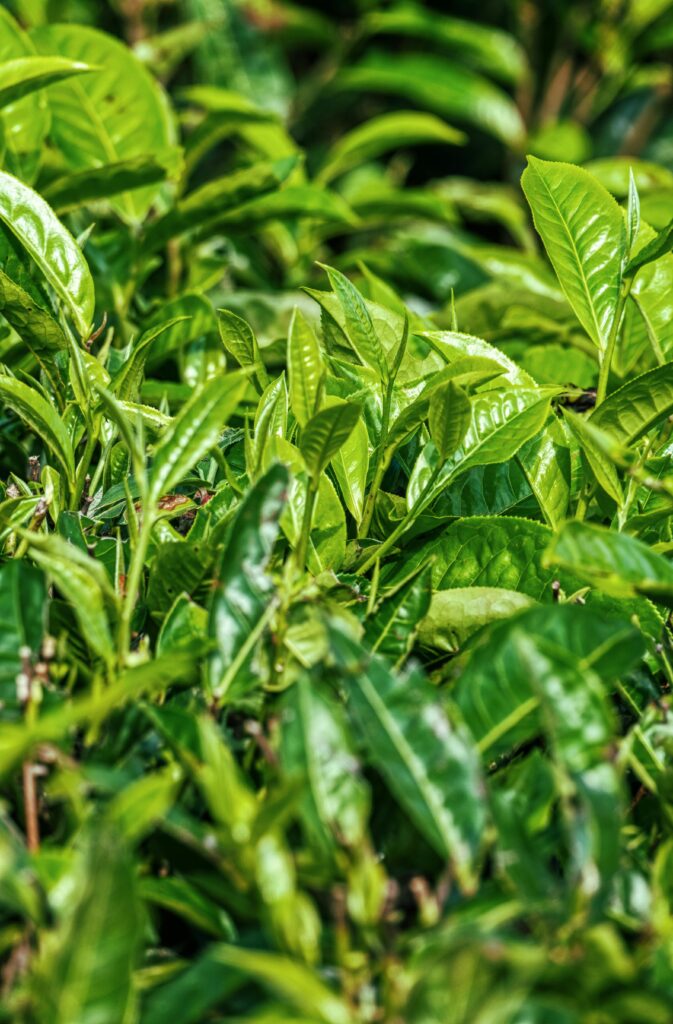
Shading: Tea Cultivation Methods, Timing and Effects
Shading changes tea leaves before harvest. Compare honzu and cloth methods, understand timing examples, and avoid automatic matcha grade claims.Definition of Shading
Shading is the practice of reducing sunlight reaching tea plants before harvest by covering them with suitable materials. For tencha used in matcha, it alters leaf development and composition, including amino acids and chlorophyll. The method and duration describe cultivation choices, not an automatic grade or guarantee of flavor.
Learn more
What Shading changes in tea cultivation
Shading reduces the light reaching tea shoots before they are harvested. It is characteristic of tencha production and also used for gyokuro and kabusecha. Covering is a cultivation stage, not a substitute for steaming, drying or milling. After harvest, the processing route still determines whether a covered leaf becomes tencha or a rolled tea.
Amino acids, chlorophyll and aroma
Maho Kanda’s 2010 technical paper from Kyoto’s tea research center explains several relevant effects: shaded tea has increased free amino acids, increased chlorophyll and thinner leaves. It also discusses an aroma precursor that yields dimethyl sulfide during heating, helping explain the characteristic covered-tea aroma. These mechanisms are more precise than saying shade simply makes every leaf sweet.
The same paper relates restricted light to preservation of theanine and reduced formation of catechins. These are useful explanations of sensory tendencies, not laboratory results for a particular retail matcha. Leaf chemistry does not by itself establish a health effect, a fixed caffeine amount, or a guaranteed calm-and-focused response after drinking.
Honzu and cloth are methods, not universal rankings
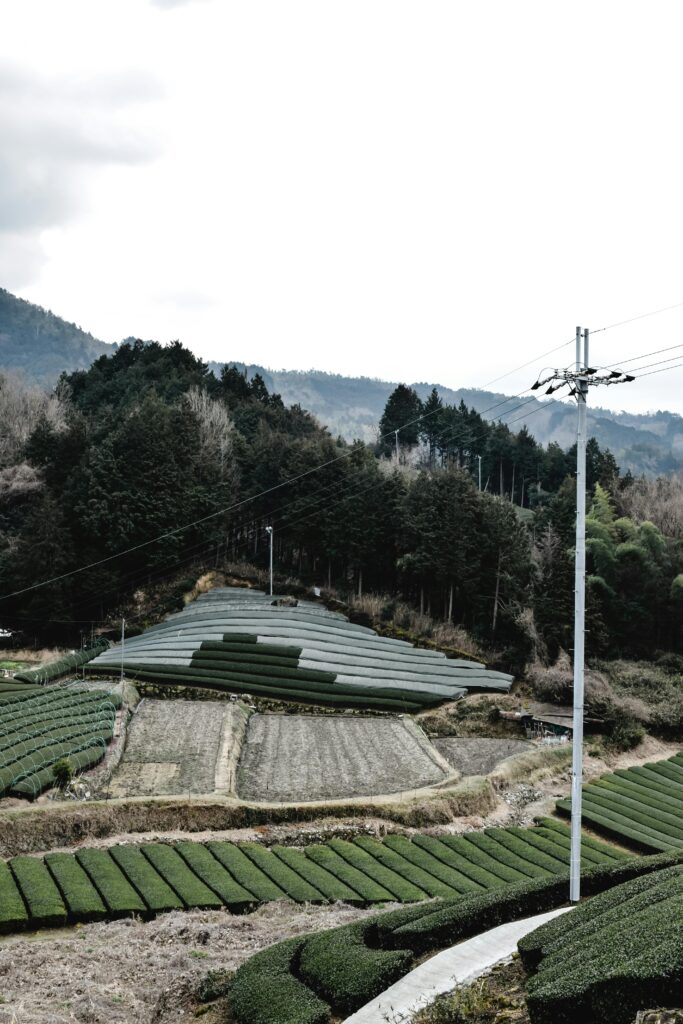
Honzu uses a reed screen over a supporting rack with straw spread above it. Kanda’s paper discusses the skilled labor and material difficulties involved. It also describes a double-layer black-cloth system developed to make the work easier. In the historical sensory comparison presented, cloth-shaded tencha was close to honzu in quality.
That finding is a reason not to call cloth automatically inferior. It is also not proof that every cloth treatment equals every honzu treatment: the comparison had a specific research context. Kanreisha refers to shading cloth; when suspended above bushes it forms a canopy. Direct covering, often called jikagise, places covering on the bushes rather than on an overhead rack. Ask which arrangement a producer actually uses rather than treating the material name as a quality certificate.
How many days and how much shade?
Yamamasa Koyamaen describes three to four weeks of covering in its matcha-production account. Kanda’s 2010 high-quality cultivation discussion gives an 85–98% shading range and at least 30 days. These are explicitly sourced examples with different contexts, not a single mandatory international matcha rule.
MAFF’s 2022 tea guide gives about 20 days for gyokuro and about one week for kabusecha. These examples show why duration is informative, but they should not become a rigid grading table. If a seller reports a shading percentage, ask whether it describes the covering material or measured light reduction at the plants, and whether the treatment changed during the period.
Shading does not finish the tea
Tencha is steamed and dried without rolling; gyokuro is rolled. Milling refined tencha makes matcha. This is why “shade-grown” alone cannot distinguish the two and why powdered gyokuro should not be assumed to follow the tencha route. Suitable heating remains necessary even when the leaf has been grown under cover.
What to check when buying
Look for a producer’s explanation of the method, crop and timing rather than a claim that longer always means better. Color and umami are useful tasting observations, but they cannot reveal a shade ratio or prove a particular covering material. Cultivar, processing, blending and storage also affect the finished cup.
A named traditional method can explain labor and heritage without guaranteeing superiority. Compare actual products for the way you intend to prepare them. The most useful shading information is specific enough to understand the producer’s choices while leaving room for differences between farms and lots.
Sources and further reading
- Production Technique of Shade Grown High Quality Tea in Japan – Matcha tea cultivation and production — Kyoto Prefectural Agriculture, Forestry and Fisheries Technology Center / World Green Tea Conference 2010
- Cultivation and processing of Matcha — Yamamasa Koyamaen
- 味わいや香りもさまざまなお茶の種類 — Ministry of Agriculture, Forestry and Fisheries of Japan
Sources and references

Accessed: 2026-09-08
Language: en
Maho Kanda, pp.1–2: free amino acids, chlorophyll, thinner leaves, aroma precursor; honzu and double-layer cloth; historical sensory comparison. The 85–98% and at least 30 days recommendation is this 2010 technical context, not a universal grade rule.
Accessed: 2026-09-08
Language: en
Producer describes 3–4 weeks covering, both hand and machine harvest, steaming, unrolled drying, sorting out stems, veins and old leaves, evaluation, blending, cool dry storage and milling.
Accessed: 2026-09-08
Language: ja
April 2022: sencha rolling stages; deep steaming at least twice ordinary steaming; shaded, steamed, unrolled tencha; stem and vein removal; matcha from ground tencha; gyokuro and kabusecha distinctions.
Accessed: 2026-09-08
Language: ja
Covering during shoot growth; kabusecha, gyokuro and tencha as covered teas; overhead versus direct-cover arrangements; black cloth, silver-surfaced direct-cover materials, and traditional reed/straw honzu. Does not guarantee hand-harvest or grade.
Author: Margot Claudel
Accessed: 2026-09-08
Language: en
English commercial usage of Jikagise for direct covering of bushes. Consulted only for the name; its quality rankings, timing, health and historical claims are not adopted. Physical arrangement is corroborated by Kyoto Prefecture.

Emilie Schol
Founder of Best MatchaFrequently asked questions
Here are some frequently asked questions and answers.Is honzu always better than cloth shading?
Is honzu always better than cloth shading?
No universal ranking follows from the evidence. The 2010 Kyoto paper presents a historical comparison in which double-layer cloth produced tencha close to honzu in quality.
Must all matcha be shaded for exactly 30 days?
Must all matcha be shaded for exactly 30 days?
No. Yamamasa describes three to four weeks; a 2010 Kyoto technical account recommends at least 30 days in its particular high-quality cultivation context. Neither is a universal grade rule.
Does shade-grown mean matcha?
Does shade-grown mean matcha?
No. Gyokuro and kabusecha are also covered teas. Matcha follows the tencha route, including drying without rolling and subsequent milling.