Shaoxing: Fusheng Matcha and Tea Culture
Shaoxing has a documented matcha industry in Fusheng. Explore Royal Tea Village and distinguish revived dian cha from modern processing.Definition of Shaoxing
Shaoxing is a city in Zhejiang, China, with tea culture and a documented modern matcha business in Fusheng, Yuecheng district. Its revived dian cha demonstrations connect visitors with powdered-tea history, but do not establish that historical tea preparation and present-day matcha manufacture are identical.
1 term related to Shaoxing
Learn more
Modern activity in a named district
Shaoxing’s connection to matcha is more specific than a general Zhejiang tea story. A September 30, 2022 municipal-portal report identifies Fusheng town in Yuecheng district and names Royal Tea Village as a modern matcha manufacturer involved in planting, production, processing and marketing. The report connects a named manufacturer with a specific locality.
A documented cultural experience
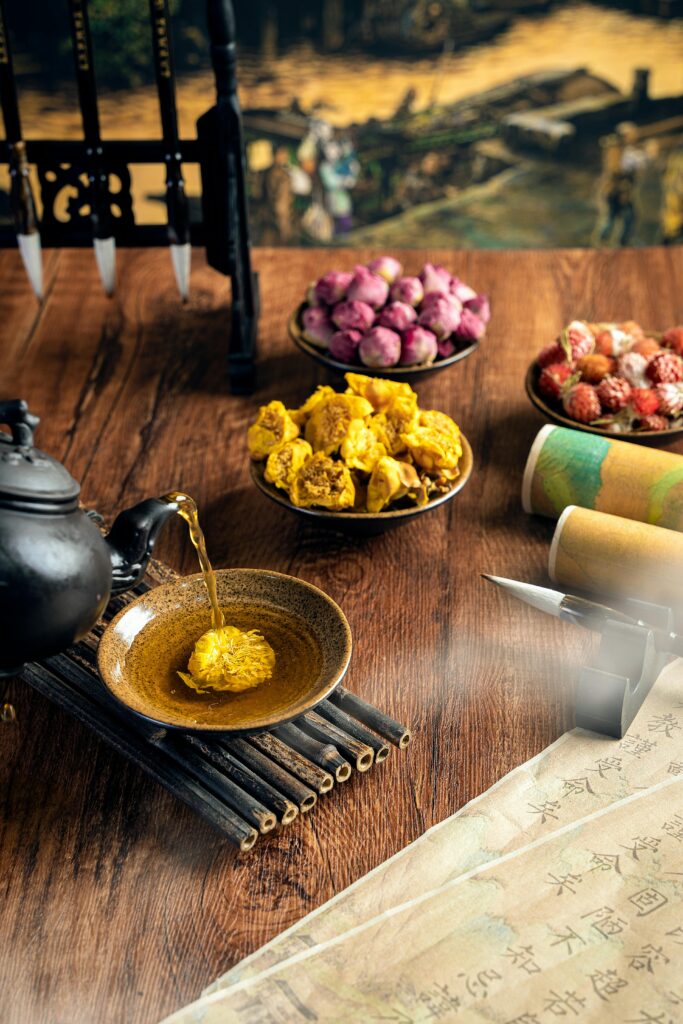
The report follows visitors to Matcha Town Living Room on September 29. They tasted matcha-flavored sweets and experienced dian cha, with preparation demonstrated by a representative of Shaoxing Royal Tea Village Tea Industry Co., Ltd. The event illustrates tea as a social and cultural activity without representing the practices of every Shaoxing household.
Preparation is not powder manufacture
The demonstration involved warming the cup and whisk, adding tea powder, pouring water in stages and whisking to produce fine froth for surface designs. The report connects the revived practice with the Song dynasty. That historical connection does not prove that a modern manufacturer uses the same leaf-growing and processing methods as a Song-era tea maker. Making a bowl and manufacturing the powder are separate activities.
Keep tea origins and dates precise
The Fusheng evidence does not establish West Lake Dragon Well as a Shaoxing invention. Nor does it support a universal local process described as sun-drying followed by pan-firing. The report’s promotional rankings, sales and acreage are not carried forward as current city-wide totals. A buyer can acknowledge the named manufacturer while requesting its actual shading, drying and milling specifications. Neither a tea-art demonstration nor a matcha dessert supplies a complete batch manufacturing record.
What makes a powder matcha
The Japan Matcha Association describes matcha as powdered tencha. Tea leaves are cultivated under shade, steamed and dried without rolling before milling. This distinguishes the manufacturing route from simply grinding an ordinary leaf tea. It is a general processing reference, not evidence that every farm in the place named here uses that method. The local sources above must establish their own production claims; the process definition cannot fill gaps in a regional report.
Reading the origin on a package
Separate the place where leaves were grown from the locations of processing, milling, packing and sale. Ask for a named producer, the actual leaf origin, the tea category before milling and the harvest or lot information. Where an organic claim is made, request the current certificate and its operator and product scope. A location name, scenic field or retailer address is not a substitute for these records.
Comparing the actual tea
Use product-specific information when comparing taste, color and value. A broad climate description cannot establish a batch’s amino-acid content, sweetness or absence of astringency. Compare named teas prepared in similar ways and keep sensory observations attached to those products. This lets documented regional history remain useful without turning it into an unsupported promise about every powder sold under the place name.
Sources
- Expats experience fine frothy art — Shaoxing English portal / China Daily
- What is MATCHA — Japan Matcha Association
Sources and references

Accessed: 2026-09-08
Language: en
September 2022 account locates Fusheng in Yuecheng district; identifies Royal Tea Village as modern matcha manufacturer with planting/processing/marketing; documents dian cha event.
Accessed: 2026-09-08
Language: en
General processing only: shaded leaves steamed and dried without rolling, then milled; matcha is powdered tencha. Not used for local production, health or historical origin claims.

Emilie Schol
Founder of Best MatchaFrequently asked questions
Here are some frequently asked questions and answers.Where is documented Shaoxing matcha activity?
Where is documented Shaoxing matcha activity?
The cited report locates it in Fusheng, Yuecheng district, and names Royal Tea Village as a modern manufacturer.
Is dian cha the same as manufacturing matcha?
Is dian cha the same as manufacturing matcha?
No. Dian cha is a preparation practice using powder and whisked water, not a record of cultivation and factory processing.
Does Shaoxing tea mean West Lake Dragon Well?
Does Shaoxing tea mean West Lake Dragon Well?
No. A broad Zhejiang connection does not assign West Lake tea to Shaoxing. This evidence concerns Fusheng matcha and tea culture.