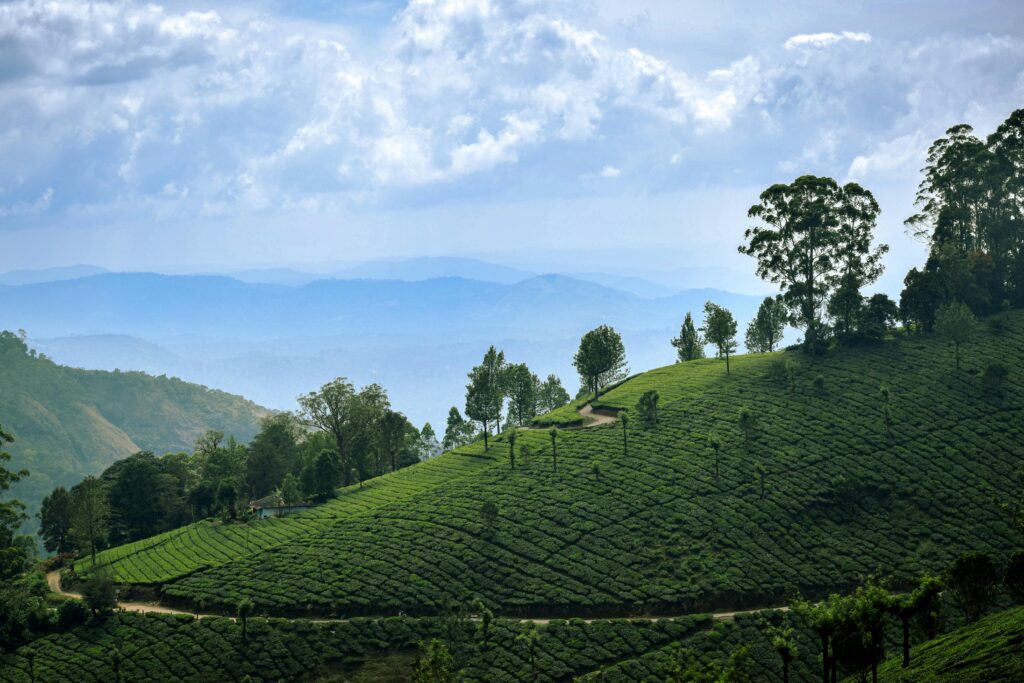
Hangzhou: Longjing Heritage and Matcha Provenance
Hangzhou is home to Longjing heritage and modern matcha businesses. Distinguish West Lake tea origin from Jingshan production claims.Definition of Hangzhou
Hangzhou is the capital of Zhejiang Province, China, associated with West Lake Longjing and a broader tea industry. Modern matcha businesses are also documented within the city, including Yuhang’s Jingshan area. Longjing provenance, a factory address and matcha leaf origin are not interchangeable claims.
Learn more
More than one tea story within Hangzhou
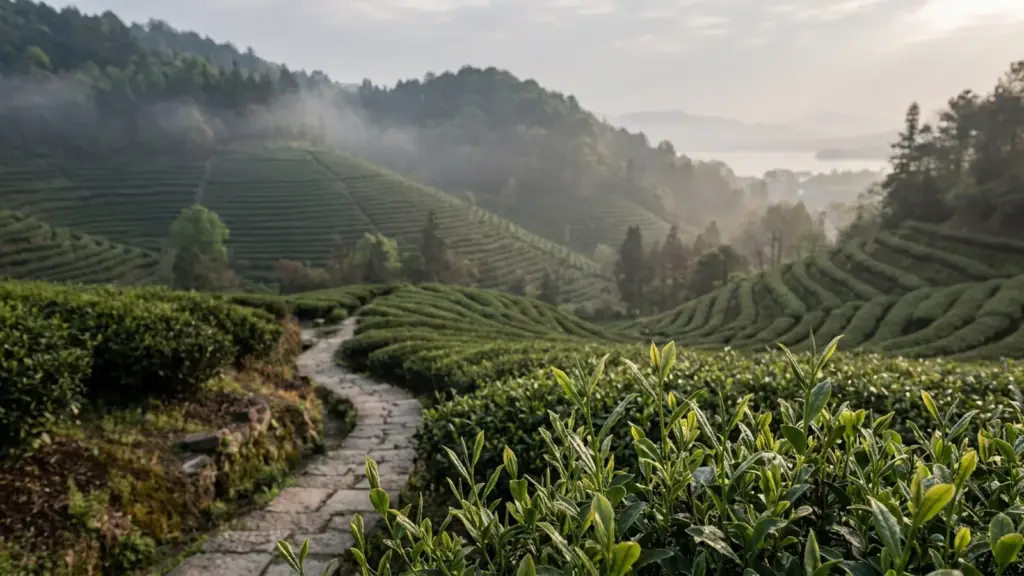
Hangzhou is Zhejiang’s capital city and an important centre of Chinese tea culture. West Lake Longjing is one of its best-known teas, but it is not a synonym for every tea grown or sold within Hangzhou. The official city portal identifies West Lake Longjing with Longjing Village and surrounding areas in the West Lake area. The wider city also contains other tea localities and modern processing businesses.
Keep Longjing characteristics attached to Longjing
Whole-leaf Longjing and a powdered matcha product should not be described with one blended set of quality markers. Flat leaves, the appearance of a brewed infusion and the handling of individual buds concern a leaf tea. They do not describe the particle texture or preparation of a matcha powder. Similarly, a discussion of Longjing’s reputation cannot establish that West Lake gardens are the main source of Hangzhou matcha.
A producer-documented modern matcha connection
Hangzhou Yinquan Tea lists a Jingshan Town address in Yuhang District, Hangzhou, and explicitly includes matcha among its products. Its company page also lists Jingshan tea, Jingshan black tea and steamed green tea. This documents a contemporary business within Hangzhou without requiring an inference from Longjing cultivation. The company’s multiple tea categories are a useful reminder that the same business can make products by different methods.
A specific shading statement, not a city rule
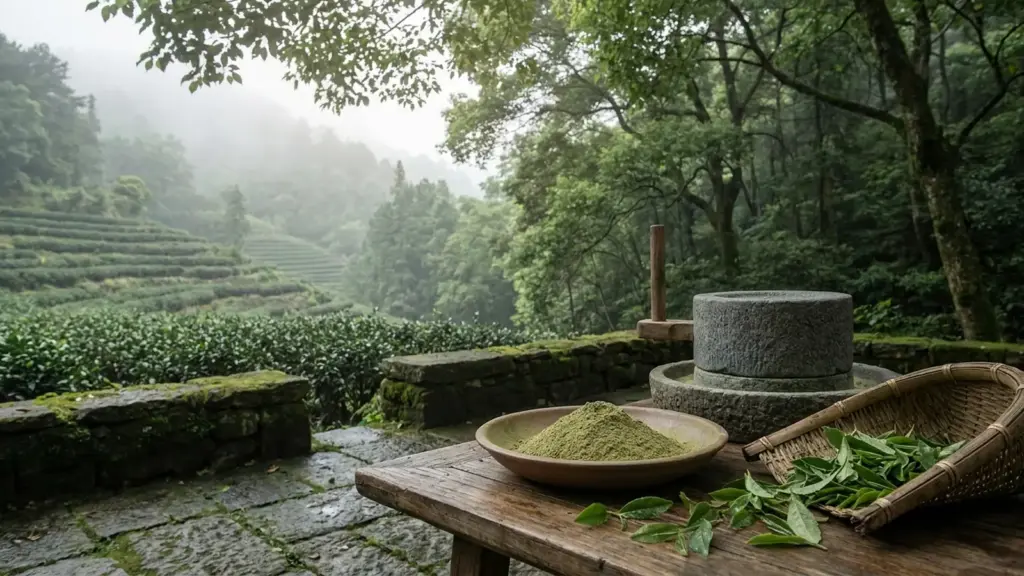
Yinquan’s Jingshan matcha page states that its gardens are covered for about twenty days before processing. The page describes grinding, screening and subsequent inspection and packaging. That information belongs to the identified producer. It does not establish the protocol of every Hangzhou manufacturer, the location of every supply field or a universal distinction between Chinese and Japanese tea production.
Geography is not a sensory comparison
Claims that Hangzhou leaves are inherently smaller than Japanese cultivars, or that soil guarantees more chestnut sweetness and less umami in matcha, are not established by these sources. Product flavour depends on which tea is actually being discussed and how it was cultivated, processed, stored and prepared. A Longjing tasting description should remain a Longjing description; a named matcha needs its own tasting notes. Mist is also not a documented substitute for the intentional covering reported by a matcha producer.
How to interpret Hangzhou on a label
Ask whether Hangzhou indicates where the leaves grew, where the tea was processed or where the seller is based. If West Lake Longjing is claimed, that claim needs its own origin evidence. If Jingshan matcha is claimed, check the supplier’s product and garden information rather than applying West Lake geography to it. This makes the city’s tea heritage useful to buyers without promising an ideal climate, fixed cultivar mix, organic status or superior quality for every product carrying the Hangzhou name.
Sources and scope
Come to China, enjoy six amazing teas; Hangzhou Yinquan Tea Co., Ltd; Matcha powder-Matcha powder-Hangzhou Yinquan Tea Co., Ltd. Sources checked on 8 September 2026. Producer statements are attributed; they are not independent tests of every product.
Sources and references
Accessed: 2026-09-08
Language: en
West Lake Longjing is identified with Longjing Village and surrounding West Lake area of Hangzhou, Zhejiang. Only Longjing locality/category claims adopted; unrelated health assertions not used.
Accessed: 2026-09-08
Language: en
Producer address in Jingshan Town, Yuhang District, Hangzhou; established in 2001. Company explicitly lists matcha, steamed green tea, Jingshan tea and black tea; manufacturer self-description, not independent certification verification.
Accessed: 2026-09-08
Language: en
Producer states about twenty days of covering for its Jingshan matcha gardens. Producer describes grinding, screening, inspection and packaging. No regional taste or ancient-origin claims adopted.

Emilie Schol
Founder of Best MatchaFrequently asked questions
Here are some frequently asked questions and answers.Is all Hangzhou tea West Lake Longjing?
Is all Hangzhou tea West Lake Longjing?
No. The city includes other tea localities and businesses. West Lake Longjing refers to a more specific origin and tea category.
Is there evidence of modern matcha in Hangzhou?
Is there evidence of modern matcha in Hangzhou?
Yes. Hangzhou Yinquan Tea in Jingshan, Yuhang District, lists matcha and publishes a producer-specific shading statement.
Does a Hangzhou factory address prove West Lake leaf origin?
Does a Hangzhou factory address prove West Lake leaf origin?
No. A processing or business address and a tea-growing origin are separate pieces of provenance.