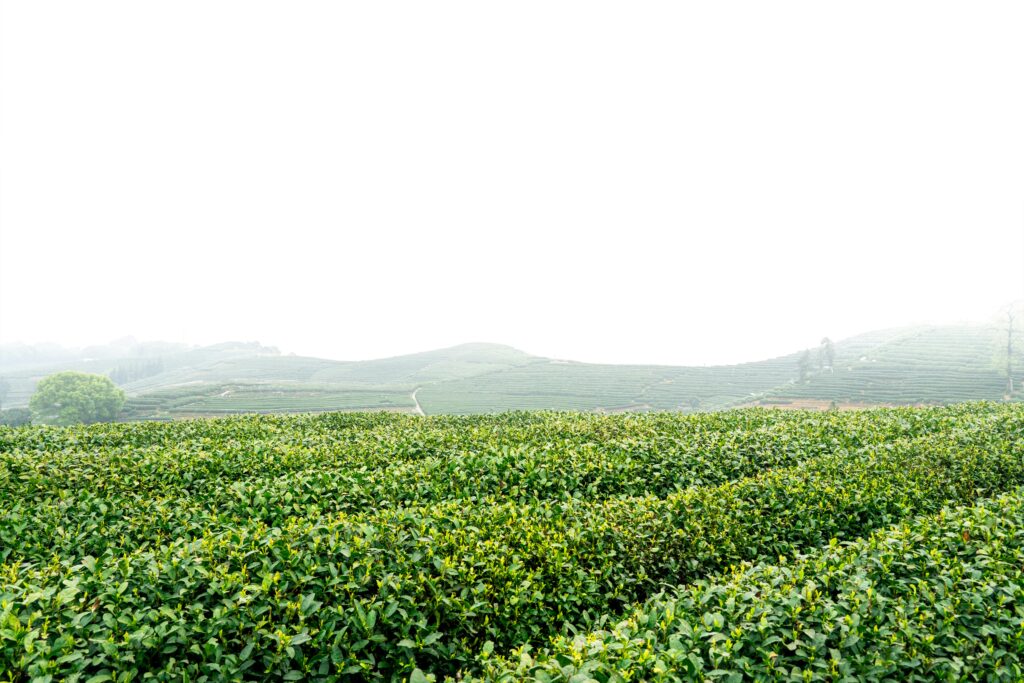
Longyou: Tea Origin and Regional Context
Longyou is a Zhejiang county known for local yellow tea, including Shengtang Mountain tea and cooperative production in Hecun village.Definition of Longyou
Longyou is a county in Quzhou, Zhejiang, China, with a documented local yellow-tea industry. Shengtang Mountain tea and Hecun village’s cooperative production help identify this origin. Their existence establishes local tea activity, but does not by itself demonstrate facilities producing matcha from tencha.
Learn more
Longyou’s place in Zhejiang tea
Longyou is a county within Quzhou in Zhejiang Province, China. Its documented tea identity includes a local product known as Longyou yellow tea. The county name is therefore meaningful in tea sourcing, but it should not be treated as shorthand for all of Zhejiang’s tea manufacturing. A provincial industry can contain very different local crops, products and processing businesses.
For Longyou, two useful local reference points are Shengtang Mountain and Hecun village. Public accounts connect these places with yellow tea, giving the origin more precise substance than broad statements about favourable climate or Chinese matcha exports.
Shengtang Mountain and the local tea variety
An April 2024 report published by Quzhou’s government information office describes Longyou yellow tea as originating from a distinctive local tea-tree variety. It places cultivation on Shengtang Mountain at elevations above 800 metres and reports geographical-indication trademark recognition. These details connect the product with a particular local plant and place.
The account emphasizes the tea’s local identity and development. It does not describe a tencha factory, a matcha milling line or a universal cultivation system for the county. Its use of the name yellow tea should therefore be retained as the reported local product name, rather than converted into an assumed matcha ingredient or an unsupported detailed processing recipe.
A cooperative example in Hecun
A separate October 2022 account describes tea picking, processing and sales in Hecun village. It identifies Yunding Cooperative, founded in 2015 by local resident Chen Jiehua and his wife to grow yellow tea. The article discusses government support and professional training alongside the village’s tea economy.
This is a concrete example of a local tea business, but the example has limits. Yunding is documented in that article as a yellow-tea cooperative, not as a matcha producer. Historical plantation areas, wages and production figures also belong to the date of the report. They are not present-day measurements and should not be repurposed as matcha capacity.
Distinguishing origin from the powder-making method
The Japan Matcha Association describes matcha as powdered tencha, made from shaded leaves that are steamed and dried without rubbing before milling. Local tea cultivation alone does not establish this route. Neither a mountain elevation nor a claim about amino-acid content tells a buyer whether a specific powder was manufactured as tencha.
For a product sold as Longyou matcha, ask which garden supplied the leaf, which business processed it and what production method was used. Keep the answers local: a factory elsewhere in Zhejiang does not establish a Longyou factory. Equally, the documented yellow-tea industry should not be dismissed just because it is not evidence of matcha production. Longyou is a real tea origin whose established local story deserves to be described on its own terms.
Sources and further reading
- Longyou yellow tea wins national honor — Information Office of Quzhou Municipal People’s Government / China Daily
- Yellow tea industry brings wealth to Hecun village in Longyou — Information Office of Quzhou Municipal People’s Government / China Daily
- What is MATCHA — Japan Matcha Association
Sources and references


Accessed: 2026-09-08
Language: en
April 2024 report describes Longyou yellow tea, local plant variety, Shengtang Mountain above 800m and geographical-indication trademark recognition; not matcha facilities.
Accessed: 2026-09-08
Language: en
October 2022 report places Hecun in Longyou county, Quzhou, Zhejiang and documents Yunding Cooperative founded in 2015 for yellow tea.
Accessed: 2026-09-08
Language: en
Matcha is powdered tencha: shaded leaves are steamed and dried without rubbing before milling. This supports processing distinctions, not regional production or health claims.

Emilie Schol
Founder of Best MatchaFrequently asked questions
Here are some frequently asked questions and answers.Where is Longyou?
Where is Longyou?
Longyou is a county in Quzhou, Zhejiang Province, China. Hecun village and Shengtang Mountain are specific places mentioned in public accounts of its yellow tea.
Is Yunding Cooperative a verified matcha producer?
Is Yunding Cooperative a verified matcha producer?
The fetched local report describes Yunding as a yellow-tea cooperative. It does not establish matcha production.
Does Zhejiang’s matcha industry prove Longyou makes matcha?
Does Zhejiang’s matcha industry prove Longyou makes matcha?
No. A provincial industry does not establish a particular county’s production. A Longyou matcha claim needs a local maker and product-specific processing information.