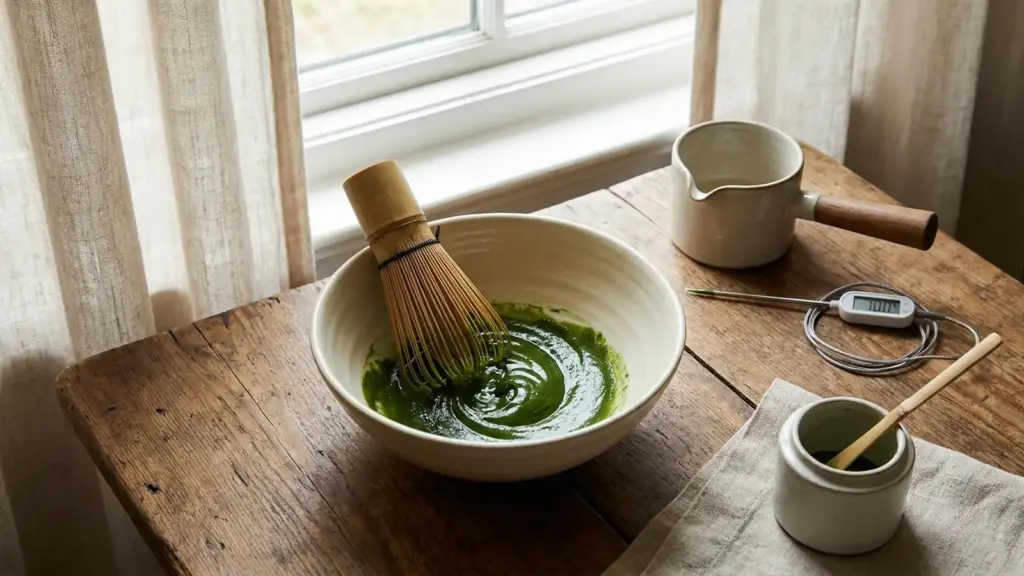
Koicha-yo (濃茶用) means matcha intended or suitable for koicha, the concentrated preparation called thick tea. Koicha is the drink or preparation style; koicha-yo describes the powder’s recommended use. Keeping that distinction clear helps when comparing tins rather than merely comparing recipes.
Why producers identify matcha for koicha
Yamamasa Koyamaen explains that koicha and usucha are, strictly speaking, preparation terms rather than independent measures of quality. In retail use, however, they may also indicate whether a powder is considered suitable for thick or thin tea. The producer notes that concentrating a sharper tea can make bitterness and astringency more prominent.
The same explanation says that matcha suitable for koicha can also be used for usucha. The label therefore does not mean that the powder must always be prepared thick. Nor does it impose one universal grade boundary: Yamamasa discusses its own recommended product range, while Ippodo publishes a separate set of koicha recommendations.
How thick tea differs from thin tea
Koicha uses more powder relative to water and is mixed slowly into a dense, smooth preparation. Ippodo compares its texture with syrup or warm honey. This concentration makes the tea’s flavor particularly prominent, which is why intended-use guidance is helpful when selecting a powder.
Slow mixing, rather than vigorous foaming, is the practical emphasis in the producer’s instructions. Sifting first helps remove lumps before a small quantity of water is introduced. This is a mixing process; the whole powdered leaf is not an instant soluble extract that must completely dissolve at a particular temperature.
One producer’s starting recipe
Ippodo’s published koicha recipe uses 4 grams of sifted matcha, 30 milliliters of water at 80°C and about 15 seconds of gentle mixing with a bamboo whisk. It advises incorporating the powder carefully, then moving the whisk slowly until the tea looks smooth and lustrous.
These quantities are an attributed recipe, not a definition of koicha-yo or a rule shared by every tea school. A seller’s own instructions are the appropriate starting point for its tea. If you are learning a formal tea practice, follow the instructions of that teacher rather than treating a commercial recipe as a substitute.
Temperature claims need context
There is no basis here for saying that all water above 80°C destroys theanine or that matcha below 75°C cannot mix properly. A recipe temperature does not establish a universal chemical failure threshold. When a preparation feels lumpy, examine sifting and mixing as well as the producer’s suggested proportions.
For buying decisions, ask whether the particular matcha is recommended for thick tea, not merely whether it is called ceremonial. Then distinguish that suitability claim from growing origin, cultivar and harvest method. Koicha-yo gives useful preparation guidance, but those other properties remain separate questions about the product.