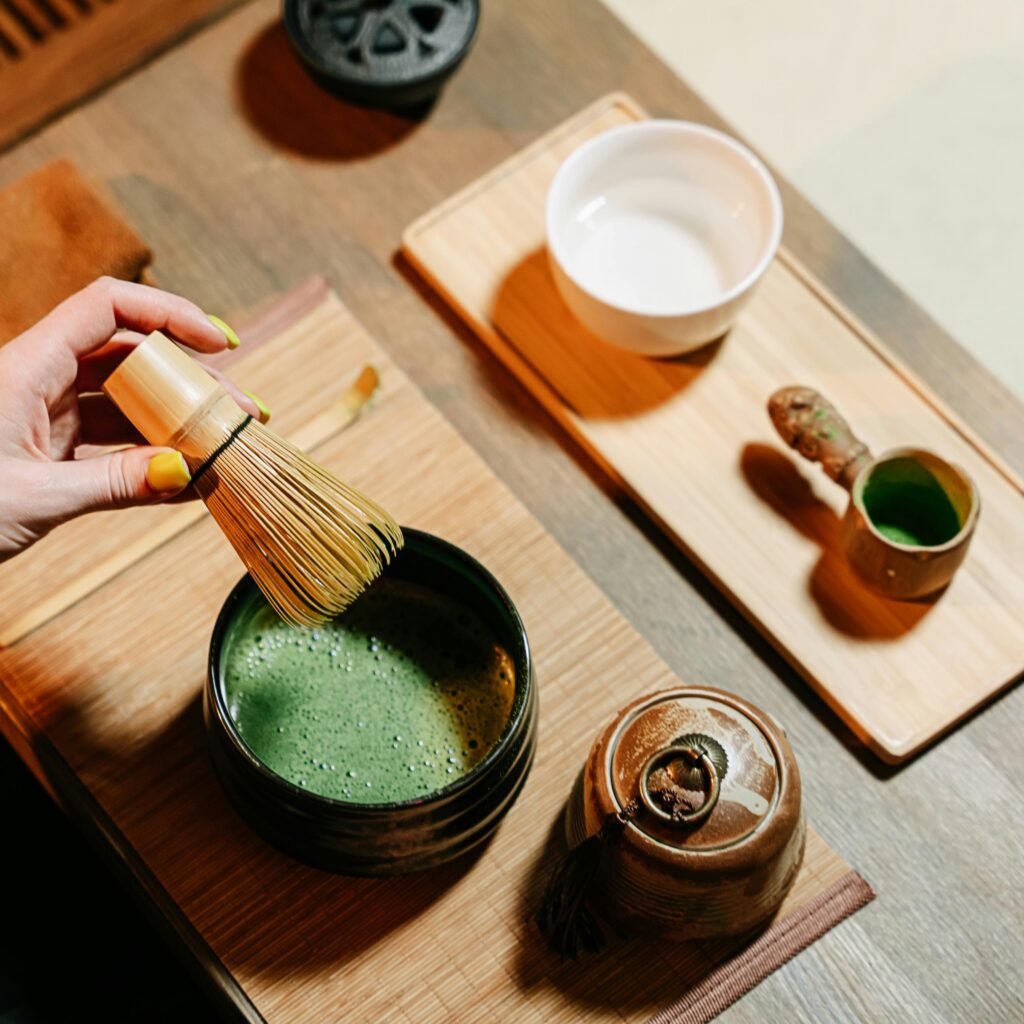
Aracha (荒茶), often translated as rough or crude tea, is tea before final refinement. The Japan Tea Central Association defines it by that unfinished stage, not by a universal sequence of rolling operations. Sencha aracha and tencha aracha can therefore differ in appearance and manufacture while both remaining aracha.
Why rough tea still needs finishing
After primary processing, the material can contain leaves of different sizes together with stems and fine fragments. Refinement sorts and prepares it for the intended finished product. In MAFF’s account of a Kakegawa producer, the work includes screening, cutting, firing and blending before final quality checks.
These operations need not belong to entirely separate businesses. The producer profiled by MAFF integrates growing, primary processing, finishing and sales across its group. Aracha describes the tea’s production status; it does not require a fixed division in which every farmer stops work and every wholesaler takes over.
The rolled sencha route
For sencha, steaming stops the activity of the enzymes associated with oxidation, after which the leaves are cooled and worked through rolling stages. MAFF describes rough rolling with hot air and pressure, unheated rolling to make moisture more uniform, intermediate rolling with heat, and fine rolling that applies force in a consistent direction to shape the tea.
Final drying completes this primary stage. In the Kakegawa example, the approximate moisture target is 5%. This is a documented processing example, not a definition of every aracha or a stand-alone food-safety test. The article does not justify universal claims that leaf breakage begins below 4% or that microbial growth automatically resumes above 6%.
The unrolled tencha route
Tencha for matcha follows a different path. Covered-grown leaves are steamed and dried without rolling, leaving an unrolled material rather than sencha’s shaped leaf. The association’s standard explicitly permits tencha drying equipment with the relevant function rather than requiring every producer to use one traditional brick structure.
Rough tencha is then refined for its intended use and milled into matcha. Removing unwanted stem and vein material belongs to preparing the leaf for the final powder, not to redefining aracha as rolled tea. “Tencha aracha” already names the rough tencha stage; it is misleading to say that the word tencha only becomes available after all refinement is complete.
What finishing changes
Sorting separates fractions, firing further adjusts moisture and aroma, and blending can produce a chosen profile from selected material. MAFF documents these operations in its sencha example. Their exact order and extent depend on the product, so one percentage of weight loss or one firing temperature should not be presented as a rule for all Japanese tea.
Reading quality and market descriptions
Color, aroma, shape and tasting all provide useful information, but their interpretation must match the tea type. Needle shape is relevant to rolled sencha, not a test that unrolled tencha should pass. Likewise, touch alone cannot establish a precise moisture percentage. When comparing aracha prices or production totals, identify the year, tea type and market rather than combining unrelated auction records.