What harvest terms tell you about matcha
Matcha Harvest Terms describe different parts of a tea’s agricultural history. A numbered flush tells you which crop was picked; a seasonal name emphasizes new tea; a picking-method label describes the work in the field. Reading those categories separately is more useful than treating them as interchangeable quality grades.
Japanese harvest vocabulary without a fixed quality ladder| Term | Meaning | What it does not establish |
|---|
| Ichibancha | First harvest of the growing season | An exact nationwide picking date |
| Nibancha | Second harvest | A compulsory culinary grade |
| Sanbancha | Third harvest | An invariably bitter taste |
| Yonbancha | Fourth harvest, where taken | A universal autumn calendar |
| Shincha | New-season tea | A separate numbered flush |
| Tezumi | Hand-picking | A specified chemical composition |
Ichibancha and later flushes
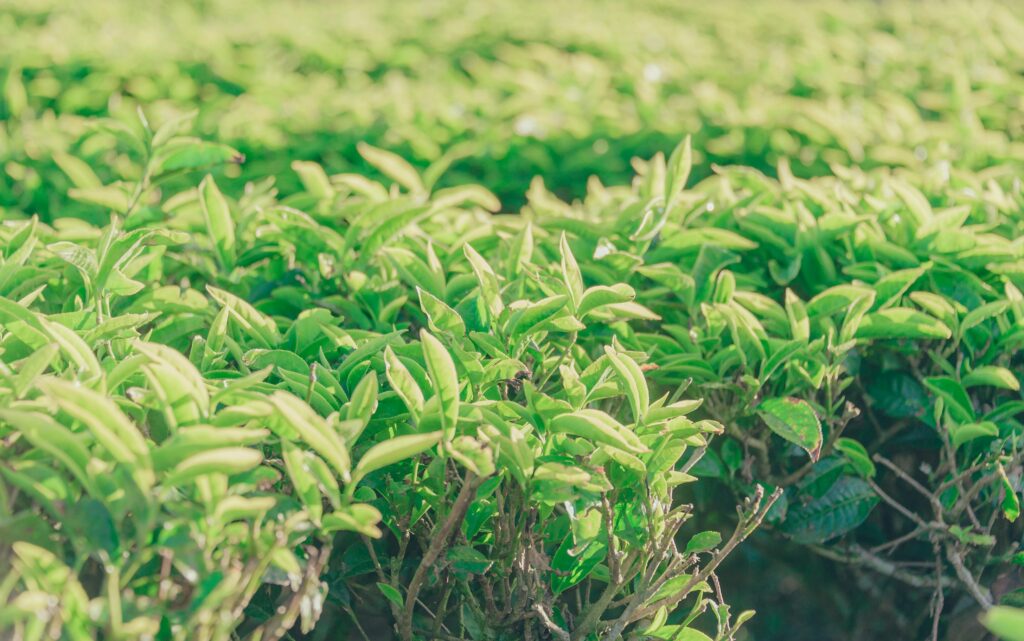
Ichibancha is associated with young spring growth. The World Green Tea Association explains the first crop in terms of winter nutrient reserves and slower development in cool conditions, contrasting it with the faster-growing second crop. That is useful seasonal context, but a general comparison should not become a promise that every first-flush matcha outperforms every later-flush product.
Nibancha and subsequent crops can differ in amino acids, astringency, and intended use. Cultivar, shade management, leaf maturity, and processing also matter. Calling third-flush tea inevitably thin or fourth-flush tea inevitably fibrous substitutes a rigid ranking for information about the actual lot. Harvest numbers count crops; they are not sensory test results.
Regional timing is an example, not a rule
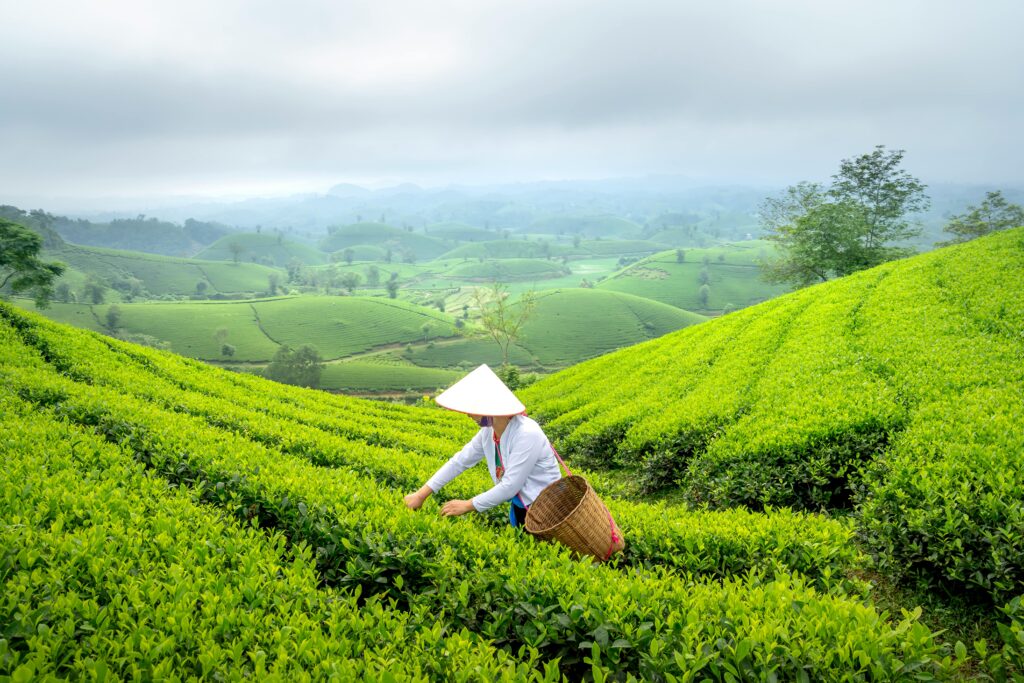
The World Green Tea Association gives late April to early May as its first-harvest example. Nishio producer Nanzan-en describes picking beginning in early May in its area. These descriptions concern particular growing contexts, not a calendar that every Japanese farm must follow. NARO’s description of Seimei as a semi-early harvesting cultivar also shows why cultivar belongs alongside region when interpreting dates.
A spring picking date should be read with its year, location, and flush. It does not tell you when the tencha was milled or how the resulting powder was stored. The harvest date is therefore a traceability detail rather than a guarantee of current freshness.
Shincha and tezumi answer different questions
Shincha means new tea and commonly refers to the new spring crop offered during the season. Ichibancha identifies the first crop even when it is sold later. Neither word establishes the opening date of your tin or the amount of aroma it retains today.
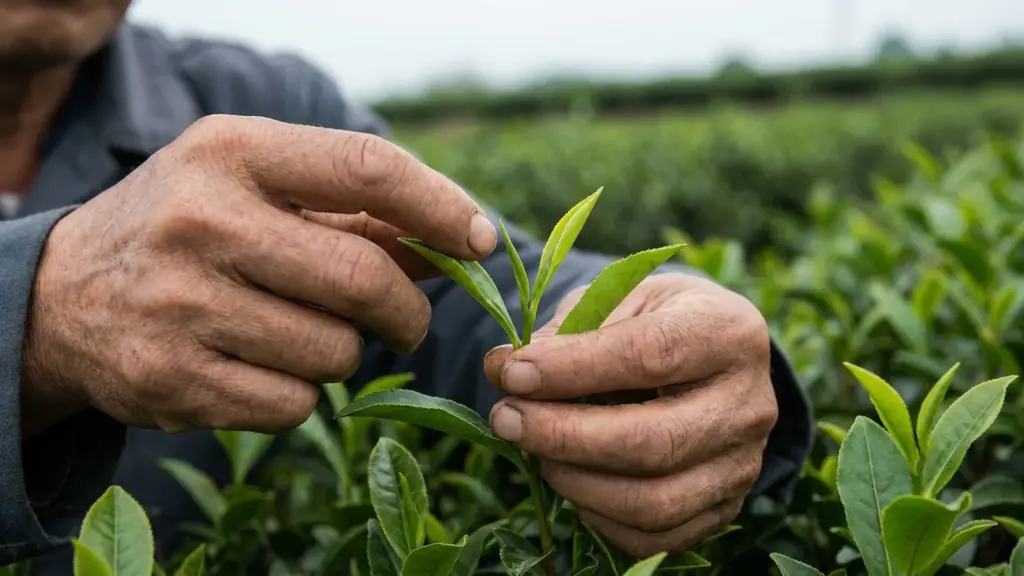
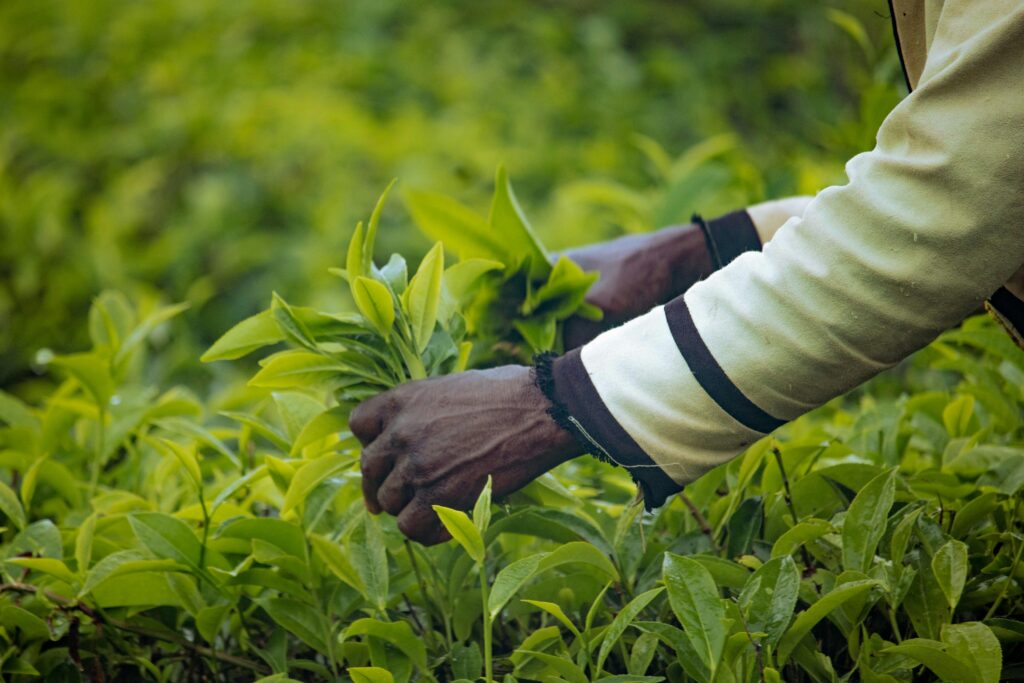
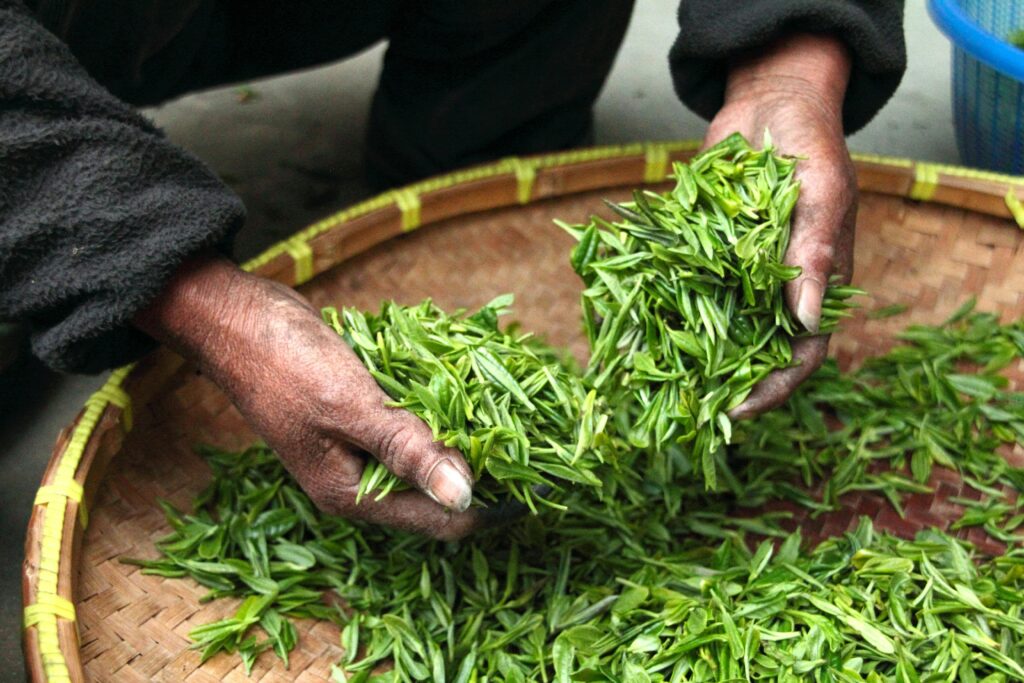
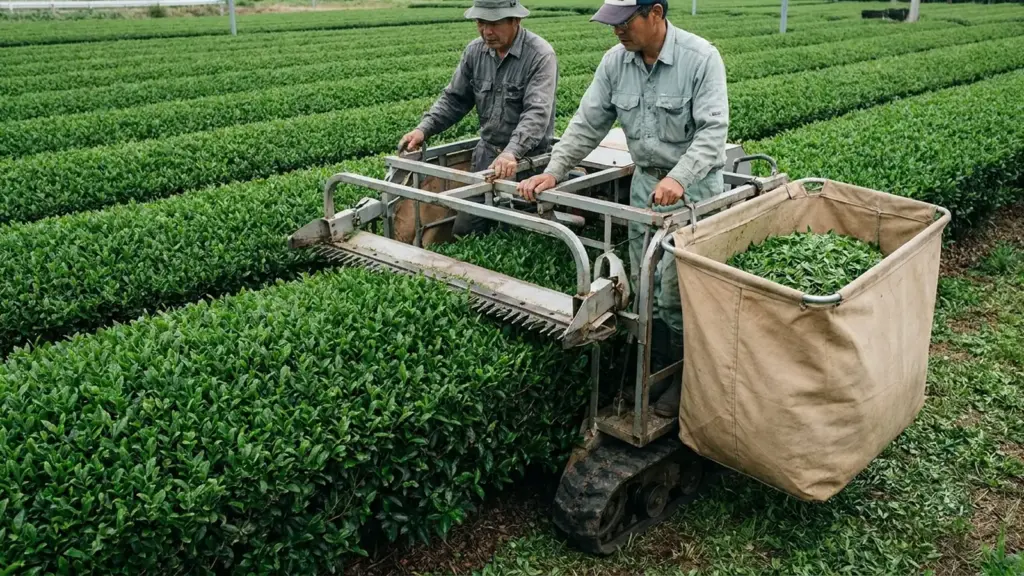
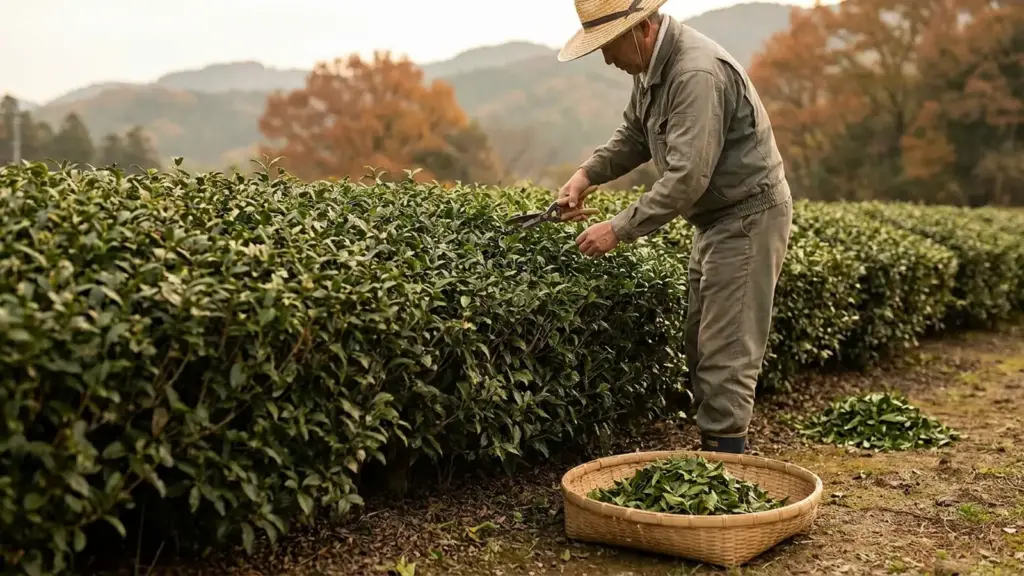
Tezumi means hand-picking. It allows selective picking, while machine harvesting offers a different balance of labor and throughput. The term alone does not specify exactly which shoots were selected, prove a fixed price premium, or disqualify carefully produced machine-harvested tea. Ask the producer how selection was carried out rather than assuming that every hand-picked lot follows one bud-and-leaf formula.
How to use the vocabulary when buying
Ask which flush supplied the tencha, whether the lot blends harvests, where it was grown, and what preparation the seller recommends. Then compare a sample in that preparation. First flush can be a useful preference, but neither a grade name nor harvest order replaces tasting, sound packaging, and clear storage instructions.
Sources and scope