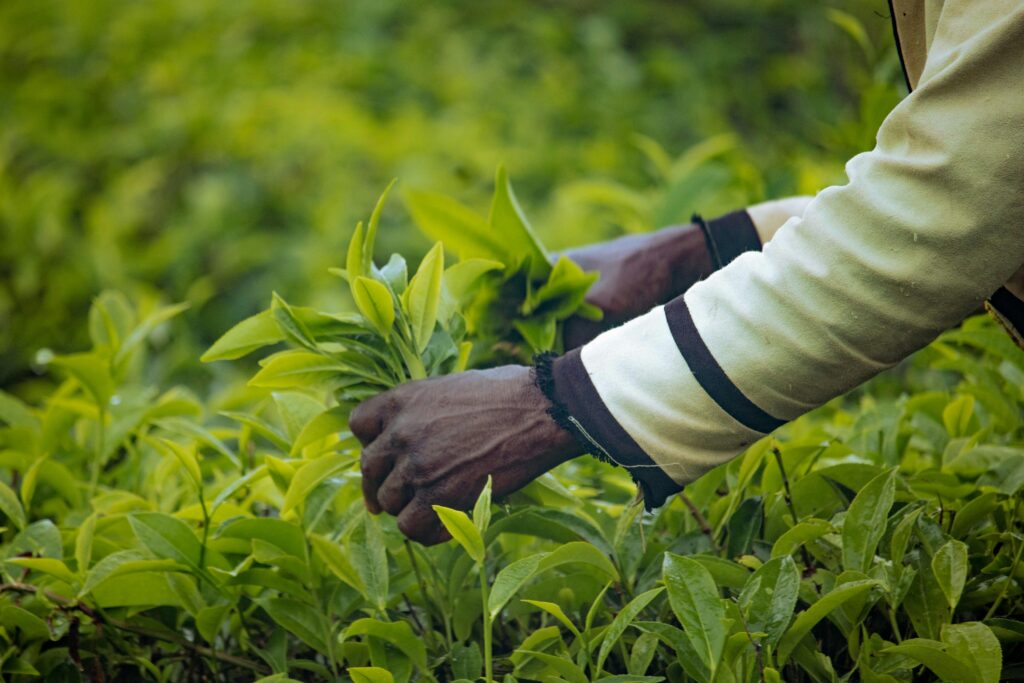
Hand-Picking: Selective Harvest of Tender Tea Leaves
Hand-Picking means selecting tea shoots by hand. Learn how the harvest method differs from machine cutting and what it cannot guarantee.Definition of Hand-Picking
Hand-Picking is the manual selection and harvest of tea shoots by workers, who can choose individual leaves and buds at the plant. In matcha production it describes how fresh leaf is gathered, not a compulsory quality grade or a guarantee of the finished powder’s flavor.
Learn more
What Is Hand-Picking in Matcha Production?
Hand-picking, known as tezumi in Japanese, refers to manual harvesting in which workers choose tea shoots individually. Its practical distinction is selection at the plant: a picker can decide which shoot to take and which to leave. It is a harvest method, not a finished-tea grade.
One bud and two leaves: a method, not a universal rule
MAFF’s April 2022 feature on a Kakegawa tea producer describes one bud and two leaves as a representative hand-picking method. That supports explaining the practice, but not declaring it compulsory for every matcha producer. The feature also describes using harvesting machinery to collect shoots within a short growing window.
Leaf selection and the harvest calendar are separate questions. A tea can be first harvest without being hand-picked; a hand-picking claim alone does not supply a harvest date. Regional weather, cultivar and the grower’s crop plan affect when shoots are ready.
Hand-picking versus machine harvesting
Yamamasa Koyamaen’s matcha-production account explicitly describes both careful hand selection of sprouts and machine harvesting. The producer values hand-picked tencha for its flavor. This is a useful example of one producer’s approach, not proof that mechanically harvested matcha cannot be suitable for drinking.
Hand selection gives workers a different kind of control than cutting across a managed tea canopy. Its value depends on the material selected and how it is handled afterward. Neither method by itself establishes amino-acid concentration, pesticide compliance, shelf life or the taste of the finished powder. Those require other evidence.
What happens after the harvest?
The harvested leaf still has to become tencha and then matcha. Steaming, drying without rolling, refining, storage and milling remain consequential even when the leaf was selected by hand. A harvest label cannot replace an account of those operations.
The existing distinction between selection and throughput remains useful: picking individual shoots requires direct labor at each selection. However, daily kilogram figures, staffing requirements and retail price multipliers need a named farm, season and comparison. They should not be treated as fixed industry conversion rates.
How to evaluate a hand-picked claim
Ask whether the entire lot was hand-picked, which garden and harvest it came from, and whether the seller can connect that description to the product being sold. A photograph of a picking demonstration is not enough to establish the method for every product from the same brand.
Compare two teas using the same powder dose, water amount and preparation method. Treat flavor preference as a result of that comparison rather than something guaranteed by the harvest label. Hand-picked does not automatically mean sweeter, greener, more nutritious or better value.
For Japanese terminology, see Tezumi. This page focuses on evaluating the English harvest claim; Matcha Processing Terms explains the later factory stages. Keeping those questions separate makes a producer description easier to assess.
Sources and references

Accessed: 2026-09-08
Language: ja
April 2022 producer feature: one bud and two leaves is a representative hand-picking method; machines also used; harvest dates vary by region and cultivar. Sencha processing details are not tencha specifications.
Accessed: 2026-09-08
Language: en
Producer account of hand and machine harvest, steaming, unrolled drying, sorting, evaluation, blending, storage and milling; not universal quality guarantees.

Emilie Schol
Founder of Best MatchaFrequently asked questions
Here are some frequently asked questions and answers.Must good matcha be hand-picked?
Must good matcha be hand-picked?
No. Producers use both hand and machine harvesting. Selection method is one part of production and does not determine the finished tea’s suitability by itself.
Does hand-picking always mean one bud and two leaves?
Does hand-picking always mean one bud and two leaves?
That is a representative tea-picking method described by MAFF, not a universal requirement for all matcha production.
How can I verify a hand-picked claim?
How can I verify a hand-picked claim?
Ask for a lot-specific explanation of the garden, harvest and picking method, including whether the claim applies to the whole lot.