What Machine Harvest Means in Matcha Production
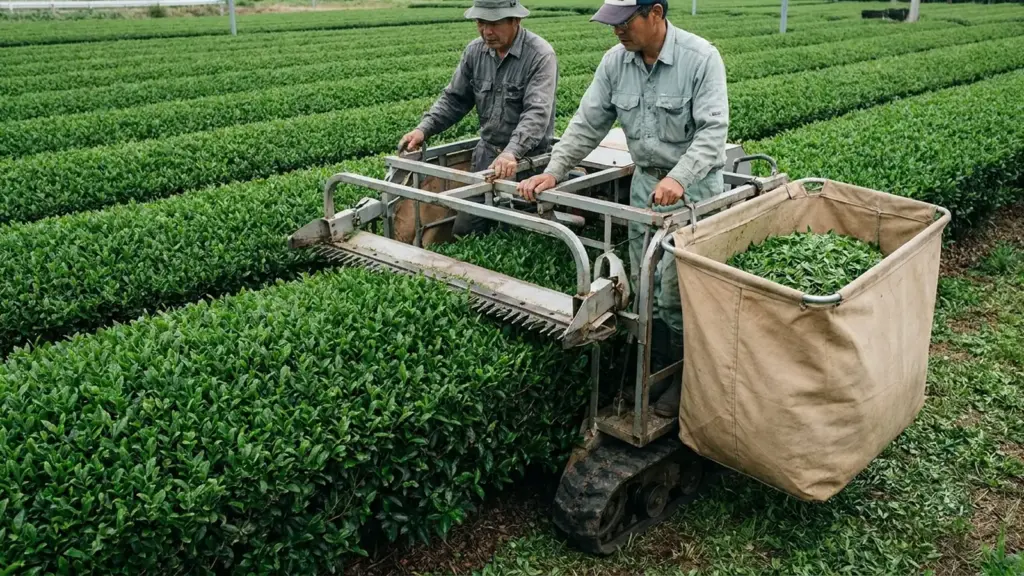
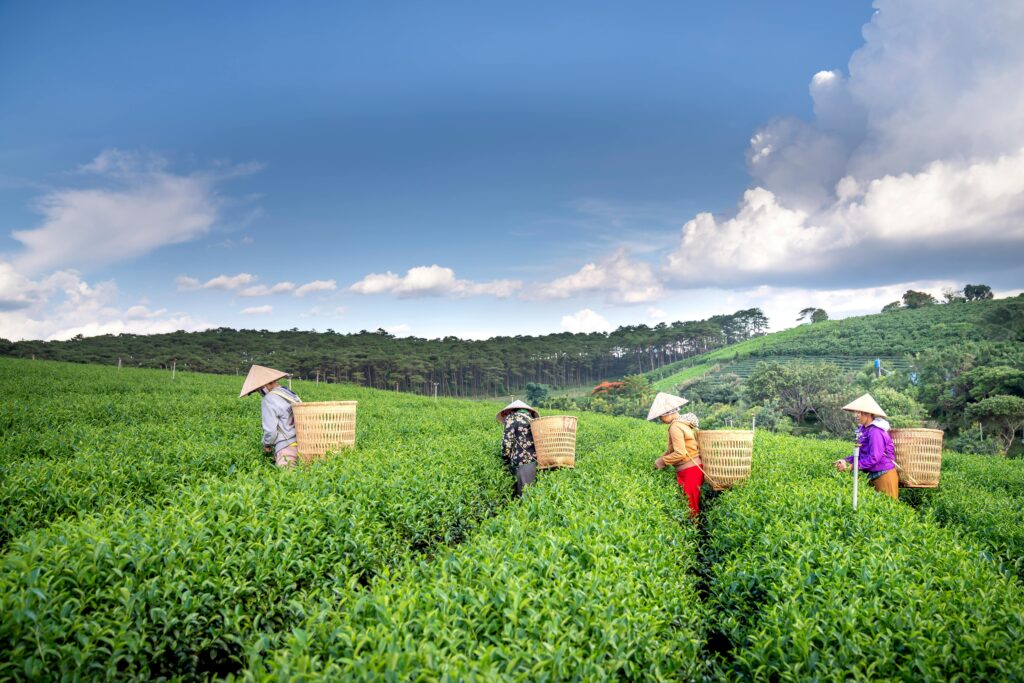
Machine Harvest is the use of mechanical equipment to cut and collect tea shoots. It contrasts with individual hand picking, in which a person selects shoots directly. The Japanese term Kikai-zumi describes the same general harvesting approach, not a separate tea grade.
The Global Japanese Tea Association describes portable machines whose blades cut the shoots while air moves the leaves into a collection bag. Larger driven machines are another option. Equipment choice depends partly on access and terrain; the association notes that portable machines remain common on hillsides while driven machines are suited to flatter ground.
How It Differs from Hand Picking
Selection and Field Layout
Hand picking allows a worker to choose individual shoots. A mechanical cutter works across the tea canopy rather than inspecting each leaf in that way. This is a real difference in selection method, but it does not by itself measure the quality of a finished powder. The condition of the shoots, harvest timing, operation of the machine and subsequent handling all need consideration.
Labor and Harvest Organization
Mechanization lets growers collect larger quantities with fewer people than individual hand picking. The association’s account describes the progression from shears to portable powered machines and then driven equipment. It dates a portable-machine patent to 1965 and the use of driven machines in Kagoshima to the 1970s. These are developments in Japanese tea harvesting generally, not a chronology exclusive to matcha.
Published throughput examples vary by machine and working conditions. A figure for kilograms per day should not be silently changed into kilograms per hour, or presented as a promise for every farm. Machine harvesting also still involves skilled work; it does not eliminate the need for operators, field management or safe handling.
Harvesting Is Not Tencha Manufacture
For matcha, harvesting follows the cultivation of shaded tea shoots. It is not correct to prescribe one fixed shading duration for all machine-picked tea, nor to say hand picking alone permits longer shading. The cultivation plan and the collection method are different pieces of information.
After collection, matcha leaves follow the tencha route: steaming, drying without rolling, refining and milling. JETRO distinguishes this from powder made from other finished teas. NARO likewise identifies shaded new shoots and specialized manufacturing as central to matcha. A harvesting machine and a milling machine do different jobs at different stages.
No Harvest-Based Grade Ladder
A claim that mechanical collection imposes an inherent quality ceiling is not established by these sources. Neither bitterness, a dull color nor coarse particle size should be assigned automatically to machine-harvested matcha. Milling affects the powder’s physical form after the leaves have left the field.
Words such as ceremonial and culinary on a product page should not be used to infer the harvest method unless the supplier states it. Hand-picked leaves can be a meaningful production detail, but that detail is not a substitute for tasting or documented processing. Rejecting the automatic grade ladder does not mean all collection methods are identical; it means the result needs evidence beyond the method’s name.
Questions Worth Asking a Producer
- Was this lot hand picked or mechanically harvested?
- What harvest and leaf selection does the product use?
- How were the leaves shaded and processed into tencha?
- What preparation does the producer recommend for the finished matcha?
Use the answers together rather than reducing the purchase to machine versus hand. This preserves the practical distinction while avoiding a misleading assumption that mechanized tea is suitable only for cooking.