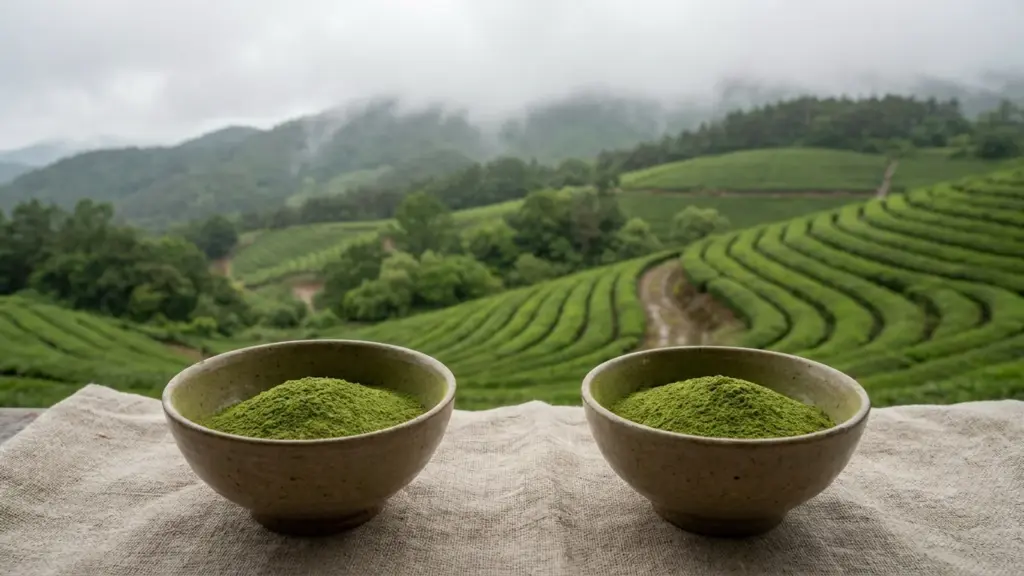
Jeollanam: Boseong Tea and Powdered-Tea Provenance
Jeollanam is South Jeolla, associated with Boseong green tea. Learn why regional tea heritage and specific matcha production differ.Definition of Jeollanam
Jeollanam is the South Jeolla regional name used in South Korean tea origins, including Boseong. It identifies geography rather than one tea-making method. Regional green tea heritage does not establish matcha production volumes, a universal shading schedule or the taste of a particular powdered tea.
1 term related to Jeollanam
Learn more
Jeollanam and its tea origins
Jeollanam is the South Jeolla regional name, also encountered as Jeollanam-do or Jeonnam, in descriptions of Korean tea. Boseong is a more specific origin associated with this region. A broad regional name helps a reader place a tea, but it does not identify the farm, harvest, raw material or factory that made a particular powder.
The Korea Tourism Organization’s Jeollanam-do guide presents Boseong green tea as a local specialty. It also describes Jangheung’s Cheongtaejeon, a fermented tea made into discs. This contrast is useful: even within the same regional tea story, products can have different shapes and processing histories. They should not all be treated as matcha.
Boseong’s landscape is green tea evidence
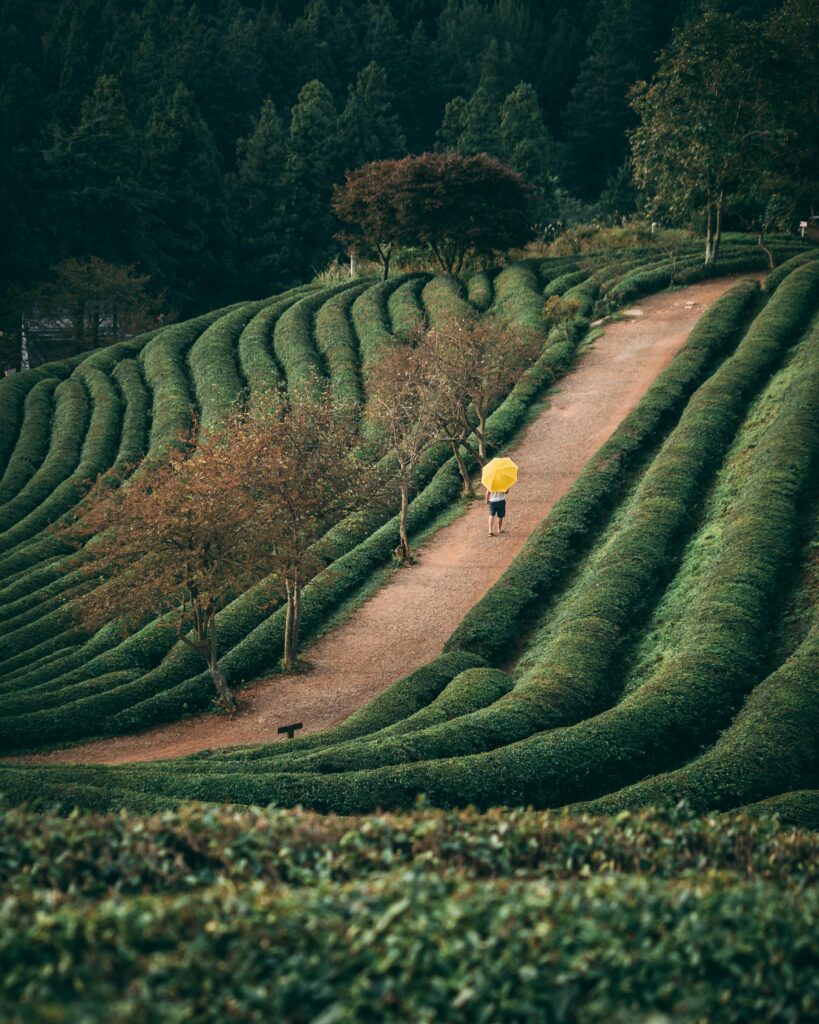
The regional guide describes warm temperatures and foggy growing conditions in Boseong. The official Daehan Dawon visitor listing documents a green tea plantation with hillside rows and a cedar-lined approach. Those are concrete observations about a named place, rather than evidence for an identical farming regime across an entire province.
Fog, coastline and hillside terrain can describe a growing environment without establishing a fixed flavor. They cannot prove that all tea is grown organically, that soils are free of pollutants or that the powder has more umami than tea from Jeju. Such claims require farm-level records, testing or a defined sensory comparison.
What a matcha process claim should contain
The Japan Matcha Association’s explanation identifies matcha with powdered tencha: tea plants are shaded, leaves are steamed, dried without rolling and then milled. That process gives readers a practical benchmark for asking about a product marketed as Korean matcha or malcha. The name of the region cannot fill in any missing steps.
The official regional material cited here establishes tea culture and named tea products, not a province-wide two-week covering schedule or universal stone grinding. A contemporary matcha maker may document those practices for its own leaves. Conversely, evidence of ordinary green tea production does not rule out a specialized powder operation; it simply does not establish one.
Comparing products without borrowing a regional reputation
Ask whether the stated Jeollanam origin refers to cultivation, manufacture or a seller’s address. A Boseong farm declaration gives more precise leaf provenance than a regional business address, provided the declaration is traceable. Check whether the powder contains only tea and whether the producer identifies its leaf treatment and milling process.
Production statistics need the same care. A percentage for Boseong green tea is not automatically the province’s share of matcha, and acreage is not finished powder tonnage. Organic certification, harvest terms and sensory descriptions should refer to the actual product. Compare samples prepared consistently, recording their aroma, texture and astringency. This preserves the region’s genuine tea diversity rather than replacing it with a single unsupported matcha flavor profile.
Sources and references

Accessed: 2026-09-08
Language: en
Boseong green tea in the Jeollanam-do regional context; warm temperatures and foggy growing conditions; Jangheung Cheongtaejeon is fermented disc tea, not matcha.
Accessed: 2026-09-08
Language: en
Daehan Dawon is a green tea plantation in Boseong with hillside rows, a cedar-lined entrance and a viewpoint on a 350-metre peak. These visitor-site details do not establish a matcha manufacturing process.
Accessed: 2026-09-08
Language: en
Matcha process only: shaded leaves, steaming, drying without rolling, and milling tencha; not its speculative history or health claims.

Emilie Schol
Founder of Best MatchaFrequently asked questions
Here are some frequently asked questions and answers.Is Jeollanam tea all made as matcha?
Is Jeollanam tea all made as matcha?
No. Official tourism material describes different regional products, including Boseong green tea and Jangheung fermented disc tea. A regional name does not identify one manufacturing method.
Can Boseong green tea statistics be used for Jeollanam matcha?
Can Boseong green tea statistics be used for Jeollanam matcha?
Not directly. County and regional totals differ, and green tea, matcha, acreage and finished powder tonnage are different measurements. Use dated, category-specific evidence.