Gyeongsangnam: Hadong Tea Heritage and Origin
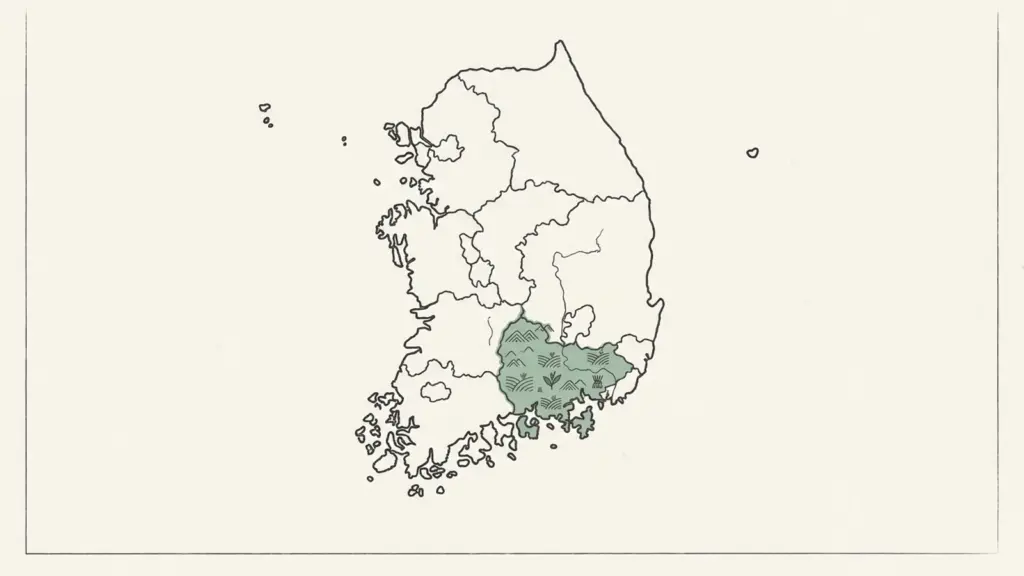
Gyeongsangnam includes Hadong and Hwagae. Explore the tea heritage while separating provincial origin from matcha processing and taste.Definition of Gyeongsangnam
Gyeongsangnam is South Gyeongsang, a province in South Korea that includes Hadong County and its Hwagae tea-growing area. The province’s tea heritage is not a matcha specification. Confirm the farm, leaf treatment and milling method before assigning production or flavor claims to a regional powder.
1 term related to Gyeongsangnam
Learn more
Province, county and tea-growing community
Gyeongsangnam, also called South Gyeongsang or Gyeongsangnam-do, is a South Korean province. Hadong County lies within it; Hwagae-myeon is the more specific community associated with the traditional tea agricultural system described by FAO. These nested names are related, but they are not interchangeable farm addresses.
A provincial label can help locate a tea broadly. A Hadong or Hwagae declaration can be more precise if it actually refers to the leaves. A distributor’s office or a packing location should not be mistaken for the place of cultivation. This distinction is especially important when a seller uses a famous regional tea story to describe a powdered product.
What the heritage evidence establishes
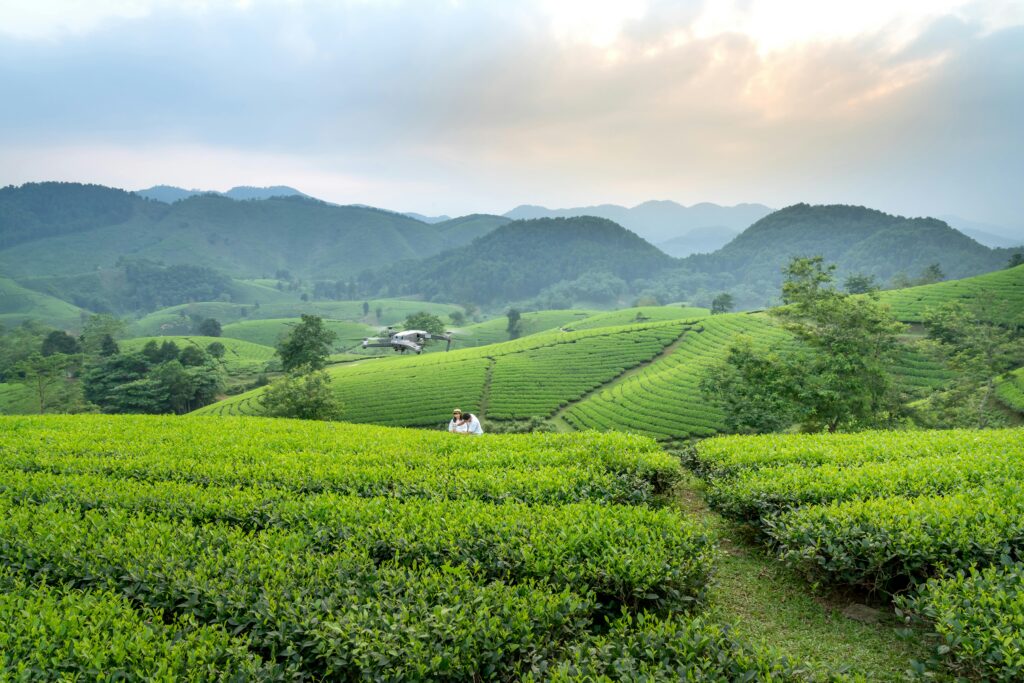
FAO’s Hadong tea profile identifies the Traditional Hadong Tea Agrosystem in Hwagae-myeon as a Globally Important Agricultural Heritage System since 2017. It describes tea fields among rocks, forests and streams, traditional management knowledge, genetic diversity and hand harvesting. These are features of the documented agricultural system, not a certification of all tea sold from the province.
Hadong County’s historical account quotes the Samguksagi on seeds brought from Tang China and ordered planted at Jiri Mountain in 828. The same account says tea was known earlier. This supports a carefully attributed cultivation history, not a claim that modern matcha manufacture has continued unchanged for twelve centuries.
Traditional processing is not evidence of tencha
FAO describes hand roasting tea leaves in iron pots. That is important local processing knowledge worth preserving in its own right. It does not establish that these leaves were made by the steamed, unrolled tencha process. Nor does it show that all farms across Gyeongsangnam use the same technique today.
For comparison, the Japan Matcha Association’s explanation describes shading, steaming, drying without rolling and milling tencha. If a seller offers matcha or another green tea powder from this province, ask which steps apply to that product. Simply grinding a finished loose-leaf tea changes its form; it does not establish the prior cultivation and drying method.
Claims to keep at product level
Neither the FAO designation nor the historical narrative gives a current provincial matcha tonnage or proves a particular share of Korea’s green tea output. A count of heritage households is not a modern factory-capacity survey. Regional production comparisons need the same year, geographical scope and tea category.
The province name also cannot guarantee organic certification, volcanic soil, low bitterness or ceremonial quality. Ask for the named farm, harvest and process, then taste the actual powder. A regional source can establish where a documented tradition exists; a lot specification and sample are needed to assess what is in the packet. This keeps Gyeongsangnam’s genuine tea heritage distinct from unsupported predictions about every product carrying its name.
Sources and references

Accessed: 2026-09-08
Language: en
Hwagae-myeon within Hadong; GIAHS designation in 2017; rocky mountain fields, biodiversity, gaengsin, pulbibae, hand picking and iron-pot roasting. Statistical figures on this undated profile are not used.
Accessed: 2026-09-08
Language: en
Local history quotes Samguksagi on tea seeds planted at Jiri Mountain in 828; tea was known earlier; later Hwagae tea tribute and monastic literary traditions.
Accessed: 2026-09-08
Language: en
Matcha process only: shaded leaves, steaming, drying without rolling, and milling tencha; not its speculative history or health claims.

Emilie Schol
Founder of Best MatchaFrequently asked questions
Here are some frequently asked questions and answers.How are Gyeongsangnam, Hadong and Hwagae related?
How are Gyeongsangnam, Hadong and Hwagae related?
Gyeongsangnam is the province, Hadong is a county within it, and Hwagae is the more local tea-growing township associated with the FAO heritage system.
Does FAO recognition certify Gyeongsangnam matcha?
Does FAO recognition certify Gyeongsangnam matcha?
No. It recognizes the agricultural heritage system in Hwagae-myeon, not every provincial product, an organic status or a matcha grade.