Sencha Naturals Emperor’s Ceremonial Matcha

Sencha Naturals Emperor’s Matcha is a first-harvest ceremonial matcha from Shizuoka and Kagoshima with mild sweetness, umami and grassy notes.
  • Subtotal

    {{ currencyFormat( pricing_summary.total_amount ) }}

First-harvest ceremonial matcha with mild sweetness and umami

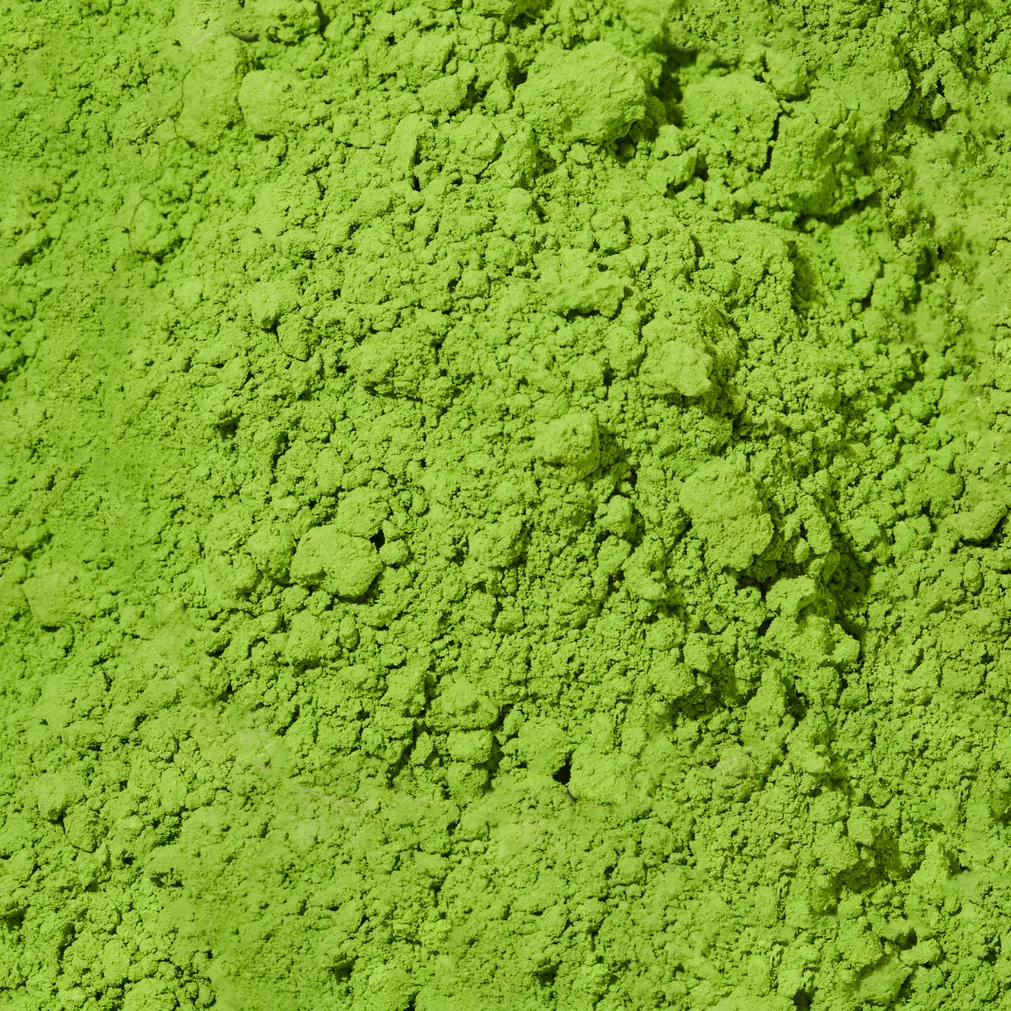
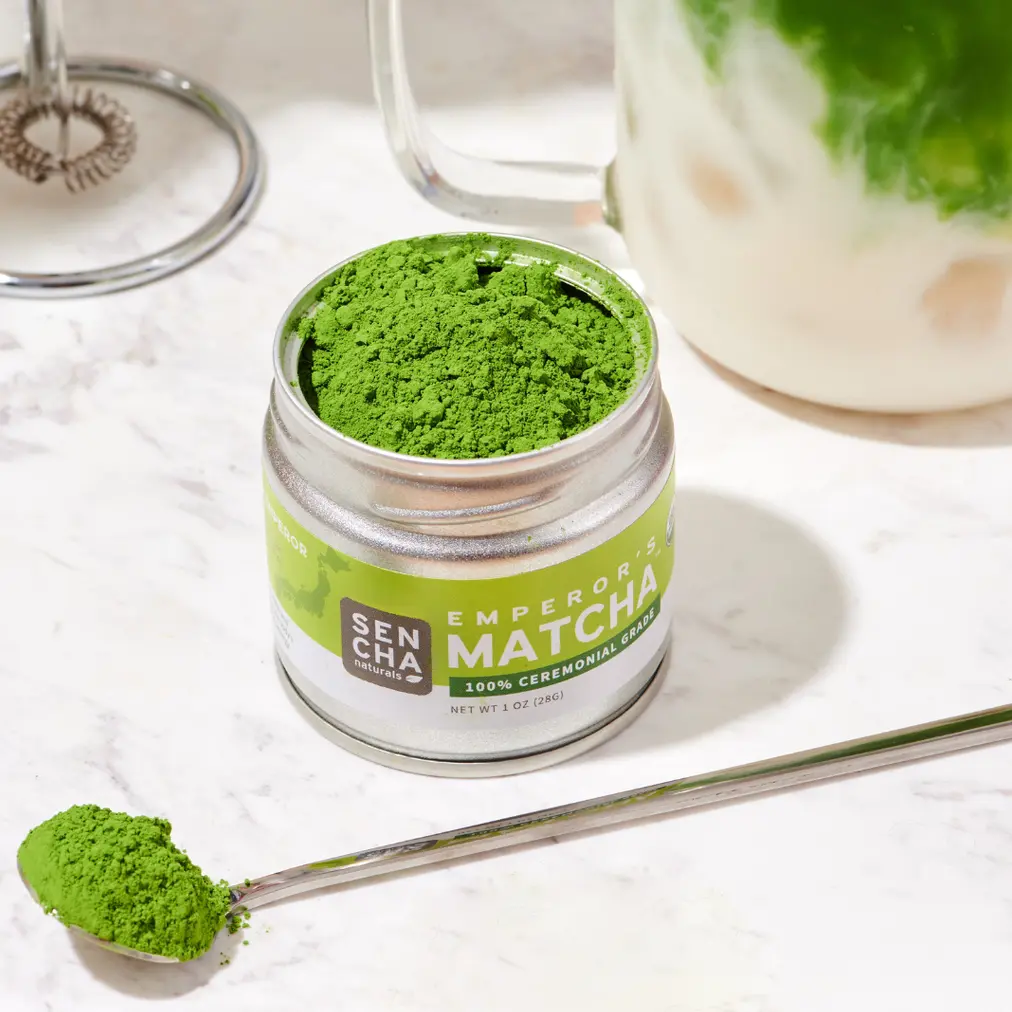
Sencha Naturals Emperor’s Matcha is a pure, first-harvest ceremonial matcha powder sourced from Japan. Tea farms in Shizuoka and Kagoshima supply the matcha directly. Its stated profile combines mild sweetness, umami and grassy notes with a smooth, full-bodied texture.

What does Emperor’s Matcha taste like?

This ceremonial matcha brings together three distinct flavor notes. Mild sweetness provides the sweet element, while umami and grassy notes complete the profile. The texture is both smooth and full-bodied. These details give buyers a specific picture of the product without relying on broad quality terms.

The profile can be summarized through the following product details:

  • Flavor: mild sweetness, umami and grassy notes
  • Texture: smooth and full-bodied
  • Harvest: first harvest
  • Type: pure ceremonial matcha powder

Where does this first-harvest matcha come from?

Emperor’s Matcha is sourced directly from multi-generational family tea farms in two Japanese tea-producing areas: Shizuoka and Kagoshima. The product therefore names two prefectures rather than a single regional origin. Both locations are in Japan, and both are explicitly connected to the sourcing of this matcha.

The first-harvest designation is another specific product detail. It identifies when the tea leaves used for this matcha were harvested. The ceremonial designation states the intended matcha category, while the source description identifies the finished product as a powder.

Which Emperor’s Matcha format is listed?

This Sencha Naturals listing contains 1 oz (30 g) of Emperor’s Matcha. The product name, ceremonial designation, first-harvest detail and Japanese sourcing remain the central distinctions. Buyers comparing matcha by flavor can also use the named mild sweetness, umami and grassy notes, along with the smooth and full-bodied texture.

Emperor’s Matcha is a concise option to compare by harvest, category, sourcing region, texture and flavor profile. Its product details identify the matcha itself, the two Japanese prefectures connected with its sourcing and the multi-generational family tea farms that supply it directly.

Reviews

Reviews on Sencha Naturals Emperor’s Ceremonial Matcha

Find below the taste profile of this product based on reviews found on Sencha Naturals’s website.
Learn more about how Best Matcha generate matcha taste profiles
This review has been generated by Best Matcha sensory profiling system, and represent the reviews aggregated below.
Color Vibrancy
16 review details
  1. I classify “The color is deep green” as Moderate Color Vibrancy, without adopting the claimed link to flavor quality. — Source: Iphone u. (2024-08-14).Iphone u. — 2024-08-14
  2. I assign Vibrant color to “Color is spot on - nice and vibrant”. — Source: Kaitlin Q. (2024-03-26).Kaitlin Q. — 2024-03-26
  3. I read “it was bright green” as Vibrant color for Emperor’s Matcha, not for the compared Ippodo product. — Source: KP (2025-06-11).KP — 2025-06-11
  4. I rate “the green is very deep and appealing” Moderate color; depth and liking alone do not establish brightness. — Source: batman (2024-08-07).batman — 2024-08-07
  5. I read “is a nice shade of green” as Moderate color, keeping aesthetic approval separate from saturation. — Source: Prime M. (2024-08-29).Prime M. — 2024-08-29
  6. I retain Vibrant color from “with its more vibrant green & foamy top.”, assessing the foam separately. — Source: Taylor (2024-06-03).Taylor — 2024-06-03
  7. I choose Moderate color for “The color is deep and rich and a true green color, not a yellowish-green.”, preserving the negation rather than scoring it yellow. — Source: Our E.L. (2024-07-24).Our E.L. — 2024-07-24
  8. Explicit green vibrancy is my basis for Vibrant; the wider promotional claims do not establish sensory intensity. “The vibrant green color” — Costco, 2024-08-17.Costco — 2024-08-17
  9. I classify “It's a really nice deep green color” as Moderate Color Vibrancy. — Source: An (2020-11-07).An — 2020-11-07
  10. Lively green brightness supports my Vibrant classification, separately from the latte sweetness. “The color is a bright lively green” — Eric L., 2024-07-25.Eric L. — 2024-07-25
  11. Added vanilla, cinnamon, and honey explain the darker video appearance; I retain Vibrant from the direct green-color report. “The green is so vivid!” — Jessica, 2024-09-16.Jessica — 2024-09-16
  12. Vibrancy is the measurable color term I retain at Vibrant, rather than the general appeal or recipe success. “the vibrant green color is quite appealing.” — Alex, 2024-07-21.Alex — 2024-07-21
  13. Comparison with familiar powders supports my Vibrant reading without fixing an absolute exceptional level. “The green color of the powder is a lot more vibrant and pretty than what I'm used to seeing.” — Customer, 2024-08-03.Customer — 2024-08-03
  14. Very bright green is the stated cue I retain at Vibrant, not an automatic exceptional-intensity classification. “It's very bright green” — Amazon C., 2024-08-19.Amazon C. — 2024-08-19
  15. Color brightness leads me to Vibrant; I do not adopt the accompanying claim that color certifies quality. “The color is bright green” — Kenji, 2024-09-12.Kenji — 2024-09-12
  16. The ceremonial powder, not its culinary comparator, receives my Vibrant color reading. “this ceremonial grade matcha color is more vibrant” — Rachel, 2024-07-22.Rachel — 2024-07-22
3.7(16 reviews)
Bitterness
12 review details
  1. I rate “not overly bitter” Mild Bitterness rather than Minimal. — Source: H. K. (2024-07-22).H. K. — 2024-07-22
  2. I retain Minimal Bitterness from “There is no bitterness at all” in warm water with ice. — Source: Amazon C. (2024-07-22).Amazon C. — 2024-07-22
  3. I assign Minimal Bitterness to “no bitter after taste” for the stated whole-milk iced latte, made with hot water and a bamboo whisk. — Source: bly (2024-10-28).bly — 2024-10-28
  4. I classify “not at all bitter” as Minimal Bitterness; the reviewer says milk and sweetener were not needed. — Source: Prime M. (2024-08-29).Prime M. — 2024-08-29
  5. I rate “no tinge of bitterness.” Minimal Bitterness in the stated hot and cold drinks with milk and a touch of sugar. — Source: Tam E. (2025-02-14).Tam E. — 2025-02-14
  6. I rate “kind of bitter and astringent.” Mild Bitterness; the review later describes an agave and coconut-milk latte, which does not establish intrinsic sweetness. — Source: Sydney O. (2025-02-15).Sydney O. — 2025-02-15
  7. Strawberry jam and almond milk qualify my Minimal bitterness reading as a latte observation, not a plain-water test. “It doesn't taste bitter or grassy at all.” — Bunny, 2024-07-25.Bunny — 2024-07-25
  8. I choose Minimal Bitterness for “No bitter aftertaste” in the warm-water preparation. — Source: An (2020-11-07).An — 2020-11-07
  9. I rate “The taste doesn't taste bitter at all” Minimal Bitterness; the review also specifies daily matcha lattes. — Source: Customer (2024-08-03).Customer — 2024-08-03
  10. The very-minimal qualification supports my Minimal bitterness reading without implying a sweetness score. “There's very minimal if any bitterness” — Amazon C., 2024-08-19.Amazon C. — 2024-08-19
  11. Chasen preparation provides the context for my Minimal bitterness reading from the explicit very-minimal statement. “The bitterness is very minimal” — Kenji, 2024-09-12.Kenji — 2024-09-12
  12. I interpret “the taste is smooth and less bitter” as Mild Bitterness versus culinary grade; the review mentions both plain tea and lattes. — Source: Rachel (2024-07-22).Rachel — 2024-07-22
1.3(12 reviews)
Smoothness
7 review details
  1. I rate “it mixed well with a handheld milk frother” Smooth despite skipped sifting; the recommendation to sift is not a report of actual persistent grit. — Source: Prime M. (2024-08-29).Prime M. — 2024-08-29
  2. I use “Blends well” as concrete Smoothness evidence and assign Smooth. — Source: Amazon C. (2025-04-01).Amazon C. — 2025-04-01
  3. I read “The powder easily blends into a smooth paste with water, dissolving completely without residue.” as Silky Smoothness in water. — Source: A L. (2024-09-13).A L. — 2024-09-13
  4. I interpret “Its fine texture ensures easy mixing” as Smooth, not proof of unusually abundant froth. — Source: Costco (2024-08-17).Costco — 2024-08-17
  5. I assign Smooth to “The smooth and creamy texture”, which expressly describes texture rather than only taste. — Source: ChipDesigner (2024-07-27).ChipDesigner — 2024-07-27
  6. I use “The sweetness and fine texture make it easy to mix” for Smoothness and assign Smooth in the cup-of-tea context, not from powder fineness alone. — Source: Alex (2024-07-21).Alex — 2024-07-21
  7. Clump-free chasen mixing is my evidence for Smooth, without upgrading the result to Silky. “the matcha powder mixed smoothly without any clumps” — Kenji, 2024-09-12.Kenji — 2024-09-12
4.1(7 reviews)
Natural Sweetness
5 review details
  1. I assign Minimal Natural Sweetness to “I really didn't need it for this one as it has a touch of sweetness.” The full sentence distinguishes this from optional milk and sweetener. — Source: Prime M. (2024-08-29).Prime M. — 2024-08-29
  2. I assign Moderate Natural Sweetness to “The tea has a natural sweetness”; the preceding preparation is with water, with lattes only an alternative. — Source: A L. (2024-09-13).A L. — 2024-09-13
  3. Sweetness is attributed to the powder before the recipes, so I retain Moderate rather than score the ice cream. “The powder is very fine and has a pleasantly sweet taste.” — Alex, 2024-07-21.Alex — 2024-07-21
  4. I rate “The taste was slightly sweet” Subtle Natural Sweetness; no milk or sweetener is stated. — Source: Kenji (2024-09-12).Kenji — 2024-09-12
  5. Naturally sweet is a direct product statement I classify as Moderate; price comparisons add no intensity. “is naturally sweet” — Xena, 2025-05-09.Xena — 2025-05-09
2.4(5 reviews)

Frequently asked questions

First-harvest ceremonial matcha with mild sweetness and umami Here are some frequently asked questions and answers.

What does Sencha Naturals Emperor’s Matcha taste like?

Emperor’s Matcha has mild sweetness, umami and grassy notes. Its texture is smooth and full-bodied.

Where is Emperor’s Matcha sourced?

Emperor’s Matcha is sourced from Shizuoka and Kagoshima, Japan. It comes directly from multi-generational family tea farms in both prefectures.

Is Emperor’s Matcha made from the first harvest?

Yes. Emperor’s Matcha is identified as a first-harvest matcha powder.

Is Sencha Naturals Emperor’s Matcha ceremonial matcha?

Yes. Emperor’s Matcha is a ceremonial matcha powder.

What texture does Emperor’s Matcha have?

The texture is smooth and full-bodied. These are separate from its mild sweetness, umami and grassy flavor notes.

How much matcha is in this format?

This listed format contains 1 oz (30 g) of Emperor’s Matcha powder.

Is Emperor’s Matcha pure matcha powder?

It is identified as pure matcha powder. The product is also designated as first-harvest and ceremonial.