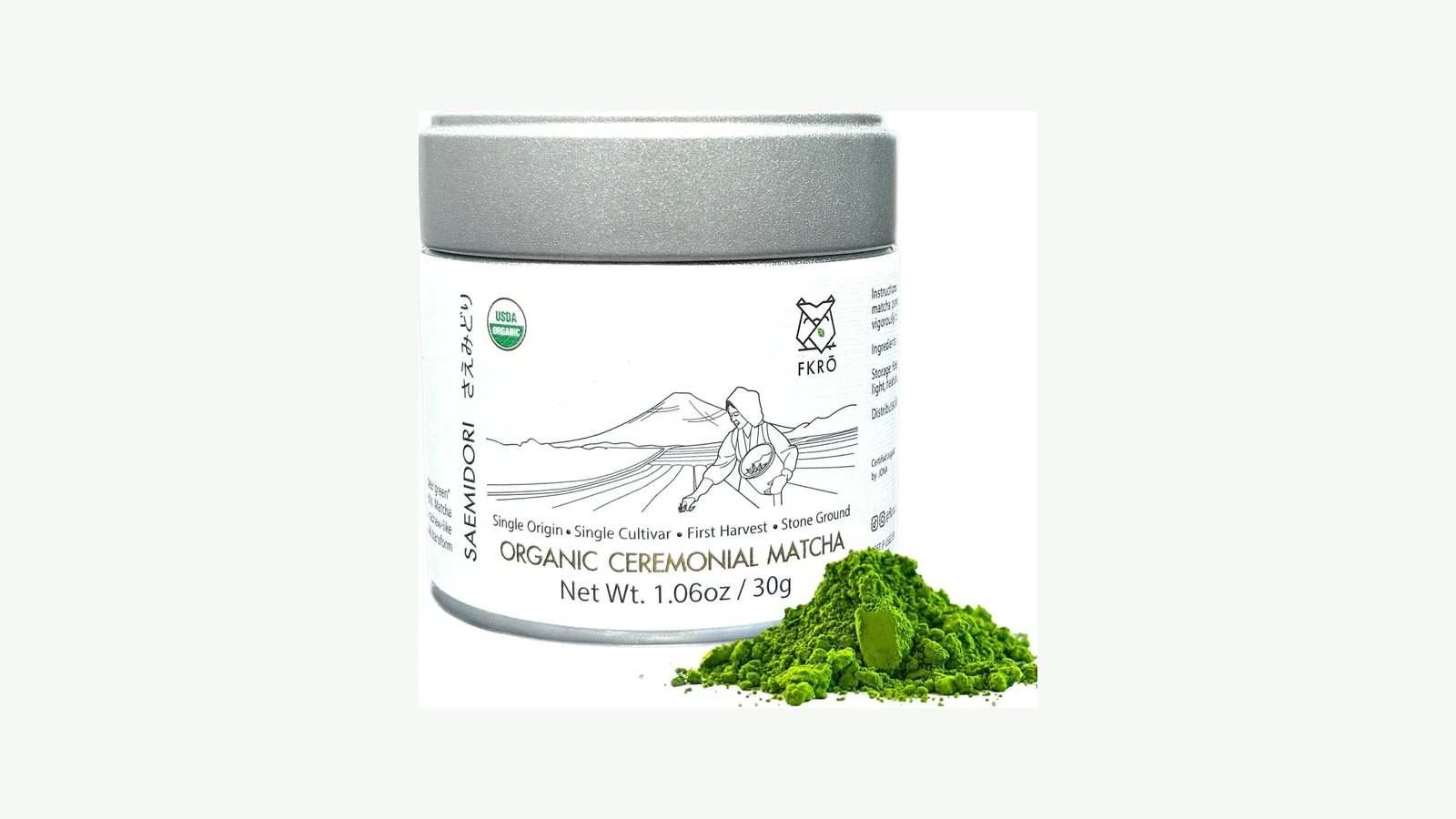
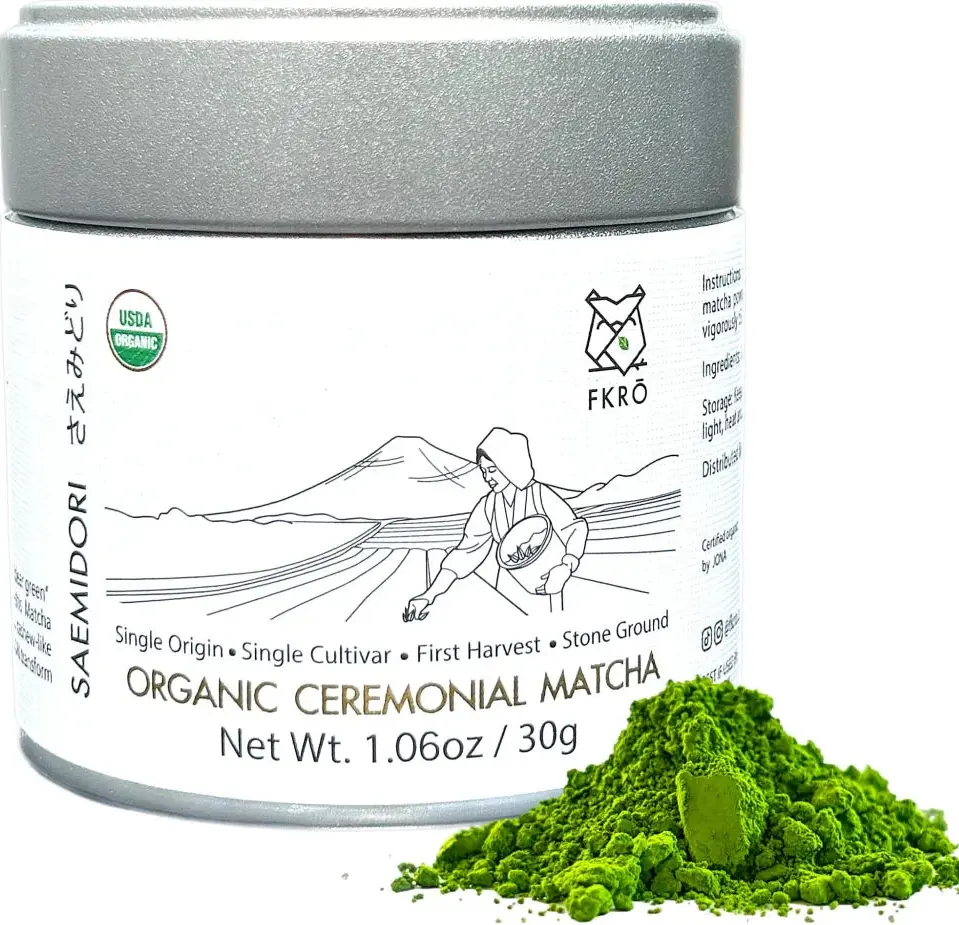
FKRŌ Saemidori Ceremonial Matcha

FKRŌ Saemidori ceremonial matcha is USDA certified organic, first harvest, stone-ground, and suited to usucha, lattes, and smoothies.
  • Subtotal

    {{ currencyFormat( pricing_summary.total_amount ) }}

Single-cultivar Saemidori matcha for usucha lattes and smoothies

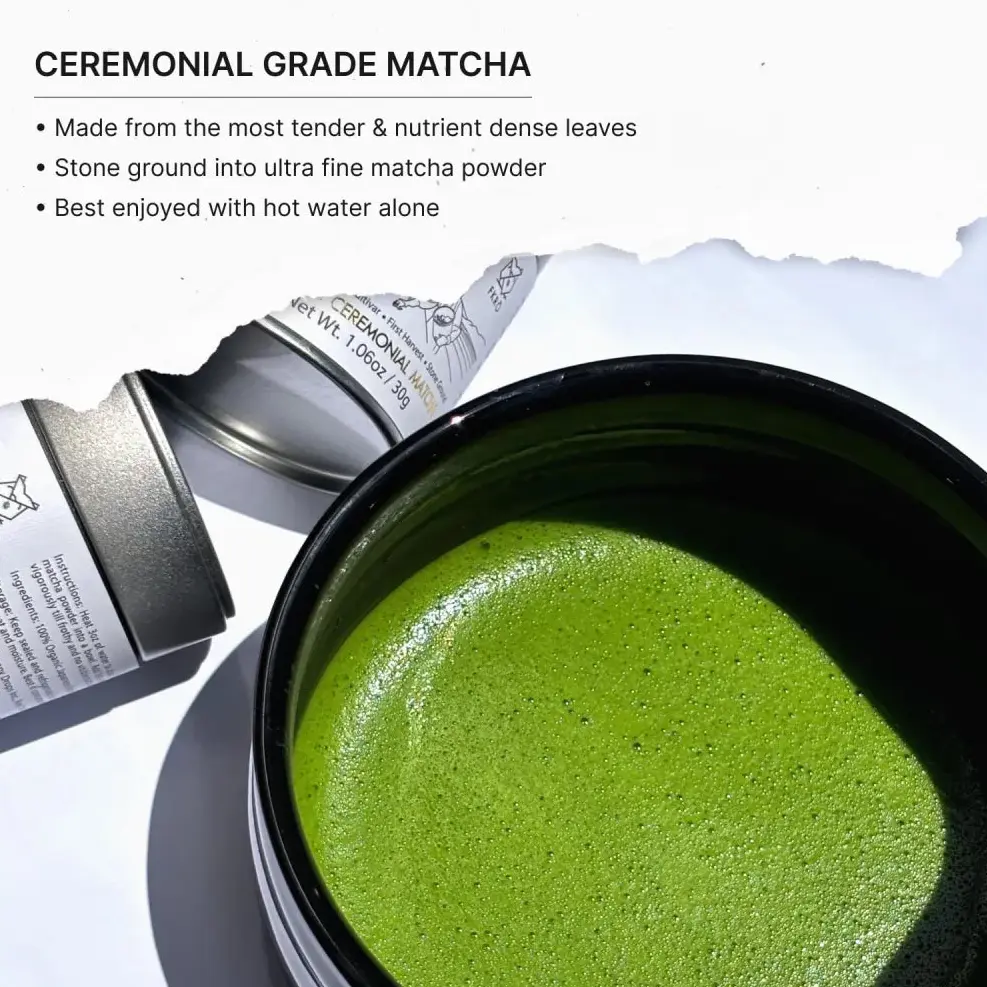
FKRŌ Saemidori Ceremonial Matcha is a single-cultivar, first-harvest matcha from a family farm in Tenryū, Shizuoka, Japan. USDA certified organic and stone-ground, it combines an emerald color and silky texture with gentle sweetness, subtle umami, and low astringency. Its smooth, buttery profile has a delicate cashew note.

How does Saemidori matcha taste?

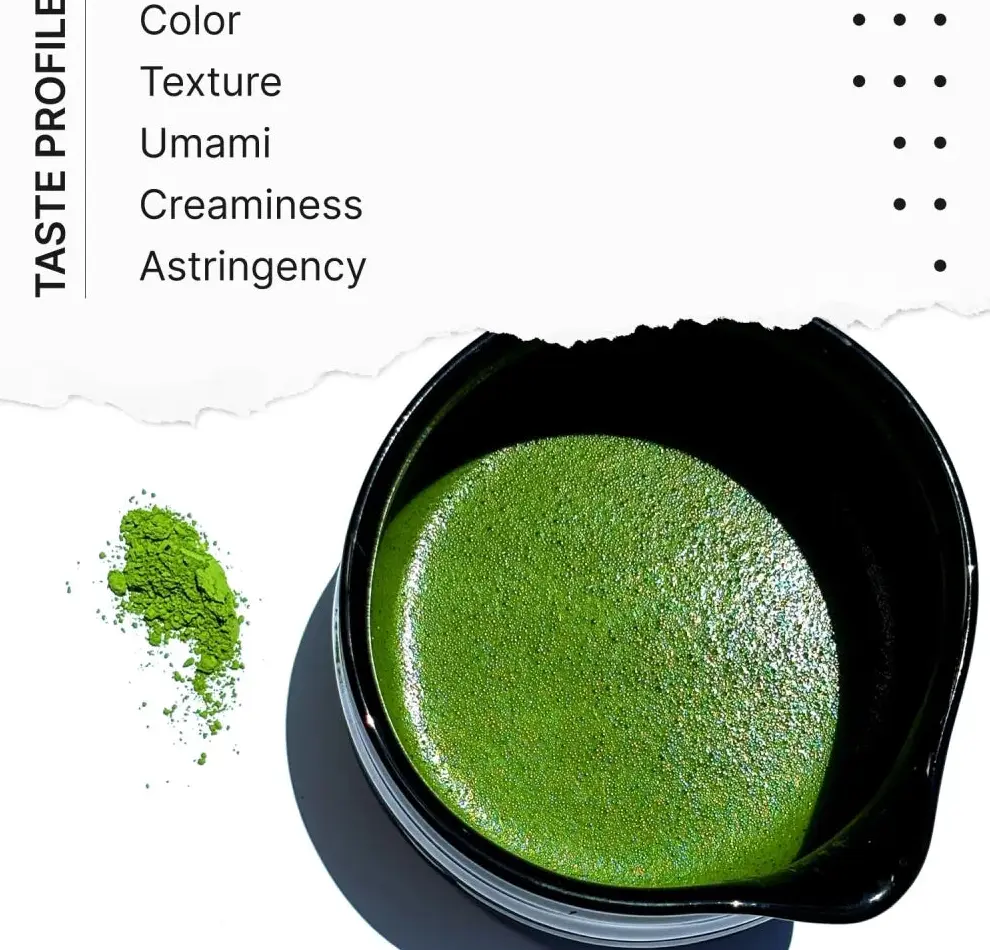
This matcha has a lighter, delicate character built around buttery sweetness rather than pronounced bitterness. Subtle umami supports the sweet profile, while a cashew-like note adds mild nuttiness. The texture is silky and creamy, and the prepared matcha has an emerald color. Low astringency keeps the finish smooth.

Within the FKRŌ range, Saemidori is the lighter and more delicate option. Okumidori is presented as the bolder matcha, with deeper umami, creamy sweetness, and a rounder finish.

Where is this organic ceremonial matcha grown?

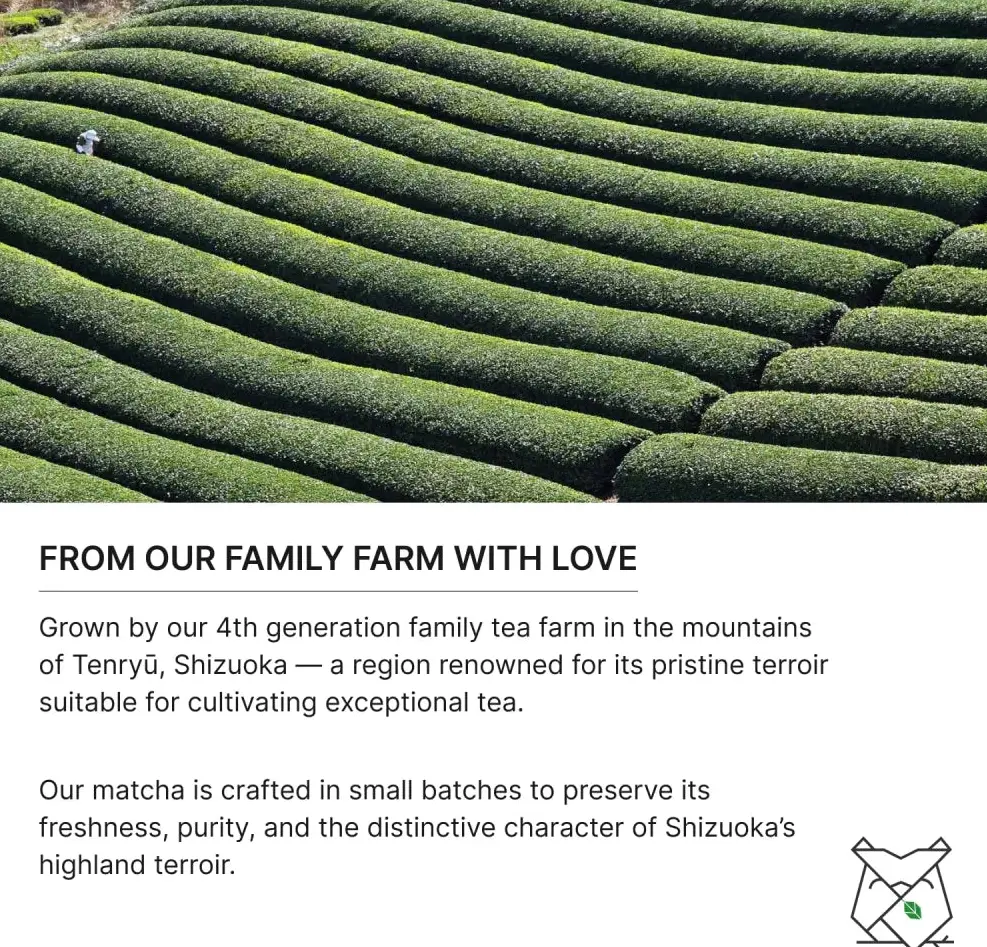
The Saemidori cultivar is grown on a family farm in Tenryū, Shizuoka. The leaves come from the first harvest and are selected from the youngest, greenest growth in the top third of the tea plant. Before harvest, the plants are shaded for at least three weeks to develop amino acids and naturally sweet umami.

  • Cultivar: Single-cultivar Saemidori
  • Grade: Ceremonial grade
  • Organic status: USDA certified organic and grown without pesticides
  • Harvest: First-harvest leaves from the top third of the plant
  • Origin: Tenryū, Shizuoka, Japan

How is FKRŌ Saemidori matcha ground?

The harvested tea is stone-ground at a rate of 30 grams per hour. The finished particles measure approximately 10 to 15 microns. This slow, fine grinding method is used to retain the leaves’ aroma, delicate flavor, color, and silky texture.

Which preparations suit this matcha?

FKRŌ Saemidori Matcha is intended for usucha, lattes, and smoothies. Usucha is thin matcha prepared with water, and this cultivar’s gentle sweetness and low astringency suit that lighter style. Its buttery texture and cashew note also carry into milk-based drinks and blended smoothies.

Use water that is not boiling, since excessively hot water can flatten Saemidori’s gentle sweetness. After opening, keep the tin sealed and away from heat, light, and air exposure to preserve its color and flavor.

Reviews

Reviews on FKRŌ Saemidori Ceremonial Matcha

Find below the taste profile of this product based on reviews found on FKRŌ Matcha’s website.
Learn more about how Best Matcha generate matcha taste profiles
This review has been generated by Best Matcha sensory profiling system, and represent the reviews aggregated below.
Color Vibrancy
8 review details
  1. I use the explicit green-color observation only, without treating color as a quality test. The wording is “The color is such a vibrant green” — Jennifer L., 2026-04-25. Color Vibrancy: Vibrant.Jennifer L. — 2026-04-25
  2. I retain the visual description while setting aside the reviewer’s quality inference. Mariam E. (2026-03-20) writes: “vibrant green”. Color Vibrancy: Vibrant.Mariam E. — 2026-03-20
  3. The direct color-vibrancy clause supports my Vibrant reading, separate from the flavoring-free first preparation. “the color is vibrant” — Anabelle D., 2026-06-15.Anabelle D. — 2026-06-15
  4. I interpret the intensified color description as very vibrant, independent of taste praise. Ana D. (2026-03-30) writes: “super vibrant”. Color Vibrancy: Very vibrant.Ana D. — 2026-03-30
  5. Tin aroma and beginner suitability do not measure color; I retain Vibrant from the explicit vibrancy claim. “has a vibrant color” — Emily H., 2026-06-03.Emily H. — 2026-06-03
  6. Vibrant green is directly stated, giving my assessment a Vibrant color reading independently of light sweetening. “So vibrant and green” — Madeline D., 2026-05-18.Madeline D. — 2026-05-18
  7. I keep the stated vibrant green color, not the shipping or quality claims. The wording is “vibrant green color” — Jenny C., 2026-10-05. Color Vibrancy: Vibrant.Jenny C. — 2026-10-05
  8. I take rich green as a saturation description, not as proof of product quality. Diana Z. (2026-06-12) writes: “Color is a rich green”. Color Vibrancy: Vibrant.Diana Z. — 2026-06-12
4.1(8 reviews)
Bitterness
14 review details
  1. I retain mild bitterness as reported for a strawberry matcha, not an unsweetened-water test. In the review dated 2026-08-21, Hebrenys M. says “The flavor is smooth, vibrant, and not overly bitter.”. Bitterness: Mild.Hebrenys M. — 2026-08-21
  2. I keep the stated absence of bitterness with the honey-latte and cold-foam context attached. Jennifer L. (2026-04-25) writes: “no bitterness”. Bitterness: Minimal.Jennifer L. — 2026-04-25
  3. I read the comparison as reduced bitterness, not an absolute claim of none. Sean P., writing on 2026-02-25, reports “It lacks the bitterness of other ceremonial grades”. Bitterness: Mild.Sean P. — 2026-02-25
  4. I preserve the negated excess: the review does not say the matcha is bitterness-free. Mariam E., writing on 2026-03-20, reports “not overly bitter”. Bitterness: Mild.Mariam E. — 2026-03-20
  5. Not bitter at all is explicit, supporting my Minimal reading without deriving natural sweetness from reduced sweetener use. “not bitter at all” — Erica C., 2026-03-23.Erica C. — 2026-03-23
  6. I retain the first unflavored trial’s explicit absence of bitterness. The wording is “I didn’t add any flavoring the first time & it wasn’t bitter or nasty.” — Anabelle D., 2026-06-15. Bitterness: Minimal.Anabelle D. — 2026-06-15
  7. No sugar or extra additions are needed in this account, providing context for my Minimal reading of the explicit bitterness denial. “doesn't have any bitter taste” — Ramilia U., 2026-03-18.Ramilia U. — 2026-03-18
  8. The no-bitterness statement supports my Minimal reading, independently of the comparison with preparation in Uji. “not bitter” — Cassidy W., 2026-10-12.Cassidy W. — 2026-10-12
  9. No bitter taste is the unambiguous cue I retain at Minimal, separate from the overall best-matcha verdict. “No bitter taste at all” — Maryangela O., 2026-10-14.Maryangela O. — 2026-10-14
  10. I keep this as a latte-specific absence of bitterness; brown-sugar lattes are recommended. In the review dated 2026-03-18, Anastasia C. says “does NOT taste bitter in lattes”. Bitterness: Minimal.Anastasia C. — 2026-03-18
  11. I distinguish restrained bitterness from a claim that bitterness is absent. The wording is “without being overly bitter” — Mekhia B., 2026-07-17. Bitterness: Mild.Mekhia B. — 2026-07-17
  12. A direct bitterness denial supports my Minimal reading; quality and delivery praise do not affect the score. “Not bitter” — Jenny C., 2026-10-05.Jenny C. — 2026-10-05
  13. I retain reduced bitterness in the usual latte context, not a claim of zero bitterness. Nicolette M., writing on 2026-03-30, reports “doesn’t have the strong bitterness”. Bitterness: Mild.Nicolette M. — 2026-03-30
  14. Overly is the limiting qualifier I preserve in my Mild reading, rather than treat the phrase as a complete denial of bitterness. “without being overly bitter” — Debi J., 2026-07-07.Debi J. — 2026-07-07
1.4(14 reviews)
Body
7 review details
  1. I treat the comparative creaminess as full body, not an absolute claim of very full body. In the review dated 2026-04-01, Josie T. says “the creamiest”. Body: Full.Josie T. — 2026-04-01
  2. I interpret the paired smooth and creamy description as body, without an exceptional-density claim. In the review dated 2026-07-29, Ana R. says “It's smooth, creamy, and has a great flavor that isn't overpowering.”. Body: Full.Ana R. — 2026-07-29
  3. I take the rich, creamy description as full body while excluding the promotional enthusiasm. In the review dated 2026-02-24, Summer S. says “rich, creamy”. Body: Full.Summer S. — 2026-02-24
  4. I read the named Saemidori’s creamy, smooth character as full body. The wording is “So creamy and smooth.” — Kamai A., 2026-03-22. Body: Full.Kamai A. — 2026-03-22
  5. Creaminess paired with smoothness supports my Full body reading, separately from the nutty flavor. “smooth, creamy” — Bianca G., 2026-08-17.Bianca G. — 2026-08-17
  6. I treat this direct smooth-and-creamy description as full, not exceptionally full, body. Lyv V., writing on 2026-07-29, reports “smooth and creamy”. Body: Full.Lyv V. — 2026-07-29
  7. Repeated creaminess is the body cue I retain at Full, without using the beginner recommendation as sensory evidence. “It’s well balanced and creamy.” — Emily H., 2026-06-03.Emily H. — 2026-06-03
4.0(7 reviews)
Smoothness
18 review details
  1. I retain the explicit fine, smooth powder description without upgrading it to silky. In the review dated 2026-08-08, Kathy H. says “This matcha powder is so fine & smooth.”. Smoothness: Smooth.Kathy H. — 2026-08-08
  2. I take the buttery first-sip description as mouthfeel, not proof of exceptional silkiness. Vy P., writing on 2026-04-03, reports “the first sip was smooth and almost buttery.”. Smoothness: Smooth.Vy P. — 2026-04-03
  3. I interpret the emphatically smooth prepared result as exceptionally uniform, with non-specialist tools noted. Mecyia M. (2026-08-26) writes: “I didn’t have what you would consider the proper tools and it came out super smooth.”. Smoothness: Silky.Mecyia M. — 2026-08-26
  4. I base smoothness on the successful mixing, not on the flavor adjective; this was a honey latte. Jennifer L. (2026-04-25) writes: “It mixed perfectly”. Smoothness: Smooth.Jennifer L. — 2026-04-25
  5. Explicit smooth texture supports my Smooth reading, with the slight astringency kept as a separate sensation. “a smooth texture with a hint of astringency” — Ash A., 2026-09-11.Ash A. — 2026-09-11
  6. I treat rapid incorporation into water as mixing evidence, not frothability. In the review dated 2026-05-25, Ashley p. says “blends into water in seconds”. Smoothness: Smooth.Ashley p. — 2026-05-25
  7. I keep the smooth, lump-free whisking result at smooth rather than automatically silky. The wording is “whisks smoothly with no clumps” — Mariam E., 2026-03-20. Smoothness: Smooth.Mariam E. — 2026-03-20
  8. Absent chalkiness supports my Smooth classification without proving the exceptional Silky level. “is not chalky” — Marina L. t. b., 2026-09-19.Marina L. t. b. — 2026-09-19
  9. I ground this in the explicit blending result rather than the broad taste praise. In the review dated 2026-06-15, Anabelle D. says “It blends really well”. Smoothness: Smooth.Anabelle D. — 2026-06-15
  10. Smooth and creamy are combined in this account, giving my assessment a Smooth texture reading rather than a flavor-strength score. “It's smooth, creamy” — Ana R., 2026-07-29.Ana R. — 2026-07-29
  11. I use the explicit texture wording, without assuming that very smooth automatically means silky. Maryangela O. (2026-10-14) writes: “very smooth texture”. Smoothness: Smooth.Maryangela O. — 2026-10-14
  12. Creamy smoothness supports my Smooth reading; the good froth is a separate preparation result. “creamy and smooth” — Kamai A., 2026-03-22.Kamai A. — 2026-03-22
  13. The smooth-and-creamy pairing supports my Smooth texture reading, while nuttiness concerns flavor. “so smooth, creamy with a nutty taste” — Bianca G., 2026-08-17.Bianca G. — 2026-08-17
  14. Direct smooth creaminess supports my Smooth reading without an upgrade based on favorite-product enthusiasm. “so smooth and creamy” — Lyv V., 2026-07-29.Lyv V. — 2026-07-29
  15. Successful whisking is the dispersion cue I retain at Smooth, not proof that froth was produced. “It whisks well” — kaitlyn c., 2026-03-25.kaitlyn c. — 2026-03-25
  16. Clump-free and really smooth preparation supports my Smooth reading without making lump absence synonymous with silkiness. “had no clumps and was really smooth” — Jenny C., 2026-10-05.Jenny C. — 2026-10-05
  17. Easy mixing is the preparation cue I retain at Smooth in this latte-use account, rather than the smooth-taste wording. “mixes easily” — Nicolette M., 2026-03-30.Nicolette M. — 2026-03-30
  18. The successful mixing clause supports my Smooth reading; neither flavor praise nor energy claims establish texture. “it mixes beautifully” — Debi J., 2026-07-07.Debi J. — 2026-07-07
4.1(18 reviews)
Natural Sweetness
5 review details
  1. I read this as a light intrinsic sweetness rather than a strongly sweet cup. The wording is “there’s a light sweetness to it too, the kind that feels natural and calm, not overpowering.” — Vy P., 2026-04-03. Natural Sweetness: Subtle.Vy P. — 2026-04-03
  2. I read the direct taste note as slight sweetness; no added sweetener is stated. In the review dated 2026-03-20, Mariam E. says “slightly sweet”. Natural Sweetness: Subtle.Mariam E. — 2026-03-20
  3. Repeated slight qualification indicates a trace of the matcha’s own sweetness, which I retain at Minimal. “slightly slightly sweet in its own flavor” — Josie T., 2026-04-01.Josie T. — 2026-04-01
  4. A hint is the limiting sweetness cue I classify as Minimal, not a fully sweet flavor. “hint of sweetness” — Marla J., 2026-09-22.Marla J. — 2026-09-22
  5. Slight sweetness is directly stated, supporting my Subtle reading rather than a strong sweet character. “slight sweetness” — Gina S., 2026-05-23.Gina S. — 2026-05-23
1.6(5 reviews)
Umami
5 review details
  1. I retain the named umami note without treating nuttiness as extra savory intensity. The wording is “umami and nutty” — Marla J., 2026-09-22. Umami: Moderate.Marla J. — 2026-09-22
  2. I keep the explicit umami note without translating approval into stronger intensity. Destiny S., writing on 2026-09-28, reports “umami flavor”. Umami: Moderate.Destiny S. — 2026-09-28
  3. Perceived umami remains explicit alongside flavored sweeteners, so I retain Moderate without increasing its intensity. “great unami taste” — megan c., 2026-06-22.megan c. — 2026-06-22
  4. Slight limits the umami directly, leading my assessment to Subtle while leaving the nutty finish separate. “slight umami” — Gina S., 2026-05-23.Gina S. — 2026-05-23
  5. A bit establishes a small amount of umami, which I classify as Subtle rather than infer it from earthiness. “A bit umami” — Bahar A., 2026-04-09.Bahar A. — 2026-04-09
2.6(5 reviews)

Frequently asked questions

Single-cultivar Saemidori matcha for usucha lattes and smoothies Here are some frequently asked questions and answers.

Is FKRŌ Saemidori Matcha organic?

Yes. This Saemidori matcha is USDA certified organic and grown without pesticides on a family farm in Tenryū, Shizuoka.

Where does FKRŌ Saemidori Matcha come from?

It comes from a family farm in Tenryū, Shizuoka, Japan. The product uses the named Saemidori cultivar rather than a cultivar blend.

What does Saemidori matcha taste like?

It tastes smooth and buttery, with gentle sweetness, subtle umami, and a delicate cashew note. It also has a silky texture and low astringency.

Is this a first-harvest matcha?

Yes. It is made with first-harvest leaves selected from the youngest, greenest growth in the top third of the tea plant.

How is this Saemidori matcha produced?

The tea plants are shaded for at least three weeks before harvest. The leaves are then stone-ground into particles measuring approximately 10 to 15 microns.

What can FKRŌ Saemidori Matcha be used for?

It is suited to usucha, lattes, and smoothies. Its profile centers on gentle sweetness, subtle umami, buttery flavor, and a mild cashew note.

How should FKRŌ Saemidori Matcha be prepared?

Use water that is not boiling. Water that is too hot can flatten the gentle sweetness associated with this Saemidori matcha.

How should the matcha be stored?

Keep the tin sealed and store it away from heat, light, and air exposure. This handling protects the matcha’s color and flavor.

Affiliate disclosure: Best Matcha earns a commission from purchases made through the affiliate links on this page, at no additional cost to you. This never influences our ratings, reviews or editorial decisions.