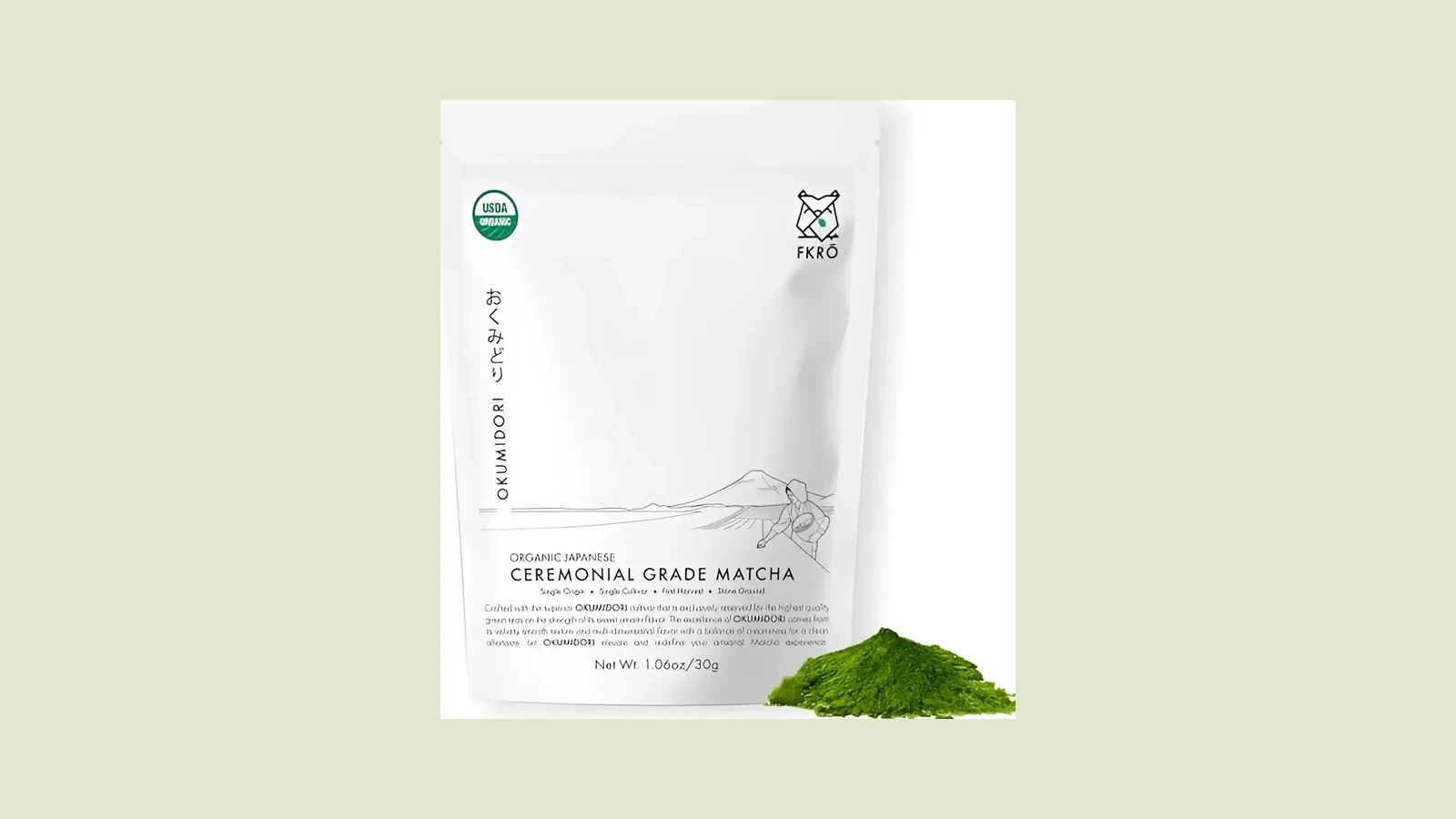
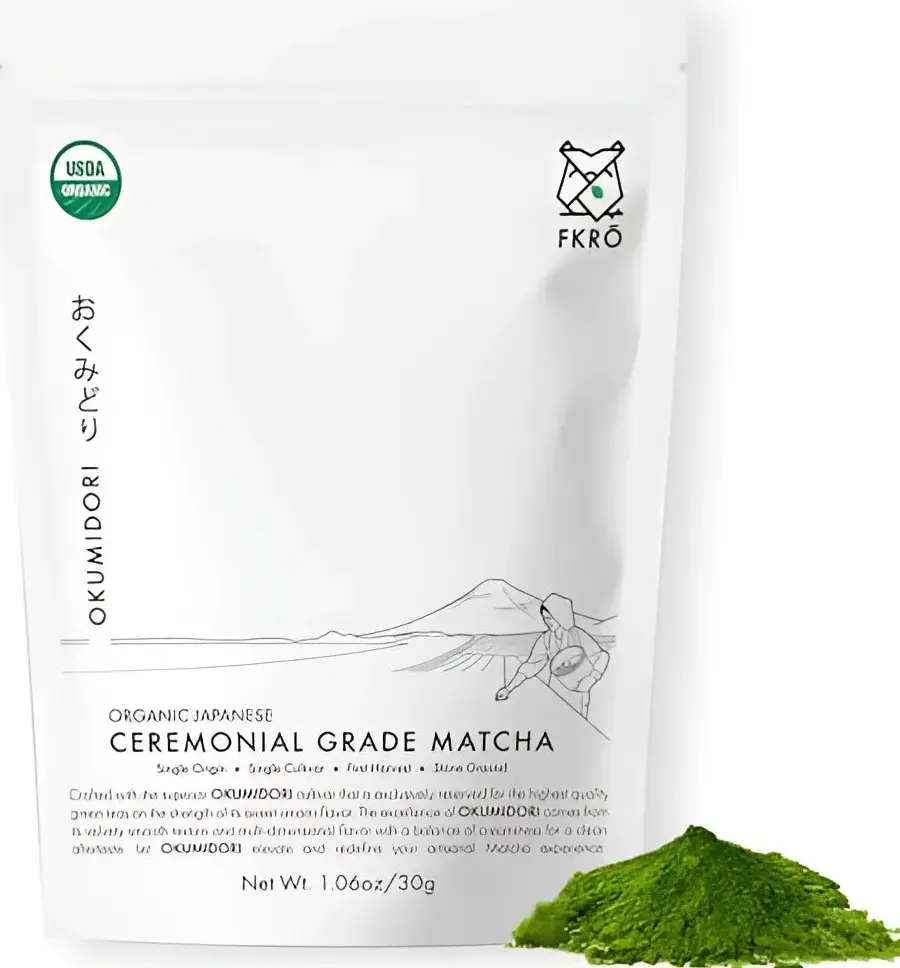
FKRŌ Ceremonial Grade Okumidori Matcha

FKRŌ Okumidori matcha is a USDA certified organic first-harvest tea from Kagoshima with bold umami and creamy sweetness for usucha, cold brew, or lattes.
  • Subtotal

    {{ currencyFormat( pricing_summary.total_amount ) }}

Single-cultivar Okumidori matcha for usucha cold brew and lattes

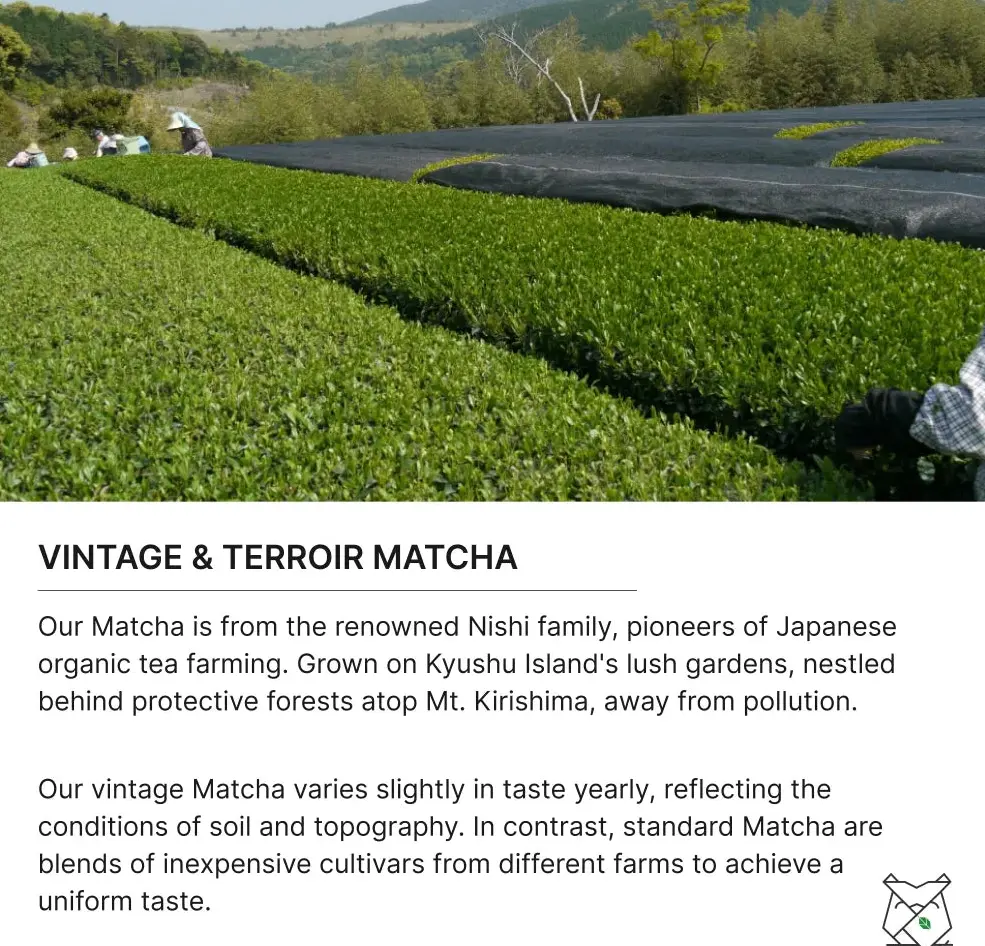
FKRŌ Ceremonial Grade Okumidori Matcha is a first-harvest, single-cultivar matcha from the Nishi family farm on Mt. Kirishima in Kagoshima, Japan. USDA certified organic and produced in limited batches, it combines bold umami and creamy sweetness with marshmallow-like, candy-like notes. The finish is clean and rounded, with minimal bitterness.

How does this Okumidori matcha taste?

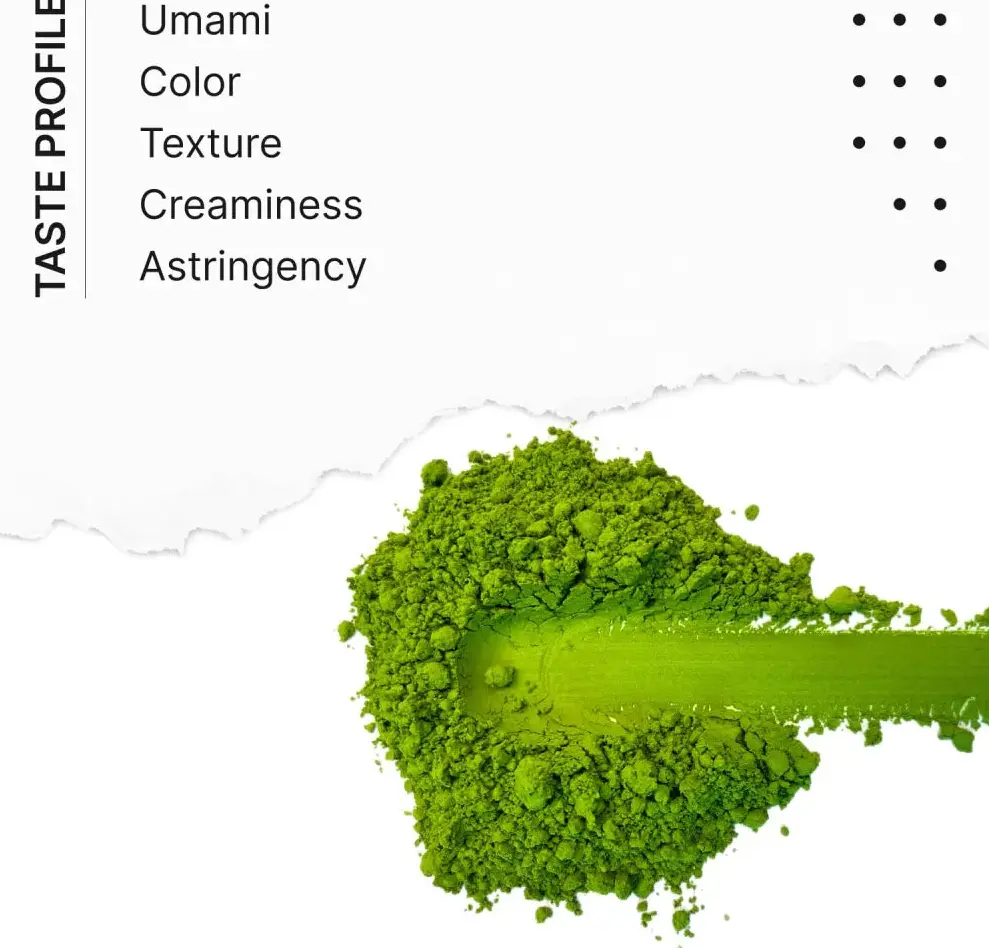
Okumidori is the only cultivar used in this matcha. Its profile centers on bold umami and creamy sweetness, followed by a clean finish. Marshmallow and candy-like notes add a distinct sweet character without replacing the tea’s umami depth. The low astringency and minimal bitterness suit the product’s stated focus on sophisticated sipping.

  • Cultivar: 100% Okumidori
  • Harvest: First harvest
  • Origin: Mt. Kirishima, Kagoshima, Japan
  • Organic status: USDA certified organic
  • Grinding: Stone-ground to 10-15 microns
  • Uses: Usucha, cold brew, lattes, and smoothies

Where is this Kagoshima matcha grown?

The tea comes from the Nishi family farm atop Mt. Kirishima. The farm has cultivated organic tea since 1954 and has received Japan’s Tennō, or Emperor’s Cup, tea honor. Only young leaves from the top third of the tea plant are used for this first-harvest matcha. The plants are shaded for at least three weeks before harvest, and the tea is grown without pesticides.

How is the matcha milled?

The leaves are stone-ground in limited batches at a stated rate of 30 grams per hour. The finished powder measures 10-15 microns. This fine grind supports the creamy texture described for the product and works across straight tea and milk-based preparations. A typical 2-gram serving contains roughly 60-70 milligrams of caffeine, although the exact amount varies by harvest.

How should FKRŌ Okumidori matcha be prepared?

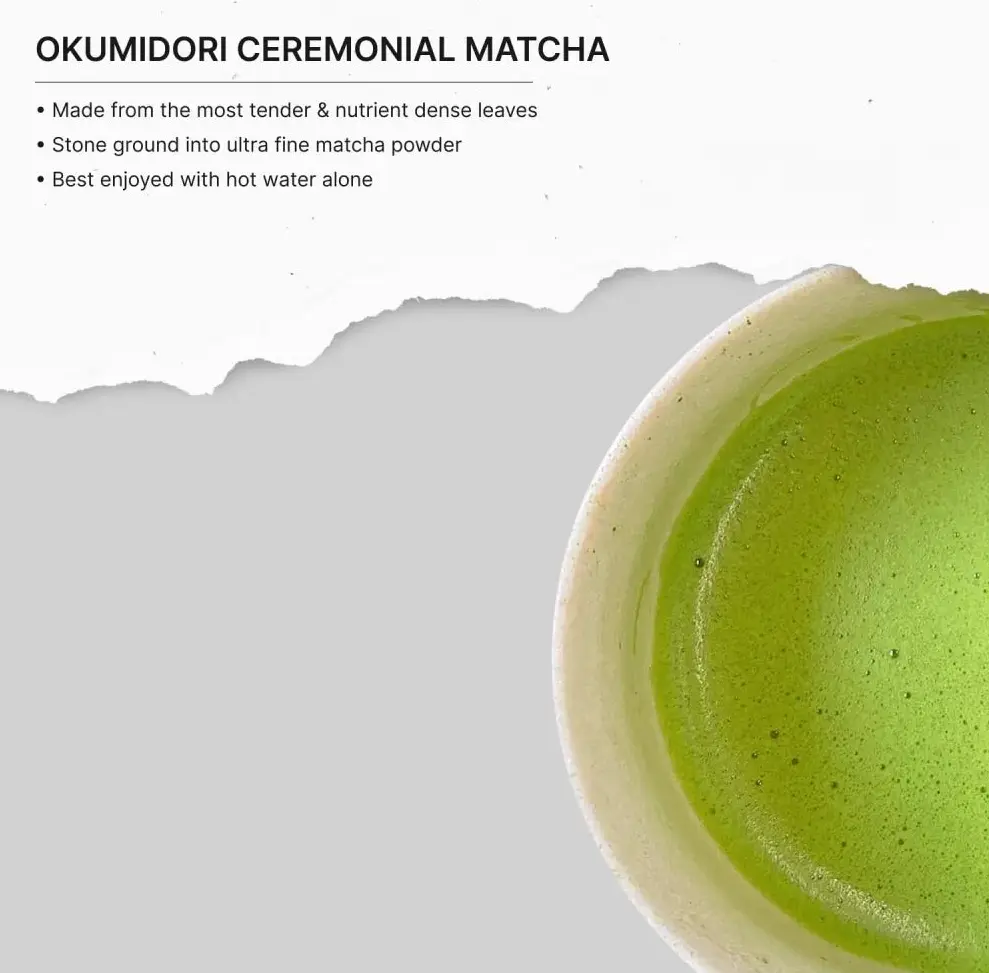
For usucha, sift the matcha into a warmed bowl, add water at 70-75°C (158-167°F), and whisk until frothy. The same matcha is also intended for cold brew, lattes, and smoothies. Its umami depth is designed to remain distinct with steamed milk, while the creamy sweetness and rounded finish also support preparation as straight matcha.

Reviews

Reviews on FKRŌ Ceremonial Grade Okumidori Matcha

Find below the taste profile of this product based on reviews found on FKRŌ Matcha’s website.
Learn more about how Best Matcha generate matcha taste profiles
This review has been generated by Best Matcha sensory profiling system, and represent the reviews aggregated below.
Color Vibrancy
17 review details
  1. For color, I give weight to “the color was very green”: the wording supports Vibrant, while the separate foaming observation does not establish saturation. No recipe is supplied. — Sarah-Luna M., 2026-08-27.Sarah-Luna M. — 2026-08-27
  2. I base the Vibrant color interpretation on “vibrant green”, not on the reviewer’s enthusiasm about umami. The recipe and viewing conditions are unstated. — Adilene L., 2026-03-31.Adilene L. — 2026-03-31
  3. I isolate “vibrant” within “creamy and vibrant” as the color evidence for Vibrant; creaminess is a separate sensation. The review gives no preparation details. — Anna M., 2026-05-20.Anna M. — 2026-05-20
  4. The phrase “The color was vibrant” is why I assign Vibrant appearance, separately from powder texture and whisked foam. Neither milk nor sweetener is specified. Mariah G., 2026-06-12.Mariah G. — 2026-06-12
  5. From the title “Quality, Vibrant Green Matcha- Finally!”, I retain Vibrant color. The body locates the observation at opening the pack; later latte and sweetener comments do not turn it into a measured drink-color claim. — Tayana J., 2026-06-17.Tayana J. — 2026-06-17
  6. I use the explicit “bright green” in “Beautiful, bright green” to support Vibrant, rather than treating “beautiful” as a measure. This brief review supplies no recipe. — Gina S., 2026-03-24.Gina S. — 2026-03-24
  7. Here I treat “Color is a vibrant green” as an explicit Vibrant color observation, distinct from the comments on bitterness and clumps. Preparation is not described. — Heather S., 2026-04-28.Heather S. — 2026-04-28
  8. In “vibrant and bright green color”, I find a specific basis for Vibrant color. The comparison with duller matchas is the reviewer’s own frame of reference, not an objective comparison I can verify. — Alexis W., 2026-05-04.Alexis W. — 2026-05-04
  9. I read “It is bright green” as direct evidence for Vibrant color, rather than relying on the review’s value judgment. The preparation is not specified. — Grace J., 2026-09-29.Grace J. — 2026-09-29
  10. I anchor “vibrant” to the cold-latte context and retain Vibrant. That preparation limits how far I can extend the color observation to plain tea or dry powder. — Londy, 2026-03-05.Londy — 2026-03-05
  11. I take “Not chalky and very vibrant ” from the review title as the basis for Very vibrant color. Almond milk is mentioned in the body, but the title does not specify whether its color judgment concerns powder or drink. — Desiree R., 2026-06-15.Desiree R. — 2026-06-15
  12. For this proof, I read “vibrant the color” as Vibrant appearance. The later latte comment concerns balance; it does not specify whether the color was assessed in powder or in the latte. — Johnson S., 2026-03-22.Johnson S. — 2026-03-22
  13. By separating “It’s also vibrant” from the surrounding flavor claims, I retain Vibrant as an appearance judgment only. The review does not explain its preparation. — Jubilee C., 2026-03-29.Jubilee C. — 2026-03-29
  14. I preserve “bright green color” as Vibrant color, with a substantial recipe caveat: 3 g matcha, a paste, water at “176” (unit unstated), milk, maple syrup, ice cream and sea salt. I cannot isolate powder color from that drink. — Elizabeth M., 2026-02-16.Elizabeth M. — 2026-02-16
  15. I distinguish the reported “bright green” appearance from the reviewer’s fridge-storage routine. It supports Vibrant color, not proof that refrigeration preserved it; preparation is unspecified. — jazmin C., 2026-07-21.jazmin C. — 2026-07-21
  16. With “very green”, I have a direct green-color description supporting Vibrant. The accompanying mixing and flavor praise adds no color measurement; preparation is unspecified. — Avary D., 2026-04-23.Avary D. — 2026-04-23
  17. I contextualize “very nice vibrant green color” within an iced-matcha-latte review. It supports the retained Vibrant label, without demonstrating the same appearance in a water-only preparation. — Haven T., 2026-04-27.Haven T. — 2026-04-27
4.1(17 reviews)
Bitterness
5 review details
  1. I keep “no bitter after taste” tied to the finish, supporting Minimal bitterness there. The reviewer usually sweetens matcha lattes but sometimes drinks this without sweetener; I do not assume every cup was unsweetened. — Tayana J., 2026-06-17.Tayana J. — 2026-06-17
  2. The qualification “isn't too bitter” is why I retain Mild, not an absence of bitterness. Strong matcha flavor is reported separately, and no recipe is specified. Heather S., 2026-04-28.Heather S. — 2026-04-28
  3. I distinguish the categorical “There’s no bitterness” from the review’s surrounding flavor praise. It supports Minimal bitterness in this account, without a stated preparation for reproducing it. — Ashley G. V., 2026-04-26.Ashley G. V. — 2026-04-26
  4. I interpret “not bitter at all” as Minimal bitterness, not a general quality score. The review gives no temperature, ratio or sweetener details, so I cannot generalize beyond this account. — Grace J., 2026-09-29.Grace J. — 2026-09-29
  5. For bitterness, I read “not bitter at all” literally as Minimal. The separate preference for umami does not establish why bitterness was absent; temperature and additions are not reported. — Jubilee C., 2026-03-29.Jubilee C. — 2026-03-29
1.2(5 reviews)
Smoothness
8 review details
  1. I read “super smooth” as Smooth texture in a review that pairs matcha with honey or maple syrup and sea salt. I retain those additions rather than attributing the entire mouthfeel to plain matcha. — Zavina P., 2026-08-06.Zavina P. — 2026-08-06
  2. For Mariah G. (2026-06-12), I read “The matcha was very smooth” as Smooth mouthfeel. The separate velvety-powder observation does not establish a silky drink.Mariah G. — 2026-06-12
  3. I locate “creamy, smooth” in a frother-made preparation and retain Smooth. The reported creaminess cannot establish the same mouthfeel from hand whisking; milk and sweetener are unspecified. — Nayab B., 2026-04-29.Nayab B. — 2026-04-29
  4. In the short phrase “it was smooth, creamy”, I find the texture basis for Smooth. The review supplies no recipe, so I cannot assign its creaminess specifically to water-only preparation. — Gabrielle B., 2026-05-13.Gabrielle B. — 2026-05-13
  5. For this texture reading, I use “The first sip is smooth and velvety” to support Silky. This describes a sip rather than powder fineness, though the review does not disclose its preparation. — Ashley G. V., 2026-04-26.Ashley G. V. — 2026-04-26
  6. I separate the texture claim “so creamy and smooth” from the slight umami note. It supports Smooth, while the absence of preparation details leaves milk and whisking effects unresolved. — Kenya, 2026-05-07.Kenya — 2026-05-07
  7. I connect “It wasn’t chalky at all” to the almond-milk preparation: it supports Smooth texture without chalkiness in that drink. Creaminess with a thinner milk is not proof of the powder’s intrinsic body. — Desiree R., 2026-06-15.Desiree R. — 2026-06-15
  8. I take “It was smooth” as the specific basis for Smooth texture, setting aside broad quality praise. The review does not identify how the drink was prepared. — Azul M., 2026-09-05.Azul M. — 2026-09-05
4.1(8 reviews)
Umami
10 review details
  1. I treat “the umami flavor” as evidence that umami is present, retaining Moderate without turning “perfect” into an intensity measurement. The review does not identify a recipe. — Adilene L., 2026-03-31.Adilene L. — 2026-03-31
  2. Within “some umami”, I read a present but qualified savory note, consistent with Moderate. Nutty notes and slight astringency remain separate; whisking is mentioned, but no milk or sweetener details are given. — Mariah G., 2026-06-12.Mariah G. — 2026-06-12
  3. I give “strong umami notes” its Pronounced meaning while keeping the flavored-syrup context visible. The reviewer says the umami held up to bolder syrups; this is not evidence about natural sweetness. — Daisy P., 2026-06-04.Daisy P. — 2026-06-04
  4. I place “The taste is heavily umami driven” in the initial tasting, before the separate milk trial. It supports Pronounced savoriness; the reviewer says milk later mellowed the profile, so I preserve that change rather than merging the two. — Samantha K., 2026-04-19.Samantha K. — 2026-04-19
  5. I contextualize Moderate in “the umami taste”, which names umami but not its strength. The review discusses a latte and explicitly says FKRO asked the author to try the matcha; I preserve that invitation disclosure. — Ankita M., 2026-03-12.Ankita M. — 2026-03-12
  6. For umami, I focus on “subtle umami depth”: Subtle describes the stated subtlety, even though the review says the depth lingers. Duration is not the same as intensity, and the recipe is unstated. — Ashley G. V., 2026-04-26.Ashley G. V. — 2026-04-26
  7. I read the modifier in “slight umami flavor” as a limit on intensity, supporting Subtle umami. Creaminess and smoothness do not strengthen the savory claim; preparation is not provided. — Kenya, 2026-05-07.Kenya — 2026-05-07
  8. I retain Moderate umami from “I recommend this one for those who like umami in their matcha.”, a recommendation that identifies savoriness without quantifying it. Almond milk is used, so I do not present this as an unmodified-water assessment. — Desiree R., 2026-06-15.Desiree R. — 2026-06-15
  9. In this wording, “This leans more umami flavored”, I see savory emphasis rather than a measured strength; I retain Moderate. No milk, sweetener or preparation method is stated. — Jubilee C., 2026-03-29.Jubilee C. — 2026-03-29
  10. I interpret “The flavor palette is so deep and umami-forward” as Pronounced umami: depth and savory prominence are explicit. The comparison with another brand is not the basis of my reading, and no preparation is stated. — Samantha Y., 2026-06-21.Samantha Y. — 2026-06-21
3.1(10 reviews)

Frequently asked questions

Single-cultivar Okumidori matcha for usucha cold brew and lattes Here are some frequently asked questions and answers.

What is Organic Okumidori Matcha?

It is a limited-batch, first-harvest matcha made only from the Okumidori cultivar. The leaves are stone-ground into a fine powder.

Where does this Okumidori matcha come from?

This matcha comes from the Nishi family farm on Mt. Kirishima in Kagoshima, Japan. The farm has cultivated organic tea since 1954 and has received Japan’s Tennō (Emperor’s Cup) tea honor.

Is this matcha USDA certified organic?

Yes. This matcha is USDA certified organic and grown without pesticides.

What does Kagoshima Okumidori matcha taste like?

It has bold umami, creamy sweetness, and a clean, rounded finish with minimal bitterness. Its tasting notes include marshmallow and candy-like sweetness.

How should I prepare this matcha?

Sift the matcha into a warmed bowl, add water at 158–167°F (70–75°C), and whisk until frothy.

Can I use this matcha for lattes or cold brew?

It is intended for usucha, cold brew, lattes, and smoothies. Its umami depth is designed to remain noticeable with steamed milk.

What package size is available?

This matcha is offered in a 30 g package.

How much caffeine does a serving contain?

A typical 2 g serving contains approximately 60–70 mg of caffeine. The exact amount varies by harvest.

Affiliate disclosure: Best Matcha earns a commission from purchases made through the affiliate links on this page, at no additional cost to you. This never influences our ratings, reviews or editorial decisions.