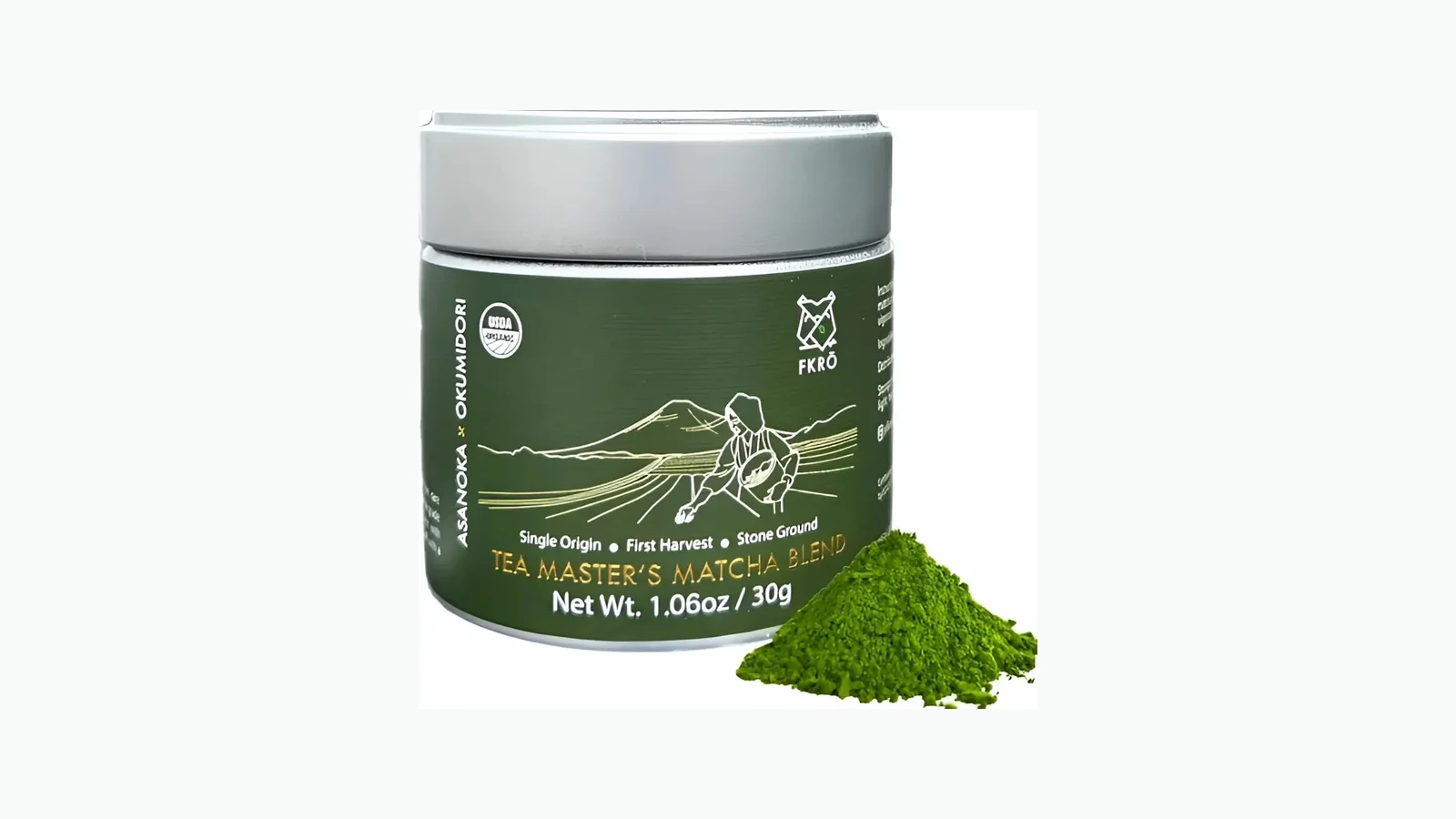
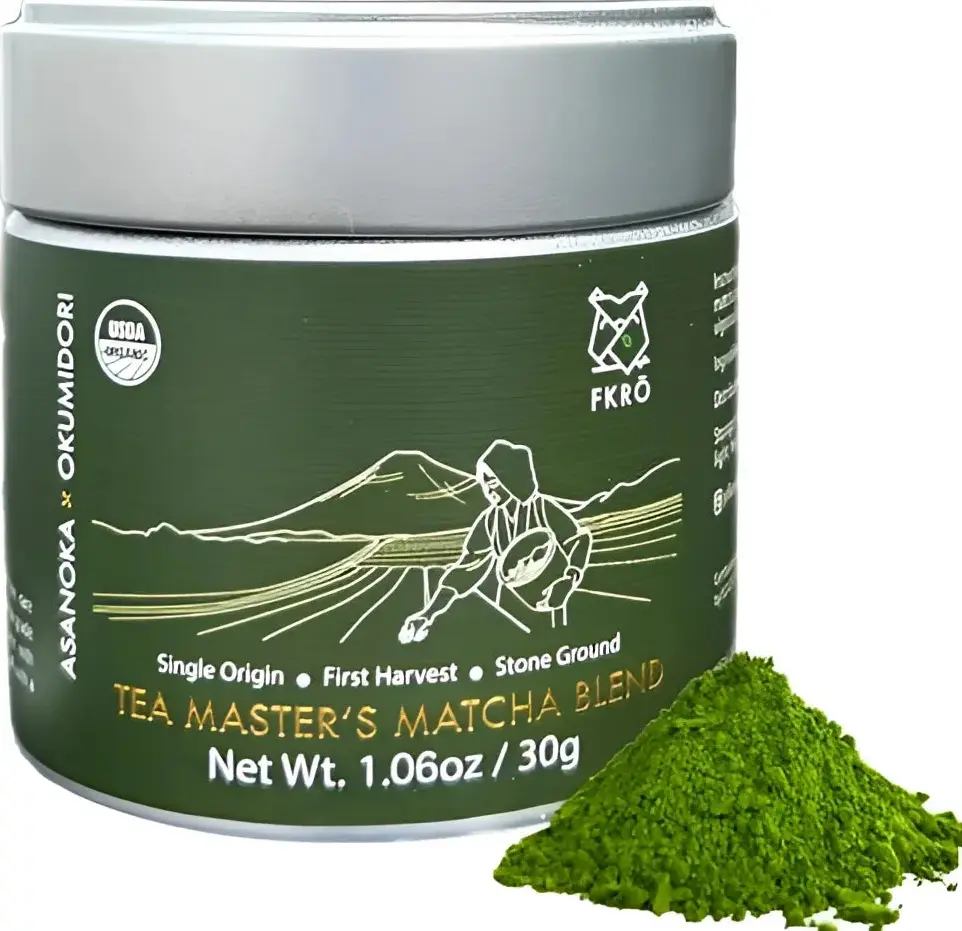
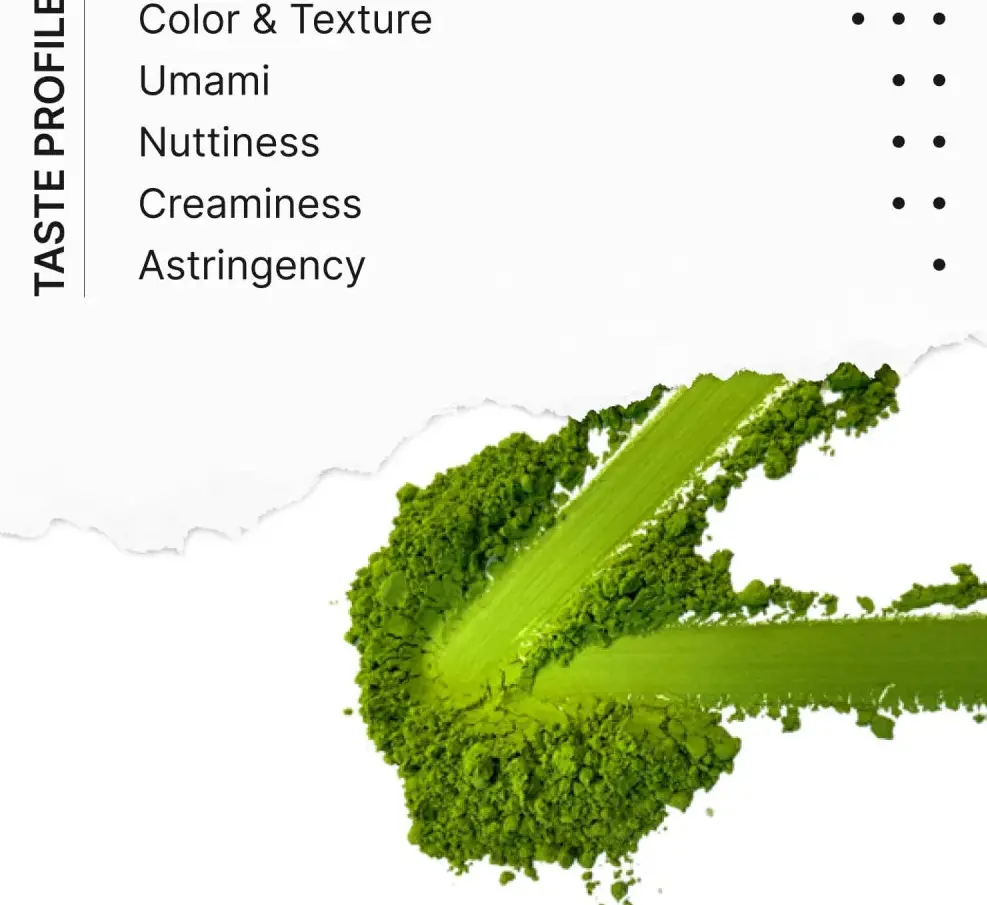
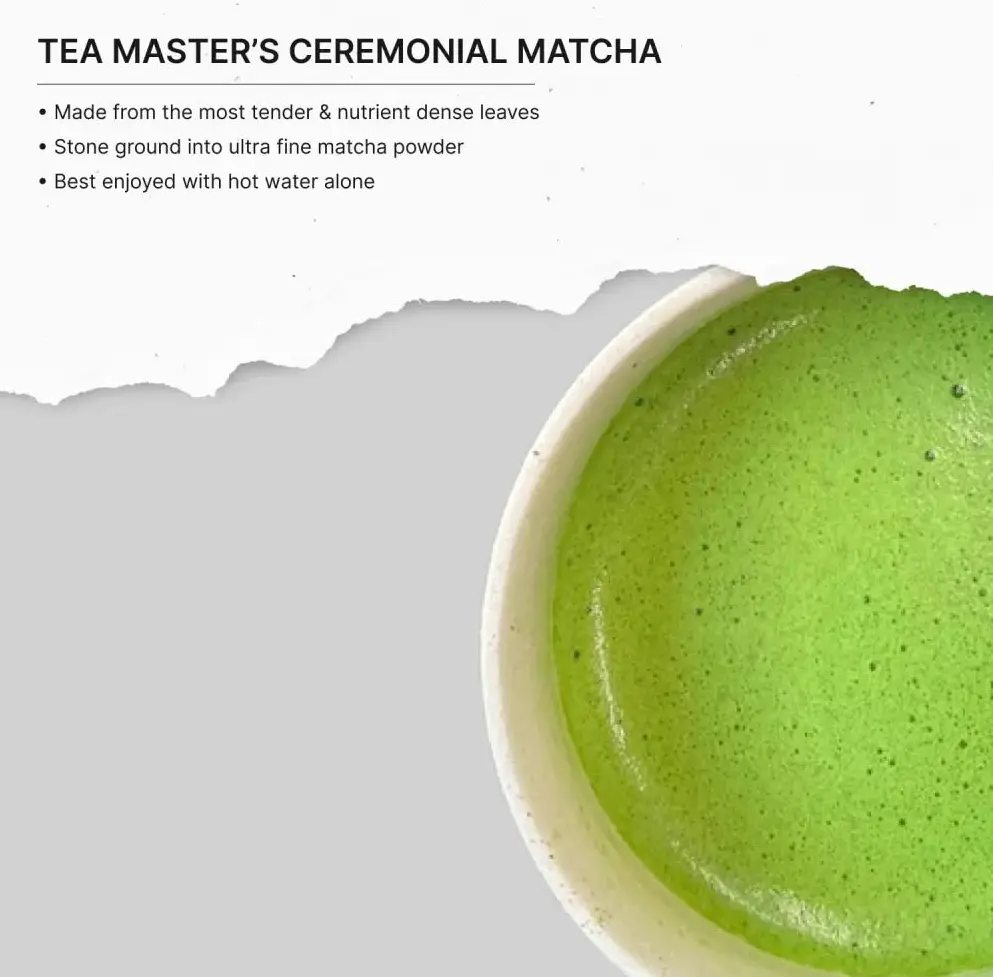
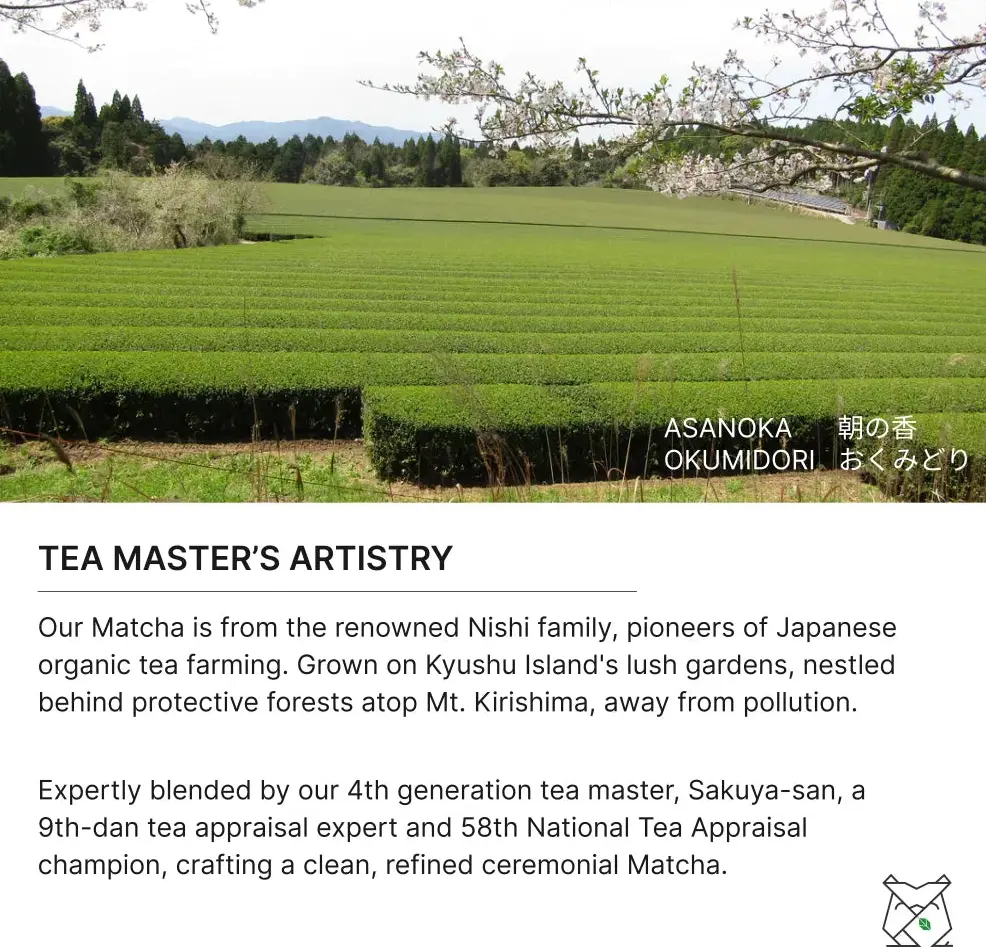
FKRŌ Tea Master’s Organic Ceremonial Matcha is a first-harvest blend of Asanoka and Okumidori cultivars from Kagoshima, Japan. Its smooth body, gentle umami, nutty character, and slight astringency suit daily usucha, lattes, and smoothies.
What does Tea Master’s Matcha taste like?
The flavor combines soft nutty and earthy undertones with subtle umami. Sweet potato, chestnut, and nori form the main tasting notes, while slight astringency gives the cup some structure. It is positioned as a smoother, gentler everyday matcha than FKRŌ’s single-cultivar reserves.
The blend is made from two cultivars:
- Asanoka and Okumidori grown on the Nishi family farm
- First-harvest leaves picked from the top third of the tea plant
- Leaves shaded for at least three weeks before harvest
- Stone-ground to a particle size of 10–15 microns at 30 grams per hour
Where is this organic ceremonial matcha grown?
The tea comes from the fourth-generation Nishi family farm atop Mt. Kirishima in Kagoshima, Japan. It is USDA certified organic and grown without pesticides. Tea master Sakuya-san blends the two cultivars. Sakuya-san is a 9th-dan tea expert and champion of the 58th National Tea Appraisal.
The first-harvest leaves are ground slowly on a stone mill. This traditional process produces an ultra-fine powder intended to retain the leaves’ aroma, texture, color, and delicate flavor.
How should Tea Master’s Matcha be prepared?
For traditional usucha, sift the matcha into a warmed bowl, add water at 70–75°C, and whisk until frothy. The blend is also intended for matcha lattes and smoothies, giving buyers several preparation options from one everyday matcha.
A typical 2-gram serving contains roughly 60–70 milligrams of caffeine. The exact amount varies by harvest, so caffeine-sensitive drinkers should account for that range when choosing a serving.
Who is this first-harvest blend suited to?
This matcha is crafted for daily enjoyment rather than a single preparation style. Its combination of nuttiness, gentle umami, slight astringency, and sweet potato, chestnut, and nori notes works across straight usucha and mixed drinks. Each container holds 30 grams of stone-ground matcha powder.